 how-to
Does Grass Come Back After Weed Removal?
Last Updated: November 13, 2026
Quick Summary
To fix a patchy lawn after weed removal, wait out the reseeding interval on your herbicide label, then rake out dead material, loosen the top inch of soil, add compost, and seed evenly. Keep the top inch moist until germination, which usually takes one to three weeks. Early fall is the best time to repair cool-season grass.
- The label's reseeding interval, not the calendar, sets how long you wait before seeding.
- Pre-emergents can block new seed for months, so their label interval is a minimum.
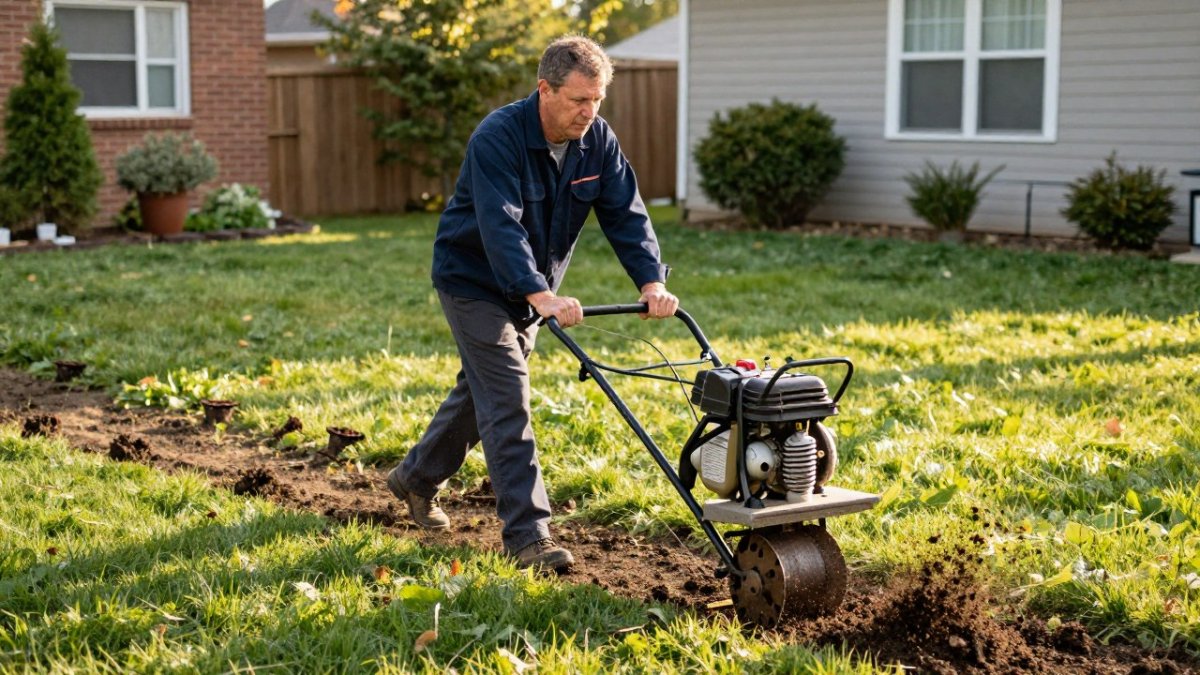
- For spots wider than a few feet, till the top few inches, add topsoil, seed heavily, and cover with straw.
- Water lightly once or twice a day for days 1 to 14, then taper to deeper waterings.
- Skip fertilizer until new grass is established because young roots burn easily.
Table of Contents
- Why Your Lawn Looks Patchy After Weed Removal
- How to Bring Grass Back to Life After Weed Killer
- The Best Time to Repair a Lawn
- Tools and Materials You'll Need for Lawn Repair
- Step-by-Step: Building a Lawn Repair Patch
- How to Fix Large Bare Spots in Lawn
- Watering, Germination, and Aftercare
- Preventing Repeat Weed Invasion
- Frequently Asked Questions
Why Your Lawn Looks Patchy After Weed Removal
Grass usually does come back after weed removal, but not on its own and not quickly. When you kill weeds, you often leave behind bare patches, thin grass, and exposed soil where weed seeds can move right back in. That is the frustrating truth about a patchy lawn after weed removal: the weeds die, but the grass does not always fill the gap.
The fix is not complicated. It just takes the right steps in the right order.
Identifying the Cause of Patchiness
Before you throw down seed, figure out why the lawn is thin. A patchy lawn is a symptom, not the disease.
- Weed competition: Weeds crowded out the grass, so removing them left holes.
- Herbicide damage: Some weed killers also stress or kill the grass around them.
- Poor soil: Compacted or low-pH soil never grew strong grass in the first place.
Check a few patches by hand. Pull on the dead grass. If it lifts easily, look for white grubs underneath. If the soil is rock hard, that is your answer.
How to Bring Grass Back to Life After Weed Killer
The single biggest mistake is reseeding too soon. Most weed killers need time to break down before new seed will grow, and the interval is set by the product, not by the calendar.
The waiting period depends on the product. Read the label, because it is the only reliable guide, and follow the reseeding interval printed there rather than a generic rule of thumb.
Herbicide-Specific Reseeding Intervals
Different products behave very differently. A broadleaf weed killer usually breaks down faster than a soil-acting product. Some labels call for a few weeks before reseeding. Others call for several months.
- Contact broadleaf sprays: often a few weeks, per the label
- Granular weed-and-feed products: usually longer, sometimes a full season
- Soil-acting pre-emergents: can block seed for months
Watch out: a generic waiting period is not safe for every product. A pre-emergent that blocks seed for months will wipe out new grass even if you waited the few weeks a broadleaf label allows.
Matching the Wait to the Product You Used
Start by identifying what you applied. A selective broadleaf herbicide, a non-selective product, a granular weed-and-feed, and a pre-emergent each carry a different reseeding interval on the label.
- Selective broadleaf herbicides: the label typically states a reseeding interval in weeks; some allow overseeding sooner than others.
- Non-selective products: these can injure or kill existing grass, so the label interval matters even more before you seed into the treated area.
- Granular weed-and-feed: the fertilizer portion can push tender new grass too hard, and the herbicide portion may persist; follow the label's interval before seeding.
A common pattern is that homeowners apply a product, see dead weeds within days, and assume the soil is ready. The weeds dying is not the same as the herbicide breaking down.
What to Do While You Wait
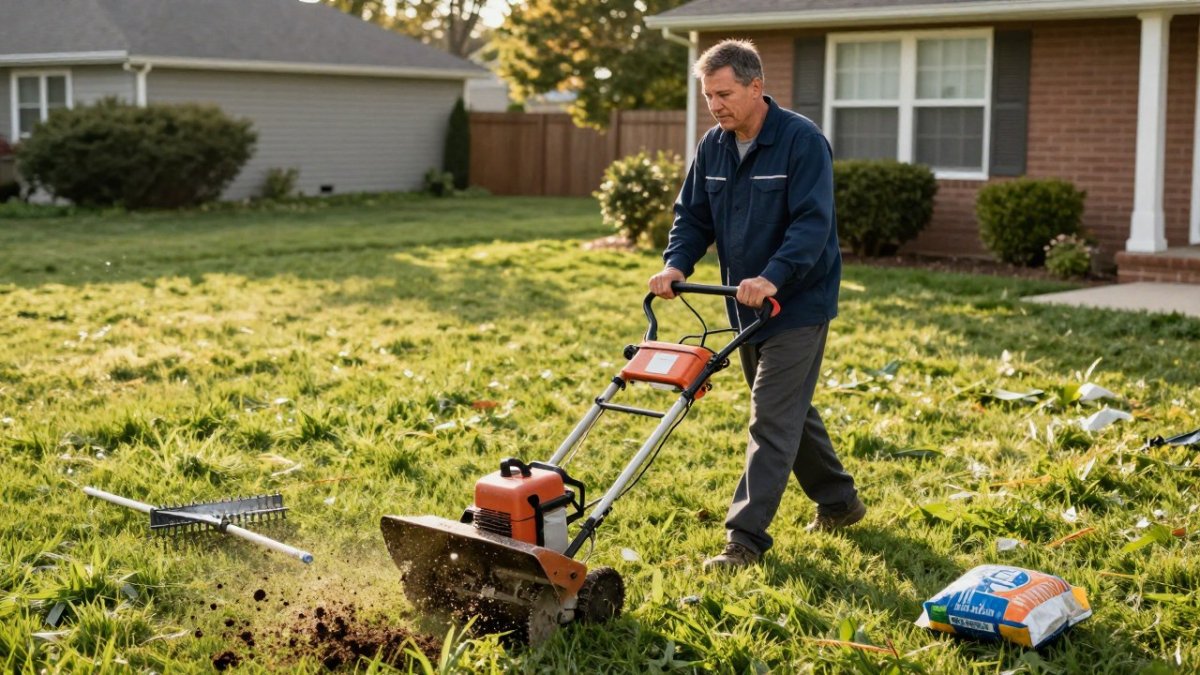
Use the waiting period to prepare rather than to seed. Rake out dead weed material, test the soil, and plan the repair so the day the interval passes you can seed immediately.
- Remove dead weeds and debris so bare soil is exposed.
- Loosen the top inch of soil and mix in compost where the soil is hard or worn.
- Choose a seed that matches the existing lawn and the light level of the patch.
- Check the label again for any restriction on tilling or disturbing treated soil.
If the label interval is long and the bare patch is large, sod is an option only after the same interval passes, because sod roots into the same treated soil.
The Best Time to Repair a Lawn
The best time to repair a lawn is early fall for cool-season grasses, and late spring for warm-season grasses. Fall wins in most northern lawns because the soil stays warm while the air cools.
Spring works too, but you fight more weeds and summer heat. Repair timing matters as much as the seed itself. Seed planted in the wrong season often fails, no matter how well you water.
Tools and Materials You'll Need for Lawn Repair
Gather these before you start, so you are not running to the store mid-job:
- Hand rake or garden rake
- Garden trowel or hand cultivator
- Grass seed suited to your lawn
- Topsoil or compost
A spreader helps on bigger patches. For small spots, your hands work fine.
Step-by-Step: Building a Lawn Repair Patch
Here is the process we use for a lawn repair patch, start to finish.
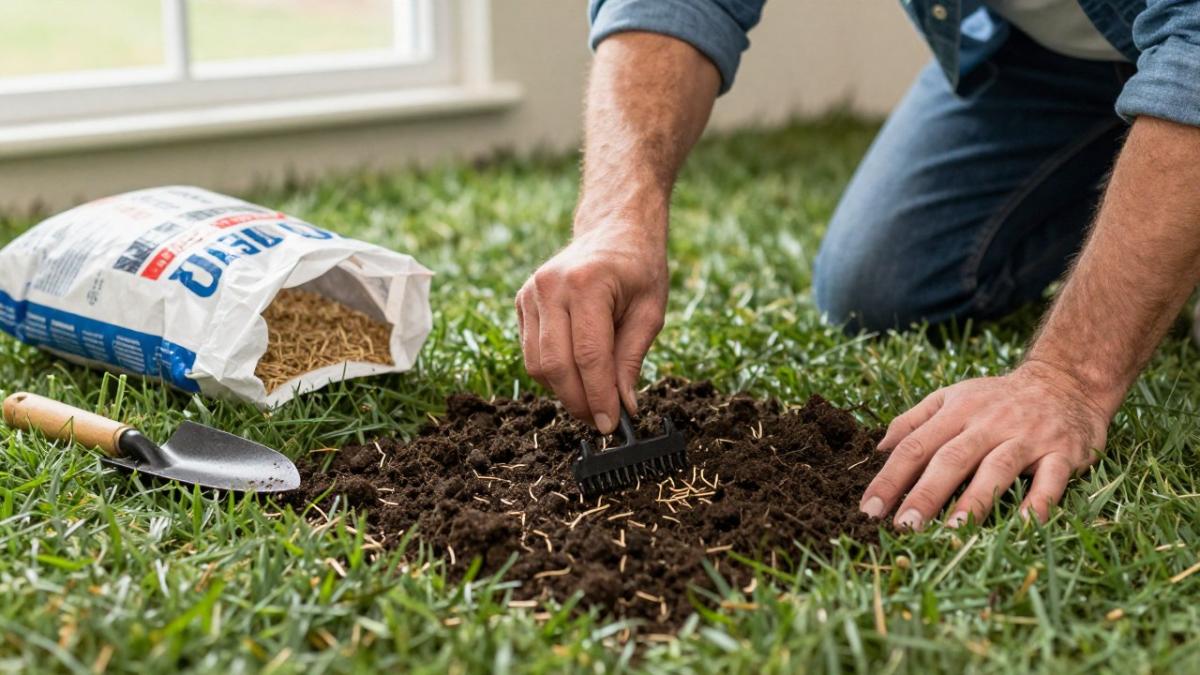
- Clear the dead grass. Rake out brown, loose material until you reach soil.
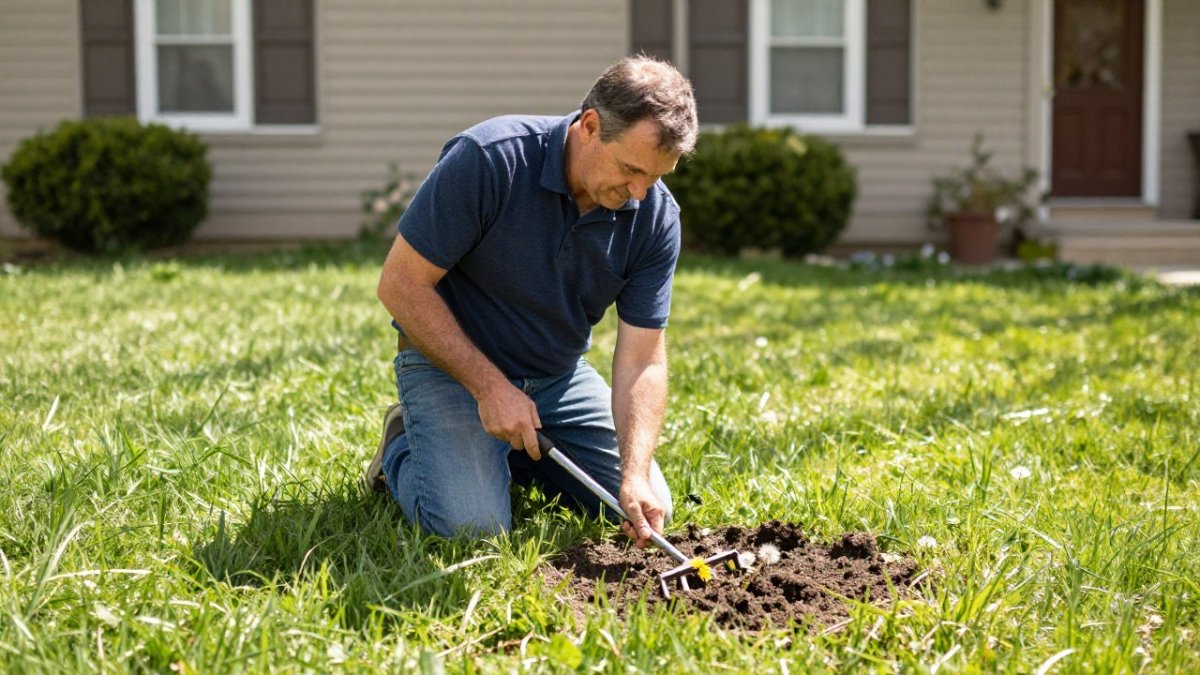
- Loosen the soil. Scratch the top inch with a rake or cultivator so roots can push down.
- Add topsoil or compost. Spread a thin layer and mix it into the top inch.
- Apply seed evenly. Aim for light, even coverage, not clumps.
- Press the seed in. Walk over it or roll it so seed touches soil. This seed-to-soil contact is what makes it grow.
- Water gently. Keep the top inch moist but not soaked.
Choosing the Right Grass Seed or Soil Amendment
Match the seed to the grass you already have. A sun-and-shade mix blends into most lawns. For a deeper look at which types suit our climate, see our guide to best grass types for Cleveland.
If your soil is hard or worn out, compost is the cheapest fix. Spread it, work it in, and the seed has something to root into.
How to Fix Large Bare Spots in Lawn
Big bare areas need more than a light sprinkle of seed. For spots wider than a few feet, treat it like a small renovation.
- Remove all dead material and debris
- Till or turn the top few inches
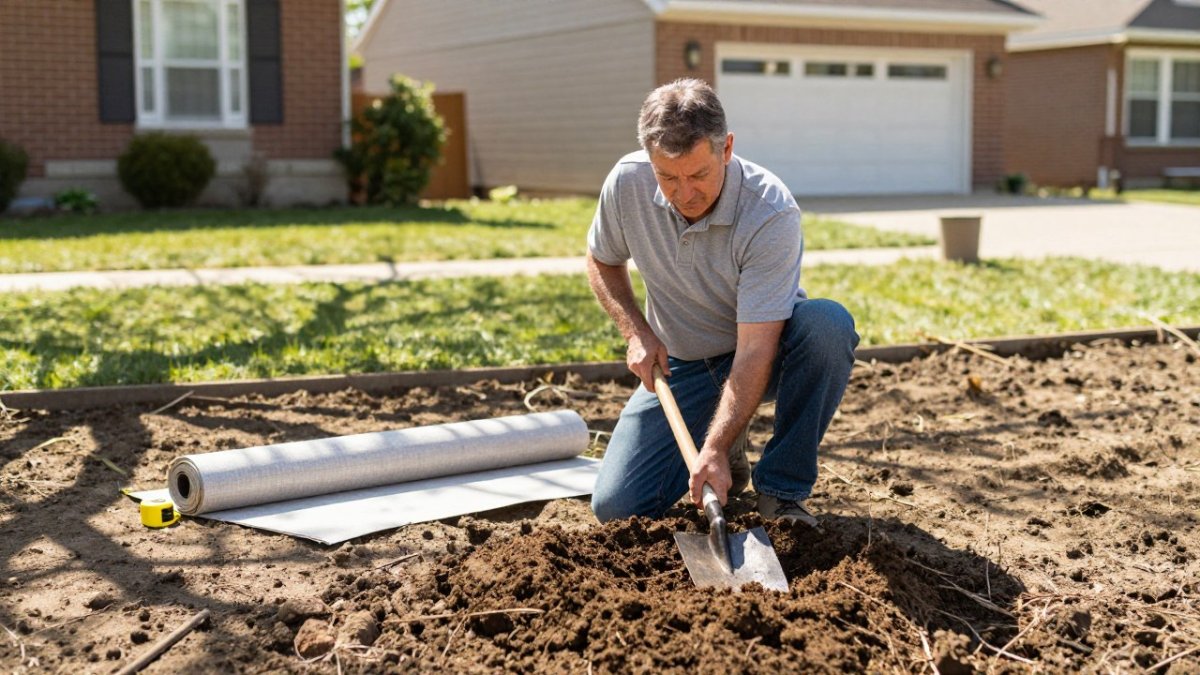
- Add a layer of topsoil and level it
- Seed heavily, then cover with straw
If the spot is very large or erosion-prone, sod gives instant cover. Sod costs more but skips the germination wait. For patchy, dying grass across a wider area, our lawn repair guide walks through the full recovery plan.
Watering, Germination, and Aftercare
New seed needs steady moisture. Not flooding, just damp. The goal is to keep the top inch of soil moist from the day you seed until the new grass is tall enough to root deeper. Letting the surface dry out for even a day can stop germination.
A Practical Watering Schedule
Water lightly and often at first, then less often and deeper as the grass matures. A common pattern that works for most home lawns:
- Days 1-14: water lightly once or twice a day, enough to keep the surface damp but not puddled. Early morning is the best time; a second light pass in early afternoon helps on hot, windy days.
- Days 15-21: as grass begins to show, shift to once a day and water a little deeper so roots follow the moisture down.
- Weeks 4-6: taper to two or three deep waterings per week, soaking the top few inches and then letting the surface dry slightly between cycles.
Watch out: a single heavy watering can wash seed into low spots or off a slope. Light, frequent passes keep seed in place; a hose-end sprayer set to a fine mist or a watering can with a rose head works better than a full-pressure hose.
Germination Timeline
Germination usually takes one to three weeks, depending on the grass type and weather. Cool-season grasses generally sprout faster in mild soil; warm-season grasses can take longer and need warmer soil to start. Expect the first green haze before the patch looks like lawn, new seedlings are tiny and easy to miss at first.
- Keep foot traffic off the patch until the new grass is a few inches tall.
- Do not let pets dig or lie on the seeded area.
- Check moisture by hand: if the surface feels dry an inch down, water lightly.
Aftercare Once Grass Is Up
Aftercare decides whether the patch fills in or thins back out. Once the new grass is established:
- Water in the morning to reduce disease.
- Skip fertilizer until the new grass is established; young roots burn easily.
- Mow high, and never cut more than a third of the blade (Mowing Your Lawn | Lawns | Illinois Extension).
- Keep mower blades sharp so new grass is cut cleanly, not torn.
For a detailed schedule, follow our steps to a lawn watering schedule for new grass seed. If the patch was caused by a weed killer spill or overdose, our guide on fixing lawn damage from weed killer covers that recovery in depth.
New seed needs steady moisture, and the watering pattern shifts as the grass matures.
| Stage | Watering | Note |
|---|---|---|
| Days 1-14 | Lightly once or twice a day | Keep surface damp, not puddled; early morning best |
| Days 15-21 | Once a day, a little deeper | Roots follow moisture down |
| Weeks 4-6 | Two or three deep waterings per week | Soak top few inches, let surface dry slightly |
| Germination | One to three weeks | Depends on grass type and weather |
Preventing Repeat Weed Invasion
Weeds come back to thin lawns. The best defense is thick, healthy grass that leaves no room for them.
- Fertilize on a schedule to keep grass dense
- Mow high and regularly
- Water deeply but less often
- Spot-treat weeds early, before they spread
For a full prevention plan, read our guide on preventing weeds in residential lawns. It pairs well with the repair work above.
A patchy lawn after weed removal is fixable, but timing and seed-to-soil contact decide whether it works. If you would rather hand it off, Ward's Lawn Care & Landscape Co. has served Greater Cleveland since 1986 with honest, dependable lawn care and fertilization.
Frequently Asked Questions
Will patchy grass come back after weed removal?
Sometimes, but not always. If the weeds were shallow-rooted and the surrounding grass is still healthy, it can spread back into thin areas on its own. Broadleaf weed killers and dense weed mats often leave bare soil behind, though, and that ground needs seed or sod to recover. Check for live crowns and green shoots before waiting. If a patch is mostly dead grass and bare dirt, plan a repair rather than hoping it fills in.
How long should you wait to reseed after using weed killer?
It depends on the product. Waiting periods vary by product, and the label is the reliable guide. Read the label and follow the stated interval exactly. If you used a granular weed-and-feed, check the bag for the reseeding restriction. When in doubt, wait the full period and confirm with a small test patch before committing seed to the whole lawn.
Should you reseed or use a lawn repair patch for bare spots?
Small spots, roughly under a foot across, often fill in from surrounding grass if you loosen the soil and keep it watered. Larger areas need a lawn repair patch: seed, topsoil, and consistent moisture. Sod is the fastest option for visible bare spots and slopes, but it costs more and needs more water to establish. Match the method to the patch size, slope, and how quickly you need the area to look finished.
What is the best time to repair a lawn?
In most of the Midwest, late summer to early fall is the best window. Soil is still warm for germination, air temperatures drop, and fall rain helps seedlings establish before winter. Spring is the second-best option, though summer heat and weeds make it harder. Avoid midsummer seeding unless you can water daily. Repairing in the right season does more for success than any product you can buy.