 how-to
9 Steps to Prep Your Yard for Synthetic Turf
Last Updated: November 7, 2026
Quick Summary
Preparing your yard for synthetic turf means removing the old lawn, excavating to the correct depth, building a compacted base, and setting a slope that drains water away. Skipping these steps leads to dips, bubbling seams, and puddles. Call 811 to mark buried utilities before any digging starts.
- Call 811 to have underground utility lines marked before digging.
- Test soil by digging a 12-inch hole and watching how fast it drains.
- Plan a slope of about one inch per eight feet of run toward drainage.
- Compact the base in layers, typically 3 to 4 inches for pedestrian lawns.
- Get a written estimate that breaks out excavation, base, drainage, and turf costs.
Table of Contents
- What Yard Preparation Involves Before Synthetic Turf Goes Down
- Assess Your Site, Soil Type, and Drainage Before You Dig
- How to Install Artificial Grass on Soil Step by Step
- How to Prepare Ground for Artificial Turf: Base, Compaction, and Grade
- Artificial Turf Installation Instructions: Edging, Laying, and Seaming
- What Artificial Turf Installation Cost Depends On
- Your Pre-Install Checklist Before Booking Ward's Lawn Care & Landscape Co.
- Frequently Asked Questions
Preparing your yard for synthetic turf is the step that decides whether your new lawn lasts ten years or ten months. Most failures trace back to shortcuts taken before the turf ever arrives. Ward's Lawn Care & Landscape Co. has served Greater Cleveland since 1986, and the same ground-level rules apply to synthetic turf projects of any size.
A synthetic turf base has to do three jobs. It must stay level, drain water away from the surface, and hold its shape under foot traffic and mowing-free years of use. Each job depends on what happens below the turf. The synthetic grass blocks soil contact, so water that cannot soak through the surface has to move sideways or down through the base.
A 2025 study in Sustainability describes synthetic turf as semi- or fully impervious, noting that the synthetic grass can limit water infiltration by blocking soil contact Artificial Turf Versus Natural Grass: A Case Study, published in Sustainability. Treat drainage and base depth as the core of the project, not an afterthought.
- Mark the area and measure the yard
- Call 811 to locate buried utility lines
- Remove existing grass and organic matter
What Yard Preparation Involves Before Synthetic Turf Goes Down
Yard preparation is everything before the turf roll arrives: removing the old lawn, digging to the right depth, building a compacted base, and setting the grade so water runs off instead of pooling.
Think of the job as a layered system: turf on top, a thin infill layer keeping fibers upright, the base carrying the weight, and native soil underneath.
Preparation often takes longer than the turf installation itself and is the part homeowners cannot see once the lawn is in.
Assess Your Site, Soil Type, and Drainage Before You Dig
Walk the yard after a heavy rain. Note where water collects, how long it stays, and whether it drains toward the house. Standing water is the clearest sign the grade or soil needs attention. Take photos and mark low spots with flags.
Read your soil type
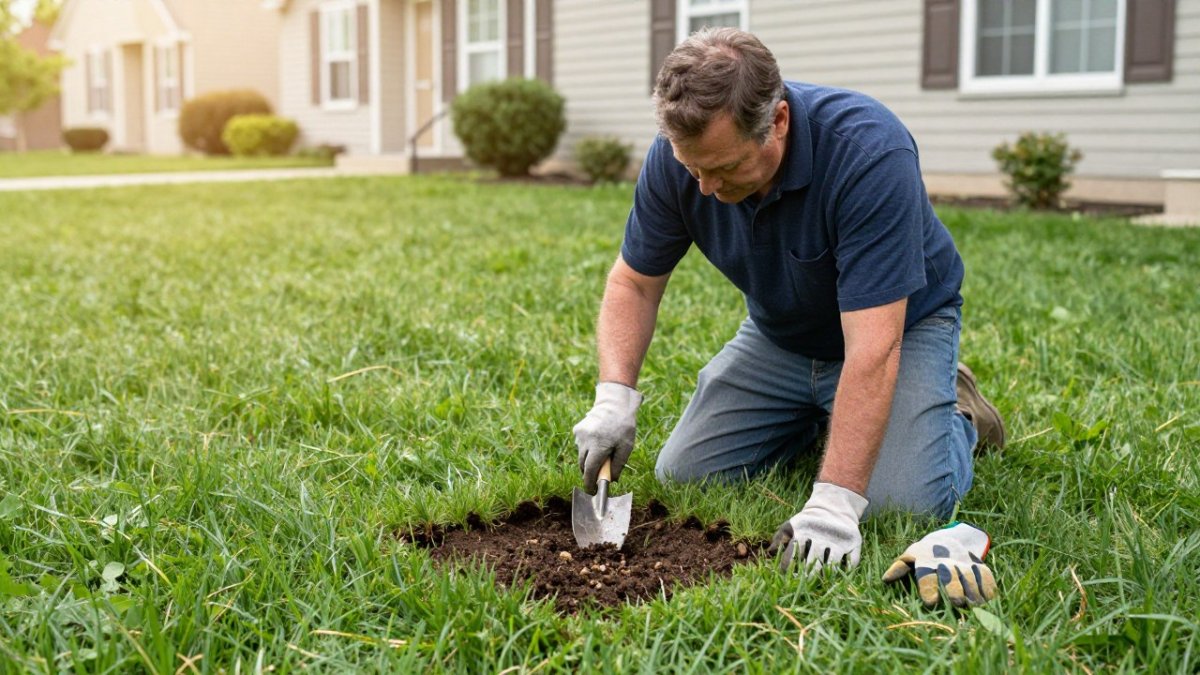
Dig a small test hole about 12 inches deep and squeeze a handful of soil. The way it holds together tells you a lot:
- Clay: holds its shape, feels slick, drains slowly. It needs a deeper, better-draining base and often a drainage outlet, because water will sit on top of clay rather than soak away.
- Sandy: crumbles and drains quickly but shifts under load. It needs firm, layered compaction and sometimes a geotextile separation layer so the base does not migrate into the subsoil.
- Loam or mixed soil: usually the easiest to work with, but still needs proper compaction and grade.
Clay soil is common in many yards, which makes drainage planning especially important. If your test hole fills with water overnight, treat the site as poorly draining and plan a drainage layer or outlet before you excavate.
Measure the yard and map the water paths
Measure the yard and sketch the shape, noting slopes, low spots, patios, and downspout direction. Downspout water pointed toward the turf can undermine a base, so reroute it to a splash block or gravel trench at least a few feet from the turf edge.
Troubleshoot drainage and slope
Decide where water will go before you dig. Plan a slope of about one inch per eight feet of run, and confirm that the low edge has a clear path to a storm drain, a gravel trench, or a planting bed that can absorb it.
Common drainage problems and fixes:
- Low spots in the middle of the yard: fill and re-grade before adding base, rather than trying to level with base material alone.
- Water pooling near the house: increase the fall away from the foundation and check that the turf edge does not dam water against the wall.
- Runoff from a neighbor or a slope above: consider a shallow swale or a gravel French drain along the uphill edge.
Watch out: a slope that looks fine dry can pool water once the base and turf are in place, so test with a hose before committing to the final grade.
Protect utilities, irrigation, and drainage systems
Before any digging, call 811 to have underground utilities marked. In the United States, this free service locates gas, electric, water, and communication lines before excavation begins (811 Before You Dig).
Also map sprinkler heads, irrigation lines, and drainage pipes so you do not cut or crush them.
Watch out: hitting a buried gas or electric line can cause serious injury, so never dig in an unmarked area.
How to Install Artificial Grass on Soil Step by Step
This section walks through the physical work on soil. Follow the order below, because each step depends on the one before it.
Check for Buried Utility Lines and Irrigation
Before any digging, call 811 to have underground utilities marked. In the United States, this free service locates gas, electric, water, and communication lines before excavation begins. Wait for the marks to be placed, and respect them.
Watch out: hitting a buried gas or electric line can cause serious injury, so never dig in an unmarked area.
Remove Existing Grass and Excavate to the Correct Depth
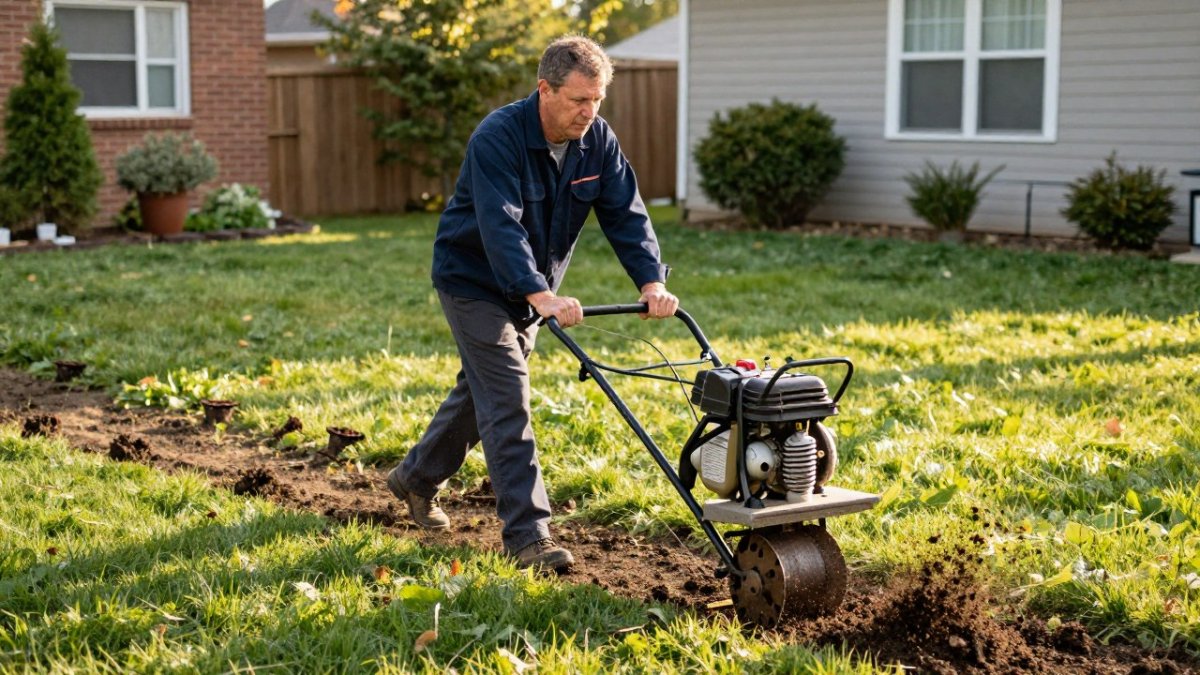
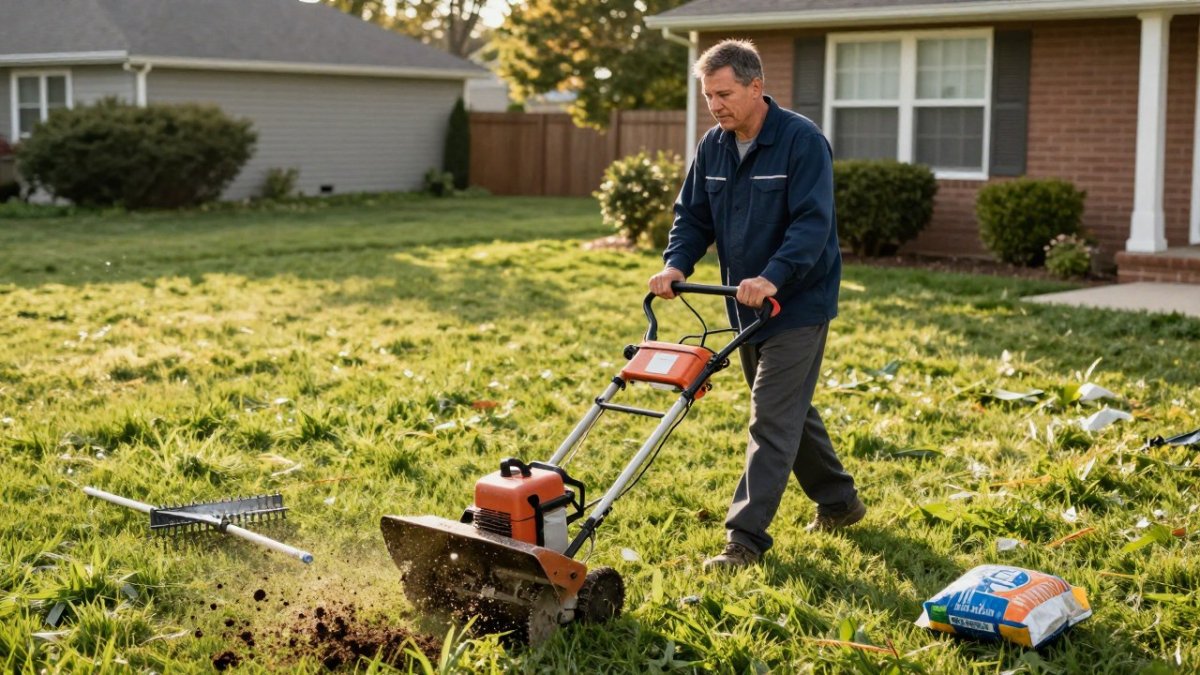
Remove the existing grass, roots, and thatch. A sod cutter or sharp spade works well for smaller areas.
Next, excavate to the correct depth. Check depth in several spots with a measuring stick and keep the surface even.
Keep the removed soil and debris in a separate pile so you can haul it away cleanly. Organic material should go to a yard waste site, not into your new base.
How to Prepare Ground for Artificial Turf: Base, Compaction, and Grade
This is the most important stage. A base that is not compacted enough will sink, and one that is not level will show every dip through the turf. The numbers below are what most installers work from on residential pedestrian lawns; adjust for your soil and use pattern, but write the targets down before you start.
Set the finished grade and slope
Set the finished grade using stakes and a string line to mark final turf height, and check the slope toward your drainage point. Many installers aim for a modest fall across the lawn, enough to move surface water without making the lawn feel tilted.
Check the slope with a long straightedge and line level at several points, and record the readings so you can compare them after compaction, since the base will settle slightly.
Excavation and base depth targets
For a typical residential lawn, plan the layers like this:
- Turf and infill: roughly 1 to 1.5 inches of finished height above the base.
- Base aggregate: typically 3 to 4 inches of compacted crushed stone for pedestrian use, and 4 to 6 inches where traffic is heavy or the subsoil is weak.
- Excavation depth: base depth plus turf and infill height, usually about 4 to 5.5 inches total for a standard lawn.
On clay or poorly draining subsoil, a deeper base and a drainage layer or drain outlets may be needed. On sandy or loose soil, plan more compaction passes, because sandy subgrades shift more before they lock up.
Lay the weed barrier
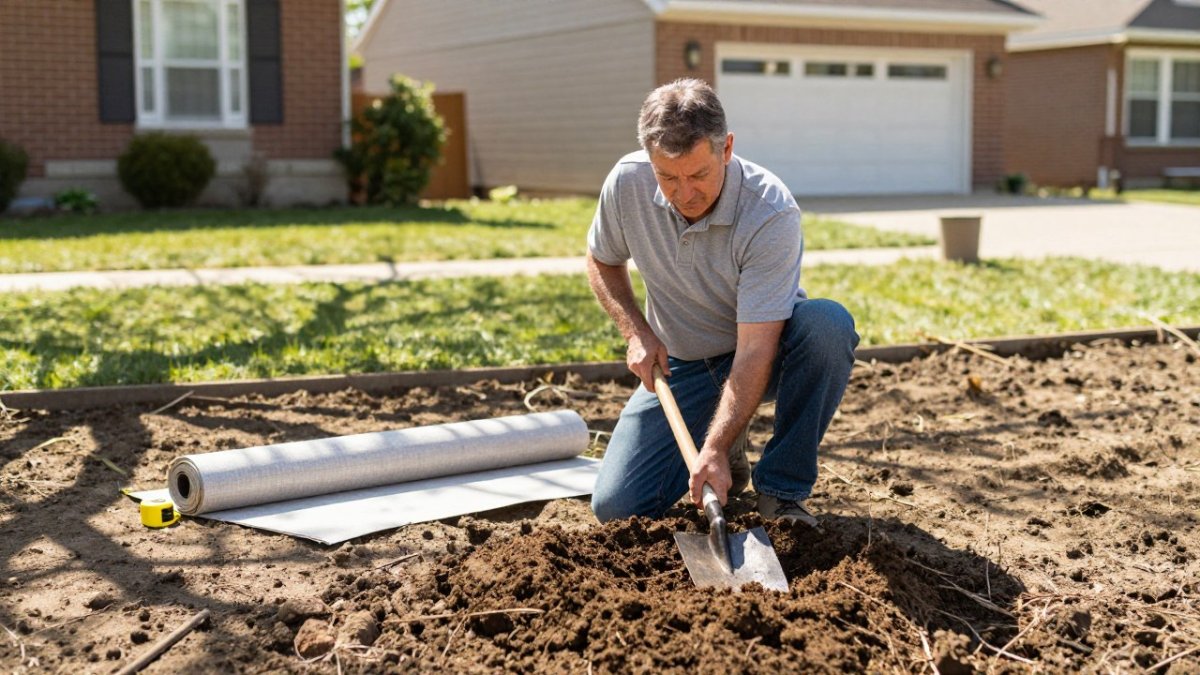
Lay a weed barrier or geotextile fabric over the excavated soil. This blocks weeds from growing up through the turf and keeps the base material from mixing into the soil below. Overlap seams and keep the fabric taut; wrinkles can telegraph through a thin base.
Spread and compact the base in lifts
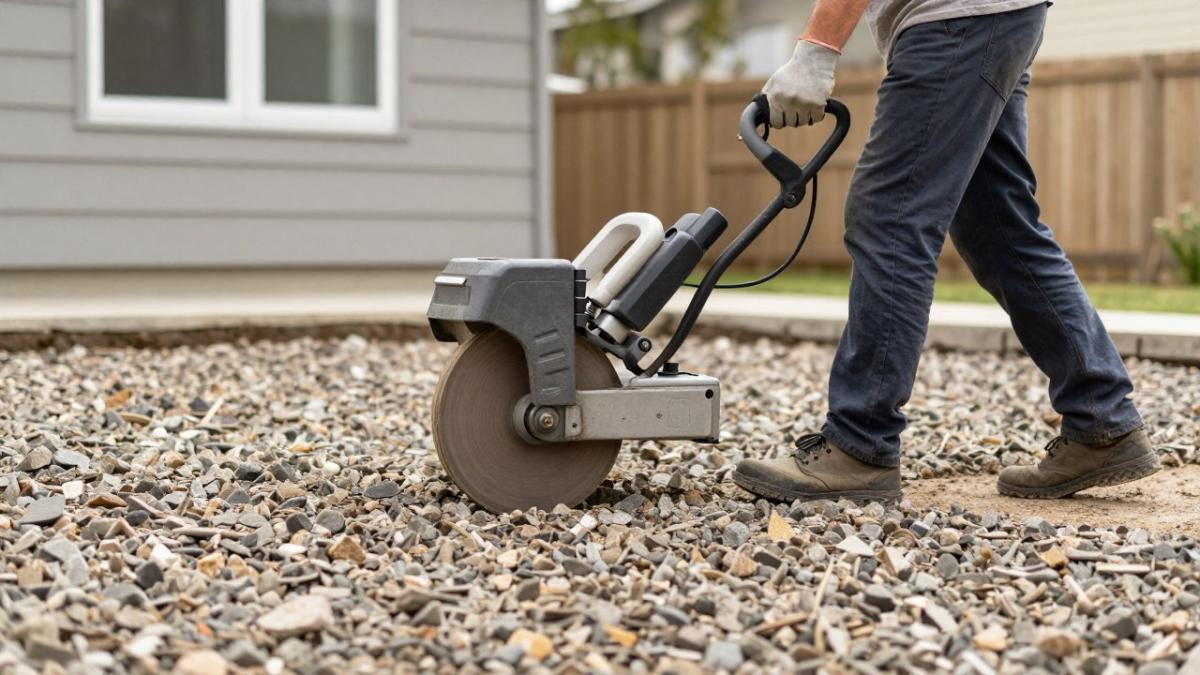
Add crushed stone or decomposed granite. Spread it in layers and compact each lift before adding the next. Repeat until the base reaches the planned depth.
Compaction checkpoints to verify as you go:
- Each lift should be compacted until the surface no longer shows footprints or shifts under the compactor.
- A well-compacted base should feel firm and stable under foot, not spongy.
- Recheck the grade with a long straightedge after every lift, fixing high or low spots before you move on.
Watch out: a base that looks solid after one pass may still settle under the weight of the turf and foot traffic, so compact each layer twice and recheck the grade afterward.
Quality-control inspection before the turf goes down
Before you unroll any turf, run this inspection:
- Firmness: walk the whole base; it should not give or feel soft anywhere.
- Smoothness: drag a straightedge or board across the surface and look for rocking or gaps.
- Grade: confirm the slope runs consistently toward the drainage point, with no low spots that will hold water.
If any check fails, fix it now. Reworking a base after the turf is seamed and infilled costs far more than another pass with the compactor.
Artificial Turf Installation Instructions: Edging, Laying, and Seaming
Once the base is level and compacted, install perimeter edging. Edging holds the turf in place and keeps the infill from spilling out.
For seams, use a manufacturer-approved seam tape and adhesive. Lay the tape under the seam, apply adhesive, and press the edges together.
Finish by securing the turf to the edging with nails or staples, brushing the fibers upright, and adding infill as the manufacturer specifies.
What Artificial Turf Installation Cost Depends On
Pricing depends on yard size, excavation depth, base material, drainage work, turf grade, and site access or obstacles, so pricing varies from yard to yard. Plan your total spending with a backyard landscaping budget guide.
The biggest cost driver is usually the base. A yard with heavy clay, poor drainage, or a steep slope needs more excavation, stone, and compaction than a level yard with good soil.
To keep costs predictable, get a written estimate that breaks out excavation, base material, drainage, edging, turf, and infill. Learn how to avoid surprise landscaping costs during installation.
Your Pre-Install Checklist Before Booking Ward's Lawn Care & Landscape Co.
Before you call for a quote or start the work yourself, go through this checklist to ask better questions and avoid surprises. Review the questions to ask when hiring a landscape designer.
- Walk the yard after rain and note standing water
- Measure the area and sketch the shape and slopes
- Identify soil type, especially whether it is clay
We are happy to discuss your yard and your project with you. Contact Ward's Lawn Care & Landscape Co. to start a conversation about your synthetic turf project and get your yard ready to last.
Frequently Asked Questions
What should I put down before artificial turf?
Most installers put down a weed barrier or geotextile fabric over the excavated soil, then a compacted base of crushed stone or decomposed granite. The base carries most of the load and drains water away from the surface. Base depth depends on the soil and drainage conditions of the site, with a thicker layer where soil is soft or drainage is poor. Clear all vegetation and organic matter first, since roots and decaying material will eventually push up through the turf or shift the grade.
Can I lay artificial grass directly on soil?
You can install artificial grass on soil, but you should not lay it directly on bare soil without excavating and building a base. Soil settles, holds water, and shifts with freeze-thaw cycles, which causes dips, puddles, and seams that separate. Excavate the area, install a weed barrier, and compact a crushed-stone base before laying the turf. Clay soils need careful drainage planning because they retain water.
How do I prepare a backyard for artificial turf?
Start by checking the site for buried utility lines, including gas, electric, water, and irrigation, and call 811 before digging. Remove existing grass and roots, excavate to the depth your base requires, and set the finished grade with a slight slope so water drains away from the house. Install a weed barrier, spread and compact the base in lifts, then screed it smooth. A clean, level, well-drained base is the single biggest factor in how long the turf lasts and how it looks.
How much does it cost to install 1000 square feet of artificial turf?
Installation cost for 1,000 square feet depends on excavation depth, base material, turf grade, drainage work, and site access, so pricing varies from project to project. Ward's Lawn Care & Landscape Co. does not publish a standard rate for this work. For a quote specific to your yard, contact Ward's Lawn Care & Landscape Co. Visit our website or contact us for a quote specific to your yard.