 how-to
How to Build a Lawn Aeration and Fertilization Schedule
Last Updated: November 11, 2026
Quick Summary
A lawn aeration and fertilization schedule works best when aeration comes first, then fertilizer, in the window when grass is actively growing. For cool-season lawns, that is usually early September for aeration and overseeding, followed by a final slow-release feeding in late October or November.
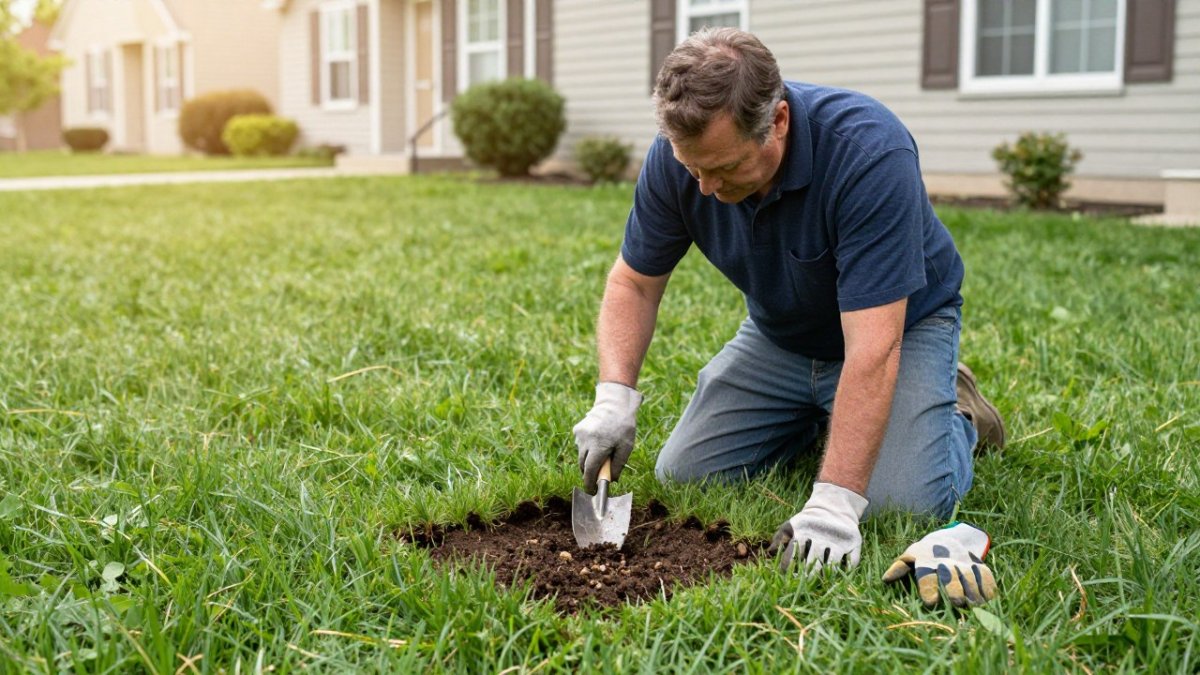
- Run a screwdriver test on moist soil; if it stops after an inch or two, the lawn is compacted.
- Aerate when soil is moist, not dry or saturated, and mow a little shorter beforehand.
- Overseed right after aeration so seed drops into the open holes.
- Follow the label on pre-emergent herbicide, because it can block new seed from sprouting.
- Use a slow-release nitrogen product for fall feeding, and water lightly after applying.
Table of Contents
- Why Timing Matters for Lawn Aeration and Fertilization
- Step 1: Assess Your Lawn for Compaction and Thin Growth
- Step 2: Gather the Right Aerate Lawn Tools and Prepare the Turf
- Step 3: Build a Month-by-Month Lawn Care Calendar
- Step 4: Choose the Best Fertilizer After Aeration
- Step 5: Sequence Aeration, Overseeding, and Fertilizer Correctly
- Scheduling Your Next Aeration and Fertilization Visit with Ward's
- Frequently Asked Questions
Why Timing Matters for Lawn Aeration and Fertilization
A lawn aeration and fertilization schedule works best when each task lands at the right point in the growing season.
Timing matters because aeration relieves compaction and fertilizer feeds growing roots. Both work only when the grass is actively growing.
Here is what the timing decision comes down to:
- Soil condition: Compacted or heavy clay soil needs aeration more than loose soil does.
- Weather: Drought, heat, and saturated soil all change when you should work the lawn.
- Task order: Aeration usually comes before fertilizer, and overseeding usually follows aeration.
Watch out: Fertilizing a lawn that is heat-stressed or drought-stricken can burn the grass. Water it first and wait for cooler weather.
Step 1: Assess Your Lawn for Compaction and Thin Growth
Before you aerate or fertilize, check what the lawn actually needs. Start with a simple screwdriver test.
Look for these signs:
- Water pools or runs off instead of soaking in
- Thin patches in high-traffic areas, such as paths or near the driveway
- Grass that wilts quickly during dry spells
- Thatch layers thicker than half an inch
- Bare spots where the soil looks hard and crusty
Next, note where the lawn grows thin. Thin areas in sun usually need more fertilizer and possibly overseeding.
A soil test from a university extension office gives you the most reliable picture of nutrient needs (soil testing?).
Common mistake: Skipping the soil test and buying a generic fertilizer.
Step 2: Gather the Right Aerate Lawn Tools and Prepare the Turf
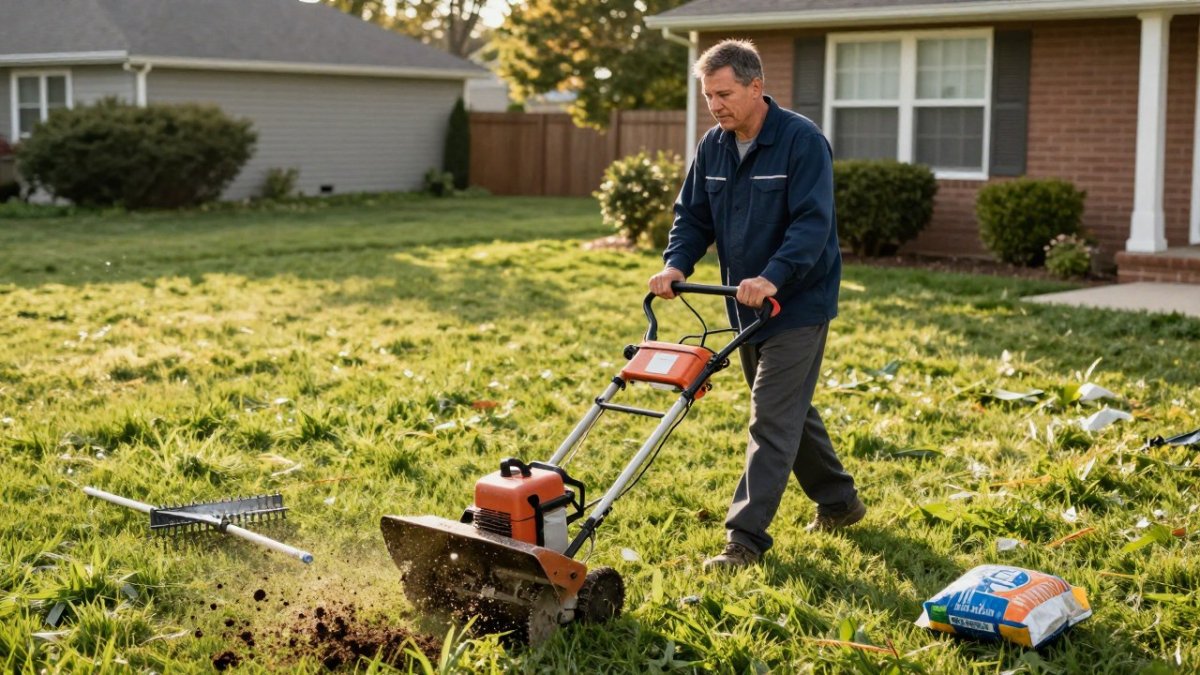
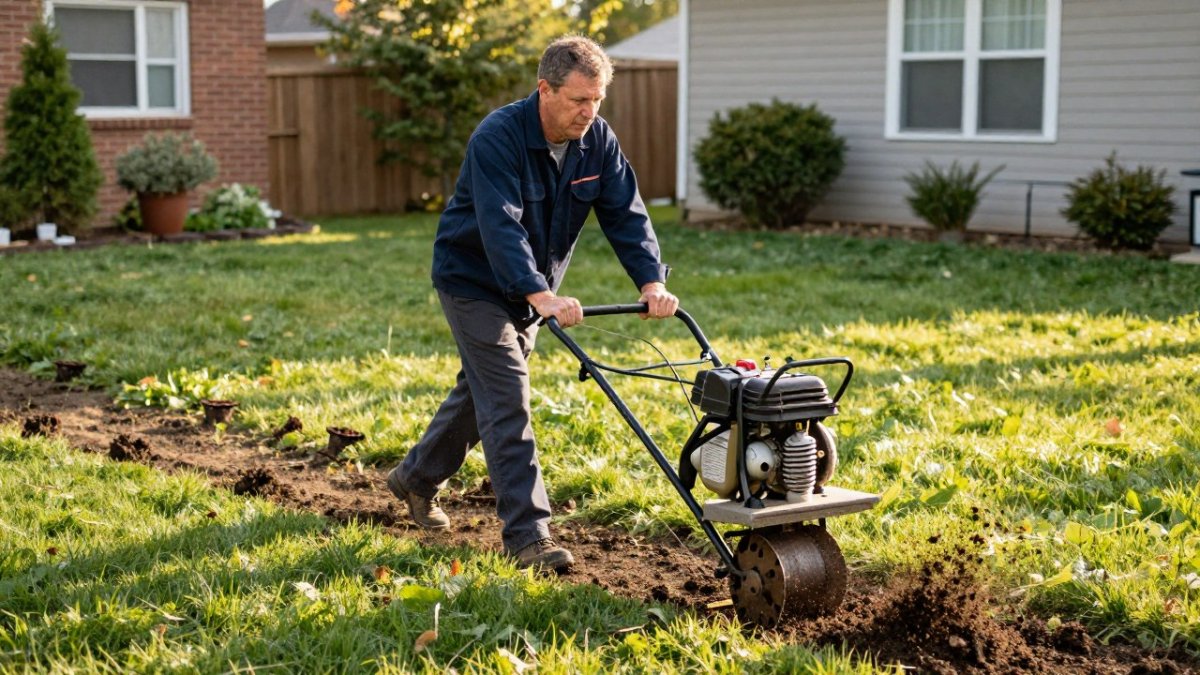
You can aerate with a rented machine or a hand tool. A core aerator pulls small plugs of soil out of the lawn.
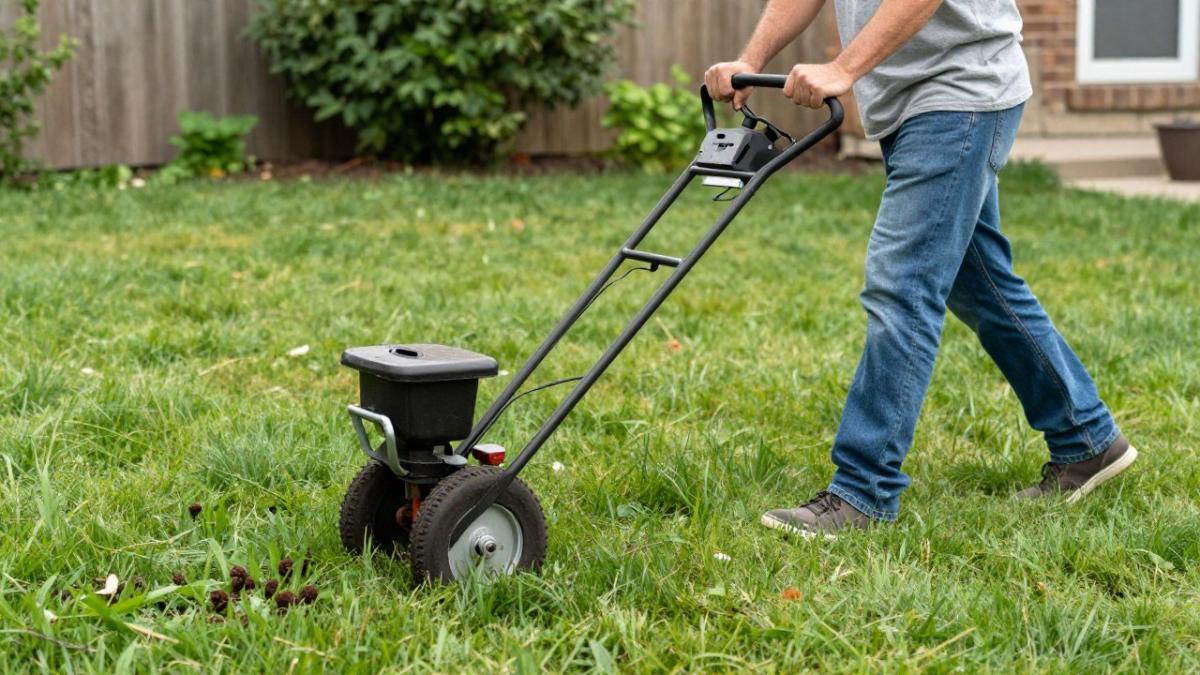
Here is what most homeowners need:
- A rented walk-behind core aerator, which pulls plugs about 2 to 3 inches deep
- Lawn mower set to a low cutting height for the final mow before aeration
- Garden hose and sprinkler for watering the lawn beforehand
- A rake or lawn sweeper to break up and collect the plugs afterward
- Marking flags to avoid sprinkler heads and buried lines
Prepare the turf in the days before you aerate. Mow a little shorter than usual, then water the lawn deeply so the soil is moist but not soggy.
Space passes about 3 inches apart, and make a second pass at a right angle to the first for denser coverage on heavily compacted lawns.
Step 3: Build a Month-by-Month Lawn Care Calendar
A month-by-month lawn care calendar keeps each task in its proper window, but a single national calendar will steer you wrong. The schedule below is built around grass type and climate zone, because a cool-season lawn in a northern climate and a warm-season lawn in a southern climate follow opposite calendars. If you are still deciding whether seasonal aeration and overseeding are worth adding to your schedule, check that guide first.
Cool-season lawns (tall fescue, Kentucky bluegrass, perennial ryegrass)
Cool-season grasses grow hardest in early fall and again in spring, and they slow down in summer heat. The fall window is the most important one of the year.
| Month | Task | Why It Fits |
|---|---|---|
| March to early April | Light cleanup, first mow, soil test if you have not tested in 2 to 3 years | Soil is often still cold and wet; avoid heavy fertilizer |
| Late April to May | Mow high (3 to 3.5 inches), spot-treat weeds, light feeding only if the lawn is pale | Grass is actively growing but summer stress is coming |
| June | Water deeply once or twice a week, monitor for stress | Heat begins to slow growth |
| July to August | Avoid aeration and heavy fertilizer; water only as needed | Heat and drought stress the grass |
| Early September | Aerate, overseed, then fertilize with a starter product | Best window for cool-season grass |
| Late October to November | Final fertilizer application with slow-release nitrogen | Roots keep growing as soil cools |
Warm-season lawns (Bermuda, zoysia, St. Augustine, centipede)
Warm-season grasses green up late, grow hardest in summer, and go dormant after the first fall frost. Their aeration and feeding windows sit in late spring and summer, not fall.
| Month | Task | Why It Fits |
|---|---|---|
| March to April | Cleanup, soil test, wait for full green-up | Grass is still waking up |
| Late May to June | Aerate and fertilize as the lawn reaches active growth | Soil is warm and grass is growing hard |
| July to August | Second light feeding if needed, water deeply | Peak growth period |
| September | Last feeding of the season, stop nitrogen as growth slows | Late nitrogen can push tender growth before frost |
| October to February | No aeration or fertilizer; let the lawn go dormant | Dormant grass does not recover from disturbance |
Adapt the calendar to your climate zone
Use the USDA Plant Hardiness Zone map as a starting point, then shift the dates. A common pattern is that lawns in warmer zones within a grass type's range start spring tasks two to four weeks earlier and finish fall tasks two to four weeks later than lawns in cooler zones. Coastal lawns with mild winters may keep growing into November, while inland lawns may be dormant by early October.
Decision rules for weather and lawn condition
- Drought or heat wave: Postpone aeration and heavy fertilizer until temperatures moderate and the lawn has been watered. Aerating dry, heat-stressed grass can kill it.
- Saturated soil: Skip aeration on wet ground. The tines smear soil and damage structure instead of pulling clean plugs.
- Newly established lawn: Wait until the lawn has been mowed at least three or four times before aerating heavily or applying strong products.
- Recent sod or seed: Follow the installer's guidance; newly laid sod is fragile and does not need aeration in its first season.
Keep weed control on its own track. Pre-emergent herbicides go down before weed seeds sprout, so timing matters more than the rest of the calendar. Read the label for the product you choose, and do not apply it right before or after overseeding unless the label allows it.
Watch out: A heavy spring fertilizer application can push fast top growth at the expense of roots, leaving the lawn weak in summer heat.
Step 4: Choose the Best Fertilizer After Aeration
The best fertilizer after aeration is usually a slow-release nitrogen product applied in early fall.
Choose based on these points:
- Slow-release nitrogen: Feeds the lawn steadily for weeks and lowers the risk of burn.
- Quick-release nitrogen: Greens the lawn fast, but it can burn if you apply too much.
- Phosphorus: Use only if your soil test shows a shortage.
- Potassium: Helps with stress tolerance and is often included in complete fertilizers.
Read the bag. The first number is nitrogen, the second is phosphorus, and the third is potassium. Follow the label's rate for square footage, and never double up to speed results.
Common mistake: Overapplying fertilizer and watering too little afterward. Water lightly after you spread the product so it reaches the root zone without washing into the street.
Step 5: Sequence Aeration, Overseeding, and Fertilizer Correctly
The order of operations matters as much as the calendar. Get the sequence wrong and you can waste seed, burn new grass, or cancel out your own weed control. Follow this order for the best results, and use the waiting periods below to avoid the most common mistakes.
- Aerate the lawn when the soil is moist and the grass is actively growing.
- Overseed right after aeration, so seed drops into the open holes and makes good soil contact.
- Water lightly once or twice a day to keep the top half inch of soil moist while seedlings establish.
- Fertilize with a starter product at seeding, or wait until the new grass has been mowed at least twice before applying a full feeding.
- Hold off on pre-emergent herbicide if you are overseeding, because it can stop new seed from sprouting.
Waiting periods that matter
- After aeration before fertilizing: You can fertilize the same day as aeration, but water lightly first so the product reaches the root zone without washing away.
- After overseeding before mowing: Wait until the new grass reaches about 3 inches tall, then mow high with a sharp blade.
- After broadleaf weed control before overseeding: Wait several weeks, or as long as the product label recommends, before putting down seed.
- After pre-emergent before overseeding: Most pre-emergent products block grass seed for weeks to months. Check the label; if you plan to overseed in fall, avoid a spring pre-emergent that carries a long residual.
- After fertilizing before heavy watering: Water lightly to move the product into the soil, but avoid a heavy soak that washes fertilizer into the street or storm drain.
Order-of-operations rules for weed control
Weed control runs on its own track and can conflict with seeding. A common pattern is to handle broadleaf weeds in spring or early fall when they are actively growing, then wait the label's interval before overseeding. Pre-emergent goes down before weed seeds sprout, so it belongs in early spring for summer annual weeds and in early fall for winter annuals, but only if you are not overseeding in that window.
Exceptions that override the sequence
- Drought or heat: Hold off on aeration and seeding until temperatures and moisture improve.
- Saturated soil: Skip aeration on wet ground, because it smears the soil and damages structure.
- New lawns: Wait until a new lawn is well established before aerating heavily or applying strong products.
- Weed control already applied: If you have put down a pre-emergent, do not overseed until the label's residual window has passed.
Watch out: Overseeding too soon after a pre-emergent application is one of the most common reasons fall seeding fails, the herbicide does exactly what it is designed to do and stops your new grass seed from sprouting.
Scheduling Your Next Aeration and Fertilization Visit with Ward's
If the timing and steps above feel like too much to manage, Ward's Lawn Care & Landscape Co. can handle it for you. Learn more about our company and experience.
We offer free estimates, and clients who hire us for multiple services can qualify for additional discounts. Contact Ward's Lawn Care & Landscape Co. to set up your next visit.
Frequently Asked Questions
Is it better to fertilize before or after aerating?
Aerate first, then fertilize. Aeration pulls soil plugs and opens channels so fertilizer can reach the root zone instead of sitting on the surface. Applying fertilizer afterward lets nutrients move into those openings, which improves uptake. Wait a few days after aerating before applying, and water lightly afterward to help the product settle into the soil. Avoid heavy fertilizer applications immediately after aerating, since the turf is still recovering from the stress of the process.
What is the best month to aerate a lawn in Cleveland?
For cool-season grasses common in Northeast Ohio, early fall is generally the best window, typically from late August through September, when soil is still warm and grass is actively growing. Early spring aeration can also work, but it should happen before the grass is under heavy stress from summer heat. Timing depends on soil moisture and weather, so aim for soil that is moist but not saturated.
Should you fertilize after aerating and overseeding?
Yes, but timing matters. Overseed right after aerating so seed contacts the exposed soil, then apply a starter fertilizer designed for new seedlings at the time of seeding or shortly after. Keep the seedbed consistently moist until new grass is established. A heavy nitrogen application can burn young seedlings, so follow label rates carefully and avoid over-applying. Ask for a soil test if you are unsure what nutrients your lawn needs.
What not to do after aerating a lawn?
Avoid mowing too soon, heavy foot traffic on wet soil, and applying pre-emergent herbicide without checking label waiting periods, since it can interfere with seed germination. Do not leave soil plugs to dry on the surface for long periods if you can break them up with a mower or rake. Skip heavy fertilizer applications until the lawn has begun to recover. Water as needed to keep the top inch of soil moist during recovery.