 how-to
How to Prevent Common Lawn Pests in Small Yards
Last Updated: November 7, 2026
Quick Summary
Prevent lawn pests in small yards by fixing mowing height, thatch, and deep, infrequent watering first, then scouting on a seasonal calendar and treating only patches that pass a damage threshold. Keep fence lines clean, encourage predators, and spot-treat rather than spraying the whole lawn.
- Mow no more than one third of the blade at a time to shade soil and hide pest eggs.
- Run a ten-minute tug, drench, cut, or blade test before buying any treatment.
- Spot-apply preventive grub control only where past damage was heavy, after a cut test.
- Apply beneficial nematodes to moist soil in the evening and water lightly afterward.
- Call a professional when damage returns after two rounds of DIY treatment.
Table of Contents
- Why Small Yards Face Bigger Pest Pressure
- Types of Lawn Bugs You Will Actually See in a Small Yard
- Signs of Lawn Pest Infestation: Symptom-Led Identification
- Step 1: Fix Mowing Height, Thatch, and Watering First
- Step 2: Build a Seasonal Prevention Calendar
- How to Get Rid of Lawn Bugs Naturally
- DIY Lawn Pest Control: Thresholds, Safety, and Spot Treatment
- When to Bring in a Professional for Your Small Yard
- Frequently Asked Questions
Why Small Yards Face Bigger Pest Pressure
A small residential yard can lose its whole lawn to lawn pests that a large property would barely notice.
Here is why. A lawn pest population moves across a property edge to edge. In a big yard, insects spread out and damage stays thin.
Small yards also sit close to fences, driveways, and foundations. Those edges trap heat, hold moisture, and collect debris. All three make good pest habitat.
How Neighboring Properties and Fence Lines Change the Equation
Your lawn is not an island. Pests walk, crawl, and fly in from next door.
A neighbor with tall weeds, standing water, or a thick layer of thatch can seed your yard every season. Fence lines are the main highway. Chinch bugs and billbugs move along the base of a fence where grass stays warm and dry.
You cannot control the property next door. You can control your side of the fence:
- Keep a clean, mowed strip along the fence line
- Remove leaf litter and brush piles that hold moisture
- Avoid stacking firewood against the fence
- Check the fence base for thinning grass each spring
This is the first place to look when a pest problem keeps coming back after treatment.
Types of Lawn Bugs You Will Actually See in a Small Yard
Most lawn damage in a small yard comes from a short list of pests. Learn these and you will recognize most of what you find:
- Grubs: white, C-shaped larvae in the soil that feed on grass roots. Damage shows as spongy turf that lifts like a carpet.
- Billbugs: small snout beetles. Their larvae tunnel inside grass stems, so the damage looks like dead streaks.
- Chinch bugs: tiny black-and-white insects that suck sap from grass blades. Lawns turn yellow in hot, dry spots first.
- Weevils: annual bluegrass weevils and similar species that chew notches in blades and stems.
- Mosquitoes and ticks: not turf feeders, but they breed and shelter in the same damp, shaded edges.
For a closer look at the pests that show up most often in this region, see our guide on how to identify common lawn pests in Northeast Ohio.
Signs of Lawn Pest Infestation: Symptom-Led Identification
The fastest way to identify a lawn pest problem is to read the damage, not hunt for the bug. Symptoms point to a short list of suspects before you ever find one.
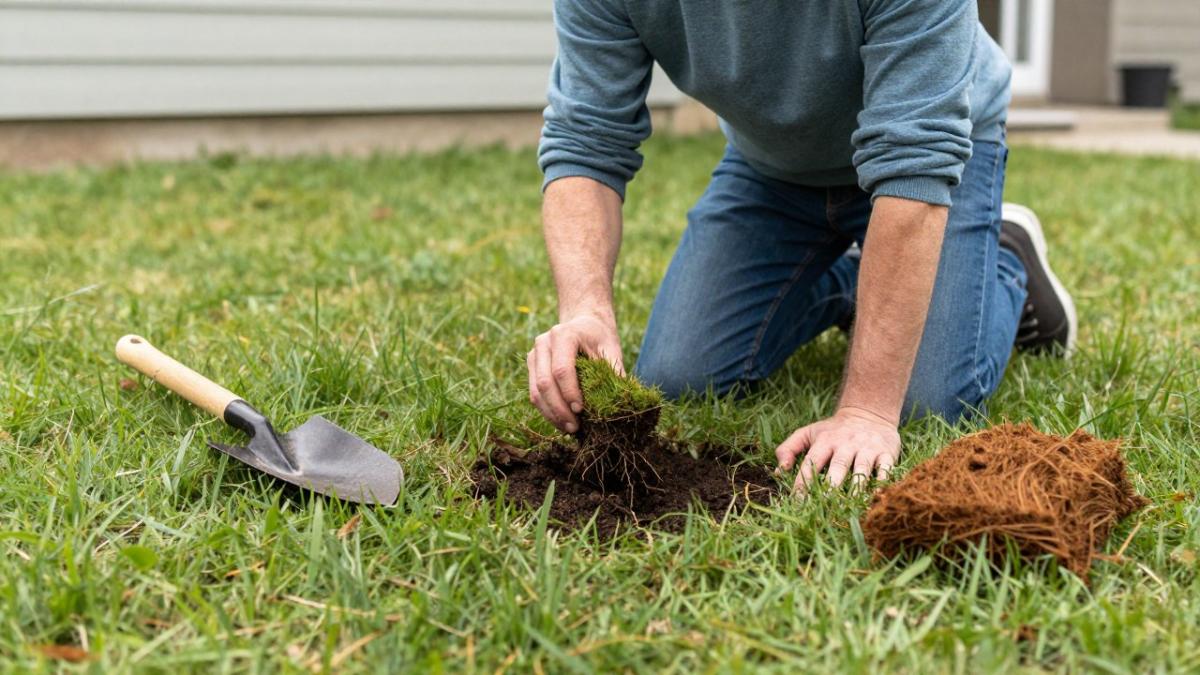
Start with these common signs of lawn pest infestation:
- Spongy turf that pulls up easily: grubs. The roots are gone.
- Yellow or brown patches that spread in dry heat: chinch bugs.
- Dead streaks or notched blades: billbugs or weevils.
- Birds, skunks, or raccoons digging at night: they are hunting grubs.
- Thin, patchy grass along edges and fences: chinch bugs or drought stress.
Damage can also come from disease, drought, or poor soil. If you are not sure which problem you have, our diagnostic guide to unhealthy lawn grass walks through the differences.
Simple Field Tests You Can Run in Ten Minutes
Try these before you buy any treatment:
- The tug test: grab a handful of turf and pull. If it lifts without resistance, suspect grubs.
- The drench test: pour a bucket of soapy water over a square foot of damaged turf. Chinch bugs and other insects float up within minutes.
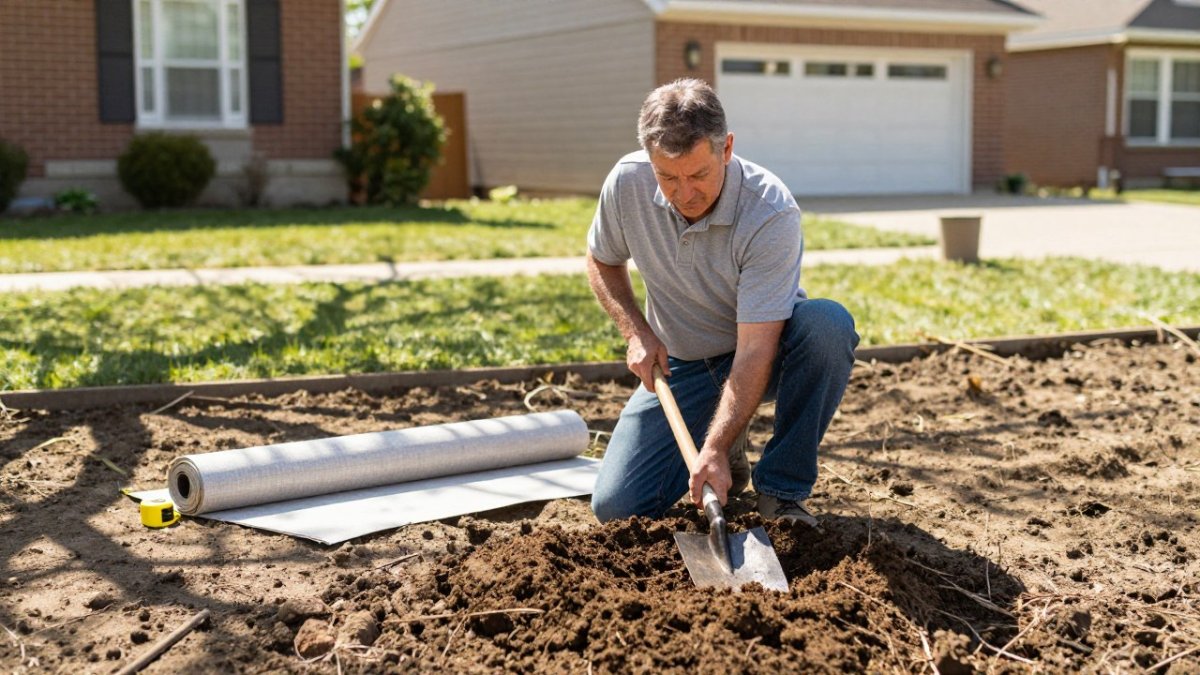
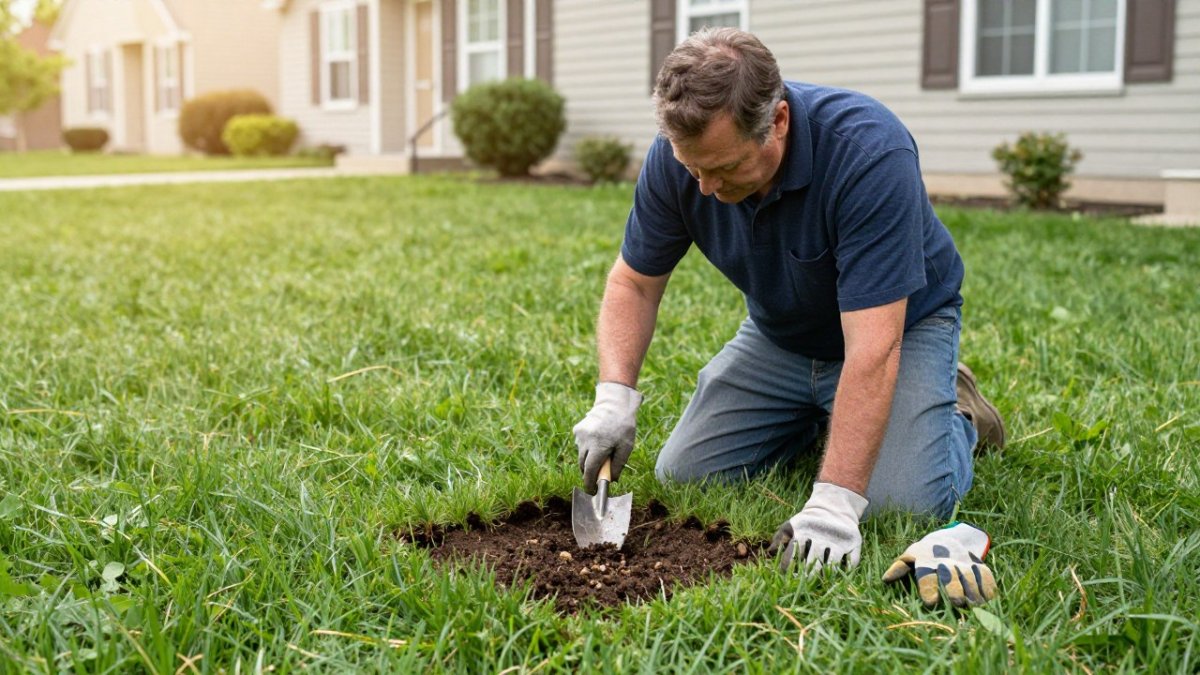
- The cut test: slice a square of turf and soil with a spade. Count grubs in the top few inches. A few is normal. A crowd is a problem.
- The blade check: part the grass and look at the base of the stems for tiny insects or chewed stems.
Ten minutes of digging tells you more than any guess.
Step 1: Fix Mowing Height, Thatch, and Watering First
Before you treat anything, fix the basics. Most lawn pest problems start with turf that is already stressed.
Mow higher. Set the mower deck so you cut no more than one third of the blade at a time.
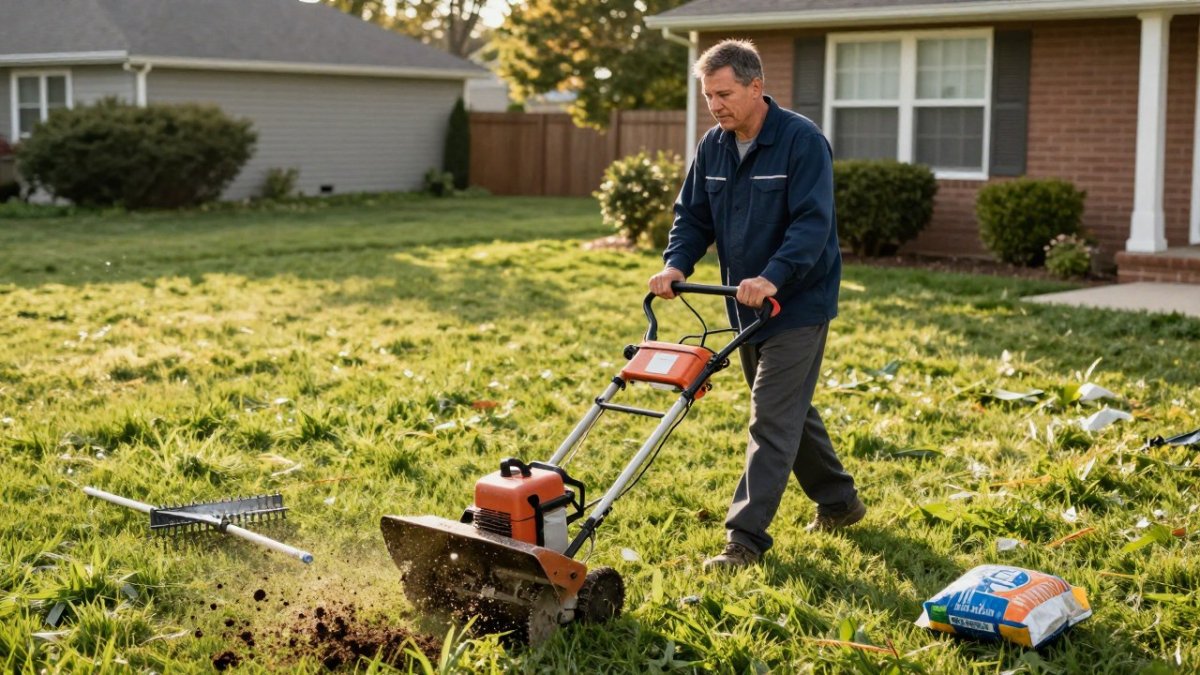
Manage thatch. Thatch is the layer of dead stems and roots between grass and soil. If thatch has built up, read our breakdown of whether professional dethatching is worth the cost before you rent equipment.
Water deeply and less often. Shallow daily watering keeps roots near the surface and favors pests.
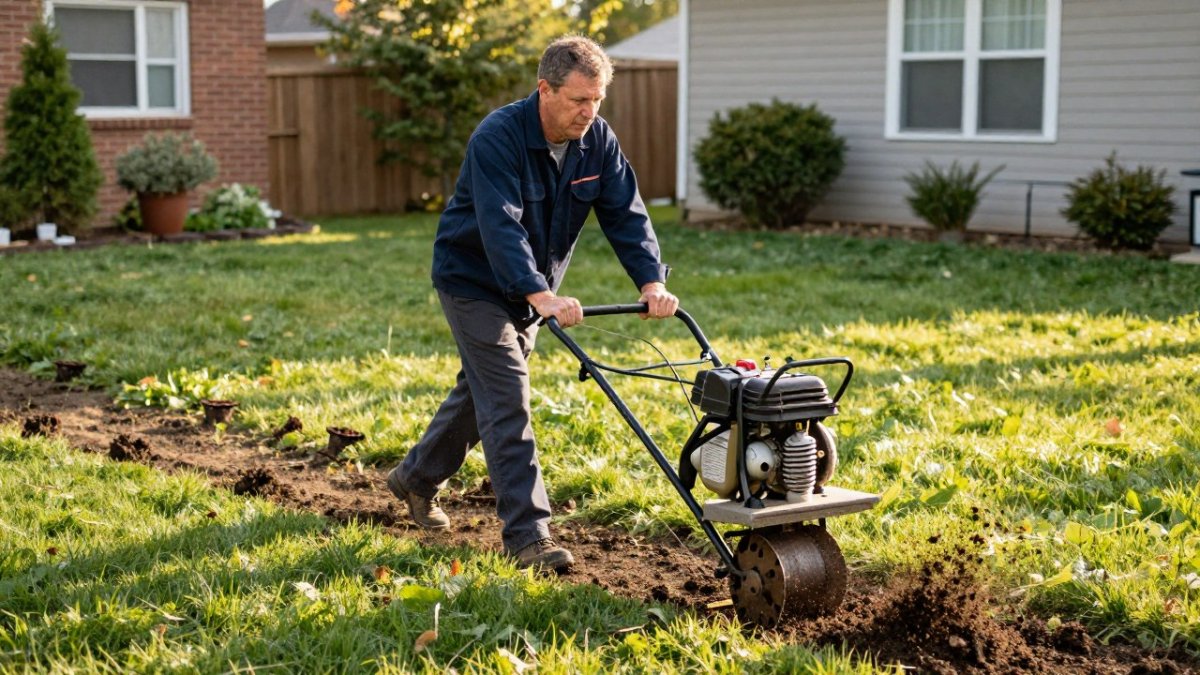
Open up the soil. Core aeration and good drainage reduce standing water, which is where mosquitoes breed and where grubs thrive.
Step 2: Build a Seasonal Prevention Calendar
Pest prevention is a year-round habit, not a spring project. Timing matters more than any single product, because each pest has a life stage when it is easiest to stop.
Use this as a small-yard plan. Each row lists what to look for, the threshold that justifies action, and the lowest-effort step that fits a compact lot.
| Timing | Main Focus | What to Scout | Action Threshold | Small-Yard Action |
|---|---|---|---|---|
| Late winter (February-early March) | Overwintering stages and habitat | Thatch depth, standing water, leaf litter along fences and foundations | Thatch thicker than about 1/2 inch; any standing water | Rake edges, clear leaves, dethatch if needed, drain low spots |
| Early spring (March-April) | Grubs and overwintering insects | Tug test on thin patches; cut test for grubs in the top few inches | More than about 5-10 grubs per square foot in damaged areas | Spot-apply preventive grub control only where past damage was heavy; overseed thin spots |
| Late spring (May-June) | Chinch bugs and billbugs | Yellow patches in hot, dry spots; drench test; check stem bases | Expanding yellow patches or visible chinch bugs in a drench test | Raise mowing height, water deeply, spot-treat affected patches only |
| Summer (July-August) | Monitoring and spot treatment | Weekly check of hot, dry, and fence-line areas; bird or skunk digging | Damage spreading despite deep watering; grubs above threshold in cut test | Treat only affected areas; keep watering deep and early; avoid blanket sprays |
| Early fall (September-October) | Repair and overseed | Thin spots, bare patches, thatch buildup | Bare spots larger than a dinner plate; thatch over 1/2 inch | Aerate, overseed, top-dress thin spots, clean up plant debris |
| Late fall (November) | Habitat removal | Leaves, brush, standing water, firewood against fences | Any accumulation that holds moisture | Clear leaves and brush, cut back perennials, remove standing water, store firewood away from the fence |
Mark these dates on your calendar and check the lawn at each one. Early detection is the whole game.
How to Get Rid of Lawn Bugs Naturally
Natural pest control starts with making the lawn a bad place for pests to live. Many yards never need a chemical at all.
- Encourage natural predators. Birds, ground beetles, and spiders eat grubs and larvae. A diverse lawn with some clover and flowering plants supports them.
- Use beneficial nematodes. These microscopic worms attack grubs and larvae in the soil. Apply them to moist soil in the evening, and water lightly after application to move them into the root zone. They work best when soil temperatures are consistently warm, typically late spring through early fall.
- Try biological control. Certain bacteria and fungi target specific lawn insects without harming beneficial insects. Follow the label for timing and application rate; these products work best when applied before pest populations peak.
- Remove alternate hosts. Weeds and plant debris shelter pests between meals. Clean edges and beds reduce pest habitat, and in a small yard, a clean fence line is one of the highest-value steps you can take.
- Keep the lawn healthy. A thick, well-fed lawn crowds out weeds and recovers from minor damage on its own. Mow high, water deep and infrequently, and avoid overfertilizing, which pushes soft growth that pests prefer.
If you have pets or young children, nonchemical options are the first line for a reason.
Once pests are under control, fix the bare spots they left behind. Our guide on repairing patchy grass in a small yard covers the repair step.
DIY Lawn Pest Control: Thresholds, Safety, and Spot Treatment
Not every bug needs a spray. Integrated pest management, often called IPM, sets a threshold: treat only when damage passes a level you can accept.
Watch out: broad-spectrum pesticides kill beneficial insects along with pests, and they can knock your lawn's natural defenses out of balance. The University of California Statewide IPM Program notes that healthy lawns need few, if any, pesticide applications and advises against broad-spectrum products for that reason.
If you do treat, follow these rules:
- Read and follow the label exactly
- Keep children and pets off treated areas until dry
- Treat in the evening when pollinators are less active
- Never spray near standing water or storm drains
The University of Florida IFAS Gardening Solutions points out that nonchemical options, like reducing thatch or cutting back fertilizer, work alongside treatment rather than replacing it. Use both.
For yards that border woods or brush, keep tick habitat in check. A study on residential yard modifications to reduce tick exposure looked at mulch, gravel, and wood-chip barriers between forest and lawn as a way to limit tick movement.
When to Bring in a Professional for Your Small Yard
Call a professional when the same problem returns every season, when damage spreads faster than you can treat it, or when you cannot identify the pest with confidence.
Small yards can still benefit from professional help, because there is less margin for error on a compact lawn.
Here are the signs it is time to call:
- Damage returns after two rounds of DIY treatment
- You find grubs or chinch bugs across most of the lawn
- Thatch is too thick to fix with a rake
- You have pets or young children and want a safer plan
- You cannot tell pest damage from disease or drought
If you are weighing the decision, our guide on signs you need professional lawn services lays out the full checklist.
A small yard can bounce back fast when you treat the cause, not just the symptom.
Frequently Asked Questions
What are the most common signs of lawn pest infestation?
Look for irregular brown or dead patches that spread outward, spongy turf that lifts easily at the edges, and grass that pulls up with no roots attached. Spongy ground often points to grubs, while small yellowing spots that merge into larger dead areas can signal chinch bugs. Also watch for birds, raccoons, or skunks digging at night. Run a simple field test by cutting a 1-square-foot section of turf and lifting it to count grubs in the top 2 to 3 inches of soil.
How do I get rid of lawn bugs naturally in a small yard?
Start with cultural fixes before reaching for products. Raise your mowing height, dethatch in early fall, reduce fertilizer runoff, and fix drainage so water does not pool. Beneficial nematodes applied to moist soil in late spring or early fall target grubs without broad-spectrum sprays. Encourage natural predators by leaving some leaf litter at the property edge. The University of California Statewide Integrated Pest Management Program notes healthy lawns need few, if any, pesticide applications, and broad-spectrum products can kill the beneficial insects that keep pest numbers down.
How often should I check my lawn for pests?
Walk your lawn once a week during the growing season and do a closer inspection every two to three weeks. Push a screwdriver into the soil in several spots to check for spongy turf, and part the grass at the edge of any brown patch to look for insects. Monitoring in spring and early fall catches infestations while they are still small enough to treat with spot methods rather than whole-lawn applications.
Can a small yard be treated without chemicals?
Often, yes. The University of Florida IFAS Gardening Solutions page recommends nonchemical options such as reducing thatch and minimizing fertilizer use alongside any pesticide treatment. For a small yard, that means correcting watering and mowing first, adding beneficial nematodes for grubs, and tolerating minor damage below a treatment threshold. When chemical spot treatment is needed, keep it confined to the affected area rather than treating the whole lawn.