 how-to
Dethatching and Overseeding Timing: When to Do Each
Quick Summary
Dethatch when grass is actively growing, and overseed when soil is warm and rain is likely, which for most Northeast Ohio cool-season lawns means late summer into early fall. Avoid both during midsummer heat or deep drought, since stressed grass recovers slowly. Dethatching and overseeding often share the same window, so plan them together.
- Late August through mid-September is the best overseeding window for Northeast Ohio.
- Dethatch only if the thatch layer is roughly three-quarters of an inch or thicker.
- Thatch under half an inch usually does not need dethatching; core aeration often helps more.
- Keep the seedbed's top half inch consistently damp during the first seven days.
- Wait until new grass is about three inches tall before the first mowing.
Table of Contents
- Why Timing Matters for Dethatching and Overseeding
- Cool-Season vs. Warm-Season Grass: Matching Timing to Your Turf
- The Best Time to Dethatch Lawn: Season by Grass Type
- The Best Time to Overseed Lawn in Northeast Ohio
- Should I Dethatch and Aerate Before Overseeding?
- What to Do After Dethatching Lawn: Watering, Seeding and Aftercare
- Booking Your Lawn Renovation Schedule with Ward's
- Frequently Asked Questions
Why Timing Matters for Dethatching and Overseeding
Last Updated: November 11, 2026
Getting the timing right decides whether your lawn thickens up or stays thin. Dethatching and overseeding are two of the most useful steps for a stressed lawn, but doing them in the wrong season can waste seed, money and time.
Thatch is the layer of dead grass stems, roots and debris that builds up between the green blades and the soil. A thin layer is normal. A thick one blocks water, air and fertilizer from reaching the roots. Overseeding puts new seed into the turf, but seed needs warm soil, steady moisture and open space to take root.
Here is the short version:
- Dethatch when the grass is actively growing. This gives the lawn time to recover.
- Overseed when soil is warm and rain is likely. New seed needs moisture to sprout.
- Avoid both during heat stress or deep drought. Stressed grass recovers slowly.
Dethatching is generally best done during active grass growth, and the right window depends on the grass type. University of Maryland Extension guidance on maintaining an established lawn
Cool-Season vs. Warm-Season Grass: Matching Timing to Your Turf
Your grass type sets the calendar. Most Northeast Ohio lawns are cool-season grasses, such as Kentucky bluegrass, perennial ryegrass and tall fescue. These grasses grow best in cool spring and fall weather and struggle in midsummer heat.
Warm-season grasses, such as zoysia and Bermuda, grow most in summer. Their timing runs later in the year.
- Cool-season lawns: Best renovation window is late summer into early fall.
- Warm-season lawns: Best window is late spring into early summer.
- Mixed lawns: Follow the timing for the grass that covers most of the yard.
Not sure what you have? Look at a few blades in your yard, check the seed label from your last purchase, or ask a local service provider to identify the turf.
The Best Time to Dethatch Lawn: Season by Grass Type
Dethatching is most effective when the grass can recover quickly. For cool-season lawns, late summer and early fall work well, because the grass is growing again after summer stress. For zoysia, late spring or early summer is the better choice.
Penn State Extension points out that overseeding thin turf or small bare patches can happen in late winter, spring or early fall. Dethatching and overseeding often share the same window, so plan them together. Penn State Extension guidance on lawn management through the seasons
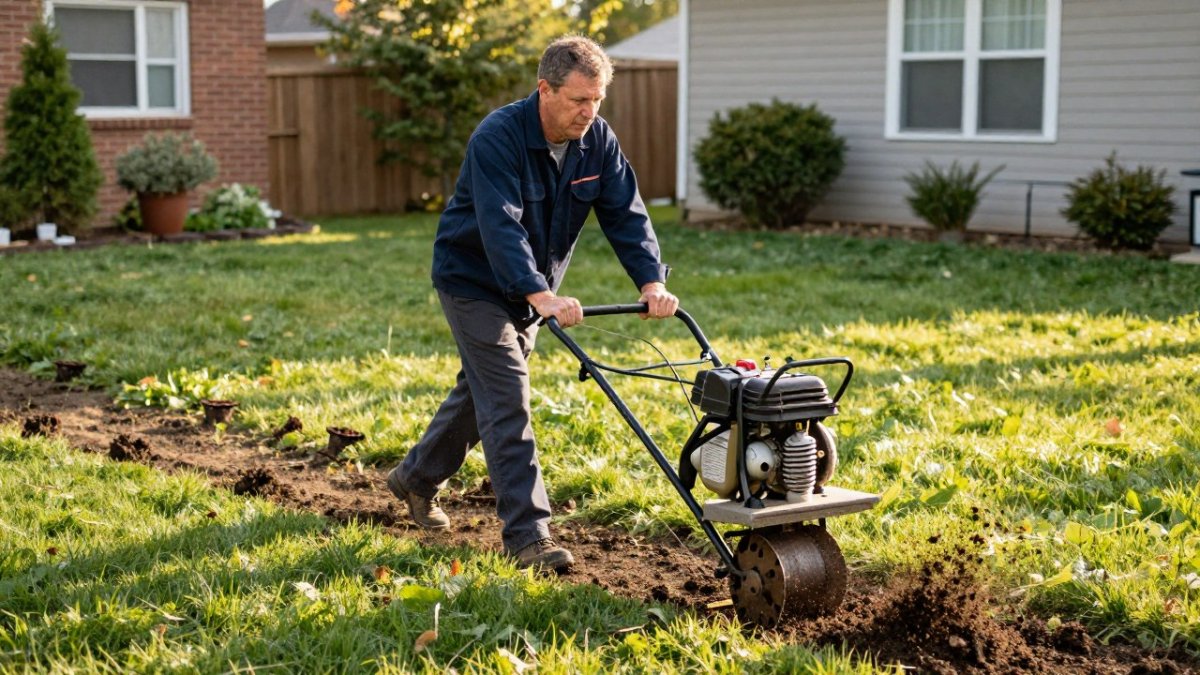
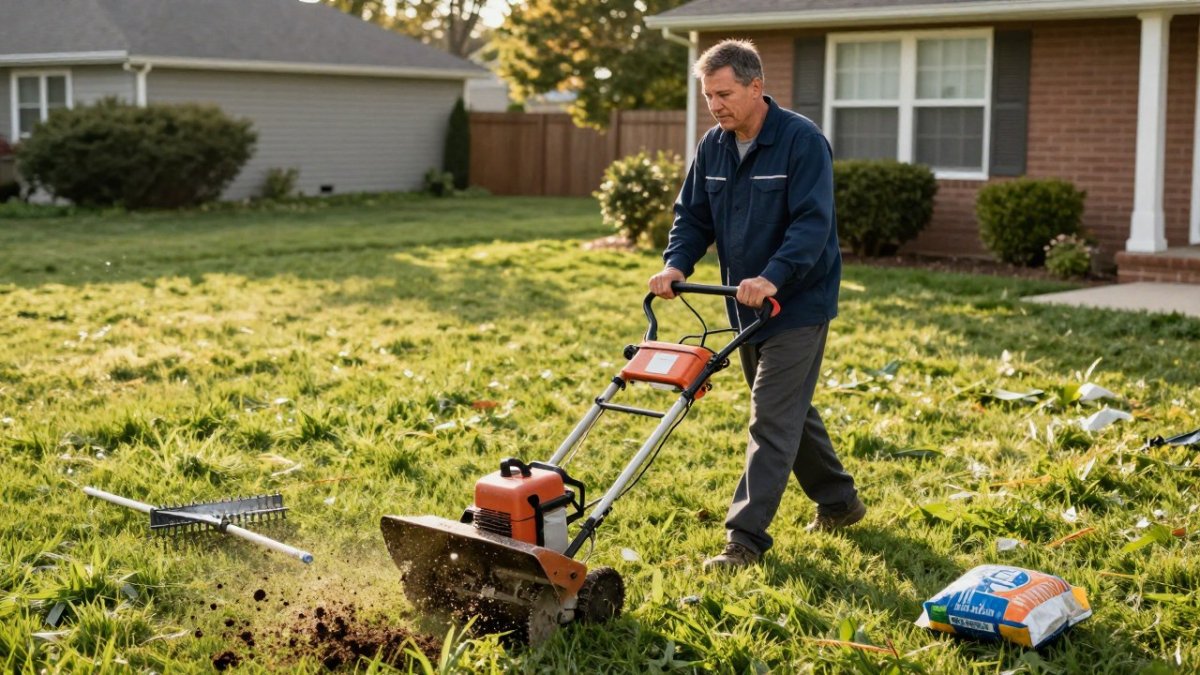
Dethatching is not always needed. Check your thatch layer first. If it is less than about half an inch thick, you may not need a machine. Core aeration can often help more in that case.
If you want a professional to handle dethatching, you can compare what the job involves and when it is worth hiring out. For a lawn with compacted soil, learn whether core aeration is worth adding alongside the dethatching work.
The Best Time to Overseed Lawn in Northeast Ohio
In Northeast Ohio, early fall is generally a strong time to overseed cool-season grass. Soil is still warm, air temperatures are cooler, and fall rain helps new seed stay moist. Seedlings get several weeks of growth before winter.
Spring can also work, but seed faces hot weather and weed competition sooner. Late spring overseeding needs more watering attention.
- Best window: Late August through mid-September
- Acceptable window: Early spring, once soil warms and frost risk passes
- Avoid: Midsummer heat and dry, windy weather
A homeowner in a residential Cleveland-area yard kneels on freshly raked soil, spreading grass seed by hand on a cool autumn morning. The homeowner is American.
The article lays out the overseeding windows for Northeast Ohio at a glance:
| Window | Timing | Note |
|---|---|---|
| Best | Late August through mid-September | Soil still warm, fall rain helps seed stay moist |
| Acceptable | Early spring | Once soil warms and frost risk passes |
| Avoid | Midsummer heat | Hot, dry, windy weather |
Should I Dethatch and Aerate Before Overseeding?
The answer depends on what is actually choking the lawn. Thatch and soil compaction look similar from the surface, but they call for different tools, and running both machines when only one is needed wastes time and stresses the turf.
Thatch is a tightly interlaced mat of dead stems, rhizomes, and roots that sits between the green blades and the soil surface. Compaction is soil particles pressed together so that air, water, and roots cannot move through them. Dethatching removes the mat. Core aeration pulls plugs of soil to open the ground beneath it. A lawn can have one problem, the other, both, or neither.
A simple test for thatch
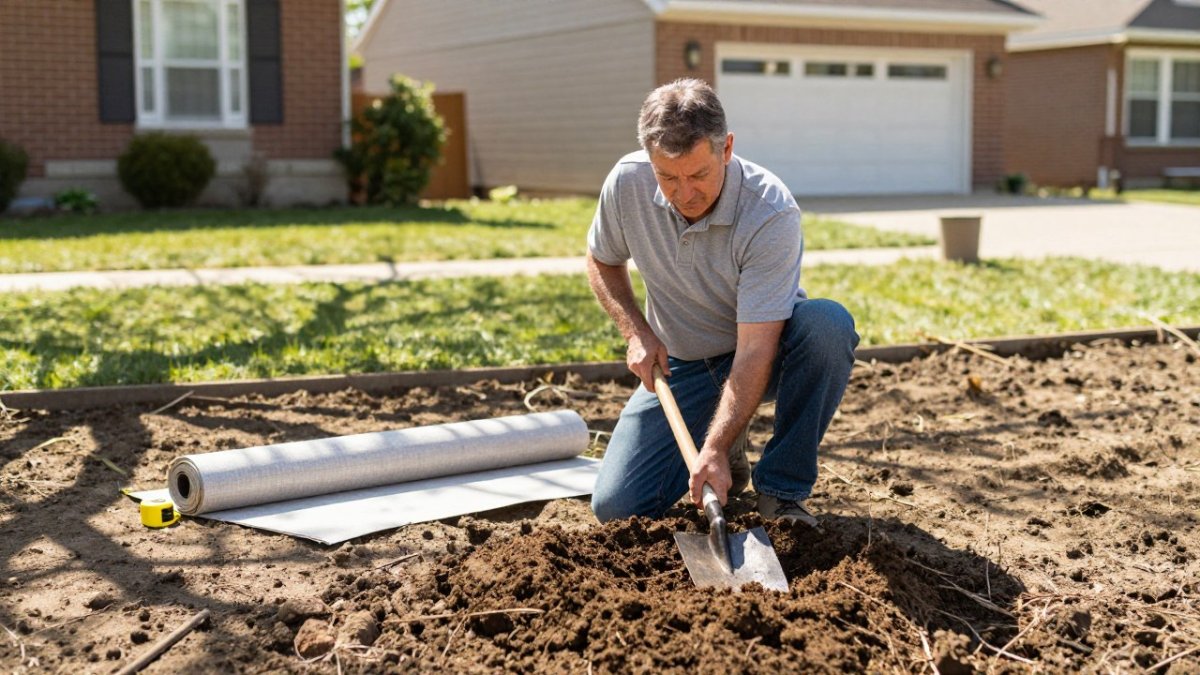
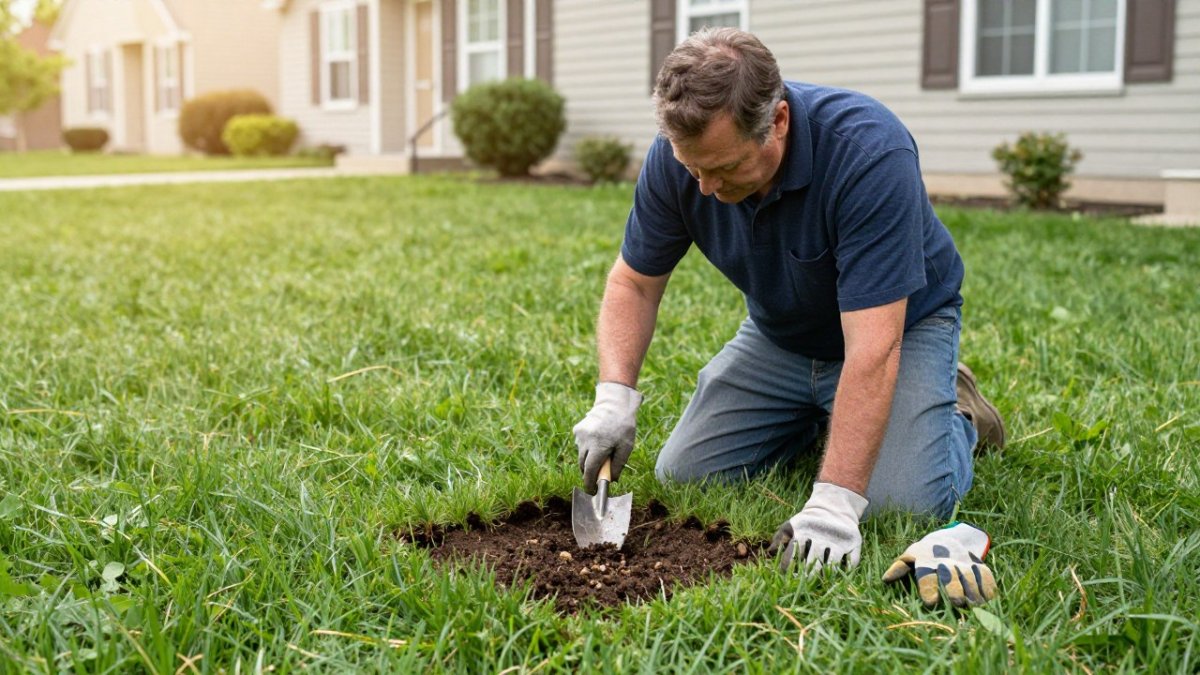
Pull a plug or a small wedge of turf about three inches deep and look at the cross-section. Healthy crowns and recent clippings are green or tan, moist, and loosely arranged. Thatch is brown or tan, spongy and springy when pressed, and resists being pulled apart by hand. Measure the spongy layer from the soil line up to where the green growth begins.
A layer under about half an inch is generally within the range a lawn can manage on its own, and dethatching at that depth often does more harm than good. Once the layer reaches roughly three-quarters of an inch or more, dethatching is usually worth doing before seeding, since seed sown on top of a thick mat tends to dry out and never reach the soil.
A simple test for compaction
Push a screwdriver or a sharpened steel probe into moist soil. If it goes in easily to six inches or more, compaction is likely minor. If you struggle to push it past two or three inches, the soil is compacted. Water that puddles or runs off during a light rain and grass that thins along foot paths are also signs of compaction. Compacted clay is the situation where aeration matters most.
Decision guide
- Thatch under half an inch, soil compacted: Skip dethatching. Core aerate and overseed.
- Thatch over three-quarters of an inch, soil loose: Dethatch, then overseed. Aeration adds little.
- Thatch and compaction both present: Dethatch first, core aerate second, then overseed into the open holes.
- Neither a significant problem: Overseed only, and keep the existing turf mowed short before sowing.
Watch out: Repeated dethatching on a lawn with little thatch can thin the turf and expose soil to weed germination, so measure before you rent the machine.
For most homeowners, the sequence that works is to decide which problem is present, address the one that is actually there, and then seed into the exposed soil. University of Maryland Extension guidance on thatch and aeration
What to Do After Dethatching Lawn: Watering, Seeding and Aftercare
Aftercare decides whether seed becomes turf or dies in the first two weeks. Follow a day-by-day watering schedule for new grass seed to keep the seedbed moist through germination. New seedlings have shallow roots and no reserve, so the goal is to keep the seedbed moist without ever letting it become waterlogged. The schedule below is a practical framework you can adjust to temperature and rainfall.
Week-by-week plan
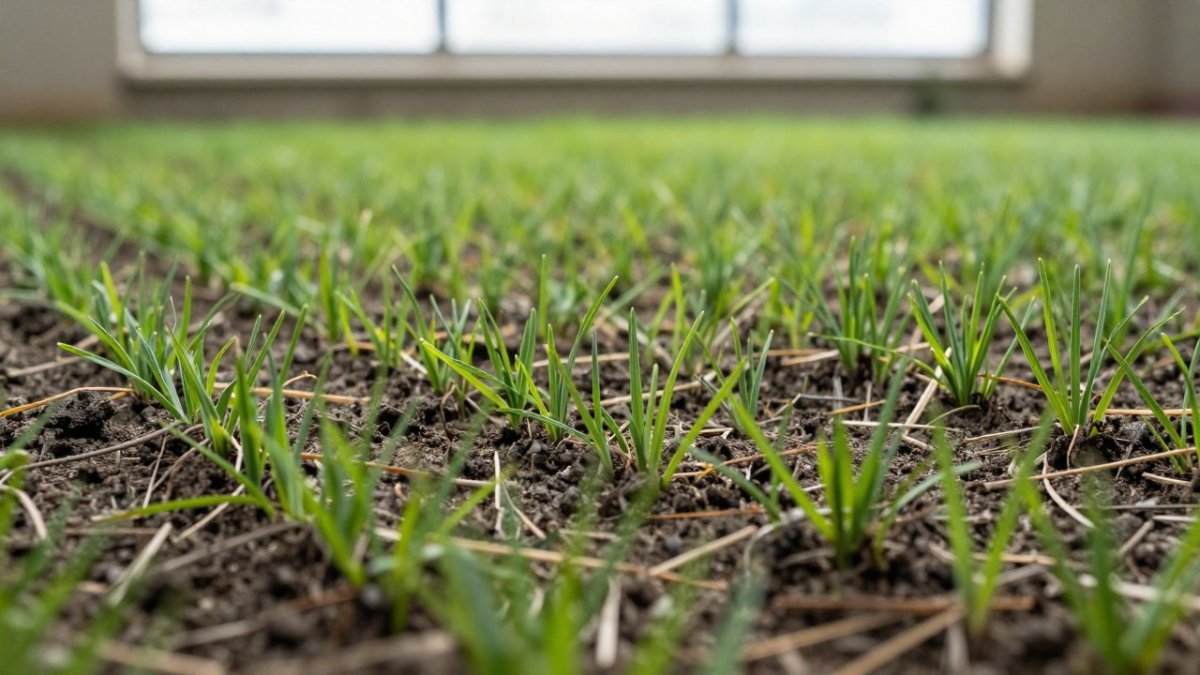
Days 1 to 7. Keep the top half inch of soil consistently damp. On warm or windy days this usually means light watering two or three times a day, with each cycle lasting only long enough to wet the surface.
Days 8 to 14. Seed begins to germinate and seedlings emerge. Cut watering to once or twice daily, but water a little more deeply each time so roots start to follow the moisture downward.
Weeks 3 to 4. Shift to deeper, less frequent watering, roughly every other day in mild weather and daily in heat, aiming for the soil to be wet about four inches down. The first mowing can happen once new grass is about three inches tall. Set the mower to the highest setting and remove no more than a third of the blade length in one pass.
Weeks 5 to 8. Reduce watering further and begin normal lawn watering habits as the turf fills in. Limit foot traffic to light use, and keep the blades sharp so new plants are not torn.
Fertilizer and weed control
A starter fertilizer applied at seeding supports root development, but a heavy nitrogen dose at this stage can burn tender seedlings. Follow the seed label exactly. Pre-emergent herbicides can prevent new seed from germinating, so do not apply them to a renovated area until you have confirmed the product label allows it at seeding time. Post-emergent broadleaf products are generally held until new grass has been mowed at least two or three times.
Reading the signs
Uniform green shoots by week two or three suggest the schedule is working. Patchy emergence in sunny spots usually means the top layer dried between waterings. Yellowing or flattened seedlings in shaded or low areas often point to too much water. Bare patches that remain after six to eight weeks may need a light second seeding.
Watch out: The most common failure is letting the seedbed dry out once in the first few days, which can kill a large share of germinating seed.
Booking Your Lawn Renovation Schedule with Ward's
Timing is easier to manage with a plan. Ward's Lawn Care & Landscape Co. offers full-service outdoor maintenance and landscape construction across Greater Cleveland, and our highly trained technicians can map out a dethatching and overseeding schedule for your yard. Read about our company's experience in Greater Cleveland before you decide.
Ward's offers additional discounts when hiring for multiple services, and curbside leaf cleanup can help free up your fall. Contact us for a free estimate to get your renovation scheduled at the right time of year.
Frequently Asked Questions
Is October 1 too late to plant grass seed?
October 1 is not too late for most cool-season lawns in Northeast Ohio, but timing depends on soil temperature and how much growing time remains before the ground freezes. Early fall is generally considered a suitable period for overseeding thin turf, and seed needs enough warm days to germinate and establish roots before winter dormancy. If the forecast shows consistent cool nights and soil that is still workable, early October seeding can succeed. Waiting much later increases the risk that seedlings will not establish before cold weather arrives, so check local conditions before deciding.
When should I dethatch and reseed my lawn?
Dethatch when grass is actively growing, because the turf recovers faster and the thatch is easier to break up. For cool-season lawns in the Cleveland area, that usually means late summer or early fall, followed by overseeding within a few days so seed reaches soil. Dethatching is generally best matched to active growth rather than a single calendar date, so the grass type and its growth cycle should guide the timing. Dethatching a dormant lawn can damage it and slow recovery.
Should I dethatch and aerate before overseeding?
Dethatching and aerating before overseeding can help, but they serve different purposes. Dethatching removes the thatch layer that blocks seed from reaching soil, while core aeration relieves compaction and opens channels for water, air and seed-to-soil contact. Many homeowners aerate first and then overseed, which gives seed a better environment to germinate. If the thatch layer is less than about half an inch thick, aeration alone may be enough. Ward's Lawn Care & Landscape Co. can assess your lawn and recommend the right sequence.
What should I do after dethatching my lawn?
After dethatching, rake up loose debris, apply seed if you are overseeding, and water lightly and frequently to keep the seedbed moist. Frequent watering in the first weeks is generally recommended, with several short sessions a day during establishment depending on temperatures. Avoid heavy foot traffic and mow only once the new grass reaches the proper height. Fertilizer timing and rates should follow the product label. Pricing depends on lawn size, condition and scope, so visit Ward's Lawn Care & Landscape Co.'s website or request a quote for current rates.