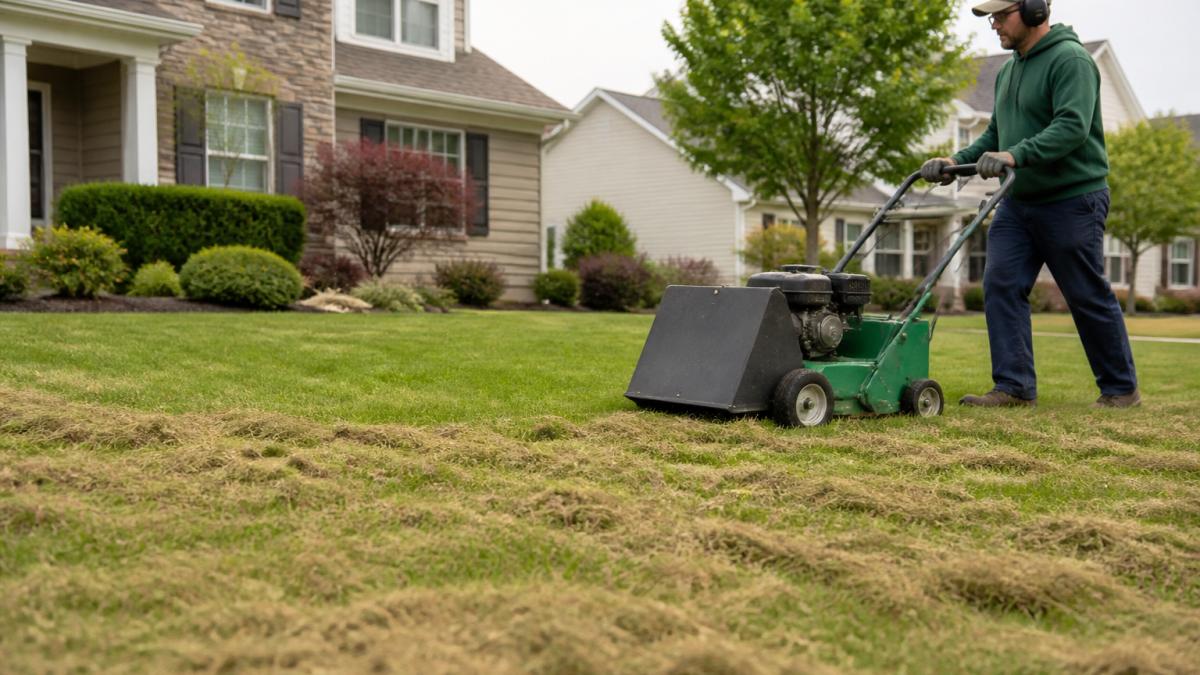
 comparison
Is Professional Lawn Dethatching Worth the Cost?
Table of Contents
- What Lawn Thatch Is and Why It Matters
- Signs Your Lawn Needs Dethatching
- Professional Lawn Dethatching Cost: What to Expect
- DIY Lawn Dethatching vs Professional Service
- Dethatcher Rental Cost and Equipment Options
- The Real Value: When Professional Dethatching Pays for Itself
- Frequently Asked Questions
Last Updated: October 6, 2026
What Lawn Thatch Is and Why It Matters
Lawn thatch is a layer of dead grass, roots, and organic debris that accumulates between the soil and living grass blades. It prevents water, nutrients, and air from reaching the soil, choking out healthy root growth. When thatch exceeds half an inch thick, it compromises turf health and weakens your lawn's ability to recover from stress.
Thatch exists in every lawn. The real question is whether yours has reached a point where is professional lawn dethatching worth the cost, which depends on how thick the layer is, how much effort you're willing to invest, and what you stand to lose by ignoring it.
Signs Your Lawn Needs Dethatching
Your lawn needs dethatching when the problem becomes visible and grass stops responding to normal care. The most obvious sign is a spongy, bouncy feel underfoot, thatch compressing instead of solid soil.
Look for patchy, thin grass, which often means thatch is blocking water and nutrients from reaching roots.
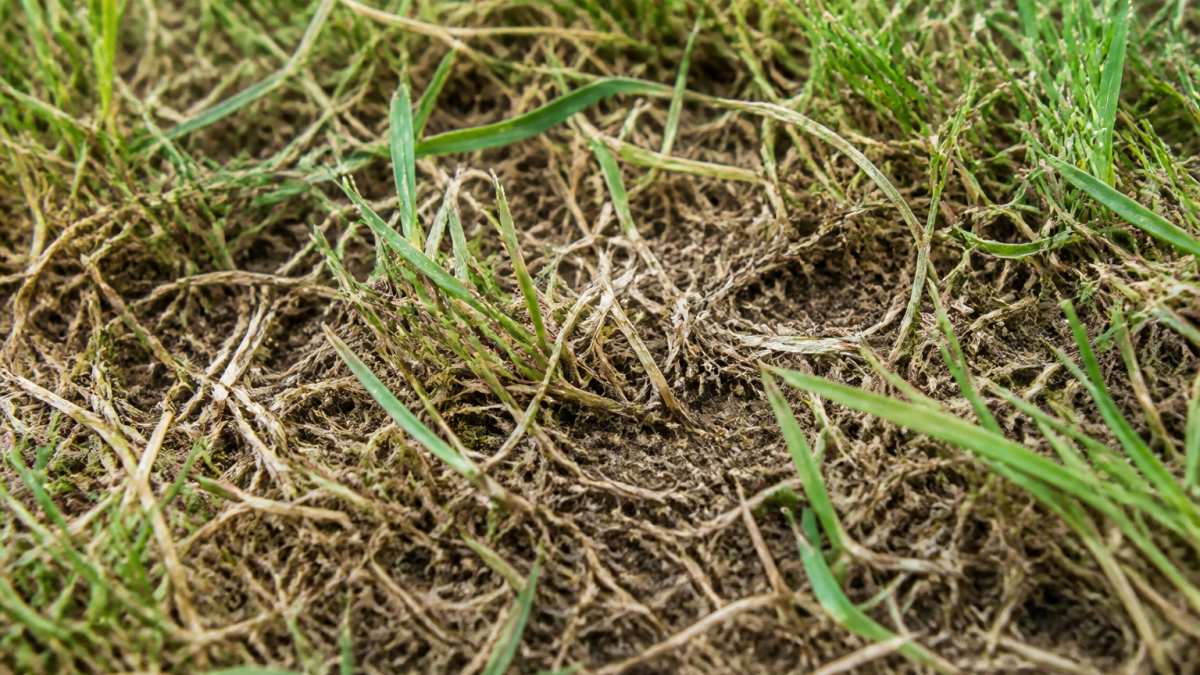
A simple test: push a screwdriver or soil probe into your lawn. If you hit resistance before reaching soil, or the layer between grass and soil feels thick and fibrous, thatch has accumulated.
Cool-season grasses common here, like Kentucky bluegrass and fescue, accumulate thatch faster than warm-season varieties. Heavy fertilization without regular aeration accelerates buildup, as do poor drainage, compacted soil, and infrequent mowing.
Professional Lawn Dethatching Cost: What to Expect
Professional dethatching is priced one of two ways, and knowing which model a company uses tells you how your quote was built.
Hourly pricing bills for labor and machine time. According to LawnStarter's dethatching cost analysis, professional services commonly run about $50 to $85 per hour, with a typical 5,000-square-foot lawn taking 1 to 3 hours. That puts a mid-size yard in the low-to-mid hundreds of dollars before any add-ons.
Area-based pricing bills by the square foot. HomeGuide's lawn dethatching pricing guide reports an average of roughly $10 to $30 per 1,000 square feet. That means a 5,000-square-foot yard and a half-acre lot (about 21,000 square feet) can land in very different brackets even when the per-unit rate is identical.
What actually drives your final number
- Lawn size and shape. Square footage sets the baseline, but odd shapes, narrow gates, and obstacles (trees, beds, play sets) add labor time.
- Thatch depth and severity. A thin layer may need one pass; a dense mat often needs two or three, plus raking between passes.
- Grass type. Cool-season grasses like Kentucky bluegrass and tall fescue build thatch faster and may need more aggressive treatment.
- Access and disposal. Curbside access is fast; a fenced backyard with no gate means hauling equipment by hand. Debris volume affects disposal cost.
- Bundled services. Aeration, overseeding, and fertilizer are often quoted alongside dethatching and change the total substantially.
What a professional quote should include
A complete estimate should spell out, in writing:
- Inspection, a thatch-depth check (often a soil probe or plug sample) rather than a phone guess.
- Method, power rake, vertical mower, or a combination, and how many passes are planned.
- Cleanup and debris removal, whether clippings and thatch are bagged and hauled away or left on the lawn.
- Aeration and overseeding, whether they are included, optional, or excluded.
- Follow-up, any post-service check, watering guidance, or recovery instructions.
Regional and market variation
Labor rates, fuel surcharges, and local demand all move the number. Dense metro areas price higher than rural routes due to drive time and overhead. Timing matters too, peak spring or early fall often costs more than a shoulder window, and some companies discount off-peak work.
A worked comparison by lawn size
Using the midpoints of the ranges above, here's how the math tends to shake out. These are illustrative estimates, not quotes.
| Lawn size | Est. service time | Est. professional cost | DIY rental + labor |
|---|---|---|---|
| 2,000 sq ft | 1 hour | ~$50-$85 | ~$50-$100 rental + 2-3 hrs |
| 5,000 sq ft | 1-3 hours | ~$50-$255 | ~$50-$100 rental + 2-4 hrs |
| 10,000 sq ft | 2-4 hours | ~$100-$340 | ~$50-$100 rental + 4-6 hrs |
| 21,000 sq ft (half acre) | 4-8 hours | ~$210-$680 | ~$100-$200 rental (multi-day) + 8-12 hrs |
The pattern is consistent: the larger the lawn, the more the professional price is offset by rental, fuel, transport, and your own hours. On small lawns, DIY can undercut the service, but only if your time is genuinely free.
The cost of getting it wrong
A cheap quote that skips inspection or cleanup can cost more in the end. Incomplete dethatching lets thatch rebound within a season, and overly aggressive passes tear up healthy turf, forcing overseeding and weeks of recovery. Compare scope, not just the bottom line.
DIY Lawn Dethatching vs Professional Service
Choosing between DIY dethatching and hiring a professional comes down to three factors: your physical ability, your time, and your lawn's actual condition.
Manual raking is the cheapest option upfront. According to Popular Mechanics' lawn dethatcher reviews, manual rakes like the Walensee 15-Inch Lawn Thatching Rake offer a budget-friendly entry point.
Power raking or dethatcher rental costs $50 to $100 per day for equipment alone, plus your labor. You operate the machine yourself, which requires strength and coordination.
Professional service eliminates the physical labor and guesswork. Technicians bring industrial-grade equipment that works faster and more thoroughly than homeowner-grade tools. They handle debris removal, which is often the most time-consuming part.
The real cost comparison isn't just rental versus service fees. Factor in your time, physical effort, and the risk of incomplete work: miss spots or don't go deep enough and thatch returns faster, while poor technique can damage healthy grass, requiring overseeding and recovery time.
Dethatcher Rental Cost and Equipment Options
If you dethatch yourself, renting is usually cheaper than buying for a one-time job. Dethatcher rental typically costs $50 to $100 per day at local shops, and some landscape supply companies offer weekend rates or multi-day discounts.
Power dethatchers come in two types: vertical mowers and power rakes. Vertical mowers cut down into thatch and pull it to the surface, more aggressive and thorough. Power rakes comb thatch out with rotating tines, gentler but still effective. Either works residentially, though vertical mowers are generally more efficient.
Rental equipment is heavy and needs a truck or trailer to transport, plus a place to store it while you work. Most rental shops deliver for an extra fee, $50 to $150 depending on distance.
If you own a small lawn and plan to dethatch every few years, buying a manual rake or small electric dethatcher ($150 to $400) might make sense. For larger properties or one-time jobs, rental is more economical.
The Real Value: When Professional Dethatching Pays for Itself
Most guides stop at "it depends on your lawn." Here's a decision framework you can run against your own property, plus realistic expectations for after the work is done.
The break-even test
Whether is professional lawn dethatching worth the cost depends on whether the value of your time plus the risk of doing it wrong exceeds the service price. Run three checks:
1. Lawn size.
- Under 2,000 sq ft: A $20-$40 thatching rake and a few hours usually beat a service call. DIY wins.
- 2,000-7,500 sq ft: Close call. Rental ($50-$100/day) plus labor often lands near a professional quote. Choose based on how you value a weekend.
- Over 10,000 sq ft: Professional service almost always costs less per square foot once you add rental, fuel, transport, and your hours. Hiring wins.
2. Thatch depth.
- Under ½ inch: Not urgent. Aeration and better mowing habits may be enough.
- ½ to 1 inch: Dethatching is warranted; either method works if you're physically able.
- Over 1 inch: Professional equipment and multiple passes matter here. Homeowner tools struggle, and poor technique risks tearing turf.
3. Your effort and risk tolerance.
- Can you physically operate a heavy power rake for 2-4 hours and haul debris afterward?
- Do you have a truck or trailer, or will delivery fees add $50-$150?
- Are you comfortable judging pass depth, or would you rather someone who does this daily make the call?
If two or more of those point toward hiring, the service is usually the better value.
What "worth it" actually looks like after the job
Dethatching isn't cosmetic, it's a stress event for the lawn. Set expectations accordingly:
- Immediate: The lawn looks thinner and rougher, normal, since thatch removal exposes buried soil and crowns.
- First 1-2 weeks: Recovery begins. Cool-season grasses dethatched in spring or early fall green up fastest; heat- or cold-stressed timing slows everything.
- 3-6 weeks: With watering and, if needed, overseeding, the lawn fills in denser than before because water and nutrients now reach the root zone.
- The season after: The value shows, better drought tolerance, fewer thin patches, less fertilizer for the same result.
The risks of poor workmanship
Not every quote is a good quote. Aggressive or mistimed dethatching can:
- Scalp the lawn, cutting into crowns and killing grass in patches.
- Stress turf during heat or dormancy, extending recovery by weeks.
- Leave debris behind, smothering the grass you just tried to help.
- Miss the root cause, so thatch returns within a season because drainage or compaction was never addressed.
This is the strongest argument for hiring: a trained technician knows how many passes your turf can take, when to stop, and when to pair dethatching with core aeration instead of running the machine harder.
Pair it with aeration and overseeding
Dethatching alone rarely solves a struggling lawn. The highest-value visits combine it with core aeration (to relieve compaction) and overseeding (to fill the thin spots dethatching exposes). Bundled, the per-service cost is lower than booking separately, and recovery is faster because seed has direct soil contact.
The bottom line
If your lawn is under 2,000 square feet and the thatch is thin, DIY is the sensible call. If it's larger, the thatch is deep, or your time is worth more than the service price, professional dethatching is the better value, not because it's cheaper on paper, but because it's done once, done right, and paired with follow-up care that keeps thatch from coming back.
Frequently Asked Questions
What is lawn thatch and how does it form?
Lawn thatch is a layer of dead grass, roots, and organic debris that accumulates between the green grass and soil. It forms naturally as grass dies and decays, but when this layer exceeds half an inch thick, it can block water, nutrients, and air from reaching grass roots. Cool-season grasses and warm-season grasses both develop thatch, though the rate varies by grass type and lawn maintenance practices.
How much does professional lawn dethatching cost compared to DIY?
Professional dethatching typically ranges from $10 to $30 per 1,000 square feet, or $50 to $85 per hour depending on lawn size and complexity. A manual thatching rake costs around $30 and requires your own labor. Dethatcher rental costs vary but represent a middle option. Your total cost depends on lawn size, thatch depth, and whether you value your time, professional service saves hours of physical work but costs more upfront.
What are the downsides of dethatching a lawn?
Dethatching stresses turf by tearing up the thatch layer and potentially damaging grass blades. Your lawn will look thin and stressed immediately after the process. Recovery takes 2-4 weeks depending on grass type and season. Poor timing or aggressive dethatching can damage grass roots and increase vulnerability to weeds and disease. That's why timing, proper technique, and post-dethatching care, like overseeding and watering, matter.
When is the best time to dethatch a lawn?
Timing depends on your grass type. Cool-season grasses should be dethatched in early spring or fall when they're actively growing. Warm-season grasses are best dethatched in late spring or early summer during their peak growing season. Avoid dethatching during drought, extreme heat, or dormancy periods. Dethatching during the growing season allows grass to recover quickly before stress from weather sets in.