 ultimate-guide
Why Professional Lawn Services Are Worth It in 2026
Table of Contents
- Why Professional Lawn Services Are Worth It: The Real Math
- What a Professional Lawn Care Maintenance Schedule Looks Like
- Lawn Aeration and Overseeding Benefits You Can't Get From a Mower
- The Cost of Professional Lawn Care vs. DIY: A Full Breakdown
- Equipment, Expertise, and Liability: What You're Really Paying For
- How to Evaluate a Lawn Care Provider Before You Sign
- Frequently Asked Questions
Last Updated: September 16, 2026
Why Professional Lawn Services Are Worth It: The Real Math
Most homeowners underestimate what their lawn actually costs them. Not the mower, not the gas, not the bags of fertilizer sitting in the garage, but the weekends, the rework, and the slow decline in turf quality that no amount of Saturday effort seems to reverse. That is the honest case for why professional lawn services are worth it, and it has very little to do with convenience. This guide from Ward's Lawn Care & Landscape Co. breaks down the real math: what you spend on DIY, what a maintenance schedule actually delivers, and how to judge a provider before you sign anything.
The pitch for hiring out lawn care usually stops at "you get your weekends back." True, but incomplete.
What most guides miss is that a lawn is a living system with a schedule. Miss the fall aeration window and you spend the next spring fighting compaction. Skip a pre-emergent application and you are pulling crabgrass by hand in July. The cost of doing it yourself is not just labor; it is the cost of doing it at the wrong time.
Below, we will walk through the season-by-season schedule, the aeration and overseeding benefits you cannot get from a mower, a full cost comparison, and a checklist for evaluating any provider.
What a Professional Lawn Care Maintenance Schedule Looks Like
A professional lawn care maintenance schedule is a seasonally timed plan covering fertilization, weed suppression, aeration, and overseeding, adjusted to your grass type and soil. It is not a monthly mow-and-go visit.
Season-by-Season Breakdown
Here is how a typical cool-season turf program in this region is structured:
- Early spring: Pre-emergent application to block crabgrass and other annual weeds before they germinate, plus the first feeding to wake the turf up.
- Late spring: Post-emergent spot treatment for broadleaf weeds, plus mowing height adjustments as growth accelerates.
- Summer: Nutrient management timed to heat stress, irrigation guidance, and pest monitoring for grubs and surface-feeding insects.
- Early fall: Core aeration, overseeding, and a starter fertilizer application. This is the single most important window on the calendar.
- Late fall: A winterizer feeding that builds root reserves for spring green-up, plus leaf cleanup.
The order matters more than the individual steps. Applying the right product at the wrong time wastes the product and can stress the lawn.
Lawn Aeration and Overseeding Benefits You Can't Get From a Mower
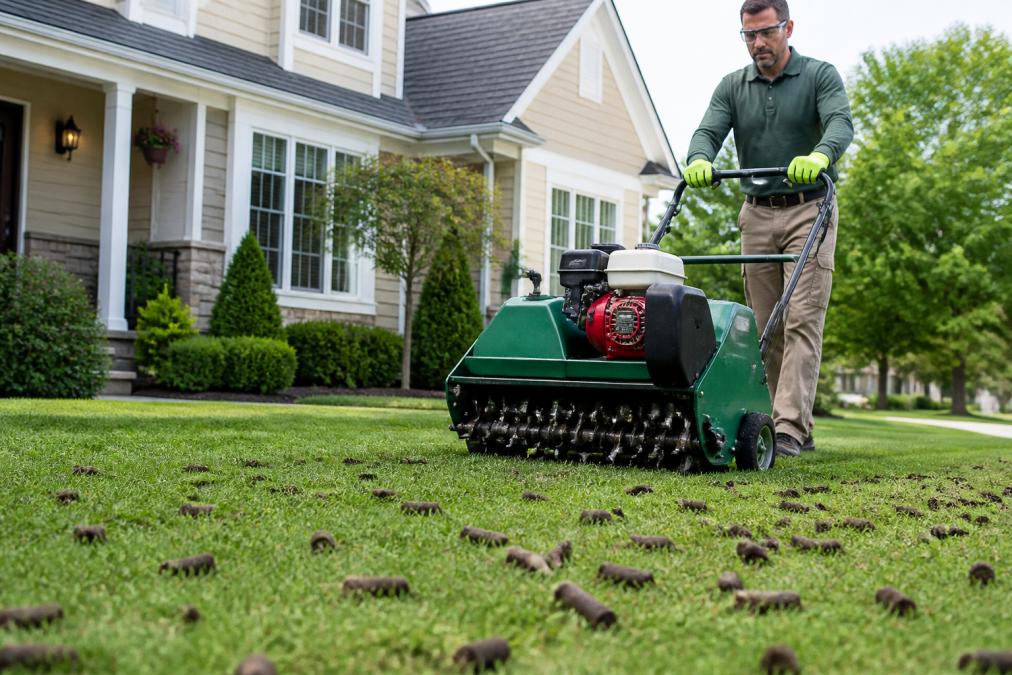
Aeration and overseeding are the two services that separate a maintained lawn from a merely mowed one. A mower cuts grass blades.
How Aeration Improves Soil and Turf Density
Core aeration pulls small plugs of soil out of the lawn, relieving compaction and opening channels for air, water, and nutrients to reach the root zone. On a lawn with heavy foot traffic or clay-heavy soil, that compaction builds up year after year until roots cannot spread.
The Cost of Professional Lawn Care vs. DIY: A Full Breakdown
The cost of professional lawn care is easier to judge once you total the DIY side honestly. Most homeowners compare a service quote against the price of gas, which is not the real comparison. The real comparison is quote versus the full ownership cost of doing it yourself, including the line items that never make it into a spreadsheet.
The Hidden Cost of Equipment Ownership
Most articles stop at labor time. The bigger gap is the cost of owning and maintaining high-end equipment. A commercial-grade walk-behind mower, a calibrated backpack sprayer, a core aerator, and a spreader represent a meaningful capital outlay, and every one of them depreciates from the day it is purchased.
What the DIY Spreadsheet Usually Misses
- Equipment maintenance and depreciation. Oil changes, spark plugs, blade sharpening, belts, and eventual replacement. A consumer mower that sees regular use has a working lifespan measured in seasons, not decades.
- Fuel and fuel stabilization. Gas, oil mix, and the cost of dealing with stale fuel in the off-season.
- Storage. A mower, trimmer, edger, spreader, and sprayer take up garage or shed space that has its own value.
- Chemical purchases in consumer quantities. Small bottles of pre-emergent and broadleaf herbicide cost far more per square foot than professional applications, and leftover product often expires before it is used.
- Rework. Seed that fails, fertilizer applied at the wrong rate, or a weed problem that gets worse instead of better. Every failed attempt is money spent twice.
- Your time. This is the one people discount to zero, and it is usually the largest line item.
| Factor | DIY Approach | Professional Service |
|---|---|---|
| Upfront equipment | Mower, trimmer, spreader, sprayer | None |
| Ongoing supplies | Gas, oil, seed, chemicals | Included in service |
| Maintenance | Blades, belts, tune-ups, replacement | Provider's responsibility |
| Depreciation | Borne by the homeowner | Borne by the provider |
| Timing accuracy | Depends on your availability | Scheduled to the season |
| Chemical safety and dosing | Your responsibility | Handled by trained technicians |
| Time per week | Several hours in peak season | None |
| Results consistency | Variable | Consistent, documented |
The comparison is not "quote versus gas." It is quote versus equipment, supplies, maintenance, depreciation, storage, rework, and your weekends, added together. When you run the numbers that way, the professional service often costs less than the DIY approach once the equipment is amortized over its real working life.
Equipment, Expertise, and Liability: What You're Really Paying For
Professional-grade equipment and trained application are the two things a homeowner cannot easily replicate. A commercial mower cuts faster and stripes better, but the bigger gap is in application equipment: calibrated spreaders and sprayers that deliver the right rate per thousand square feet. A homeowner with a drop spreader and a bag of fertilizer is guessing at the rate. A technician with a calibrated sprayer is measuring it.
Precision Application and Environmental Stewardship
Dosing matters for safety as much as results. The EPA's guidance on pesticide safety and application is clear that correct rate, timing, and protective equipment are part of lawful, safe application. A trained technician follows safety protocols because it is the job. A homeowner reading a label on a Saturday afternoon is one distracted moment away from a burned lawn or an over-application.
Liability and Insurance: The Risk You Carry Without a Provider
Then there is liability. If a mower throws a rock through a neighbor's window, or a chemical application damages adjoining property, that is a claim. A licensed, insured provider carries that exposure. Doing it yourself means you carry it.
What You Are Actually Buying
When you hire a professional, you are buying four things at once: calibrated equipment that applies the right rate, a seasonal calendar that times each application correctly, insurance that absorbs the risk if something goes wrong, and a documented record of what was applied and when. None of those four are easy to replicate on your own, and the last one is the reason a provider can adjust the program next season instead of starting from scratch.
How to Evaluate a Lawn Care Provider Before You Sign
Evaluate a provider on four things: a written seasonal schedule, clear pricing with no mid-project additions, proof of insurance, and references you can actually call. Everything else is marketing.
Use this checklist before you commit:
- Written seasonal schedule with dated applications
- Itemized quote that states what triggers any additional charge
- Confirmation of licensing and liability insurance
- Two or three local references from the past year
- A stated policy on callbacks if results fall short
- Clear answer on who performs the work and whether it is the same crew each visit
- Service agreement that tells you how to cancel
Frequently Asked Questions
Are professional lawn services worth the investment?
For many homeowners, yes. Professional lawn services deliver consistent results, access to commercial-grade equipment, and expertise in soil health and fertilization that most DIYers cannot match. They also save time and reduce the risk of costly mistakes like incorrect chemical application. If you value a healthy, weed-free lawn and want to avoid the hidden costs of DIY, professional lawn services are likely worth it.
How does professional fertilization differ from DIY methods?
Professional fertilization relies on soil testing and a customized nutrient management plan, while DIY often uses a one-size-fits-all approach. Pros apply the right blend at the right time, reducing waste and environmental impact. They also use professional-grade products and calibrated equipment for even coverage, which leads to better turf density and fewer weeds. This precision is a key reason why professional lawn services are worth it.
Does professional lawn care increase property value?
A well-maintained lawn can boost curb appeal and potentially increase property value. For homeowners in Greater Cleveland, a thick, healthy lawn makes a strong first impression and can set your property apart. While results vary, consistent professional care supports long-term property value.
What are some red flags when hiring a lawn care service?
Watch for providers who give vague quotes, lack proper licensing and insurance, or pressure you into immediate decisions. A reputable company will offer a clear written estimate, explain their fertilization schedule, and provide references. They should also be transparent about chemical application and safety protocols. If a provider cannot answer basic questions about lawn diagnostics or weed identification, look elsewhere.