 ultimate-guide
Best Grass Types for Cleveland: A 2026 Guide
Table of Contents
- Why Grass Type Matters in This Climate
- Best Grass Types for Cleveland Lawns
- Grass Variety Comparison Table
- When to Plant Grass Seed in Ohio
- How to Overseed a Lawn for Thicker Coverage
- Best Fertilizer for Cool-Season Grasses
- Signs Your Lawn Needs Aeration and Renovation
- Professional vs. DIY: Cost-Benefit Analysis
- Frequently Asked Questions
Last Updated: September 25, 2026
Why Grass Type Matters in This Climate
The grass you plant determines whether your lawn thrives or merely survives. In this region, you're not in a tropical climate or a desert, you're in a cool-season grass zone where winter temperatures drop well below freezing and summer heat can stress shallow-rooted varieties. This geographic reality eliminates roughly 80% of the grass options marketed nationally. What works in Georgia fails here. What thrives in Colorado doesn't handle the humidity. The best grass types for Cleveland are specifically adapted to this climate's freeze-thaw cycles, moderate precipitation, and seasonal temperature swings.
At Ward's Lawn Care & Landscape Co., we help homeowners select and establish the right grass varieties for this exact climate. The difference between choosing the right grass and the wrong one isn't subtle, it's the difference between a lawn that repairs itself and one that requires constant intervention.
Cool-season grasses dominate here because they're genetically built for cold winters and moderate summers. They grow most vigorously in spring and fall when temperatures are ideal. During summer heat and winter dormancy, they slow down but don't die. This is fundamentally different from warm-season grasses, which go dormant (brown) in winter and thrive in intense summer heat, the opposite of what this climate demands.
The challenge isn't finding grass that grows here. It's selecting the variety that matches your specific lawn conditions: sun exposure, soil type, foot traffic, and maintenance commitment. A shade-tolerant grass in full sun will thin out. A drought-tolerant variety in a wet, compacted soil will struggle. This guide walks you through the best grass types for Cleveland lawns and how to match each variety to your actual conditions.
Best Grass Types for Cleveland Lawns
Four cool-season grasses dominate successful lawns in this region. Each has distinct strengths and trade-offs. Understanding these differences lets you pick the variety, or blend, that fits your property.
Kentucky Bluegrass: The Aesthetic Choice
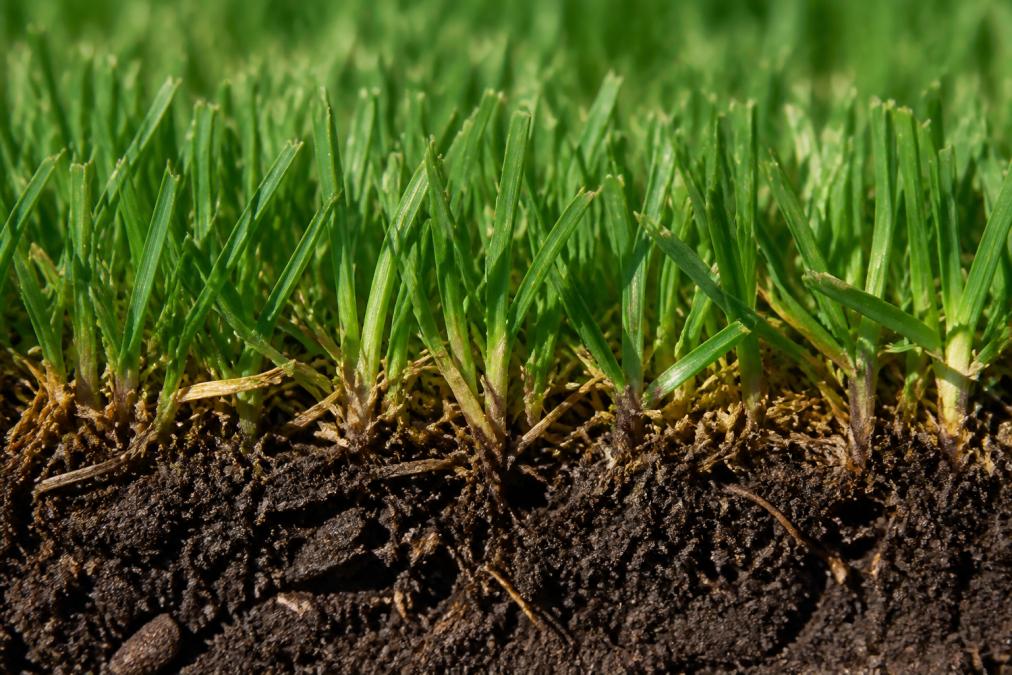
Kentucky Bluegrass produces the deep green color and uniform appearance most homeowners envision when they picture a premium lawn. It spreads via underground rhizomes, which means it self-repairs. A damaged patch doesn't require overseeding, the grass grows new shoots from existing root systems and fills in the bare spot naturally.
This self-healing trait makes it exceptionally durable for residential lawns with moderate foot traffic. Kids playing, pets running, and normal wear don't create permanent damage. The grass recovers on its own. It also establishes quickly and tolerates the cold winters here without issue.
The trade-off is maintenance intensity. Kentucky Bluegrass demands regular irrigation during dry spells and consistent fertilization to maintain that deep color. It performs best in full sun to partial shade and prefers well-draining soil. In shaded areas or compacted soil, it thins out. For homeowners willing to provide water and nutrients, it delivers superior aesthetics.
Turf-Type Tall Fescue: The Low-Maintenance Option
Turf-Type Tall Fescue (TTTF) is the practical choice for properties where irrigation is limited or inconsistent. Its deep root system accesses moisture that shallow-rooted varieties cannot reach, making it genuinely drought-tolerant once established. This matters in years with below-average rainfall or for homeowners who prefer minimal watering.
TTTF adapts to varied soil conditions, clay, sand, or loam, without requiring soil amendment. It handles temperature fluctuations better than Kentucky Bluegrass and tolerates compacted soil more gracefully. If your lawn has heavy foot traffic or sits on clay soil, TTTF outperforms other options.
The limitation is that TTTF doesn't spread via rhizomes. It's a bunch-type grass, meaning it grows in clumps from individual plants. Thin spots don't fill in automatically. You'll need periodic overseeding to maintain density. Its leaf texture is also coarser than Kentucky Bluegrass, which some homeowners perceive as less refined, though this is purely aesthetic.
Perennial Ryegrass: Fast Establishment for Repairs
Perennial Ryegrass germinates faster than any other cool-season grass, sometimes sprouting visible green within 7-10 days of planting. This speed makes it invaluable for quick repairs and overseeding existing lawns. If you've got a bare patch that needs coverage before fall or spring, Perennial Ryegrass is your first choice.
It tolerates high-traffic areas well and establishes strong wear resistance quickly. When mixed with Kentucky Bluegrass or TTTF, it provides rapid initial coverage while the slower-germinating varieties establish deeper roots. Most professional seed blends include Perennial Ryegrass for exactly this reason.
The drawback is cold hardiness. Perennial Ryegrass is less winter-hardy than Kentucky Bluegrass. In severe winters, it can thin out or be damaged by freeze-thaw cycles. It's best used as part of a blend rather than a monoculture lawn.
Fine Fescue: The Shade Solution
Fine Fescue encompasses several species (creeping red fescue, chewings fescue, hard fescue) that share one critical trait: they thrive in shade where other grasses fail. If your lawn has significant tree cover, Fine Fescue is often the only option that produces acceptable density.
Fine Fescue also requires minimal fertilization and water compared to Kentucky Bluegrass, making it genuinely low-maintenance. Its fine, needle-like leaf texture is aesthetically pleasing. In the right environment, shaded, moderate-traffic areas, it's an elegant solution.
The limitation is heavy foot traffic. Fine Fescue doesn't tolerate wear like TTTF or Kentucky Bluegrass. In high-traffic zones or full sun, it thins dramatically. It's a specialized tool for specific conditions, not a general-purpose lawn grass.
Grass Variety Comparison Table
| Grass Type | Best For | Sun/Shade | Drought Tolerance | Maintenance | Self-Repair |
|---|---|---|---|---|---|
| Kentucky Bluegrass | Aesthetic, moderate traffic | Full sun to part shade | Moderate | High | Yes (rhizomes) |
| Turf-Type Tall Fescue | Low-maintenance, drought-prone areas | Full sun to part shade | High | Low | No (overseeding needed) |
| Perennial Ryegrass | Quick repairs, overseeding | Full sun to part shade | Moderate | Moderate | No |
| Fine Fescue | Shaded areas | Shade to part shade | Low | Very low | No |
When to Plant Grass Seed in Ohio
Timing determines germination success. Plant cool-season grass seed during the season when soil temperature and moisture align with the grass's growth cycle (Practical Lawn Establishment and Renovation).
Fall seeding (late August through September) is optimal. Soil temperatures are cooling from summer heat but remain warm enough for rapid germination, typically 60-70°F. Autumn rainfall is more reliable than spring rainfall, providing consistent moisture without overwatering. Fall-seeded grass establishes strong roots before winter dormancy, then emerges vigorous in spring. This timing produces the healthiest, most resilient lawns.
Spring seeding (mid-April through May) works but is secondary. Spring soil temperatures warm more slowly, delaying germination. Spring rainfall is less predictable.
How to Overseed a Lawn for Thicker Coverage
Overseeding fills thin spots and increases turf density. The process is straightforward but requires attention to timing and technique.
Best Fertilizer for Cool-Season Grasses
Fertilizer timing and nutrient ratios matter more than brand. Cool-season grasses have two growth peaks, spring and fall, and should be fertilized accordingly.
Winter dormancy requires no fertilization.
Signs Your Lawn Needs Aeration and Renovation
Soil compaction is the silent killer of lawns. Compacted soil restricts root development, reduces water and nutrient penetration, and creates conditions for weeds and disease.
Professional vs. DIY: Cost-Benefit Analysis
The decision between hiring a professional service and doing the work yourself depends on equipment cost, time, and results.
Frequently Asked Questions
What is the best grass seed for Cleveland's climate?
Cool-season grasses thrive in Cleveland's climate. Kentucky Bluegrass offers superior aesthetics and self-repair through rhizomes, while Turf-Type Tall Fescue provides drought resistance and lower maintenance. Perennial Ryegrass germinates quickly for fast repairs. Fine Fescue excels in shaded areas. Most lawns benefit from a blend of these varieties to maximize soil compaction resistance, nutrient uptake, and turf resilience across different yard conditions.
When is the best time to plant grass seed in Ohio?
Fall (late August through September) is ideal for planting grass seed in Ohio. Cool-season grasses establish strong root zones during fall's moderate temperatures and natural moisture. Spring (April through early May) works as a secondary window. Avoid summer planting when heat stress reduces grass root development and increases water runoff. Professional timing ensures better gas exchange in soil and stronger turf establishment before winter dormancy.
Should I overseed my lawn, and how often?
Overseeding fills thin spots caused by soil compaction and thatch buildup, improving lawn drainage and grass root development. Overseed annually in fall for cool-season lawns, or in spring if fall seeding wasn't possible. Use Perennial Ryegrass for quick coverage or Kentucky Bluegrass for long-term density. Prepare soil by dethatching, aerate to improve soil porosity, and apply seed at proper rates. This increases fertilizer efficiency and drought tolerance while enhancing curb appeal.
What fertilizer works best for cool-season grasses in Ohio?
Cool-season grasses need nitrogen-rich fertilizers applied in fall and spring when growth is active. Look for formulations with higher nitrogen (first number) and lower phosphorus to support oxygen penetration and nutrient uptake in the root zone. Fall applications (September-October) strengthen turf resilience before winter. Spring applications (April-May) support new growth. Avoid heavy fertilization in summer heat, which stresses cool-season varieties. Professional services ensure proper application rates and timing.
How do I know if my lawn needs aeration?
Signs include standing water after rain (poor drainage), thin or patchy grass despite fertilization, and soil that's hard to dig into (soil compaction). High foot traffic areas show these problems first. Aeration creates soil plugs that relieve compaction, improve gas exchange, and enhance root zone development. Core aeration works better than spike aeration for Cleveland's clay-heavy soils. Professional aeration followed by overseeding maximizes results and improves turf resilience and drought tolerance.
Is professional lawn care worth the cost compared to doing it myself?
Professional services provide expertise in soil type assessment, equipment maintenance, and seasonal timing that DIY approaches often miss. Specialists identify soil compaction and thatch issues early, apply fertilizers at optimal rates, and time aeration and overseeding for maximum root development. While DIY saves upfront costs, professionals deliver consistent results, save time, and prevent costly mistakes. Many homeowners find the investment justified by improved turf resilience, better drainage, and stronger grass root systems that last years longer.