 ultimate-guide
Benefits of Professional Lawn Aeration
Table of Contents
- What Professional Lawn Aeration Does for Your Soil
- Signs Your Lawn Needs Aeration
- Best Time of Year to Aerate Your Lawn
- Core Aeration vs. Spike Aeration: Which Method Works Better
- How Professional Aeration Improves Nutrient and Water Absorption
- Benefits of Overseeding After Aeration
- Post-Aeration Care and Long-Term Results
- Why Professional Aeration Beats DIY Approaches
- Frequently Asked Questions
Last Updated: September 24, 2026
What Professional Lawn Aeration Does for Your Soil
Professional lawn aeration is the process of creating small holes in your soil to improve air, water, and nutrient penetration to the grass root zone. This mechanical intervention breaks up soil compaction, which naturally develops over time from foot traffic, weather cycles, and regular lawn use. When soil becomes compacted, water runs off instead of soaking in, roots struggle to establish themselves, and nutrients remain locked in the upper layers where they're less effective.
The difference between a healthy, resilient lawn and one that's struggling often comes down to soil porosity. A lawn with poor gas exchange will show thin patches, weak growth, and increased susceptibility to disease and drought stress. Professional aeration restores the soil's ability to absorb water and oxygen, which directly improves root development and overall turf resilience.
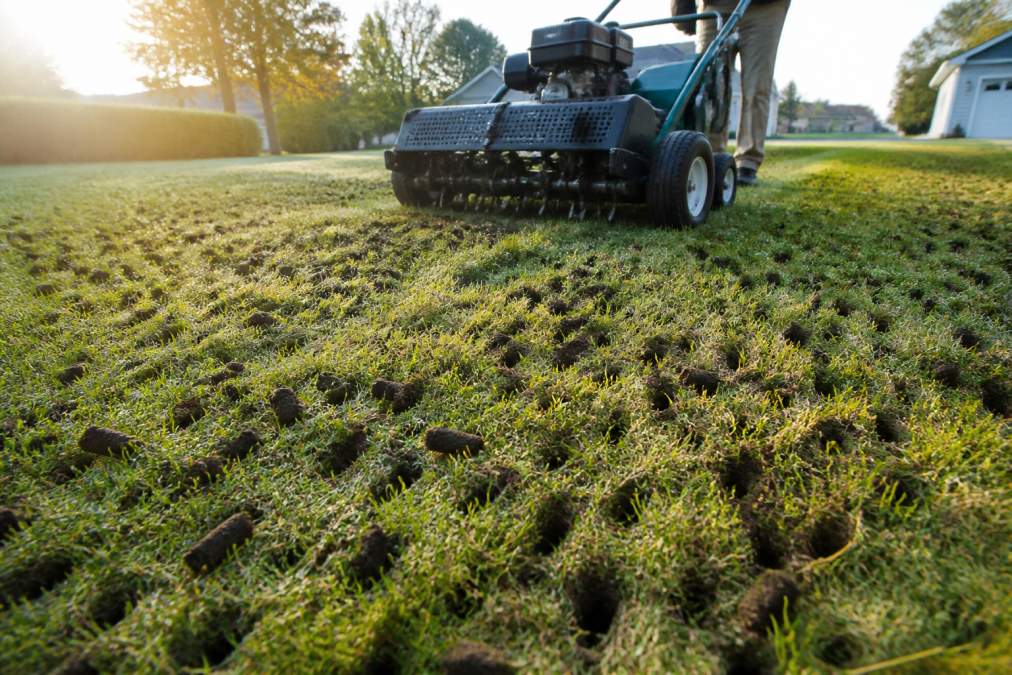
Professional aeration is one of the most effective investments a homeowner can make for long-term lawn health. The results typically become visible within 3-4 weeks as new growth fills in and the grass develops deeper, stronger roots. Many property owners are surprised by how quickly their lawn responds once the soil can breathe again.
Signs Your Lawn Needs Aeration
Your lawn sends clear signals when soil compaction has become a problem. The most obvious sign is water pooling on the surface during rain instead of absorbing into the soil. If puddles form and linger for hours after a normal rainfall, your soil density has likely become too high for proper drainage.
Thin, patchy grass growth is another indicator that aeration is overdue. When the root zone is compacted, grass cannot establish the deep, extensive root systems it needs to thrive. You'll notice weaker turf in high-traffic areas like pathways across the lawn or around pet runs, these spots experience concentrated foot traffic that accelerates soil compaction.
Increased weed pressure often accompanies soil compaction. Weeds are opportunistic and thrive in stressed lawns. When your desirable grass is struggling to grow because of poor root development, weeds move in to fill the void. This creates a frustrating cycle where the lawn gets weaker and weed problems intensify.
Moss growth, particularly in shaded areas, frequently indicates both compaction and poor drainage. Moss prefers moist, compacted soil where grass cannot compete effectively. If moss patches are spreading, aeration combined with proper overseeding can help restore grass dominance in those zones.
Best Time of Year to Aerate Your Lawn
Timing matters significantly when it comes to the benefits of professional lawn aeration. The ideal window depends on your grass type and local climate. Cool-season grasses, which are common in northern regions, respond best to aeration in early spring or fall when temperatures are mild and growth is vigorous. Spring aeration allows the grass to recover and fill in aeration holes throughout the growing season. Fall aeration, typically in late August through September, prepares the lawn for winter while promoting strong root development.
Warm-season grasses benefit most from late spring through early summer aeration, when soil temperatures have warmed and active growth is underway. Aerating during the dormant season or during extreme heat stress will damage rather than help your lawn.
Soil moisture is equally important. Aeration works best when soil has moderate moisture content, firm enough that the aerator can penetrate effectively, but moist enough that soil cores pull up cleanly without excessive resistance. If your soil is waterlogged, wait for it to dry slightly. If it's rock-hard from drought, water the lawn thoroughly a day or two before aeration to improve soil workability.
Most professionals recommend aeration once per year for residential lawns experiencing moderate to heavy use. High-traffic commercial properties may benefit from twice-yearly aeration to maintain soil porosity and support consistent turf performance.
Core Aeration vs. Spike Aeration: Which Method Works Better
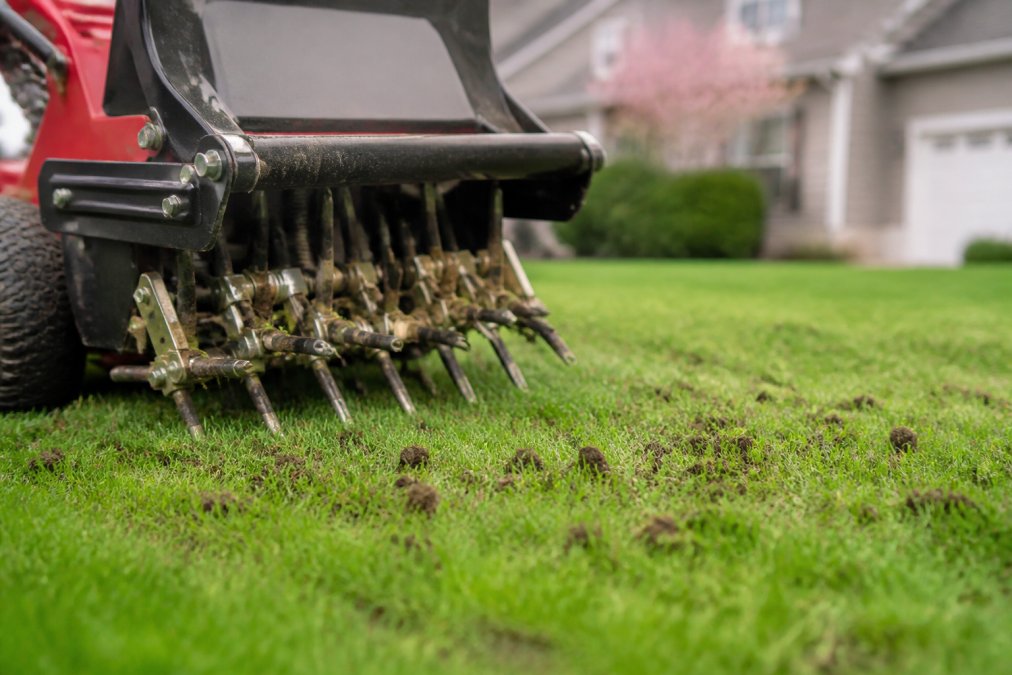
Understanding the difference between these two approaches helps explain why one delivers superior results. Core aeration uses hollow tines to extract small plugs of soil from the lawn, typically 2-3 inches deep and about the size of a pencil. These soil plugs are left on the surface to break down naturally, returning organic matter to the soil. The holes created remain open, providing direct pathways for air, water, and nutrients to reach the root zone.
Spike aeration uses solid tines or spikes to puncture the soil without removing material. This compresses the soil around the spike as it enters, which can actually worsen compaction in some cases. The holes created are smaller and tend to close more quickly as soil pressure reasserts itself.
The benefits of professional lawn aeration using core aeration are substantially greater than spike aeration. Core aeration addresses the root cause of compaction by removing soil, while spike aeration merely pushes soil aside. Research into soil physics shows that core aeration creates lasting improvements in soil porosity and gas exchange, whereas spike aeration provides only temporary surface-level relief.
For this reason, professional lawn care companies almost exclusively use core aeration equipment. It's the industry standard because it delivers measurable, lasting results. If you're comparing services, confirm that the provider is using true core aeration, not spike equipment marketed under different names.
How Professional Aeration Improves Nutrient and Water Absorption
Compacted soil creates a barrier that prevents both water and nutrients from reaching the grass root zone efficiently. When soil density increases, water tends to run off rather than infiltrate, and nutrients applied through fertilization remain concentrated near the surface where they're less accessible to deeper roots.
Professional lawn aeration solves this by restoring soil porosity. The holes created during aeration allow water to penetrate deeper into the soil profile, reaching the root zone where it's needed most. This improved water infiltration means your lawn can better withstand dry periods and makes irrigation or rainfall more effective. Fertilizer efficiency increases dramatically because nutrients can now move through the soil profile and reach the root zone where grass plants can absorb them.
The organic matter from extracted soil plugs also contributes to long-term soil health. As these plugs break down, they add organic material that improves soil structure and water retention capacity. This creates a self-reinforcing cycle: better soil structure leads to improved nutrient and water availability, which supports stronger root development, which in turn strengthens overall turf resilience.
Plants receiving better nutrition and water availability show visible improvements within weeks. New growth is typically greener and more vigorous, leaf blades thicken, and the overall density of the turf improves.
Benefits of Overseeding After Aeration
Overseeding immediately after aeration accelerates lawn recovery and fills in thin areas. The freshly created holes provide excellent seed-to-soil contact, which is critical for germination. Seeds dropped into aeration holes have direct contact with moist soil, dramatically improving germination rates compared to broadcasting seed on intact turf.
Post-Aeration Care and Long-Term Results
The first 2-3 weeks after professional lawn aeration require minimal but intentional care. Keep the extracted soil plugs on the lawn, they break down naturally within 1-2 weeks and return valuable organic matter to the soil. Don't rake them off or try to clean them up immediately.
Why Professional Aeration Beats DIY Approaches
DIY aeration using rental equipment sounds economical in theory, but several factors make professional service superior. Commercial aerators used by professionals are heavier, more powerful, and more precisely calibrated than consumer rental equipment. This matters because soil compaction depth varies across your lawn, and professional equipment penetrates consistently to the optimal depth, typically 2-3 inches, regardless of soil conditions.
Frequently Asked Questions
Is professional lawn aeration worth the cost?
Yes. Professional lawn aeration addresses soil compaction that prevents water, nutrients, and oxygen from reaching grass roots. Compacted soil forces you to spend more on fertilizer and water because plants can't absorb them efficiently. Aeration restores soil porosity, which improves nutrient uptake and reduces waste. Over time, you'll see fewer bare patches, healthier grass, and better drainage, all of which protect your property's curb appeal and value. The investment pays for itself through reduced maintenance costs and improved lawn resilience.
What should I do after professional lawn aeration?
After aeration, water your lawn within 24 hours to help soil settle and roots establish. The soil plugs left on the surface will break down naturally; you can leave them or rake lightly. Overseeding immediately after aeration is highly recommended because the open soil allows seed to make direct contact with soil, improving germination rates. Avoid heavy foot traffic for 2-3 weeks while roots recover. Hold off on fertilizing for at least one week unless your aeration provider recommends otherwise.
How often should you aerate your lawn for best results?
Most lawns benefit from aeration once per year. Cool-season grasses (common in northern climates) should be aerated in spring or fall when growth is active. Warm-season grasses respond better to late spring or early summer aeration. If your lawn experiences heavy foot traffic, compacted clay soil, or poor drainage, twice-yearly aeration may be needed. Avoid over-aerating; excessive aeration can stress grass and waste money. A professional can assess your soil density and recommend the right schedule for your specific lawn.
What is the difference between core aeration and spike aeration?
Core aeration removes plugs of soil 2-3 inches deep, creating space for air, water, and roots to penetrate. Spike aeration uses solid tines to puncture the soil without removing plugs. Core aeration is more effective for compacted soil because it truly opens the soil structure and allows organic matter to work into the root zone. Spike aeration is less invasive and costs less, but it can actually increase compaction in dense clay soils by pushing soil particles together. For most lawns, especially those with poor drainage or heavy compaction, core aeration delivers superior results.