 ultimate-guide
Sustainable Landscape Design: A Complete Guide
Table of Contents
- What Is Sustainable Landscape Design
- Core Sustainable Landscaping Principles
- Water-Efficient Landscaping Strategies
- Native Plants for Landscaping and Biodiversity
- Soil Health and Organic Matter Management
- Sustainable Landscape Design Ideas for Your Property
- Step 1: Site Analysis and Microclimate Assessment
- Step 2: Set Priorities and Define What Success Looks Like
- Step 3: Choose Interventions That Fit Your Climate and Site
- Step 4: Phase the Work and Budget Realistically
- Step 5: Address Household Needs and Safety
- Step 6: Reduce Chemical Inputs and Maintenance Requirements
- Step 7: Select Sustainable Materials and Locally Sourced Elements
- Measuring Success: Performance Indicators and Long-Term Benefits
- Frequently Asked Questions
Last Updated: October 17, 2026
What Is Sustainable Landscape Design
Sustainable landscape design creates outdoor spaces that meet human needs while minimizing environmental impact and resource consumption.
The core idea: work with nature, not against it, designing within your climate and soil reduces workload and costs while supporting local ecosystems.
At Ward's Lawn Care & Landscape Co., we provide comprehensive outdoor maintenance and landscape construction services.
Core Sustainable Landscaping Principles
Site harmony means designing around what already exists.
Reducing inputs means less water, fertilizer, pesticide, and equipment fuel.
Biodiversity support: native plants, diverse plantings, and wildlife habitat create self-regulating ecosystems that need less intervention.
Responsible material sourcing is often overlooked but critical.
Finally, maintenance requirements must be realistic.
Water-Efficient Landscaping Strategies
Water efficiency addresses one of the largest resource drains in residential landscaping. Most yards consume far more water than necessary, often through inefficient irrigation and plants that don't match local rainfall.
Rainwater Harvesting and Stormwater Management
Rainwater harvesting captures precipitation from roofs and hard surfaces for landscape irrigation.
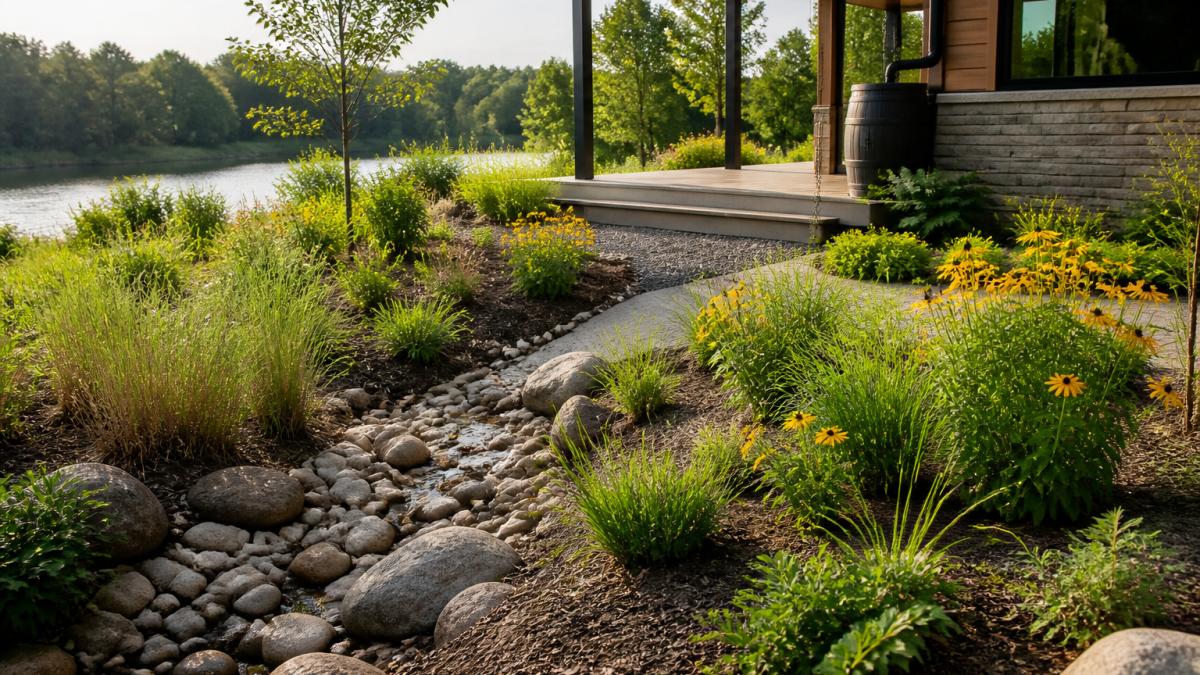
Stormwater management goes further. Instead of letting runoff flow to storm drains, sustainable designs slow water movement so it infiltrates soil and recharges groundwater, reducing flooding risk, filtering pollutants, and providing water during dry spells.
Bioswales, rain gardens, and permeable basins are practical tools.
Permeable Surfaces and Runoff Reduction
Hard surfaces, patios, driveways, walkways, create runoff problems. Water that could infiltrate soil flows across impervious material, carrying pollutants and eroding landscapes downstream.
Permeable pavers, gravel pathways, and porous asphalt reduce runoff while allowing soil to absorb water.
Reducing total hard-surface area is equally important. A smaller patio, narrower driveway, or consolidated pathways all decrease runoff.
Native Plants for Landscaping and Biodiversity
Native plants evolved in your region, adapted to local climate, soil, and water availability.
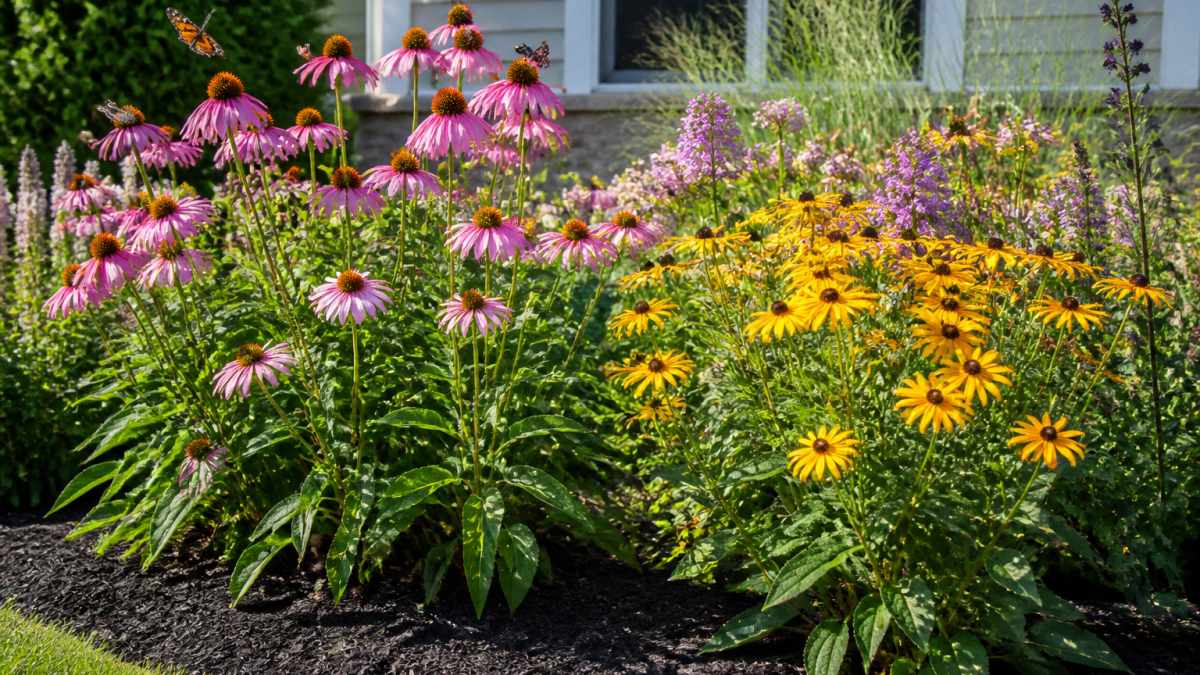
Beyond resource efficiency, native plants support wildlife.
Selecting native plants begins with identifying your hardiness zone and which species thrive in your conditions. Native plant societies and extension services maintain regional lists.
Drought-tolerant natives are especially valuable where rainfall varies.
Soil Health and Organic Matter Management
Soil health is the foundation of sustainable landscaping. Healthy soil holds water better, supports plant growth with less fertilizer, and resists erosion.
Compost is the primary tool.
Mulch protects soil and adds organic matter as it breaks down.
Reducing soil disturbance, avoiding excessive tilling or compaction, preserves soil structure and the microbial communities that make soil function.
Sustainable Landscape Design Ideas for Your Property
Moving from principles to practice requires a structured approach. Begin by understanding your site's actual conditions, then build a plan that works within them. Organize it as a phased process from assessment to installation over one to three growing seasons, spreading cost and learning what works before committing to the full design.
Step 1: Site Analysis and Microclimate Assessment
Before selecting plants or designing features, analyze your property. Observe sun exposure through the day and seasons, note drainage patterns and where water pools or runs off, identify existing soil and vegetation, and understand your microclimate: areas near buildings or pavement that heat up, low spots where frost settles, exposed windy areas.
A practical way to do this is a simple site inventory.
This assessment takes time but prevents costly mistakes. A "full sun" plant in a shaded spot will struggle; a rain garden in a high-traffic area becomes a liability. Site analysis ensures every design decision works with actual conditions.
Step 2: Set Priorities and Define What Success Looks Like
Before choosing interventions, decide which problems matter most on your property. Common priorities include reducing irrigation demand, managing a wet spot or runoff path, replacing high-maintenance lawn, supporting pollinators, or lowering chemical use.
Set a simple target for each priority so you can judge the design later.
Step 3: Choose Interventions That Fit Your Climate and Site
The same principle looks different depending on where you garden.
Local water restrictions and rebate programs also shape the design. Many municipal water utilities publish watering schedules and offer turf-replacement rebates; check your water provider's rules before finalizing an irrigation plan, because a design that assumes unrestricted watering may not be permitted during drought restrictions.
Step 4: Phase the Work and Budget Realistically
Sustainable landscapes are rarely installed in one pass.
Costs vary widely by region and scope, but the trade-offs are consistent. Permeable pavers and porous concrete typically cost more per square foot upfront than conventional asphalt or concrete, but they reduce runoff and may qualify for stormwater credits or rebates in some municipalities.
Step 5: Address Household Needs and Safety
A sustainable design still has to work for the people and animals using it. Plan paths at least 36 inches wide for comfortable passage and wider where wheelchairs or strollers need to turn. Keep sight lines clear near entries and driveways. If children or pets use the yard, avoid plants known to be toxic and choose turf alternatives that tolerate foot traffic.
Step 6: Reduce Chemical Inputs and Maintenance Requirements
Chemical fertilizers and pesticides create dependency: they provide quick results but disrupt soil ecosystems and require repeated applications.
Healthy soil with adequate organic matter produces stronger plants that resist pests naturally.
Where fertilizer is needed, organic options, compost, slow-release organic fertilizers, or targeted applications, provide nutrients without disrupting soil biology.
Maintenance requirements drop dramatically when design matches site conditions and plant selection.
Step 7: Select Sustainable Materials and Locally Sourced Elements
Material choices affect the landscape's total environmental impact. Locally sourced stone, salvaged brick, or reclaimed wood reduce transportation emissions and extraction impacts.
Recycled materials, reclaimed lumber, recycled plastic edging, salvaged stone, extend material life and reduce new extraction.
For hardscaping, consider durability and longevity. A stone patio lasts generations; an asphalt surface needs replacement every 15-20 years.
Measuring Success: Performance Indicators and Long-Term Benefits
Sustainable landscape design delivers measurable outcomes, but only if you track them. Broad claims about savings are easy to make and hard to verify; the useful approach is to pick a small set of indicators, record a baseline before changes, and compare at the same time each year.
Water Use
Water is the easiest indicator to track. Read your water meter or irrigation controller at the start and end of each billing cycle, and separate outdoor use from indoor where your meter allows. If you have an irrigation controller with a flow sensor or a smart controller with usage reports, export monthly totals.
Runoff and Stormwater
Runoff is harder to measure directly, but you can track proxies. Note whether standing water persists after storms in areas that previously flooded, and record the time it takes for puddles to drain. If your property has a rain garden or bioswale, observe whether it fills and drains within a day or two after a heavy rain, a functioning rain garden should infiltrate within about 24-48 hours depending on soil.
Maintenance Hours and Chemical Inputs
Track maintenance in a simple log: hours per month spent mowing, pruning, weeding, irrigating, and applying products, plus the quantity and cost of fertilizer, herbicide, and pesticide used. A spreadsheet with one row per month is enough. Over two to three years, most homeowners see maintenance hours fall as plants establish and turf area shrinks, but the first year often requires more watering and weeding while plants fill in, so compare year two and year three against the baseline, not the first season.
Habitat and Biodiversity
Biodiversity is observable without formal surveys. Keep a simple species list: note which pollinators, birds, and beneficial insects you see, and when. Count pollinator visits to a marked plant for ten minutes on a warm, still morning once a month during the growing season. Record which native plants are being used by insects and which are ignored, this tells you which species are pulling their weight.
Soil Health
Soil improvement is measurable with simple field tests. The jar test (soil in water, shaken and settled) shows texture and roughly how much organic matter is suspended. The infiltration test, dig a small hole, fill it with water, and time how long it takes to drain, indicates compaction and structure.
Costs, Payback, and Lifecycle Trade-offs
Track installation costs by category, soil amendments, hardscape, irrigation, plants, and labor, and compare them against annual savings in water, chemicals, and maintenance hours. Payback periods vary widely by project: a rain barrel or downspout redirection may pay back in a season or two through reduced water use, while permeable hardscape or a full turf conversion may take many years to recover upfront cost through water savings alone.
A Simple Tracking Template
A one-page annual scorecard keeps this manageable. List your baseline and current values for: outdoor water use per summer month, number of standing-water complaints after storms, maintenance hours per month, pounds or dollars of chemical inputs, native plant species count, pollinator observations per month, and soil infiltration time.
Long-term benefits compound. Lower water bills, reduced maintenance costs, improved property value, and enhanced outdoor livability create returns that can exceed the initial investment, but the case is strongest when you can show the numbers from your own property rather than relying on general claims. A landscape designed for sustainability becomes easier and cheaper to maintain as it matures, and a simple annual scorecard is how you confirm that it is.
Frequently Asked Questions
What is the definition of sustainable landscape design?
Sustainable landscape design creates outdoor spaces that reduce environmental impact while meeting your household's functional needs. It integrates water conservation, native plant selection, soil health improvement, and responsible material choices to minimize resource consumption and chemical inputs. The goal is to establish landscapes that support local ecosystems, require less maintenance, and provide long-term environmental and economic benefits for your property.
What are the main principles of sustainable landscaping?
Core sustainable landscaping principles include site analysis to understand your microclimate, selecting native and climate-adapted plants, conserving water through efficient irrigation, improving soil with organic matter, protecting biodiversity and wildlife habitat, reducing chemical fertilizers and pesticides, using sustainable and locally sourced materials, and lowering the carbon footprint of maintenance. These principles work together to create resilient landscapes that support ecosystem services while reducing your maintenance burden and environmental footprint.
How can sustainable landscaping reduce water use?
Water-efficient landscaping reduces consumption through multiple strategies: installing drip irrigation systems that deliver water directly to plant roots, capturing rainwater for reuse, creating permeable surfaces to reduce runoff, applying mulch to retain soil moisture, and selecting drought-tolerant native plants adapted to local rainfall patterns. Stormwater management techniques like rain gardens and bioswales filter runoff naturally. These methods can significantly lower your water bill while protecting local water resources and reducing the environmental impact of landscape maintenance.
What plants are best for a sustainable landscape?
Native plants adapted to your regional climate are ideal for sustainable landscapes because they require less water, fertilizer, and pest management once established. Select species that provide year-round interest, support local pollinators and wildlife, and thrive in your soil type and microclimate. Avoid invasive species and monocultures. A diverse mix of native trees, shrubs, perennials, and groundcovers creates a resilient ecosystem while reducing maintenance demands. Local native plant nurseries and regional extension services can recommend species suited to your area.
How do you improve soil for a sustainable garden?
Build soil health by adding compost and organic matter to increase nutrient content and water retention. Reduce soil erosion through mulching and permeable surfaces. Avoid chemical fertilizers that degrade soil structure; instead, use organic amendments and allow natural decomposition to feed plants. Healthy soil supports beneficial microorganisms, reduces compaction, and improves plant resilience. Regular soil testing helps you understand your soil's pH and nutrient levels, allowing you to make targeted improvements rather than applying unnecessary chemicals.
What materials are considered sustainable for landscaping?
Sustainable landscaping materials include reclaimed or recycled stone, locally sourced wood, permeable pavers that reduce runoff, and natural mulches like shredded leaves and bark. Avoid materials with high transportation costs or virgin resource extraction. When selecting hardscape elements, choose durable options that minimize replacement frequency and environmental impact. Locally sourced materials reduce your landscape's carbon footprint and support regional suppliers. Consider the full lifecycle of materials before installation to ensure they align with your sustainability goals.
How does sustainable landscape design improve property value and curb appeal?
Well-designed sustainable landscapes enhance curb appeal through attractive native plantings, thoughtful hardscape integration, and improved outdoor living spaces. Properties with ecological design features often appeal to environmentally conscious buyers and may command higher resale values. Reduced maintenance requirements save time and money over the property's lifecycle. Sustainable landscapes also improve stormwater management and reduce erosion, protecting your property's foundation and surrounding environment. Professional landscape design ensures your sustainable features are both functional and visually appealing.