 how-to
Fix Lawn Drainage in Heavy Clay Soil: A Step-by-Step Guide
Table of Contents
- Why Heavy Clay Soil Causes Drainage Problems
- Diagnose Your Lawn Drainage Issue
- How to Improve Drainage in Clay Soil
- Does Sand Improve Clay Soil Drainage?
- How to Fix a Waterlogged Lawn
- Install a French Drain for Lawn Drainage
- Recover and Maintain Your Lawn After Drainage Work
- DIY vs. Professional Drainage Installation
- Frequently Asked Questions
Last Updated: October 13, 2026
Why Heavy Clay Soil Causes Drainage Problems
Heavy clay soil holds water like a sponge holds air. The particles pack tightly together, leaving almost no space for water to move through.
This creates a serious problem for lawns. Grass roots need oxygen. When soil stays waterlogged, roots suffocate. The grass yellows, weakens, and eventually dies.
The good news: it's fixable. Understanding why clay soil fails is the first step to fixing lawn drainage heavy clay soil.
Clay particles are extremely fine. They're much smaller than sand particles. When these fine particles pack together, water can't flow through them easily.
Heavy rain makes this worse. Water pools on the surface instead of draining down.
Diagnose Your Lawn Drainage Issue
Before you fix anything, figure out exactly what you're dealing with. Not all wet lawns have the same problem. Some have standing water. Others have slow drainage. A few have both.
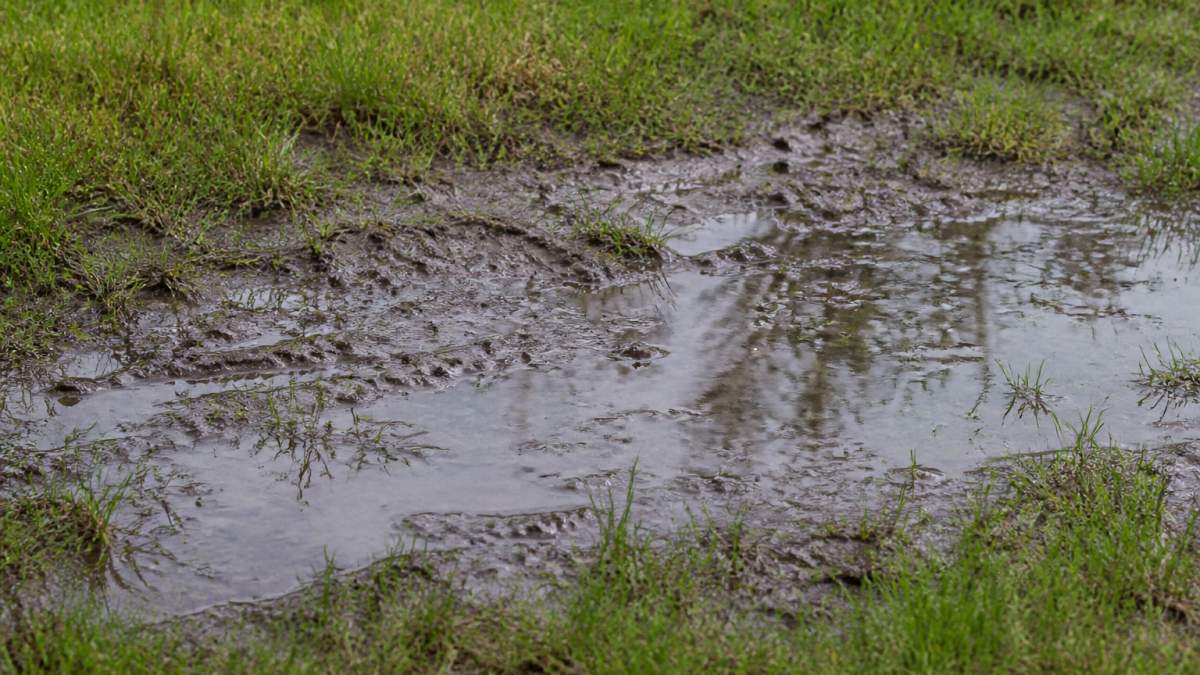
Identify standing water and low spots
Walk your lawn after heavy rain. Look for areas where water pools and sits. These are your problem zones. Mark them mentally or take photos.
Standing water that lasts more than a few hours is a red flag. Healthy lawns drain within 24 hours.
Low spots collect water naturally. Water flows downhill and gathers in depressions. These are the first places to get waterlogged. They're also the easiest to fix with grading.
Check the edges of these wet areas. Dead or dying grass in the center means roots have been drowning.
Test soil infiltration rate
You can test how fast water soaks into your clay soil. This tells you how bad the drainage problem is.
Find a low spot in your yard. Dig a small hole about 6 inches deep. Fill it with water. Time how long it takes to drain completely.
Fast drainage: water disappears in less than 1 hour. That's good.
Slow drainage: water takes 1-4 hours. That's typical for clay soil.
Very slow drainage: water sits for more than 4 hours. That's a serious problem.
If your test shows very slow drainage, you need to improve soil structure or install subsurface drainage. A simple grading fix won't be enough.
How to Improve Drainage in Clay Soil
There are two main ways to fix lawn drainage heavy clay soil. You can improve the soil structure itself, or you can add drainage systems. Most yards need both.
Aerate compacted soil
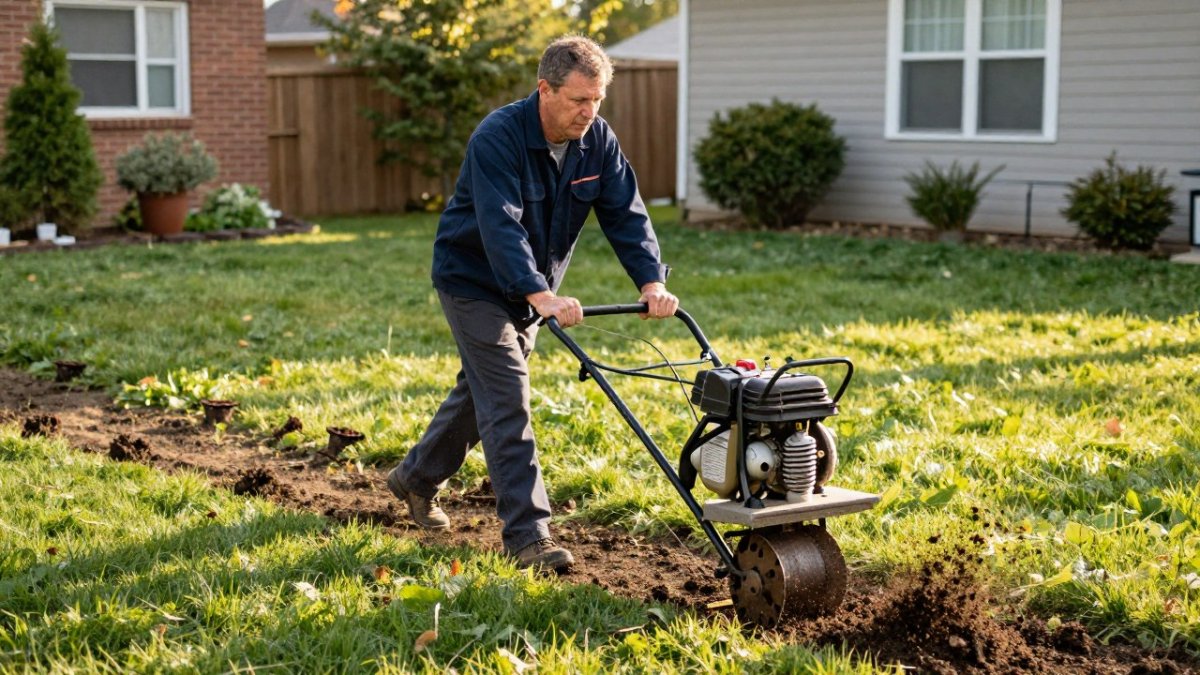
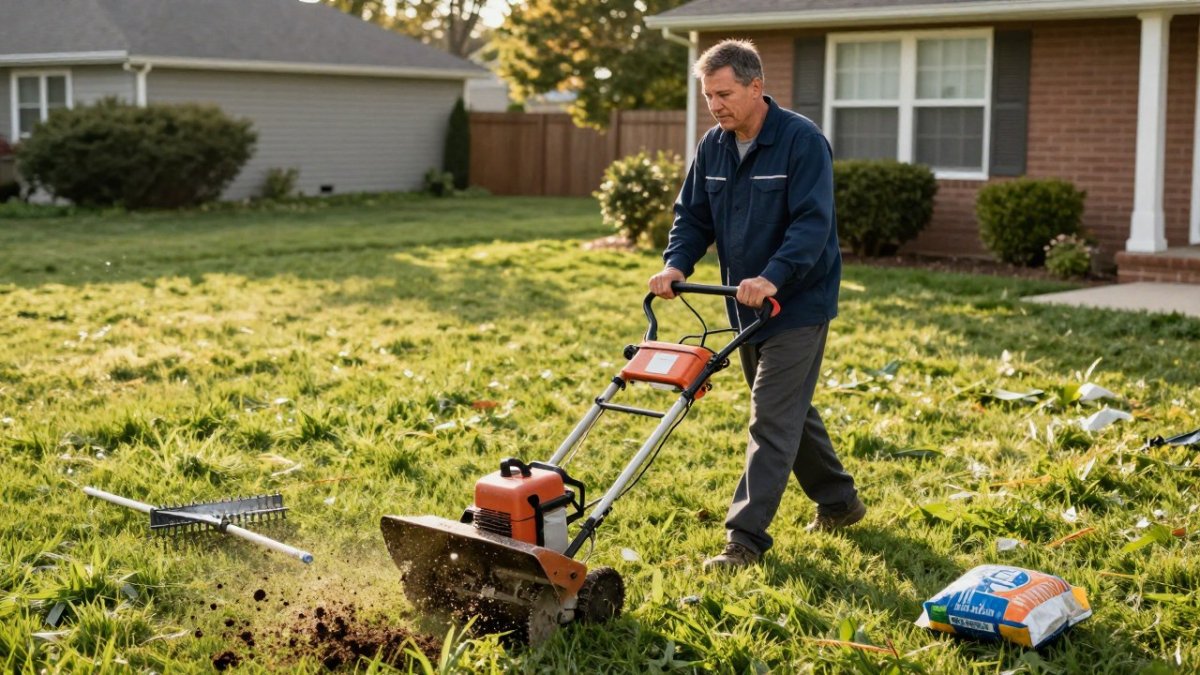
Aeration punches small holes into the soil. This breaks up compaction and creates space for water to move through.
There are two types of aeration:
Spike aeration uses solid spikes to poke holes. It's cheaper and easier but less effective. The spikes don't remove soil, so compaction often closes the holes again quickly.
Core aeration pulls out small plugs of soil. This is much more effective. It actually removes compacted material and leaves space open. The holes stay open longer.
For heavy clay soil, core aeration is worth the extra cost. Spike aeration alone won't solve your problem.
Aerate in spring or fall when the soil is moist but not waterlogged. The best time is when grass is actively growing. This lets the lawn recover quickly.
After aeration, leave the soil plugs on the surface. They break down and add organic matter back to your lawn.
Add organic matter and compost
Organic matter changes how clay soil holds and moves water. It opens up the soil structure and makes it less dense.
Spread 2-4 inches of compost over your lawn. Work it into the top few inches of soil. The best time is spring or fall.
As compost breaks down, it creates tiny air pockets in the clay. Water can now flow through these pockets. The soil becomes less waterlogged.
This takes time. You won't see major improvements in the first year. But after 2-3 years of adding compost annually, your drainage will improve significantly.
Don't stop after one application. Clay soil needs ongoing organic matter additions. Add compost every year to keep improving drainage.
Does Sand Improve Clay Soil Drainage?
Many people think adding sand to clay soil fixes drainage. This is a common mistake.
Sand alone doesn't work. In fact, mixing sand into clay can make drainage worse. Sand particles are larger than clay particles.
If you want to use sand, you need the right approach. Add sand AND compost together in equal parts. The compost opens up the soil structure. The sand provides drainage material.
But compost alone is usually more effective than sand and compost mixed. Compost is easier to apply and breaks down to improve soil over time.
For most homeowners, skip the sand. Focus on compost and aeration instead. These methods actually solve the problem.
How to Fix a Waterlogged Lawn
If your lawn has standing water after every rain, you need surface drainage solutions. These move water away from problem areas before it pools.
Grade and slope your lawn for surface runoff
Grading changes the slope of your lawn so water flows downhill instead of pooling.
Look at your problem areas. Water flows to these spots because they're lower than surrounding ground. You need to raise these low spots slightly or create a slope away from them.
The fix depends on how low the spot is:
- Low spot is 2-3 inches deep: raise the soil level with fill dirt
- Low spot is deeper: consider a drainage channel or French drain instead
- Multiple low spots across the lawn: you may need professional grading
When you add fill dirt, use topsoil mixed with compost. This gives new grass a good foundation. Compact it gently so it stays in place but doesn't become waterlogged again.
The slope should be gradual. A slope of 1-2% (about 1 inch drop per 8 feet) is enough to move water without looking unnatural.
Create drainage channels or swales
A swale is a shallow channel that guides water away from problem areas. It looks like a gentle ditch in your lawn.
Swales work best when you have one main low spot. Dig a channel from the low spot toward a drainage outlet (a storm drain, ditch, or drainage easement).
Make the swale 6-12 inches deep and 12-18 inches wide. The bottom should slope gently downhill. Plant it with water-tolerant grass or sedges. This prevents erosion while water flows through.
Swales are cheap and easy to install yourself. They're also effective for moving surface water away from your house and lawn.
Install a French Drain for Lawn Drainage
A French drain is a subsurface drainage system. It catches water before it pools and moves it away underground.
Plan your drainage system and outlet
Before you dig, plan where the water will go. A French drain needs an outlet, a place where water exits the system.
Common outlets include:
- Storm drain in the street or alley
- Existing ditch or drainage easement on your property
- Lower area of your yard where water can disperse
- Daylight outlet (where the drain exits at ground level on a slope)
Call your local utility locating service before you dig. They'll mark underground utilities like gas lines and water pipes. This prevents accidents and expensive damage.
Sketch your drain layout. It should run from the problem area downhill toward the outlet. The drain needs to slope continuously downhill, even a slight uphill section will trap water.
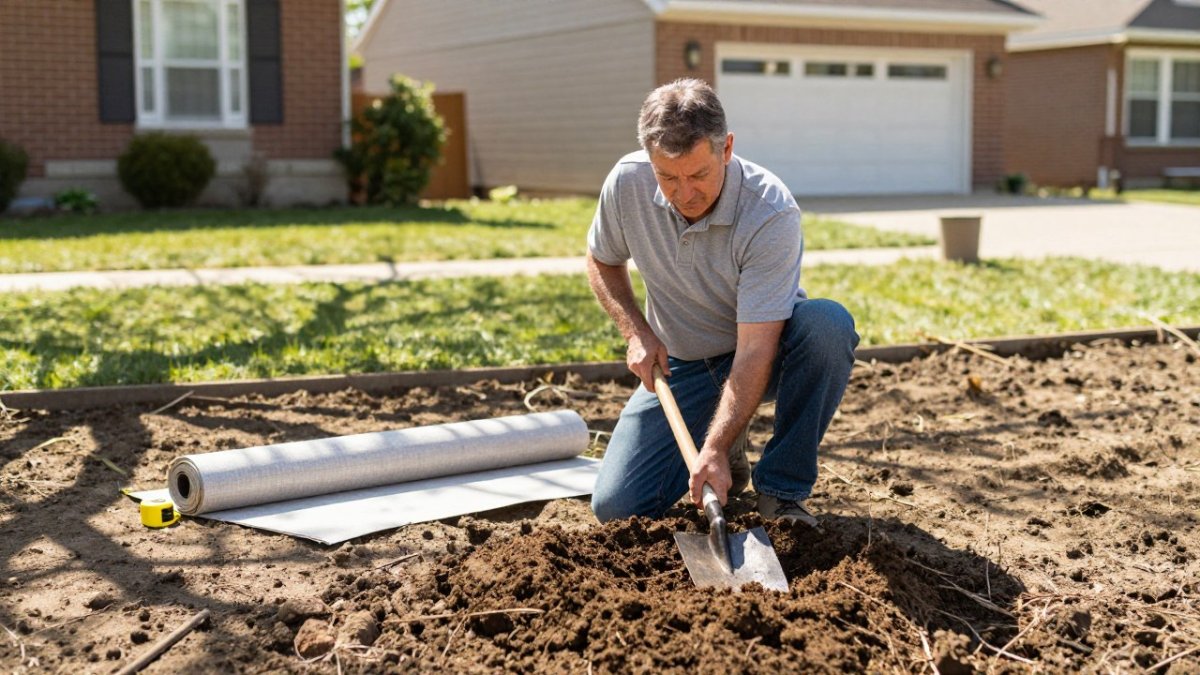
Measure the distance from your problem area to the outlet. You'll need drainage pipe, gravel, and landscape fabric for this length.
Dig and install the French drain
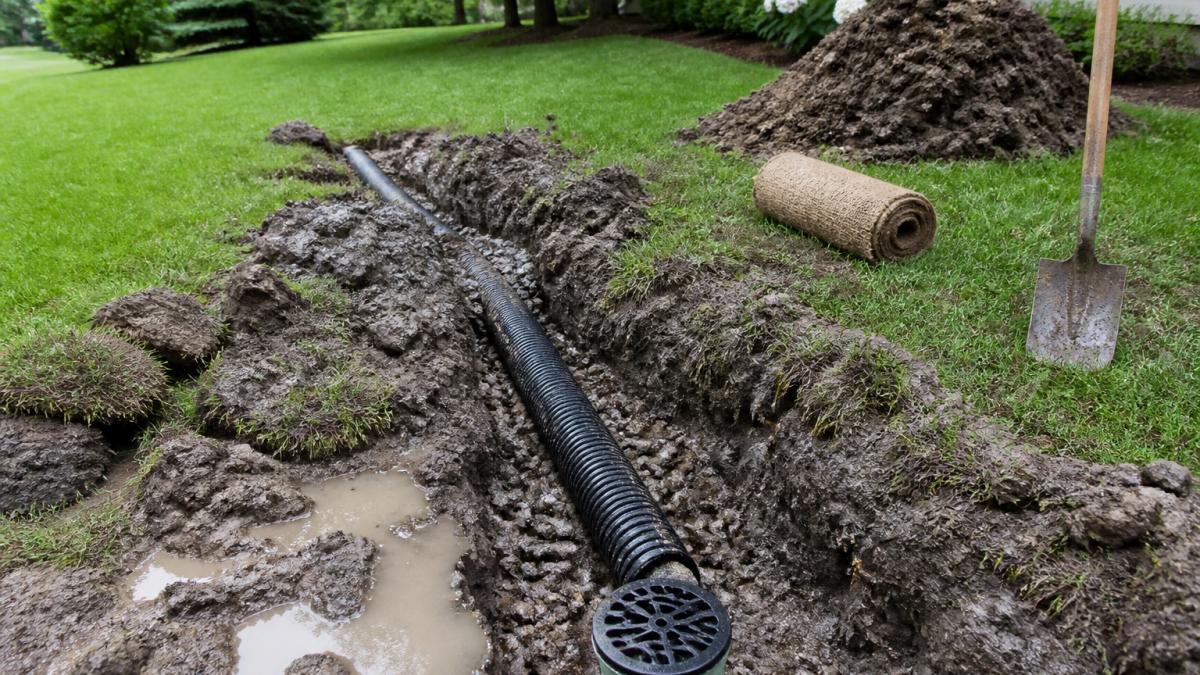
A French drain is a trench filled with gravel and perforated pipe. Water soaks into the gravel, enters the pipe, and flows downhill to the outlet.
Here's how to install one:
- Dig a trench 12-18 inches deep and 12-18 inches wide along your planned route
- Make sure the bottom slopes continuously downhill toward the outlet
- Lay landscape fabric at the bottom of the trench
- Add 2-3 inches of drainage gravel (crushed stone, not pea gravel)
- Place perforated drainage pipe on the gravel
- Cover the pipe with 2-3 more inches of drainage gravel
- Wrap the landscape fabric over the top of the gravel
- Backfill with topsoil and seed with grass
The landscape fabric prevents soil from clogging the gravel. The gravel allows water to flow freely to the pipe. The perforated pipe carries water downhill to the outlet.
A French drain is labor-intensive but highly effective. For serious drainage problems, it's worth the effort.
Recover and Maintain Your Lawn After Drainage Work
After you fix your drainage, your lawn needs time to recover. Waterlogged soil and dying grass don't bounce back overnight.
Reseed bare spots with grass seed suited to your area. Water new seed regularly for the first month.
Apply a light layer of compost in fall and spring. This continues improving your soil.
Avoid heavy foot traffic on recovering areas. This compacts the soil and undoes your drainage improvements.
Watch for water pooling during the next heavy rain. If water still collects in certain spots, you may need additional drainage work.
Most lawns need 1-2 years to fully recover from severe waterlogging. Be patient. Consistent maintenance pays off.
DIY vs. Professional Drainage Installation
Some drainage work you can handle yourself. Other projects require professional equipment and expertise.
DIY-friendly projects:
- Aeration with a rented core aerator
- Adding compost and organic matter
- Creating shallow swales
- Simple grading for minor low spots
Projects that need professionals:
- Installing French drains (requires precise slope, proper outlet connections, and heavy digging equipment)
- Major grading work (changing lawn elevation significantly)
- Connecting to storm drains or municipal drainage systems
- Working around underground utilities
- Fixing drainage in yards with complex layouts or multiple problem areas
If you have standing water that won't drain after aeration and grading, a French drain is usually necessary. This is the point where professional help saves time and ensures the job is done right.
Ward's Lawn Care & Landscape Co. handles drainage work for residential and commercial properties throughout Greater Cleveland. We design systems that actually solve your problem, not temporary fixes. We handle the planning and installation.
Waterlogged lawns destroy your outdoor space and waste your time. Our highly trained technicians handle the entire process, from diagnosis to installation to recovery. Contact us for a free estimate and let's get your lawn draining properly.
Frequently Asked Questions
How long does it take to improve drainage in heavy clay soil?
Drainage improvements depend on the method. Aeration and adding organic matter show results within one growing season as soil structure gradually improves. French drains work immediately once installed. However, clay soil's permeability changes slowly, expect 6 to 12 months to see significant improvement in water infiltration. Multiple years of consistent organic matter additions further enhance long-term drainage.
Will adding organic matter improve drainage in heavy clay soil?
Yes. Organic matter like compost breaks up clay particles and creates pore spaces that allow water to move through soil more easily. Mix 2 to 4 inches of compost into the top 6 to 8 inches of soil. Repeat annually to sustain improvement. Organic matter also enhances soil structure, making it less prone to compaction, which is especially important for lawns that receive foot traffic.
Should you aerate a waterlogged lawn?
Yes, aeration is one of the first steps to fix a waterlogged lawn. It breaks up compacted clay and creates channels for water to drain. Use either spike aeration or core aeration; core aeration removes soil plugs and is more effective for heavy clay. Aerate in spring or fall when soil is moist but not waterlogged. Combine aeration with organic matter addition for best results.
When should you install a French drain in a clay-soil lawn?
Install a French drain when simpler methods (aeration, organic matter, grading) don't resolve standing water within 6 months, or when water pools persistently in specific low areas. A French drain is essential if water remains 24 hours after heavy rain. Plan installation in spring or fall to avoid wet soil.