 how-to
How to Fix Patchy Dying Grass: A 2026 Lawn Repair Guide
Table of Contents
- Diagnose the Cause Before You Repair Patchy Dying Grass
- How to Identify Lawn Fungus vs. Pest Damage
- Step-by-Step: Remove Dead Grass and Prepare the Soil
- Lawn Aeration Benefits for Compacted Soil
- When to Fertilize Lawn for Recovery and Seeding
- Choosing Grass Seed and Watering for Germination
- Troubleshooting Failed Repairs and Pet Damage
- Conclusion
- Frequently Asked Questions
Last Updated: September 23, 2026
Diagnose the Cause Before You Repair Patchy Dying Grass
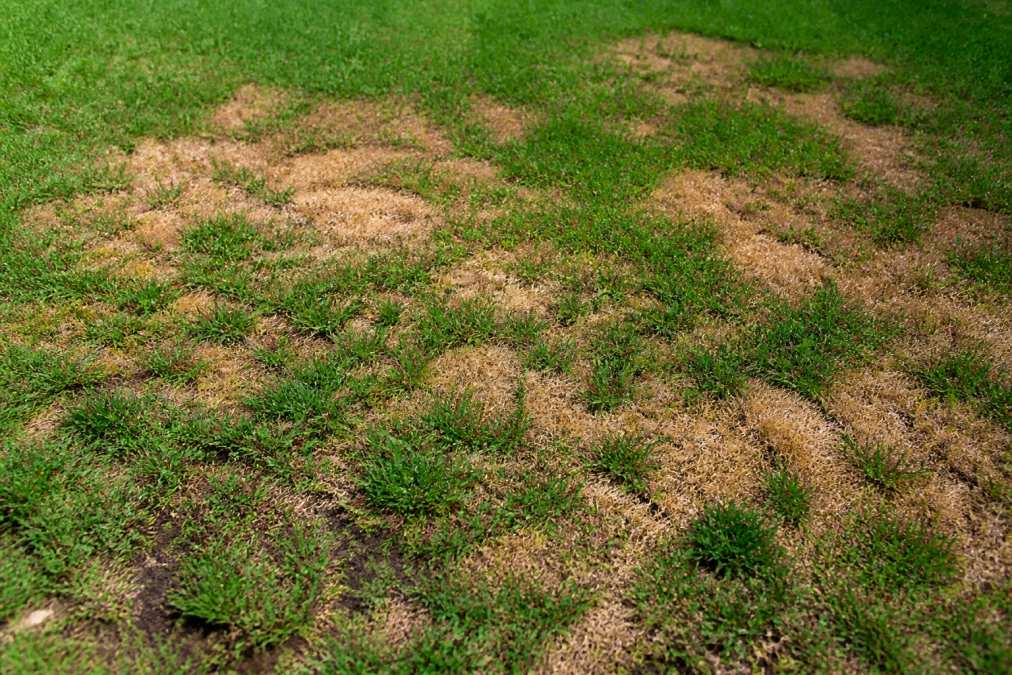
Most homeowners attack brown spots with seed and fertilizer before knowing what killed the grass, the biggest mistake in lawn repair. Fixing patchy dying grass starts with diagnosis, not shopping.
Living problems:
- Grub damage. White grubs chew roots just below the surface. The turf lifts up like loose carpet.
- Fungal infection. Brown patch and dollar spot spread in humid stretches. Look for rings or lesions on the blades.
- Pet urine. Nitrogen burns the center of the spot and leaves a dark green ring around it.
Soil and care problems:
- Soil compaction. Foot traffic and clay soil squeeze out the air roots need.
- Thatch buildup. A thick layer of dead stems blocks water and seed from reaching soil.
- Nutrient deficiency. Starved turf thins out and weeds move in.
- Improper watering. Shallow daily sprinkling grows shallow roots that die in heat.
Ohio State University Extension turfgrass disease guides
How to Identify Lawn Fungus vs. Pest Damage
Lawn fungus and pest damage look similar from ten feet away but differ up close.
Fungus clues:
- Irregular patches that expand outward in rings
- Lesions, spots, or fuzzy growth on individual blades
- Damage that worsens in warm, humid weather
- Grass that thins but does not lift easily
Grub and pest clues:
- Turf that peels back like a rug
- Spongy ground underfoot
- Birds, skunks, or raccoons digging at night
- C-shaped white larvae in the top inch of soil
Step-by-Step: Remove Dead Grass and Prepare the Soil
Repair begins with removal: dead grass and thatch block seed-to-soil contact, so nothing roots until the surface is clear.
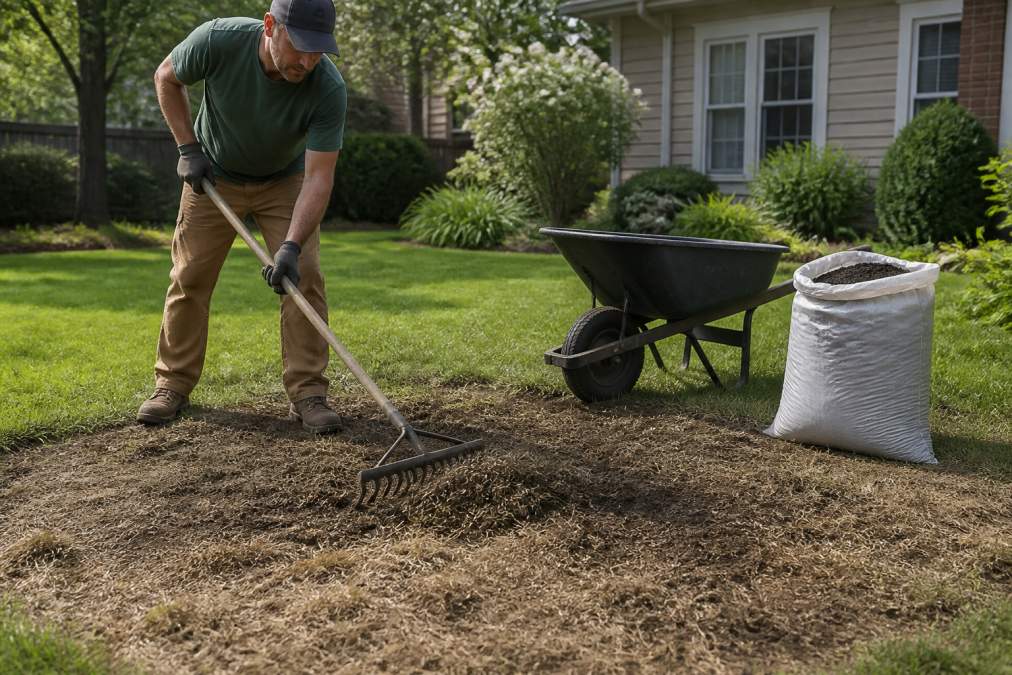
Work through these steps:
- Rake out the dead material. Use a stiff garden rake. Pull until you see soil, not matted stems.
- Dethatch if the layer is thick. A dethatching rake or machine lifts the brown layer sitting above the soil.
- Loosen the top inch of soil. Scratch it with a hand cultivator or rake tines. Seed needs a rough surface to grab.
- Fix compaction first if the ground is hard. Core aeration pulls plugs of soil out and opens channels for air, water, and roots.
- Add soil amendment or topsoil. Spread a thin layer and mix it into the top inch. This improves soil pH and gives roots something to work with.
- Level the spot. Fill low dips so water does not pool and drown new seedlings.
Lawn Aeration Benefits for Compacted Soil
Lawn aeration benefits go beyond the surface: core aeration removes small soil plugs, opening space for air, water, and nutrients to reach the root zone.
Signs you need it:
- Water puddles and drains slowly
- The soil feels hard when you push a screwdriver in
- The lawn thins in high-traffic areas
- Thatch has built up over several seasons
When to Fertilize Lawn for Recovery and Seeding
When to fertilize lawn for recovery depends on what you are feeding. New seed and existing turf want different products at different times.
For new seed:
- Use a starter fertilizer at seeding time. It is higher in phosphorus, which supports root growth.
- Do not use a standard high-nitrogen fertilizer on brand-new seedlings. It can burn tender roots.
For existing turf recovery:
- Fertilize in early fall for cool-season grasses, when top growth slows and roots strengthen.
- A light spring feeding helps, but heavy spring nitrogen pushes top growth at the expense of roots.
Choosing Grass Seed and Watering for Germination
The right seed blend and steady moisture decide whether your repair fills in or fails. Seed for a cool-season Upper Midwest lawn is wrong for a warm-season Southern lawn, and buying off the shelf without checking your zone wastes a season.
Match the seed to your climate zone, not the shelf
Turfgrass splits into two broad groups, and your repair seed has to come from the right one.
Cool-season grasses (active growth in spring and fall, semi-dormant in summer heat):
- Kentucky bluegrass, self-repairing via rhizomes, but slow to germinate (often 14-30 days) and thirsty. Best in full sun with irrigation.
- Tall fescue, deep roots, heat- and drought-tolerant, germinates in roughly 7-14 days. The workhorse for transition-zone and mid-Atlantic lawns.
- Fine fescue (creeping red, hard, chewings), the shade and low-input option. Tolerates dry shade better than bluegrass, but does not self-repair.
- Perennial ryegrass, fastest germination (5-10 days), often used as a nurse grass in blends, but weak on its own in cold winters.
Warm-season grasses (green in summer, brown after first frost):
- Bermuda, aggressive spreader, needs full sun and frequent mowing. Seed is slow and uneven; sod or plugs are often more reliable for small patches.
- Zoysia, dense and shade-tolerant for a warm-season grass, but very slow to establish from seed.
- St. Augustine, shade-tolerant and common in the Gulf states, but almost always sold as sod or plugs because seed is unreliable.
- Centipede, low-maintenance and acidic-soil-tolerant, slow from seed.
Read the seed label like a contract
Every bag sold for lawn use carries a label. Check three numbers before you buy:
- Germination percentage, higher is better; below about 85% means more inert filler.
- Weed seed content, should be 0.00% or as close as the label allows. Anything higher seeds weeds into your repair.
- Other crop seed and inert matter, lower is better; this is the non-grass portion of the bag.
Also check the date of the test on the label: viability drops with age and old seed germinates unevenly. Buy fresh and store leftovers cool and dry.
Seed-to-soil contact and moisture retention
Seed-to-soil contact and moisture retention are conditions seed cannot do without. Press seed into the soil with a light rake or roller, broadcasting onto a crusted surface leaves it high and dry. Cover with roughly 1/8 to 1/4 inch of mulch or lawn dressing; straw, peat moss, or commercial seed cover all work. The goal is shade and moisture, not a blanket.
Watering rules for new growth
- Keep the top inch moist, not soaked, until germination. A light mist two to three times a day in hot weather is normal for the first two weeks.
- Light, frequent watering beats one deep soak at this stage. Seedlings have shallow roots and cannot reach deep moisture.
- Once seedlings reach about 2 inches and have been mowed twice, shift to deeper, less frequent watering, roughly 1 inch per week, to push roots down.
- Back off frequency in cool, cloudy weather to avoid soggy soil and damping-off fungus.
Troubleshooting Failed Repairs and Pet Damage
If your repair failed, the cause is usually still there. Seed that never germinated, seedlings that died young, or patches that returned all point to a skipped problem. This section covers diagnosing a failed repair and fixing pet damage, a leading cause of patchy lawns.
Why repairs fail: a diagnostic table
| Symptom | Likely Cause | Fix |
|---|---|---|
| Seed never sprouted | Dry soil, poor seed-to-soil contact, old seed | Re-rake, re-seed fresh, water lightly twice daily |
| Seedlings died after sprouting | Damping-off fungus, heat stress, washed-out seed | Improve airflow, water in early morning, re-seed with a light mulch cover |
| Patch returned in weeks | Cause never removed (grubs, compaction, fungus) | Diagnose again, treat the root problem before re-seeding |
| Bare spot keeps spreading | Active fungus or pest | Treat before re-seeding; re-seeding over an active problem just feeds it |
| New grass is a different color or texture | Wrong species or blend | Overseed with a matching blend; small mismatches blend in over a season |
| Seed washed into a pile after rain | No mulch cover, sloped ground | Re-grade lightly, cover with straw or seed cover, water gently |
A common pattern: the repair looks fine for two weeks, then thins out, almost always a soil or pest problem the seed could not overcome. Pull a plug and check for grubs, compaction, or fungal lesions before buying more seed.
Pet damage: the repair most guides skip
Urine spots are a leading cause of patchy grass and need a different fix than grub or fungus damage. Dog urine is high in nitrogen and salts: a concentrated hit burns the center (the dead, straw-colored patch) while the nitrogen load creates a dark green ring of over-stimulated growth. Female dogs squat and concentrate urine in one spot, so their damage is often worse than a male dog's marking.
Conclusion
A patchy lawn rarely fixes itself, and the wrong repair wastes seed, water, and a full growing season. Diagnose the cause, clear the dead material, fix the soil, then seed and water with patience, that order separates a repair that lasts from one that fades by July.
Frequently Asked Questions
What are the primary causes of patchy, dying grass?
Patchy dying grass usually traces to one of six causes: soil compaction, grub damage, fungal infection, nutrient deficiency, pet urine, or improper watering. In Greater Cleveland's clay-heavy soils, compaction and poor drainage are common culprits. Before repairing, pull a sample of the affected turf and check for white grubs or fungal lesions. Matching the repair method to the actual cause prevents repeated failure.
How do I determine if my lawn needs aeration or overseeding?
Test soil compaction by pushing a screwdriver into the turf. If it resists past the first inch, you need core aeration. If the soil is loose but the lawn is thin, overseeding alone may suffice. Many lawns benefit from both: aerate first to open the soil, then overseed immediately so seed-to-soil contact improves germination rates. Fall is the ideal window for this combination in Ohio.
How long does it take for grass seed to fill in bare patches?
Most cool-season grass seed germinates in 7 to 14 days when soil temperatures stay between 50 and 65 degrees Fahrenheit. Full establishment takes 6 to 8 weeks. Keep the seedbed consistently moist, not soaked, during germination. Avoid heavy foot traffic until new blades reach 2 to 3 inches. In Cleveland's climate, seeding in late summer or early fall gives the best results before winter dormancy.
What soil amendments are necessary to fix thinning lawn areas?
Start with a soil test to check pH and nutrient levels. Most lawns perform best at a pH between 6.0 and 7.0. If pH is low, apply lime. For clay soils, add compost or a quality topsoil blend to improve structure and drainage. A starter fertilizer high in phosphorus supports root development. Apply a thin layer of lawn dressing or compost over the seedbed to retain moisture and protect seedlings.