 listicle
Best Native Shrubs for Privacy: A Regional Guide
Table of Contents
- Why Native Shrubs Outperform Non-Native Options for Privacy
- Native Shrubs for Screening: Top Species by Region
- Fast-Growing Native Shrubs for Privacy: Speed and Density
- Evergreen Native Shrubs for Privacy: Year-Round Screening
- Native Shrubs for Wet Soil: Solutions for Poorly Drained Sites
- Planting Layout, Spacing, and Time to Full Privacy
- Maintenance and Establishment Calendar for Native Privacy Hedges
- Frequently Asked Questions
Last Updated: October 8, 2026
Why Native Shrubs Outperform Non-Native Options for Privacy
Native shrubs for privacy offer advantages non-native species cannot match: they're adapted to your local climate, need less maintenance once established, and support local wildlife and pollinators.
Native shrubs for screening thrive in your region's soil, rainfall, and temperature patterns, meaning faster establishment, deeper roots, and natural resilience to local pests and diseases.
The ecological benefit is equally important: native shrubs feed and shelter birds, beneficial insects, and other wildlife.
Beyond ecology and maintenance, native shrubs for privacy deliver faster visual results. Many grow quickly in their native range and develop the dense branching structure you need for screening.
Native Shrubs for Screening: Top Species by Region
The best native shrubs for privacy depend entirely on where you live. A shrub that thrives in the Southeast may fail in the Northeast, and a Midwest native won't perform the same way in the Great Plains.
A quick note on what "native" means here: a plant is locally native only if it evolved in your ecoregion, not just somewhere in the country.
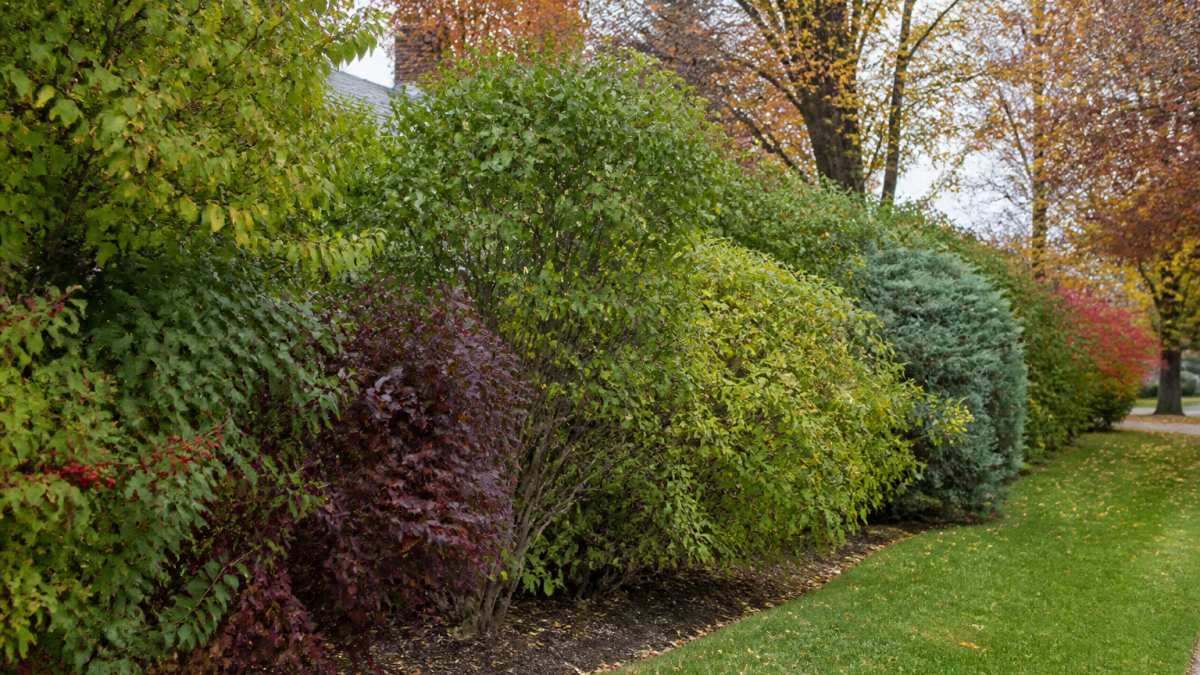
Northeast and Mid-Atlantic Species (Zones 4-7)
The Northeast demands native shrubs for privacy that handle cold winters, variable spring weather, and moderate summer heat.
For a faster-growing option, consider native hawthorns like Cockspur Hawthorn (Crataegus crus-galli). These multi-stemmed shrubs sucker readily, ideal for a dense hedgerow, reaching 20 to 30 feet tall with thorny branching that creates an impenetrable barrier. The trade-off: periodic pruning and thorny cleanup.
Black Chokeberry (Aronia melanocarpa) is an underrated native shrub for privacy in the Northeast and Mid-Atlantic.
Southeast Species (Zones 7-10)
The Southeast's warm, humid climate opens up different native shrubs for privacy screening. Yaupon Holly (Ilex vomitoria) reaches 15 to 20 feet tall with dense, fine-textured foliage, tolerates wet and dry conditions, and produces bright red berries on female plants.
For a deciduous option with seasonal interest, consider native viburnums such as Arrowwood (Viburnum dentatum) and Possumhaw (Viburnum nudum). These flower in spring, produce berries for wildlife, and deliver reliable fall color.
Midwest and Great Plains Species (Zones 3-6)
The Midwest and Great Plains require native shrubs for privacy that tolerate temperature extremes, variable moisture, and harsh winds.
Serviceberry species perform well across this region. Amelanchier covers several native species, all offering spring flowers, summer berries, and reliable fall color, maturing 15 to 25 feet tall and working beautifully in layered privacy plantings.
For the drier Great Plains, Chokecherry (Prunus virginiana) reaches 20 to 30 feet tall with dense branching suitable for screening, tolerates drought once established, and provides berries for wildlife.
Mountain West and Pacific Northwest Species (Zones 3-9)
In the Mountain West, native shrubs for privacy must handle alkaline soils, low humidity, and dramatic day-to-night temperature swings. Rocky Mountain Juniper (Juniperus scopulorum) reaches 20 to 30 feet tall with a narrow, columnar habit that fits tight property lines.
In the Pacific Northwest, native evergreen huckleberry (Vaccinium ovatum) reaches 6 to 10 feet tall with dense, glossy evergreen foliage that screens year-round. Red Osier Dogwood (Cornus sericea) is a fast-growing deciduous native reaching 6 to 9 feet tall, tolerating wet soils, and adding red winter stems.
Find your regional native plant list
Fast-Growing Native Shrubs for Privacy: Speed and Density
If you need screening quickly, certain native shrubs deliver faster results.
Hawthorns top the list for speed and density. Their multi-stemmed habit fills in laterally as well as vertically, creating a solid barrier faster than single-stemmed species.
Serviceberry species also establish quickly, particularly in their native regions, developing multiple stems naturally and growing 2 to 3 feet per year in good conditions.
For maximum speed, space your native shrubs for privacy closer together initially, 3 to 4 feet apart instead of the standard 6 to 8 feet.
Evergreen Native Shrubs for Privacy: Year-Round Screening
Evergreen native shrubs for privacy deliver screening even after deciduous plants drop their leaves. But "evergreen" isn't a single category, and the difference between a true evergreen, a semi-evergreen, and a deciduous shrub that holds leaves late matters enormously when planning a screen you want to work in February.
The Three Screening Categories, Compared by Season
- True evergreens keep their foliage and color 12 months a year. They provide full screening in every season, but they generally grow more slowly and cost more per plant.
- Semi-evergreens hold most of their foliage through mild winters but can drop leaves in a hard freeze or in the northern part of their range. They screen fully in spring, summer, and fall, and partially in winter.
- Deciduous shrubs drop all foliage in fall. They screen fully in the growing season and provide zero leaf screening in winter, though a dense twiggy structure still blocks some sight lines.
True Evergreen Natives by Region
In the East and Southeast, the best evergreen options are native hollies. American Holly (Ilex opaca) is hardy in zones 5-9 and reaches 15 to 30 feet tall.
In the Midwest and Plains, Eastern Redcedar (Juniperus virginiana) is the workhorse native evergreen, hardy in zones 2-9 and reaching 30 to 40 feet tall. It is drought-tolerant, wind-tolerant, and one of the most widely distributed native evergreens in the country.
In the Pacific Northwest, Evergreen Huckleberry (Vaccinium ovatum) is hardy in zones 7-9 and reaches 6 to 10 feet tall with dense, glossy foliage.
Semi-Evergreen Natives for Partial Winter Screening
Semi-evergreen species retain much of their foliage through winter in mild climates, providing partial screening even in the coldest months. They're less dense than true evergreens but offer spring flowers and fall color.
Swamp Bayberry (Morella caroliniensis) is semi-evergreen in zones 7-10 and holds foliage through most winters in the coastal Southeast. Some viburnum species, including Leatherleaf Viburnum (Viburnum rhytidophyllum) in zones 5-8, hold leaves late into winter. Note that Leatherleaf Viburnum is native to China, not the U.S., so choose native viburnums like Possumhaw (Viburnum nudum) if local native status matters to you.
The Speed Trade-Off
The trade-off with evergreen native shrubs for privacy is that they often grow more slowly than deciduous species: plan for five to seven years to reach full mature height, versus three to five years for fast-growing deciduous options. If year-round screening is essential, the slower establishment is worth the wait. If you need screening fast and can accept a bare winter look, plant a fast deciduous native like Red Osier Dogwood or Chokecherry as a nurse screen and interplant evergreens that will eventually take over.
Native Shrubs for Wet Soil: Solutions for Poorly Drained Sites
Not every property has well-drained soil. If your site stays wet seasonally or year-round, many native shrubs for privacy will fail.
Viburnum species vary in moisture tolerance, but several native viburnums perform well in wet conditions. Check the specific species' requirements before purchasing, as some prefer drier sites.
For the wettest sites, those that remain waterlogged most of the year, native shrubs like buttonbush and some willow species may be your only option.
Planting Layout, Spacing, and Time to Full Privacy
The spacing and layout of your native shrubs for privacy determines how quickly you achieve screening and how dense your final hedge becomes.
For faster results, use a staggered two-row pattern with plants 4 to 6 feet apart within each row and rows offset by 2 to 3 feet.
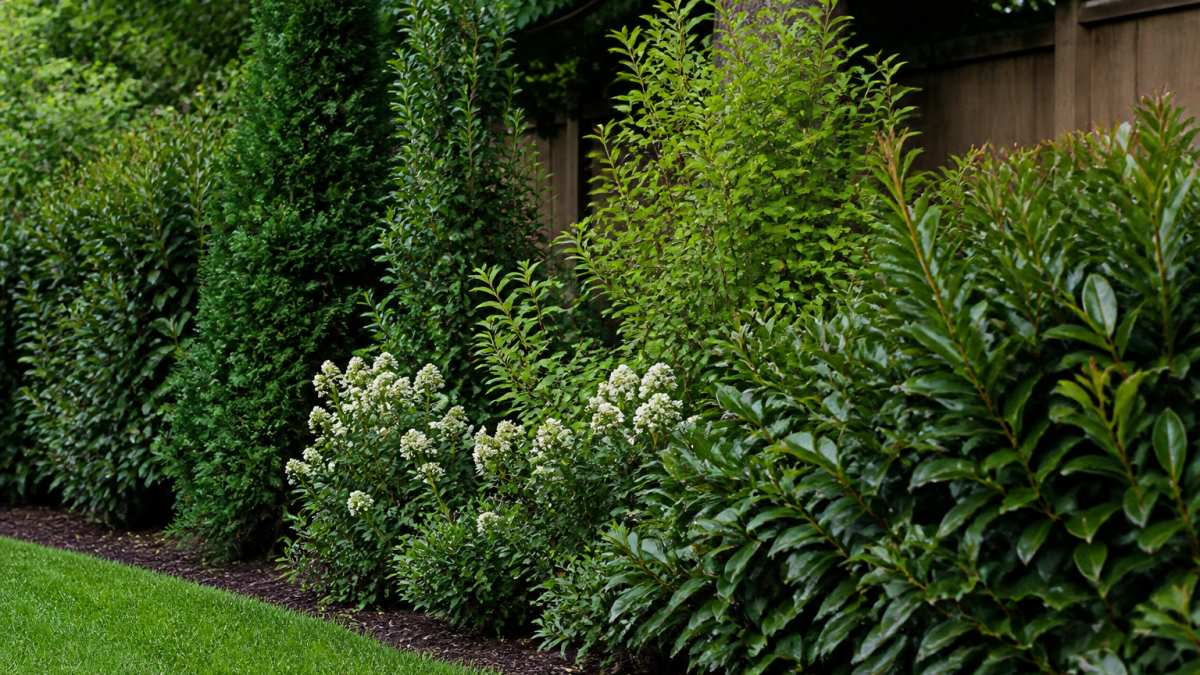
Three-row layered plantings create the densest, most professional-looking privacy screens: tall species in back, medium shrubs in the middle, shorter species in front.
Expect these timelines based on spacing and species:
- Single row, standard spacing (6-8 feet): 5-7 years to full screening
- Single row, close spacing (4-6 feet): 4-5 years to full screening
- Two-row staggered: 3-4 years to full screening
- Three-row layered: 2-3 years to full screening
Time to full mature height (not just screening) ranges from 5 to 15 years depending on species and site conditions.
Maintenance and Establishment Calendar for Native Privacy Hedges
The first year after planting is critical for native shrubs for privacy.
Year one tasks:
- Water weekly during the growing season
- Apply 2-3 inches of mulch around plants
- Remove competing weeds by hand or light cultivation
- Avoid pruning except to remove damaged branches
Years two and three focus on filling in and developing structure.
By year three or four, begin light pruning to encourage denser branching if needed. Most native shrubs respond well and develop multiple stems from cut points.
Once established (year five and beyond), native shrubs for privacy require minimal maintenance.
Fertilization is rarely necessary for native shrubs in their native regions. If you planted in poor soil, a light application of balanced fertilizer in early spring of year two can help.
Creating an effective privacy screen with native shrubs for privacy takes planning, but the payoff is a landscape that looks better each year, requires less maintenance, and supports the wildlife that makes your property truly alive. Ward's Lawn Care & Landscape Co. has designed and installed hundreds of native privacy hedges throughout Greater Cleveland, and we've learned that the right species in the right location, spaced properly and maintained consistently, deliver screening that lasts for decades. Contact us for a free estimate on your privacy planting project, and let our highly trained technicians help you select and install native shrubs suited to your specific site conditions.
Frequently Asked Questions
How far apart should you plant native shrubs for a privacy screen?
Spacing depends on mature width and desired screening speed. For fast coverage, plant shrubs at 50-75% of their mature spread; for example, a shrub with a 6-foot mature width might be planted 3-4 feet apart. Closer spacing creates density faster but requires more plants and ongoing pruning. Stagger rows in a hedgerow pattern for denser, more natural screening. Consult a landscape professional to assess your site's conditions and design a layout that meets your timeline and budget.
Which native shrubs grow quickly enough to create a privacy screen?
Fast-growing native shrubs include Allegheny Serviceberry, Black Chokeberry, and Swamp Bayberry, which can add 2-3 feet per year under favorable conditions. In the Southeast, Yaupon Holly and Inkberry Holly offer evergreen coverage without the long wait. Growth rate depends on soil quality, moisture, sunlight, and establishment care. Layered planting with faster-growing shrubs in front and slower species behind can balance speed with long-term structure. Professional installation and mulching accelerate establishment significantly.
Do native shrubs provide privacy in winter?
Deciduous native shrubs lose foliage in winter and offer minimal screening during cold months. Evergreen natives like Inkberry Holly, American Holly, and Yaupon Holly retain leaves year-round and maintain privacy in all seasons. For year-round screening in mixed climates, combine evergreen and deciduous species in a layered design, or choose a predominantly evergreen hedgerow. Winter privacy depends on your hardiness zone and the specific species selected for your region.
What native shrubs don't mind wet feet and can handle poorly drained soil?
Native shrubs adapted to wet or boggy conditions include Black Chokeberry, Swamp Bayberry, and several hawthorn species. These thrive in areas with high water tables, clay soils, or seasonal flooding. Avoid planting moisture-sensitive species like Yaupon Holly in wet sites. Before selecting shrubs, assess your soil drainage and consult with a landscape professional to match plants to actual site conditions. Proper site preparation and mulching improve establishment even in challenging soil.
How do I choose native shrubs for my soil and sunlight?
Start by testing your soil type, pH, and drainage, and observing daily sunlight hours across your property. Most native privacy shrubs prefer full sun (6+ hours) and well-draining soil, though some tolerate partial shade or wet conditions. Match species to your hardiness zone and native range; a plant native to your region is already adapted to your climate. Contact a local extension office or landscape professional to assess your specific site conditions and recommend shrubs that will thrive without extensive amendment.