 listicle
Backyard Fire Pit Design Review: 2026 Guide
Table of Contents
- What Makes a Backyard Fire Pit Design Work
- Gas vs Wood Burning Fire Pit Pros and Cons
- Fire Pit Safety Clearance Requirements
- Portable vs Permanent Fire Pit Options
- Custom Fire Pit Installation Cost Breakdown
- Top Fire Pit Designs for Your Backyard
- How to Choose the Right Backyard Fire Pit Design
- Frequently Asked Questions
Last Updated: October 1, 2026
What Makes a Backyard Fire Pit Design Work
A well-designed backyard fire pit combines efficient airflow, durable materials, and smart placement to create a functional outdoor gathering space. The difference between a pit that smokes you out and one that delivers clean heat comes down to three core elements: how air flows through the fire, what the structure is made from, and where you position it on your property.
Understanding the fundamentals of backyard fire pit design will save you from costly mistakes, whether you're considering a portable smokeless model or a permanent built-in installation.
Smokeless Airflow Technology
Smokeless fire pit designs rely on secondary combustion, where air enters the fire chamber at multiple points to burn off smoke particles before they reach your face.
The most effective systems use 360-degree airflow design: air enters through vents at the base and sides, gets heated, and re-enters the combustion zone at the top, creating a cycle that reduces smoke while increasing heat output.
Look for designs with adjustable airflow controls to fine-tune smoke production based on wind conditions and fuel type. The quality of the airflow design determines performance; not all smokeless pits work equally well.
Material Durability and Weather Resistance
Steel is the standard material for backyard fire pits. Gauge thickness and protective coatings determine whether a pit lasts five years or twenty.
Thicker gauge steel (2-3mm) resists warping and cracking better than thin sheet metal. Stainless steel offers superior rust resistance but costs more; standard steel with quality rust-resistant coating can perform adequately.
Weather-resistant finishes protect the underlying metal from oxidation. A fitted cover between uses extends the lifespan significantly.
Gas vs Wood Burning Fire Pit Pros and Cons
Wood-burning pits deliver authentic flame and heat but require fuel management. Gas pits offer instant on-off convenience but depend on propane supply and cost more upfront.
Wood-Burning Efficiency and Heat Output
Wood fires produce more radiant heat than gas alternatives and create visible flames that enhance outdoor entertainment appeal.
The tradeoff is fuel preparation: you need seasoned firewood (dried 6-12 months), proper storage, and regular ash removal. A removable ash pan makes this task significantly easier.
Wood-burning pits produce more smoke than gas alternatives. If you have close neighbors or unfavorable wind patterns, this becomes a quality-of-life issue.
Propane Conversion and Convenience
Gas fire pits eliminate wood storage and ash cleanup, offering instant flame and heat. Many homeowners choose gas for this simplicity, especially if they entertain frequently.
Propane pits require tank connections and regular refills. Heat output from gas is generally lower than wood burning, though modern designs have closed the gap considerably.
One practical consideration: propane pits work reliably in cold weather, while wood fires become harder to maintain when conditions are wet or freezing. If you live somewhere with harsh winters and want year-round use, gas has a real advantage.
Fire Pit Safety Clearance Requirements
A fire pit placed too close to your house, deck, or fence creates a genuine hazard for your property, neighbors, and emergency responders.
Distance to Structures and Combustibles
The general rule is minimum 10-15 feet from structures, though local codes vary. Combustibles include dry leaves, mulch, overhanging branches, and propane grills. A pit surrounded by dried landscaping becomes a fire hazard regardless of design.
Smokeless pits with efficient airflow concentrate heat more intensely, potentially requiring greater clearance. Don't overlook overhanging branches; sparks and embers rise.
Position your pit so prevailing winds carry smoke away from your house, deck, and neighbors' properties.
Local Fire Code Compliance
Contact your local fire marshal's office or check your city's building code online for regulations on permanent vs. portable pits, maximum diameter, setbacks, and permits.
Some jurisdictions prohibit open flames during certain seasons, require fire extinguishers nearby, or restrict wood burning in favor of gas.
Building without a permit can void your homeowner's insurance and create liability. Getting it right upfront saves headaches later.
Portable vs Permanent Fire Pit Options
Your space, budget, and long-term plans determine whether a portable or permanent pit makes sense.
Portable Smokeless Models
Portable pits excel for renters, smaller yards, or anyone wanting flexibility. You can move them seasonally, store them during winter, or take them camping.
Portable models are lighter and smaller, meaning less heat retention. They're more prone to tipping on uneven ground. Quality matters enormously; a well-made pit from a reputable brand will outlast a cheap knockoff by years.
Setup is simple: place on level ground, clear the surrounding area, and light it. No digging, permits, or permanent commitment.
Permanent Masonry and Built-In Designs
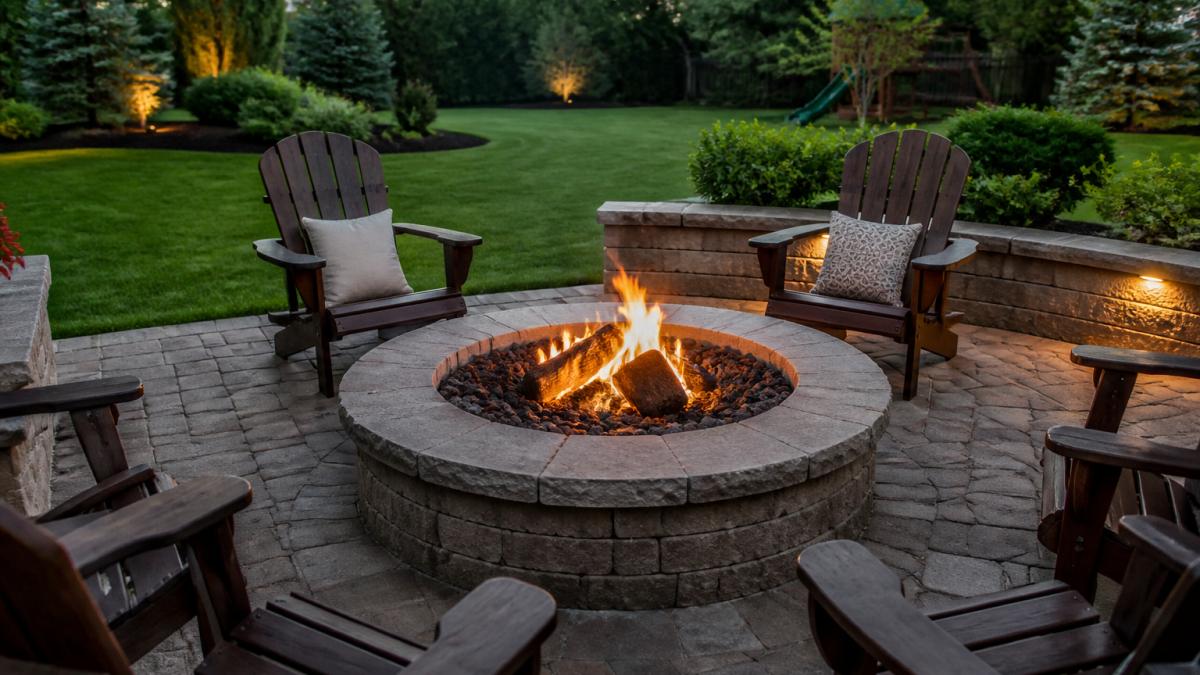
A built-in fire pit integrates with hardscaping, patios, and seating walls, creating a cohesive outdoor living space and adding property value.
Professional installation typically costs thousands of dollars and locks you into that location permanently.
Permanent pits require proper drainage and periodic masonry sealing. The investment pays off if you plan to stay long-term.
Custom Fire Pit Installation Cost Breakdown
Understanding where money actually goes helps you make realistic budget decisions.
Budget-Friendly DIY Kits
A DIY stone ring kit ($300-600) includes interlocking blocks. You dig a shallow pit, create a level base, stack blocks, and add a grate in 4-8 hours.
The advantage is cost and customization. The disadvantage is permanence and quality depending on your execution. Poor drainage or uneven base preparation causes cracking and shifting.
Portable smokeless models range from $200 (basic steel bowl) to $550 (premium brands like Solo Stove). These are true plug-and-play options with no installation required.
Professional Installation and Hardscaping Integration
Professional permanent installations range from $3,000-5,000 for basic designs to $10,000+ for high-end custom masonry with integrated seating.
You're paying for site preparation, proper footing below the frost line, drainage systems, skilled masonry work, and design expertise to ensure your pit is built to code and properly positioned.
Professional installation ensures the pit flows with your existing landscape rather than sitting awkwardly in the middle of your yard.
Long-Term Maintenance Costs
Portable pits require minimal maintenance with essentially zero annual costs unless replacing worn components.
Permanent pits require masonry sealant reapplication every 2-3 years ($200-500). Wood pits require annual fuel. Gas pits require propane refills ($15-30 per fill).
Consider whether you'll use it enough to justify the investment. A pit that sits unused becomes a maintenance liability.
Top Fire Pit Designs for Your Backyard
Solo Stove Bonfire 2.0: Lightweight Smokeless Efficiency
The Solo Stove Bonfire 2.0 is the best portable option for most homeowners, with 360-degree airflow that reduces smoke and stainless steel construction that resists rust.
At $250, it's accessible without being cheap.
Breeo Y Series: Durable Multi-Functional Design
The Breeo Y Series ($499) offers durability and versatility with adjustable legs for uneven terrain and X Airflow technology rivaling Solo Stove's performance.
Tiki Patio Smokeless Fire Pit: Aesthetic Smoke Control
The Tiki Patio model ($395) prioritizes visual appeal alongside smoke control. Its internal airflow system creates consistent flames and effective smoke reduction without the industrial look of some competitors.
Propane Gas Fire Pit Table: Convenience and Clean Burning
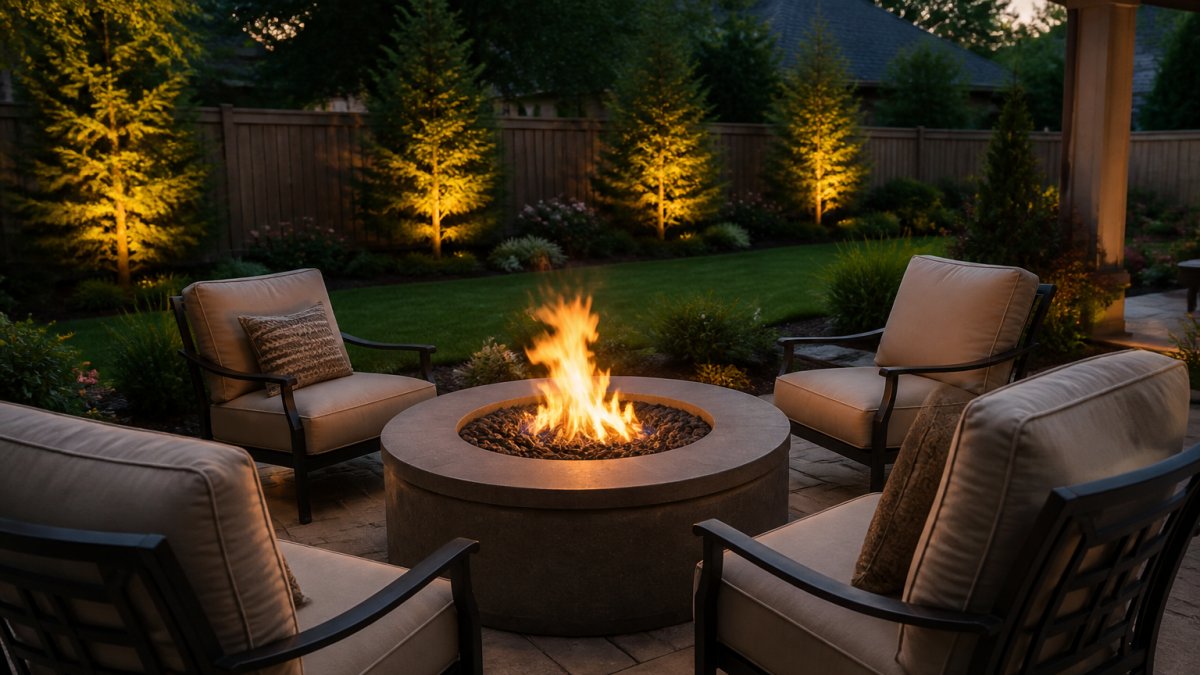
A propane fire pit table ($400+) doubles as outdoor furniture while providing instant, clean flame. No smoke, no ash, no fuel storage, just turn a knob and you have fire.
DIY Stone Ring Kit: Budget Custom Look
A DIY stone ring kit ($300-600) lets you build a traditional-looking fire pit for a fraction of professional installation costs. The interlocking blocks create a clean aesthetic that integrates well with most landscapes.
How to Choose the Right Backyard Fire Pit Design
Assess Your Space and Outdoor Living Needs
Start by measuring your available space and identifying how you actually use your yard. A small urban patio demands a different solution than a sprawling suburban lot. Consider sight lines from your house, deck, and neighbors' properties.
Evaluate Maintenance and Longevity
Consider your tolerance for maintenance. A wood-burning pit requires fuel storage, regular ash removal, and occasional deep cleaning. A gas pit needs propane refills. A permanent masonry pit needs periodic sealing and drainage inspection.
Frequently Asked Questions
What are the most durable materials for a backyard fire pit design?
Stainless steel and Cor-Ten steel offer superior durability for backyard fire pit designs. Stainless steel resists rust and corrosion, while Cor-Ten develops a protective rust layer that prevents deeper deterioration. Heavy-gauge steel (typically 1/8 inch or thicker) withstands repeated heating and cooling cycles better than thin-wall options. For permanent installations, fire-rated concrete and masonry provide long-term durability when properly installed with adequate drainage and footing.
What is the typical cost difference between gas and wood burning fire pits?
Pricing for fire pits varies widely depending on the type, materials, and complexity of the installation. Gas options eliminate ongoing wood purchases but require propane refills; wood-burning offers lower fuel costs but demands more maintenance and ash removal.
How much clearance do I need between a fire pit and my house?
Most fire codes require a minimum 10-foot clearance from structures, including your home, deck, or fence. Check your local fire code, some jurisdictions require 15 feet or more. Overhanging tree branches must be at least 12 feet above the fire pit. The ground around the pit should be clear of dry leaves, mulch, and other combustibles for at least 10 feet in all directions. Professional installation ensures compliance with local regulations and proper clearance to combustibles.
Can I install a fire pit myself, or do I need professional help?
DIY stone ring kits and portable fire pits can be assembled by homeowners with basic tools. However, permanent masonry installations and custom fire pit designs integrated into your hardscaping require professional expertise to ensure proper drainage, footing depth, fire code compliance, and structural stability. Professional installation also increases property value and ensures the design aligns with your overall landscape. For complex projects involving seating walls or integrated cooking surfaces, hiring a landscape professional is recommended.