 how-to
7 Steps to a Lawn Watering Schedule for New Grass Seed
Quick Summary
A new grass seed watering schedule means keeping the top inch of soil consistently damp, not soggy, with light passes two to three times a day in hot weather. Check the soil with a finger before each session. Reduce frequency gradually once seedlings reach about 1.5 inches and have been mowed.
- Push a finger into the top inch of soil; water only when it feels dry.
- Water two to three times a day in hot weather, with early morning as the best time.
- Hand watering sessions usually last five to ten minutes using a gentle spray.
- Calibrate sprinklers with empty cans to find run times that deliver about a quarter inch.
- Cut back frequency gradually once seedlings reach about 1.5 inches and have been mowed.
Table of Contents
- Step 1: Keep the Top Inch of Soil Consistently Moist
- How Often to Water New Grass Seed in Hot Weather
- How Long to Water Grass Seed with a Hose
- Best Times of Day and Sprinkler Calibration
- When to Stop Watering New Grass Seed
- Watering After Overseeding and Troubleshooting Common Problems
- Scheduling Your Lawn Establishment with Ward's
- Frequently Asked Questions
Why Watering New Grass Seed Is Different
Watering new grass seed is not like watering an established lawn. A mature lawn has deep roots that pull water from the soil below. A seed has none of that. It sits in the top layer of soil and depends entirely on that surface staying moist until it sprouts and builds roots.
That is why a lawn watering schedule for new grass seed looks so different from the schedule you use the rest of the year. Watering once a day for a long time can stall germination. Watered too deeply and too rarely, the seed dries out. Watered too heavily, it washes away or rots.
Here is what sets new seed apart: for a broader look at getting a lawn ready for the season, see the spring lawn preparation guide.
- Seed needs constant surface moisture, not deep soaking
- Roots are not yet established, so the top inch of soil does all the work
- Water needs change fast as the seedlings grow
- Overwatering can be as harmful as letting the soil dry out
The goal in the first few weeks is simple: keep the seedbed damp, never soggy.
Step 1: Keep the Top Inch of Soil Consistently Moist
The top inch of soil is the most important zone during germination. Seed sitting there must stay damp, not wet, until it sprouts.
A quick check works well. Push a finger into the soil. If the top inch feels dry, it is time to water. If it feels like a damp sponge, hold off.
Many homeowners find it helps to:
- Water lightly so the surface stays damp without pooling
- Avoid heavy soaking that washes seed into low spots
- Check the soil again before each watering session
- Adjust when the weather changes, especially after rain
Consistency matters more than volume. A light, steady moisture beats occasional heavy drenching every time.
How Often to Water New Grass Seed in Hot Weather
Hot, dry weather dries the seedbed quickly, so new seed often needs watering two to three times a day during the germination period. Cool, cloudy weather may need less.
A simple daily pattern many lawn professionals recommend looks like this:
- Morning: One light watering around sunrise
- Midday: A second session if the surface dries out
- Afternoon or early evening: A third session in very hot or windy conditions
Avoid watering in the middle of the night, since prolonged wet conditions can encourage disease. Stop watering in the evening once the soil stays moist enough to get through the night.
The article's guidance on watering frequency during germination can be scanned at a glance:
| Time of day | Watering pattern | Purpose |
|---|---|---|
| Morning | One light watering around sunrise | Start the day with damp surface soil |
| Midday | Second session if surface dries out | Replace moisture lost to heat |
| Afternoon or early evening | Third session in very hot or windy conditions | Keep seedbed damp in extreme heat |
| Overall | Two to three times a day in hot weather | Keep the top inch damp, not soggy |
How Long to Water Grass Seed with a Hose
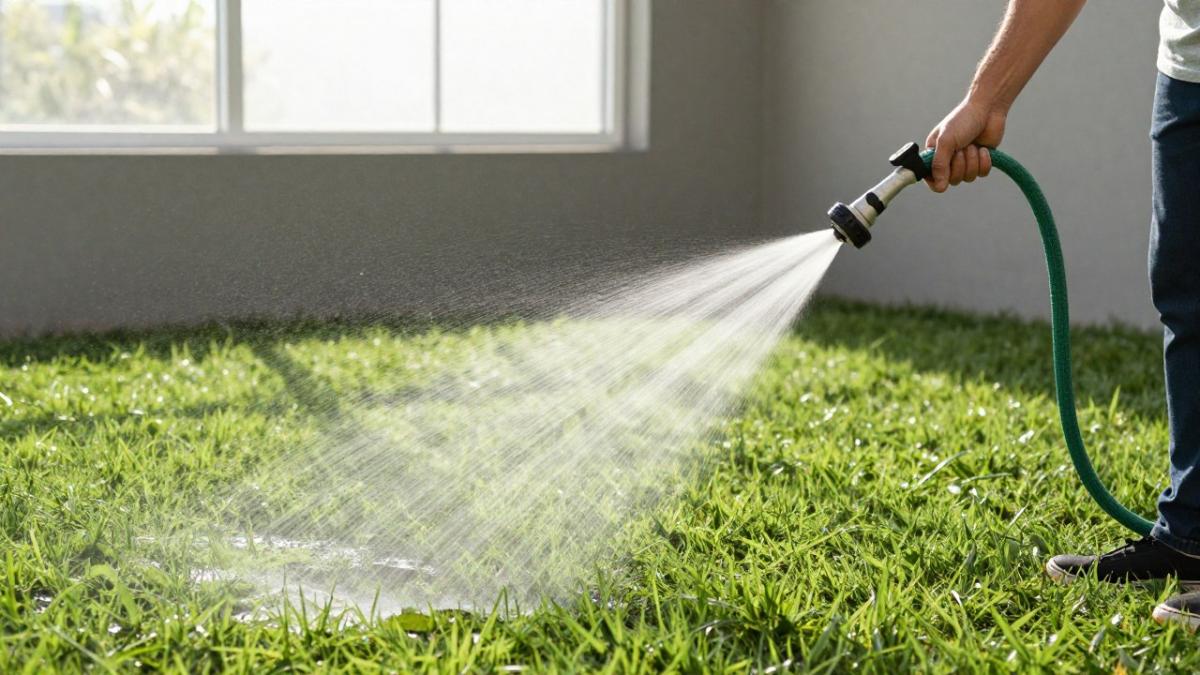
Hand watering with a hose lets you control exactly where the water lands. Most sessions should be short, about five to ten minutes, using a gentle spray or mist setting.
Keep these points in mind:
- Use a nozzle with a soft spray so seed is not washed away
- Move slowly across the area so water soaks in evenly
- Stop when the surface looks damp and water starts to puddle
- Repeat a few times a day rather than running one long session
Be careful with hose watering on slopes. Water runs off quickly on hills, so shorter passes work better there.
Best Times of Day and Sprinkler Calibration
Early morning is the best time to water new seed. Temperatures are cooler, winds are usually calm, and the surface has time to dry before evening, which lowers the risk of fungal problems. Midday watering loses more to evaporation and wind, and late-evening watering leaves the seedbed wet overnight.
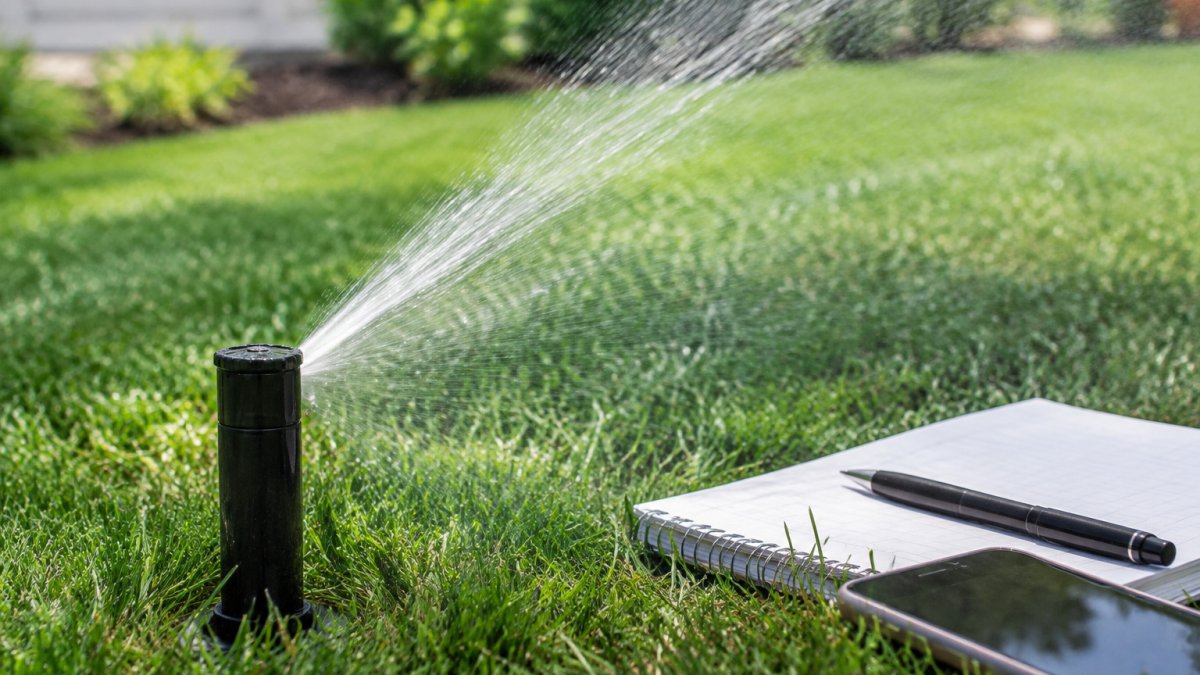
The bigger issue is that most homeowners do not know how much water their sprinkler actually delivers. A sprinkler that runs for 15 minutes may put down a quarter inch in one spot and almost nothing six feet away. Calibrate before you trust any schedule.
The can test. Scatter empty tuna cans or similar straight-sided containers across the seeded area, run the sprinkler for 15 minutes, then measure the depth in each can with a ruler. If the cans average a quarter inch, your run time is delivering about a quarter inch per 15 minutes.
Target amount per session. During germination, the goal is to wet the top inch of soil, not to soak deeper. A common target is roughly a quarter inch per session, applied two to three times a day in hot weather. That is a light pass, not a drench. Once you know your sprinkler's output from the can test, you can set run times to hit that amount instead of guessing.
Cycle and soak. On clay or sloped ground, water applied faster than the soil can absorb it runs off and takes seed with it. Split each session into two or three short passes with a 10- to 15-minute pause between them. The first pass wets the surface, the pause lets it soak in, and the next pass adds more without puddling.
Match the pattern to the site. Oscillating sprinklers cover a rectangle but often overshoot the edges. Impact sprinklers throw farther but land in a circle. Rotary and gear-drive heads are more even but need longer run times. Whatever you use, overlap the pattern slightly and recheck the cans after any change to pressure, hose length, or nozzle.
Watch out: a sprinkler that puddles within a minute or two is applying water faster than the soil can take it, so shorten the pass and add a soak interval rather than running it longer.
When to Stop Watering New Grass Seed
Most new seed needs frequent light watering for about two to three weeks, until the grass is established. Once seedlings reach about 1.5 inches tall and roots have started to form, you can begin to reduce frequency.
Signs it is time to cut back:
- Seedlings have been mowed at least once
- The soil stays moist for a day between sessions
- Roots pull firmly when you gently tug a plant
Shift to fewer, deeper waterings slowly. Going from daily light sprinkling to deep soaking every few days in one jump can shock young plants.
Watering After Overseeding and Troubleshooting Common Problems
Overseeding into an existing lawn follows the same basic rules, but the established turf competes for water and shades the new seed. Keep the surface moist without drowning the older grass, and expect the new seedlings to need light, frequent passes while the mature lawn would rather have a deep soak.
Use the soil, not the calendar. Before each scheduled session, push a finger into the top inch. If it feels like a damp sponge, skip the pass. If it is dry and crumbly, water. After rain, check before resuming: a soaking rain can buy you a day or more, while a brief shower may only wet the surface and dry out within hours.
Adjust for soil type. Clay holds water and drains slowly, so it needs shorter, less frequent sessions and benefits most from cycle-and-soak. Sandy soil drains fast and may need more frequent light passes, sometimes an extra one in hot, windy weather. Loam sits in between.
Adjust for slope, shade, and exposure. Sloped ground sheds water quickly, so use short passes with pauses and a finer spray. Shaded areas stay damp longer and may need fewer sessions, while full-sun and windy spots dry out first and may need an extra pass. South- and west-facing slopes are usually the first to dry.
Adjust for grass type and season. Cool-season grasses such as tall fescue and Kentucky bluegrass germinate best in cooler weather and may need less midday watering in spring and fall. Warm-season grasses such as bermudagrass and zoysia are often seeded in late spring and summer, when heat drives faster drying and more frequent passes. Match the frequency to the weather in front of you rather than a fixed number.
Troubleshoot by symptom.
- Bare, dry patches: usually uneven sprinkler coverage. Recheck the can test, adjust the pattern, and add a short extra pass to the dry zone.
- Mushy soil or standing water: too much water at once or poor drainage. Shorten sessions, add soak intervals, and consider aerating before seeding.
- Seed washing into low spots: switch to a finer spray, water more gently, and use short passes on slopes.
- Yellowing or mold: often overwatering or poor drainage. Reduce frequency, water earlier in the day, and improve airflow.
- Uneven germination: a mix of coverage gaps, soil differences, and shade. Fix the sprinkler pattern first, then adjust per zone.
Respect restrictions and water efficiently. Check local watering rules before you start, since many areas limit days or hours during establishment. Cycle-and-soak, temporary drip or soaker lines, and watering early all stretch the water you are allowed to use. If restrictions are tight, prioritize the seedbed over the rest of the lawn.
Watch out: do not jump from daily light sprinkling to deep soaking in one step once seedlings emerge, because young roots cannot yet reach deeper moisture and the surface can dry out between soakings. If your grass is still thin or dying, a repair guide for patchy grass walks through the fixes.
Scheduling Your Lawn Establishment with Ward's
If you would rather not manage a watering schedule yourself, Ward's Lawn Care & Landscape Co. can help. Our team serves Greater Cleveland homeowners and businesses with lawn maintenance and landscape construction. Read more about our experience working on lawns across the area.
For lawn maintenance options in Greater Cleveland, see our residential and commercial lawn services. When you are ready to talk through your project, contact our team for details and a quote.
Frequently Asked Questions
What is a good watering schedule for a lawn that was just seeded?
A common starting point is two to three short watering sessions per day, each lasting roughly 5 to 10 minutes, to keep the top inch of soil consistently moist. Watering in the early morning reduces evaporation and gives the seed time to stay damp through the day. Adjust based on temperature, shade and rainfall, and check the soil with your finger before each session. Avoid soaking the area so heavily that water pools or runs off.
Should I water my new grass seed every day?
Yes, during germination the seedbed should not be allowed to dry out, which usually means watering every day and often more than once. Once seedlings are established and mowing begins, you can shift to deeper, less frequent watering. Overwatering can wash seed away or encourage disease, so the goal is moist soil, not standing water. Check the soil surface daily and let your observations guide small changes.
How often should I water new grass seed in hot weather?
In hot, dry weather, new grass seed often needs two to four short sessions per day to keep the top inch of soil moist. Midday watering is less efficient because much of the water evaporates, so focus on early morning and early afternoon sessions. Shade from trees or buildings may reduce how often you need to water. Monitor the soil surface closely during heat waves, since it can dry out within hours.
When should I stop watering new grass seed?
Keep the seedbed moist until the new grass is well established, typically several weeks after germination, and then gradually reduce frequency. Once the seedlings are about 1.5 inches tall and have been mowed a few times, shift to less frequent, deeper watering that encourages roots to grow downward. Stopping too early can stress young plants, while overwatering later can encourage shallow roots and disease. Transition gradually over one to two weeks.