 how-to
How Do You Repair Patchy Grass in a Small Yard?
Last Updated: October 30, 2026
Quick Summary
Repair patchy grass in a small yard by first finding the cause, then raking out dead material, loosening the top 1 to 2 inches of soil, and mixing in 1 to 2 inches of compost. Spread seed at the bag rate, cover it lightly, and keep the patch damp until germination.
- Small yards fail from heavy foot traffic, dog urine, deep shade, short mowing, compaction, and thatch.
- Seed suits bare patches up to about 50 square feet; sod fits slopes and fast fixes.
- Level the patch about 1/4 inch below the surrounding lawn so it doesn't puddle.
- Most grass seed germinates in one to three weeks, so keep the surface damp, never soaked.
- Wait for the first light mow until new grass reaches mowing height.
Table of Contents
- Why Is My Lawn Patchy? Diagnosing the Cause First
- Step 1: Clear Dead Grass and Debris From Bare Spots
- Step 2: How to Prepare Soil for Grass Seed
- Step 3: Choose the Best Grass Seed for Bare Spots
- Step 4: Spread Seed and Cover It for Even Coverage
- Seed, Sod, Plugs, or Patch Products: Which Fits Your Small Yard?
- How Long Does Grass Seed Take to Grow? Aftercare Milestones
- Common Mistakes That Keep Small-Yard Patches Bare
- Frequently Asked Questions
Why Is My Lawn Patchy? Diagnosing the Cause First
If your small yard has gone spotty, you're not alone, and the fix is usually simpler than it looks. Repairing patchy grass in small yards starts with one step most people skip: finding out why the grass died.
A patch of dead grass is a symptom, not the problem. For a deeper walkthrough of repairing dying grass, see our lawn repair guide. Seed over it without solving the cause and the new grass dies too.
Common Culprits in Small Yards
Small yards get more abuse per square foot than big ones. Here's what we see most:
- Heavy foot traffic. A narrow path across the lawn gets compacted fast.
- Dog urine. Small yards concentrate pet spots in one place.
- Deep shade. Fences and buildings block sun for hours.
Not sure what you're looking at? Our guide to signs of unhealthy lawn grass walks through each symptom.
Step 1: Clear Dead Grass and Debris From Bare Spots
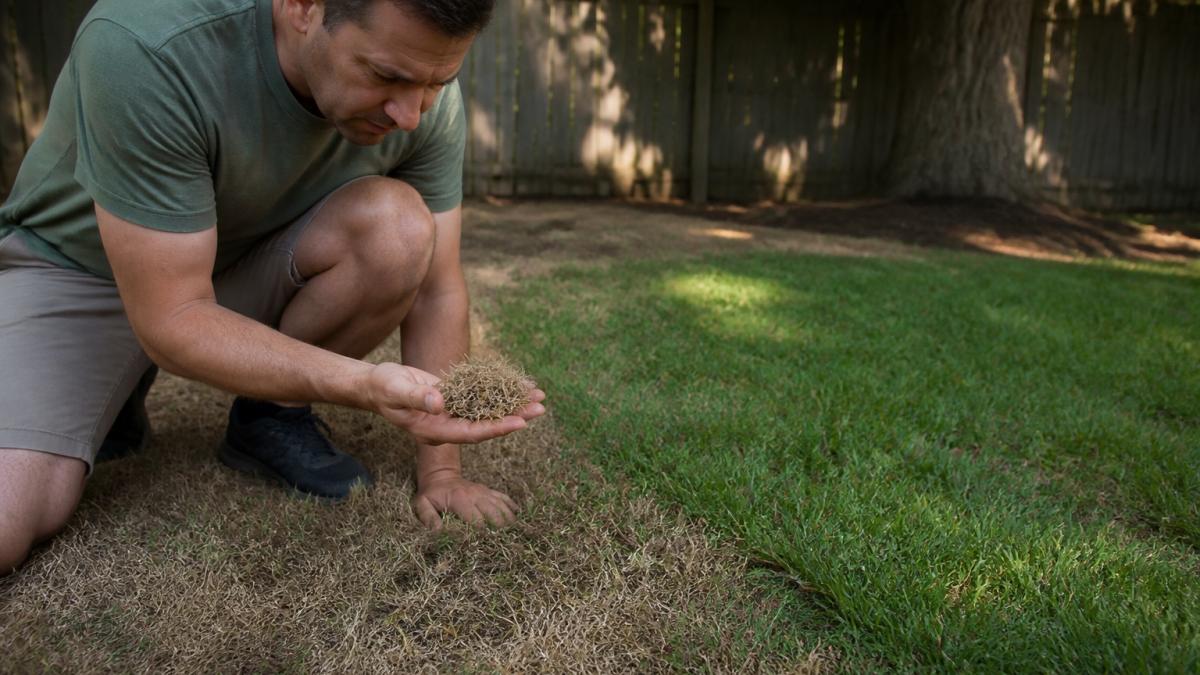
Start by removing everything that's already dead. New seed needs contact with soil, and dead grass blocks it.
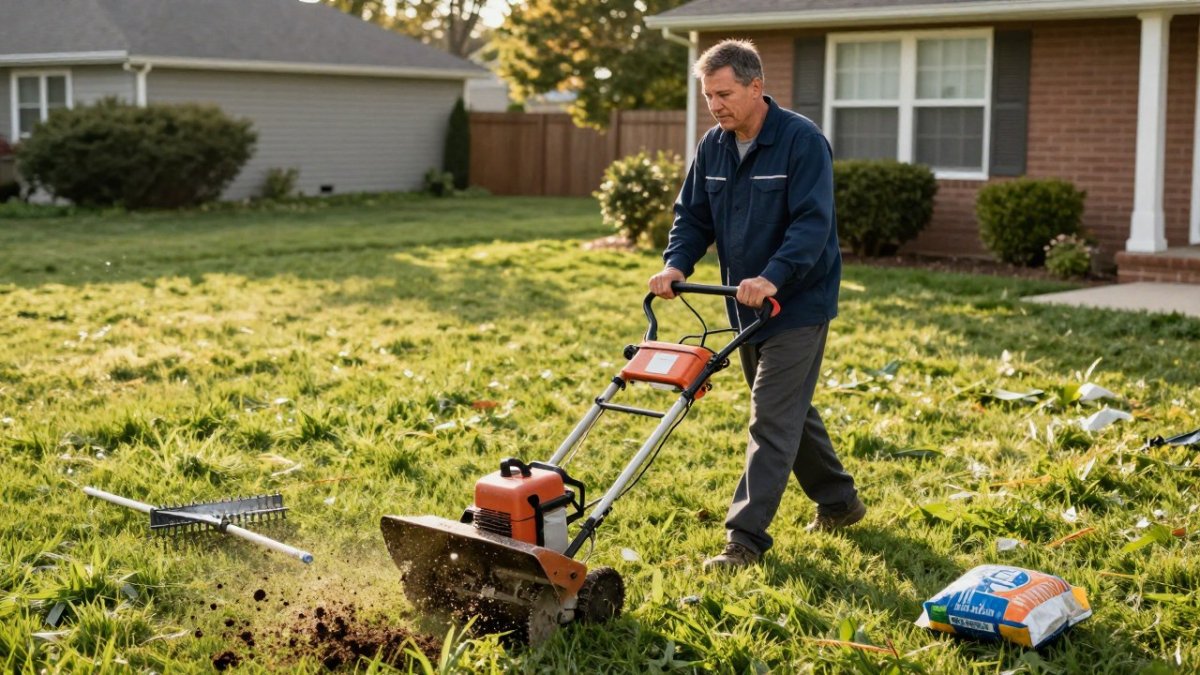
Rake the bare patch firmly with a stiff leaf rake or garden rake.
Bag the debris rather than leaving it. Lawn clippings and dead material can smother seed and hold moisture against new growth.
Watch out: don't rake so hard you tear out healthy grass at the edges.
Step 2: How to Prepare Soil for Grass Seed
Good soil prep is the difference between seed that sprouts and seed that washes away. In a small yard, prep is also a logistics problem: you have limited space to stage compost, nowhere to pile excavated soil, and often only a narrow gate or side path to move materials through. Plan the prep step around those constraints before you open a bag.
Stage Materials Without Wrecking the Yard
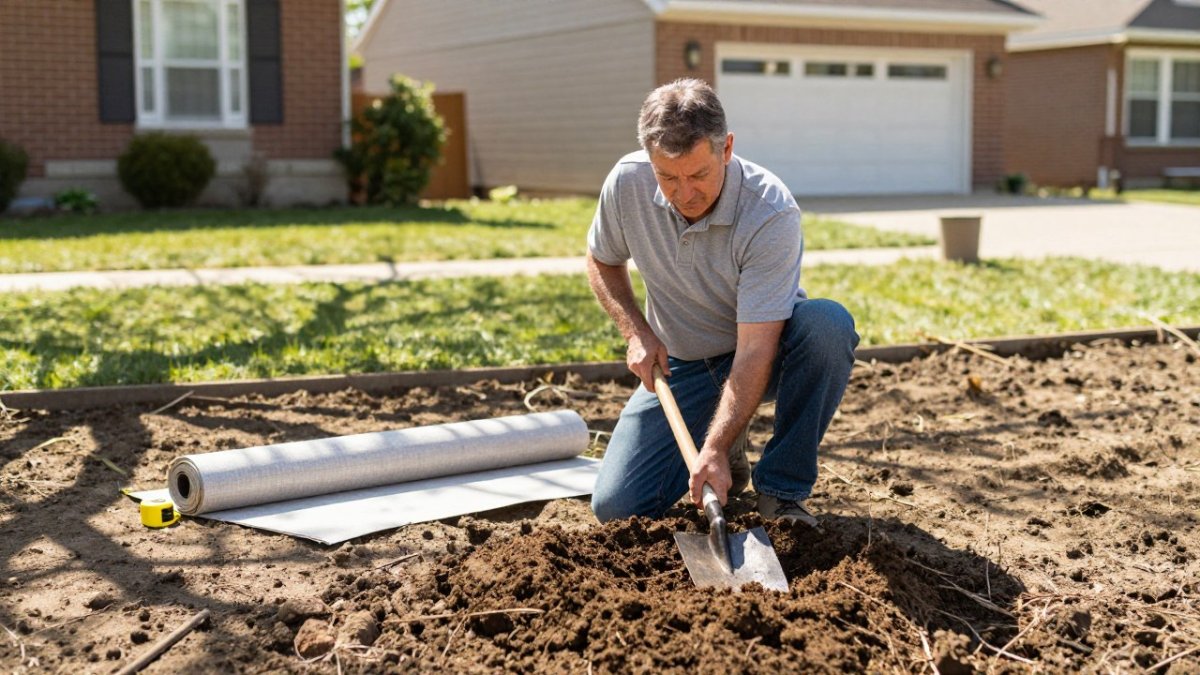
Work in zones. Clear one patch completely, seed it, and move to the next rather than digging up the whole lawn at once. A tarp or a sheet of 6-mil plastic laid on the driveway or patio holds excavated soil and compost and keeps it off healthy grass. For narrow access, use 5-gallon buckets or a wheelbarrow that fits through the gate; a standard wheelbarrow is about 2 feet wide, so measure your path first.
Loosen and Level the Patch
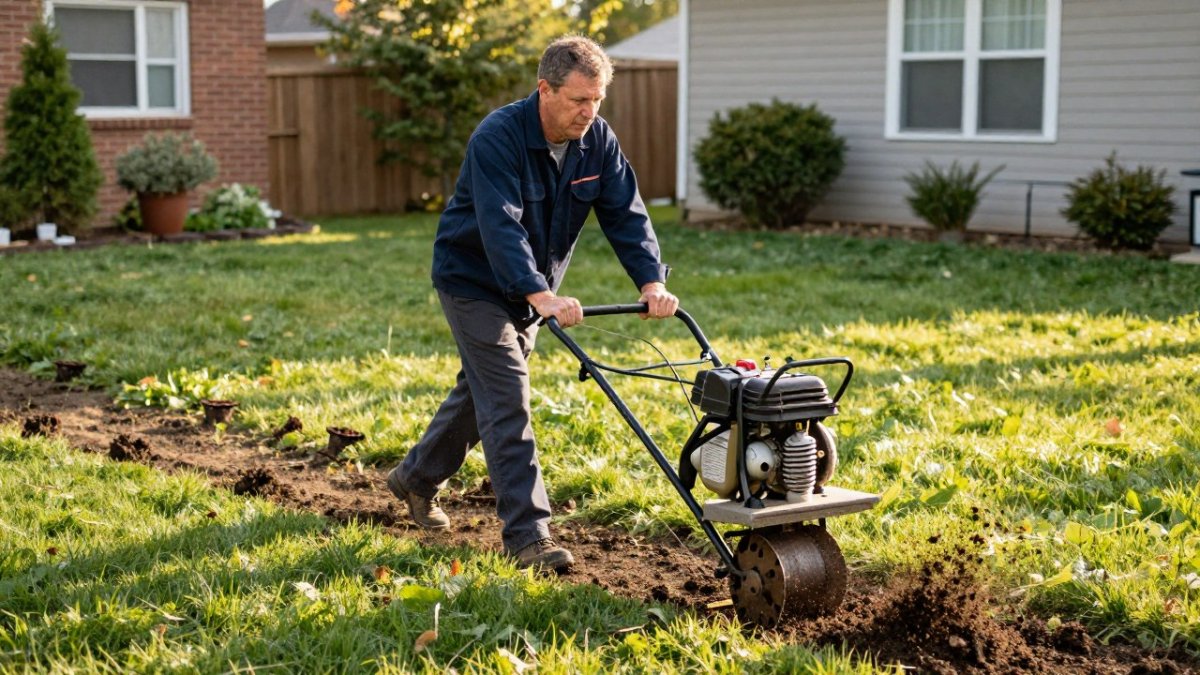
Loosen the top 1 to 2 inches with a hand rake, cultivator, or a square-blade spade for larger bare spots. Break up clods until the surface is crumbly, not dusty. Then level the patch so it sits about 1/4 inch below the surrounding lawn, new seed settles, and a patch that starts flush often ends up low and puddles.
If the soil is hard enough that a screwdriver won't push in easily, it's compacted. Aerate the patch with a hand core aerator or a garden fork before adding amendments. For small yards, a walk-behind aerator is often overkill and hard to maneuver around beds and paths; a manual core aerator or fork works fine on patches.
Amend With Compost or Topsoil
Mix in 1 to 2 inches of compost or quality topsoil over the loosened patch and work it into the top 2 to 3 inches. For a 10-square-foot patch, that's roughly 1 to 2 cubic feet of compost, about half to one standard bag. Don't over-amend; too much compost can create a fluffy layer that dries out fast and separates from the native soil.
Check pH and Drainage Before You Seed
Testing pH before you seed saves guesswork. Our guide on how to test soil pH at home covers five accurate methods. Most lawn grasses prefer a pH between 6.0 and 7.0, and a simple home test kit or a soil test through your local cooperative extension office gives you a number to work from. If pH is off, adjust before seeding, seedlings are more sensitive than established grass.
Step 3: Choose the Best Grass Seed for Bare Spots
Match the seed to the grass already growing around the patch. Mixing a shade grass into a sunny lawn, or the reverse, creates a mismatched, weak stand.
For small yards, a patch-specific seed mix blended for your region works well.
If you're unsure what you have, our guide to the best grass types for your area helps you identify the right match before you buy.
Step 4: Spread Seed and Cover It for Even Coverage
Spread seed evenly, then cover it lightly. Aim for good seed-to-soil contact, not a thick blanket.
Apply seed at the rate on the bag, then rake it in gently so it sits about a quarter inch deep.
For thin spots, use extra seed, but don't overdo it. Too much seed crowds itself out and invites disease.
Water lightly and keep the patch damp until germination. Short, frequent watering beats one deep soak at this stage.
Seed, Sod, Plugs, or Patch Products: Which Fits Your Small Yard?
Most guides list the options but don't tell you how to pick. In a small yard, the decision usually comes down to four factors: patch size, how fast you need coverage, whether the patch matches your existing grass, and how much disruption you can tolerate. Use the guide below to narrow it down before you buy.
Start With Patch Size
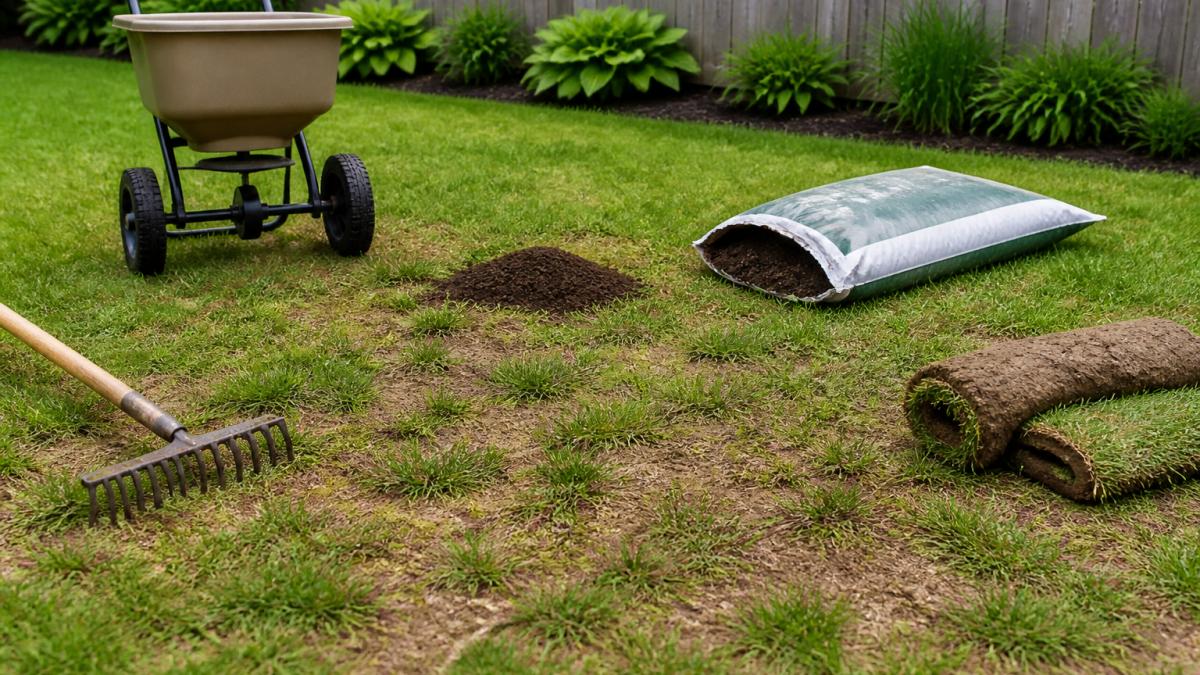
As a rule of thumb, seed is the most practical choice for bare patches up to about 50 square feet, roughly a 7-by-7-foot area. Sod makes more sense for larger bare areas, slopes, or spots where seed will wash away. Plugs fit awkward spots along paths, beds, and fence lines where a full sod piece won't sit flat. Patch products, premixed seed, mulch, and fertilizer, are convenient for touch-ups smaller than a few square feet, but they cost more per square foot than buying seed and compost separately.
Match the Method to Urgency and Budget
Seed generally takes weeks to fill in, while sod gives near-instant coverage. Plugs are slow to fill in and suit small, odd-shaped spots. Patch products combine seed, mulch, and fertilizer in one product.
Match Grass Type to What's Already Growing
Whatever method you choose, match it to the grass around the patch. Mixing a shade grass into a sunny lawn, or the reverse, creates a mismatched, weak stand. Sod should be the same species and blend as your existing lawn; if you can't match it, seed is often the better choice because you can blend varieties. For small yards, a patch-specific seed mix blended for your region works well.
Small-Yard Constraints That Change the Decision
- Slopes and runoff: seed washes away on even mild slopes; use sod, or seed with a tackifier or erosion blanket.
- Pet and foot traffic: sod tolerates traffic sooner than seed, but both need protection until established. Fence off the patch with a temporary barrier.
- Narrow access: sod comes in rolls that are heavy and awkward through a side gate; seed and compost are easier to move in buckets.
| Option | Best For | Speed | Effort | Relative Cost |
|---|---|---|---|---|
| Grass seed | Most small bare patches up to ~50 sq ft | Moderate (weeks) | Low | Lowest |
| Sod | Slopes, fast fixes, larger bare areas | Instant | High | Highest |
| Plugs | Tight or odd-shaped spots | Slow | Moderate | Moderate |
| Patch products | Quick DIY touch-ups under a few sq ft | Moderate | Low | Higher per sq ft |
For a small yard, seed is often the most flexible choice. Sod makes sense when you need coverage before an event or on a slope where seed washes away. Plugs and patch products suit specific situations.
How Long Does Grass Seed Take to Grow? Aftercare Milestones
Most grass seed germinates in one to three weeks, depending on the grass type and weather. Cool-season grasses sprout faster in mild temperatures; warm-season grasses need warmth.
Here's what to expect:
- Days 1-7: keep the surface damp, never soaked.
- Weeks 1-3: first green shoots appear.
- Weeks 3-6: seedlings thicken and fill in.
Keep foot traffic off new seed. Water deeply but less often as roots establish, and hold off on weed control until the new grass is mature. For official guidance on seeding and establishment, see the university extension turfgrass resources.
Common Mistakes That Keep Small-Yard Patches Bare
The same mistakes keep small lawns bare year after year. Avoid these and your repair has a real chance of sticking.
- Skipping the diagnosis. Seeding over a cause you haven't fixed means repeat failure.
- Bare seed with no cover. Birds and rain take it before it roots.
- Watering too little or too much. Both kill seedlings.
If DIY repair keeps failing, it may be time to bring in help. You can also explore our lawn and landscape maintenance services in Greater Cleveland.
For more on best practices, the EPA's healthy lawn guidance is a solid reference on watering, mowing, and soil care.
Frequently Asked Questions
Can I just sprinkle grass seed on bare spots?
Sprinkling seed onto hard, compacted soil rarely works. Seed needs contact with loose soil to germinate, and birds or rain wash away seed that sits on the surface. Clear the dead grass, loosen the top inch or two of soil, mix in a little compost, then spread seed and press it in with a rake or your foot. That extra 20 minutes of soil prep is the difference between a patch that fills in and one that stays bare.
How often should I water newly seeded bare spots?
Keep the top inch of soil moist, not soaked, until seedlings appear. In mild weather that usually means a light watering once or twice a day for the first two to three weeks. Once grass reaches about 2 inches tall, water less often but deeper, so roots grow downward. Small yards dry out fast, so check the patch each morning and water before it turns dusty and gray.
When is the best time to repair patchy grass?
Late summer to early fall is the best window for cool-season grasses common in the Midwest, because soil is warm and weeds are fading. Early spring works as a backup. Avoid midsummer heat, when new seedlings dry out before they establish, and avoid late fall, when grass may not have time to root before frost. Repair timing matters as much as the seed you choose.
How do I stop foot traffic from damaging new grass?
Keep people and pets off seeded patches until grass is about 3 inches tall and firmly rooted, usually four to six weeks. A few stakes and a light string or a small wire cloche marks the spot and reminds family members. In small yards where paths cross the lawn, redirect traffic with a stepping stone path or a temporary barrier rather than hoping everyone remembers.
A patchy lawn in a small yard is fixable, but only if you treat the cause, not just the bare spot. If repeated repairs keep failing, Ward's Lawn Care & Landscape Co. can take it from here. We offer full-service lawn maintenance and fertilization, free estimates, and discounts when you bundle multiple services. Get started with Ward's Lawn Care & Landscape Co. and turn those bare spots into a lawn you're proud of.