 how-to
How to Test Soil pH at Home: 5 Accurate Methods
Quick Summary
To test soil pH at home, collect several soil samples 6 to 8 inches deep from across the area, mix them, and use a test kit, digital meter or pantry method. A reading between 6.0 and 7.0 suits most lawns.
- Dig 8 to 12 random spots, 6 to 8 inches deep, for a composite sample.
- Use distilled water, since tap water can skew results.
- Calibrate a digital pH meter with fresh buffer solutions before testing.
- Pantry vinegar and baking soda tests are only rough checks, not true pH readings.
- Make soil changes gradually and retest after several months.
Table of Contents
- Why Soil pH Matters for Your Lawn and Garden
- What Soil pH Measures and the Acidic-to-Alkaline Scale
- Materials Needed and How to Collect Representative Soil Samples
- Testing Soil pH with a Soil pH Test Kit
- How to Test Soil pH with a Meter
- How to Test Soil pH with Vinegar and Baking Soda
- How to Read Soil pH Test Results and Choose Your Next Step
- Frequently Asked Questions
Why Soil pH Matters for Your Lawn and Garden
Soil pH is the single most important number for plant health that most homeowners never check. Plants can only absorb nutrients like nitrogen, phosphorus and potassium within a certain pH range. Outside that range, fertilizer you pay for may sit in the soil unused.
Most lawn grasses and garden plants prefer slightly acidic to neutral soil. When pH drifts too far in either direction, growth slows even if you water and feed on schedule.
- Nutrients may be locked up and unavailable to roots
- Weeds often adapt to conditions that stunt grass
- Fertilizer applications may be wasted or cause a poor response
- A simple test helps you decide whether lime or sulfur is needed
Testing first saves guesswork. Many lawn problems that look like a fertilizer shortage turn out to be a soil chemistry problem.
What Soil pH Measures and the Acidic-to-Alkaline Scale
Soil pH measures how acidic or alkaline your soil is (Energy-Efficient Use of Fertilizer and Other Nutrients in Agriculture). The scale runs from 1 to 14, with 7 considered neutral. The National Wildlife Federation explains the basic scale in its guidance on For a Wildlife-Friendly Garden, Test Soil First, and it is a good starting point for beginners.
Most lawns do best somewhere in the slightly acidic to neutral range. Soil far outside that range is harder to correct, so knowing your starting point matters.
- Below 6.0: strongly acidic, often needs lime
- 6.0 to 7.0: slightly acidic to neutral, suitable for most lawns
- Above 7.5: alkaline, may need sulfur or organic matter
Because pH is logarithmic, a change of one full unit means a tenfold change in acidity. Small shifts still matter, so track your readings over time.
Materials Needed and How to Collect Representative Soil Samples
Good results depend on good sampling. A single scoop from one spot can give a misleading reading, so collect several small samples from across the area you want to test.
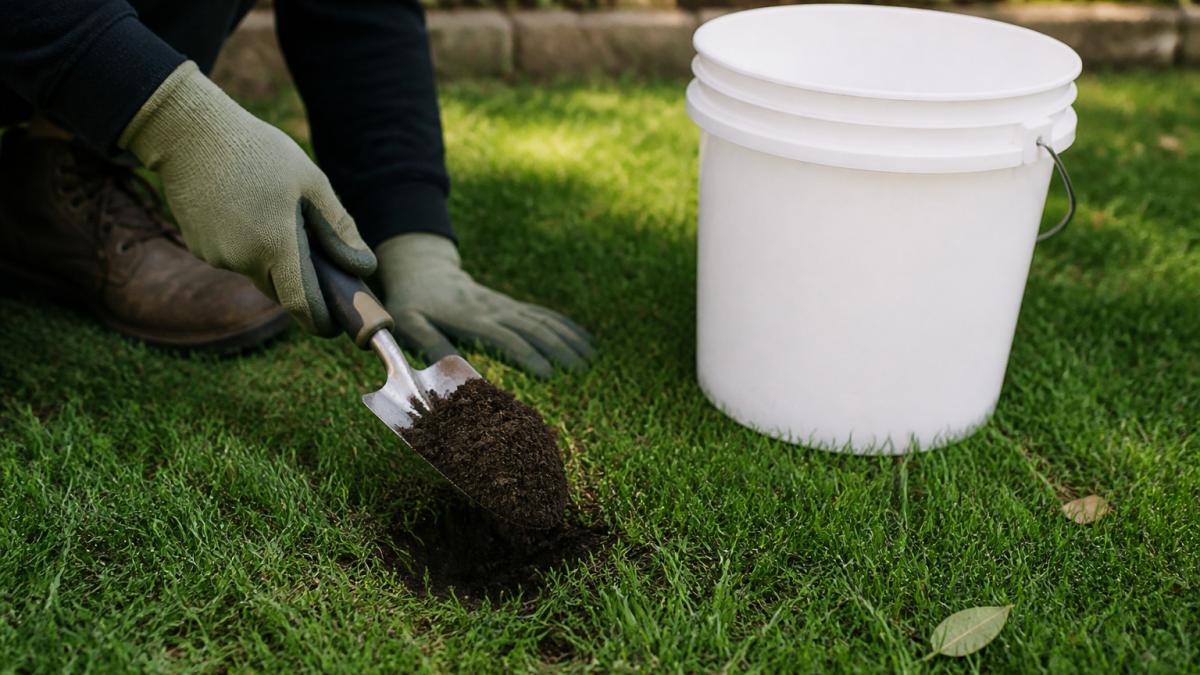
You will need:
- A clean stainless steel trowel or handheld shovel (avoid galvanized or rusty tools, which can contaminate the sample)
- A clean plastic bucket
- A clean bowl and spoon for mixing
- A glass or plastic container for the test
- Distilled water (tap water can skew results because of dissolved minerals and chlorine)
- A permanent marker and labels if you are testing more than one area
To collect a representative sample, follow this standardized protocol:
- Walk the lawn or bed in a zigzag pattern so you cover the whole area, not just the edges.
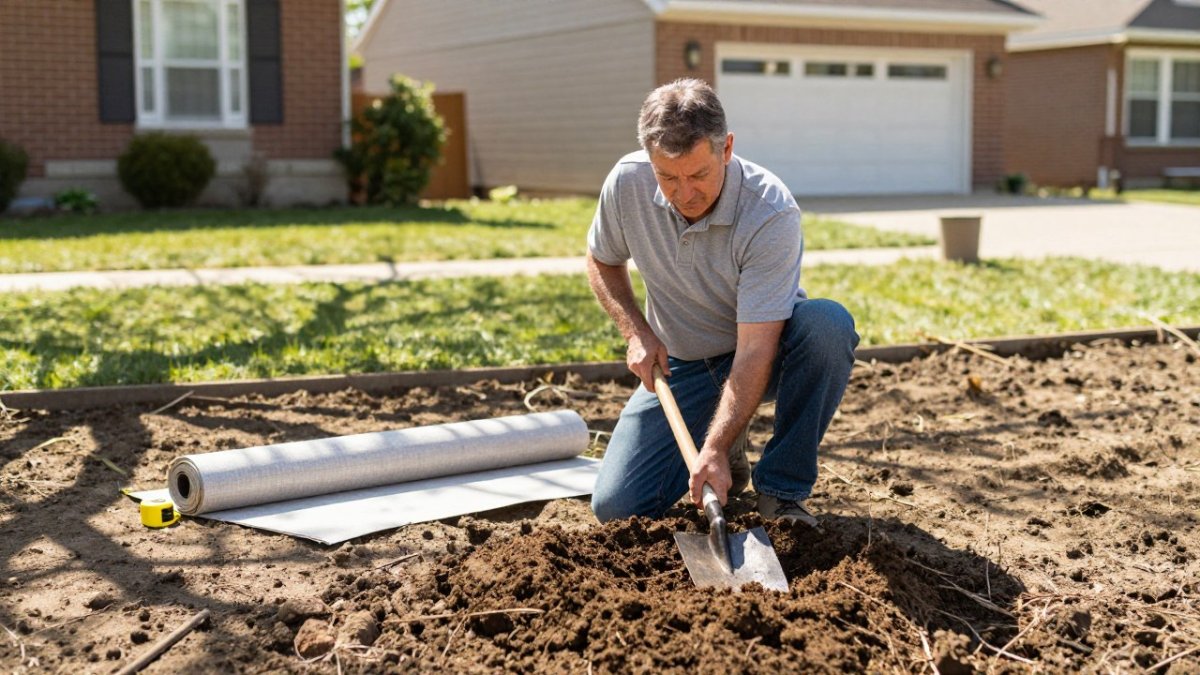
- Dig 6 to 8 inches deep at 8 to 12 random spots. For lawns, that depth captures the root zone; for vegetable beds, sample to the depth you till.
- Remove grass, leaves, thatch and debris from the surface before you dig. Do not include mulch or compost in the sample.
- Put all the cores into the bucket and mix them thoroughly with the spoon. Break up clods so the sample is uniform.
- Spread the mixed soil on a clean tray or paper and let it air-dry for a few hours if it is wet. Do not oven-dry or microwave it, which can alter chemistry.
- Sieve or pick out stones, roots and large organic fragments before testing.
Test areas with different plants, soil types or histories separately.
For the test itself, keep the soil-to-water ratio consistent. Most home kits and meters call for one part soil to one part distilled water by volume, but some use two parts water to one part soil. Follow the kit's instructions exactly, and use the same ratio every time you retest so your readings are comparable. After mixing, let the slurry settle for the time the kit specifies, often 10 to 30 minutes, before reading. Rushing this step is one of the most common causes of inconsistent results.
Label each sample with the area name and date. Store leftover dry soil in a sealed plastic bag if you plan to retest, and keep notes so you can compare readings from year to year.
The sampling steps below set up an accurate reading, so each step and its timing is worth following closely.
| Step | What to do | Time or detail |
|---|---|---|
| Walk the area | Zigzag across the whole lawn or bed | Cover the full area, not just edges |
| Dig cores | Take 8 to 12 random spots | 6 to 8 inches deep |
| Clear debris | Remove grass, leaves, thatch | Before digging |
| Mix sample | Combine cores in bucket and break clods | Make the sample uniform |
| Dry soil | Air-dry on a clean tray | A few hours; never oven or microwave |
| Prepare for test | Sieve out stones and roots | Before testing |
Testing Soil pH with a Soil pH Test Kit
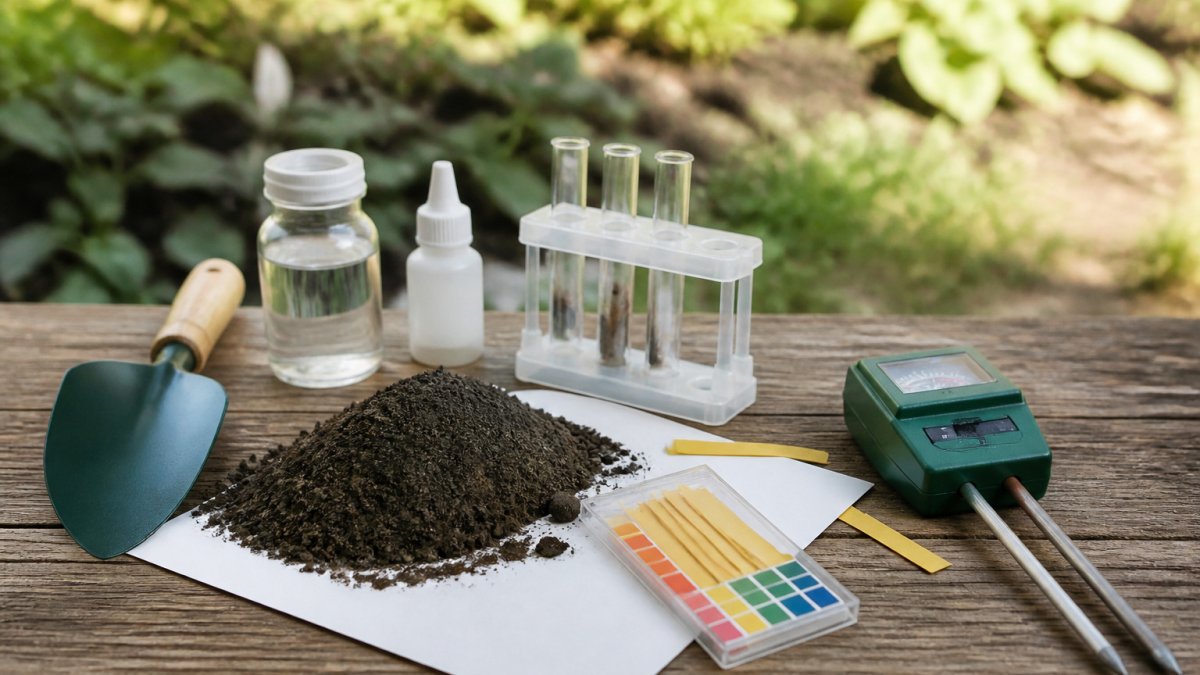
A soil pH test kit is the most common home option. Most kits contain indicator powder or liquid and a color chart. They are generally easy to use.
To use a kit:
- Mix the soil sample with distilled water as the instructions say
- Add the indicator and shake or stir gently
- Let the mixture settle for the time listed
- Compare the color of the liquid to the chart in good light
Kits are usually accurate enough to show whether soil is acidic, neutral or alkaline. They are less precise for fine adjustments, so use the result as a guide rather than an exact number.
How to Test Soil pH with a Meter
A digital pH meter gives a more precise reading than a color test, but only if it is calibrated and maintained. Handheld meters are sold for gardeners and can be used on moist soil or on a soil-and-water slurry. The difference between a useful number and a misleading one usually comes down to calibration and probe care.
Follow these steps for a meter test:
- Calibrate the meter using fresh buffer solutions. Most meters use pH 4.0 and pH 7.0 solutions, and some add pH 10.0. Pour a small amount of each into a clean cup, immerse the probe, and adjust the meter to the stated value. Do not dip the probe back into the stock bottle, which can contaminate the solution.
- Mix one part soil with one part distilled water in a glass. Stir well and let the mixture settle for about 30 minutes so the liquid above the soil is clear enough to read.
- Insert the probe into the liquid, not into the mud. Make sure the bulb is fully submerged and stir gently to dislodge air bubbles.
- Wait for the reading to stabilize. Most meters take 30 to 60 seconds; if the number keeps climbing or falling after a minute, the probe may be dirty or the battery low.
- Record the number, then rinse the probe with distilled water and blot it dry with a clean tissue.
If readings seem wrong, check the calibration again. Old probes can drift, and dirty probes give false results. Clean the probe with a soft toothbrush and a little dish soap, rinse with distilled water, and recalibrate. Store the meter with a few drops of storage solution or distilled water in the cap, never store it dry, which shortens probe life.
A meter is most useful when you need a number to track over time or to decide how much lime or sulfur to apply. For a one-time check of whether soil is acidic or alkaline, a kit or strip may be enough. If you need nutrient levels or amendment rates, a laboratory test is still the better choice.
How to Test Soil pH with Vinegar and Baking Soda
A pantry test can show whether soil is alkaline or acidic, but it is not a true pH measurement. It works best as a rough screen when you have no kit or meter.
For the vinegar test, put a small amount of dry soil in a cup and add a splash of vinegar.
For the baking soda test, put a small amount of dry soil in a cup and add a splash of distilled water. Then add a little baking soda.
A vinegar fizz indicates the presence of calcium carbonate rather than giving an exact pH value, so these tests should be read cautiously. Use them only as a quick check before a proper test.
How to Read Soil pH Test Results and Choose Your Next Step
Once you have a number, decide what it means for your lawn. A reading between about 6.0 and 7.0 is generally good for most turfgrass. Results outside that range suggest a correction may help.
If your soil is acidic, lime may raise pH over time. If it is alkaline, sulfur or organic matter may help lower it. Make changes gradually, and retest after several months before adding more.
Before you buy any product, review your options. A reader with clay soil results will want to see which fertilizer suits that condition, and University extension guidance on soil testing offers good background on interpreting results.
If your results are unclear, or the lawn keeps struggling after correction, a professional laboratory soil test gives the most reliable answer. Ward's Lawn Care & Landscape Co. provides lawn fertilization and maintenance across Greater Cleveland, and you can request a free estimate for work tailored to your soil.
Frequently Asked Questions
Can I do my own soil pH test?
Yes. Home methods such as a digital pH meter, a pH test kit, or the vinegar and baking soda tests can give you a useful estimate of soil acidity or alkalinity. A meter or liquid test kit generally gives a more specific reading than the pantry tests, which only indicate whether soil is strongly acidic or alkaline. For a precise numerical result, or if you need to make a significant lime or sulfur application, a laboratory soil test through a university extension service is the more reliable option. Whatever method you use, collect several samples from across the area and mix them before testing.
What household items can be used to test pH?
Vinegar and baking soda are the two household items most often used. Mix a sample with distilled water and add vinegar; a fizz suggests the soil contains free calcium carbonate and is likely alkaline. If nothing happens, add baking soda to a new sample with water; a fizz suggests the soil may be acidic. These tests only indicate a general direction and do not give a pH value. Their limited accuracy is the main reason to use a meter or test kit for a number you can act on.
How do you test soil pH with a meter?
Calibrate the meter as the manufacturer directs, then mix one part soil with one part distilled water in a clean glass container and stir well. Let the mixture settle for a few minutes, insert the probe into the slurry, and wait for the reading to stabilize before recording it. Rinse the probe between samples and recalibrate periodically, because drift over time is a common cause of inaccurate results. Test several locations across your lawn or garden and compare the readings.
When is the best time to test soil pH?
Early spring or early fall are good times to test, because you can then apply lime or other amendments before the main growing season. Test again after making any correction, typically several months later, to confirm the change. Avoid sampling soil that is saturated after heavy rain or that has just been fertilized, since both can skew the reading. Consistent timing across years makes it easier to track how your soil is changing.
Ward's Lawn Care & Landscape Co. has served Greater Cleveland since 1986. Contact us for a free estimate on lawn care, fertilization and landscape work.