 how-to
How to Identify Common Lawn Pests in Northeast Ohio
Last Updated: October 22, 2026
Quick Summary
How to identify common lawn pests in northeast in Ohio starts with direct inspection: dig a 12-inch square of turf 3 inches deep in damaged areas and look for white C-shaped grubs, tiny black chinch bugs in the thatch, or other visible insects. Each pest has distinct appearance and damage patterns, grubs cause irregular brown patches with easily pulled grass, while chinch bugs create yellowing that spreads outward in hot, dry areas.
- Fewer than five grubs per square foot usually don't require treatment; damage becomes visible around 10-15 per square foot.
- White grubs are C-shaped, cream-colored larvae about half an inch to 1 inch long with dark brown heads.
- Chinch bugs are tiny insects the size of a pinhead to sesame seed with black bodies and white or reddish wings.
- Grub damage appears in late summer through fall; spring damage usually indicates a different pest or disease.
- Inspect at least three spots across affected areas since grub populations aren't uniform across the lawn.
Table of Contents
- Why Identifying Lawn Pests Matters in Northeast Ohio
- How to Check Lawn for Grubs: A Step-by-Step Inspection
- Common Lawn Pests Found in Northeast Ohio
- Signs of Grub Damage in Lawn: Recognizing Turf Damage Patterns
- Lawn Insects vs Lawn Disease: How to Tell the Difference
- When to Treat Lawn Grubs: Timing and Treatment Thresholds
- Northeast Ohio Pest Calendar: Seasonal Activity Timeline
- Common Mistakes to Avoid When Identifying Lawn Pests
- Frequently Asked Questions
Why Identifying Lawn Pests Matters in Northeast Ohio
Misdiagnosis means applying the wrong control method, spraying for grubs when chinch bugs are the culprit, or treating for disease when insects are doing the damage. Each mistake costs money and delays recovery.
Northeast Ohio's cool springs, warm summers, and wet falls let different insects thrive at different times. Knowing which pests are active now, and which are coming, puts you ahead of the problem.
How to Check Lawn for Grubs: A Step-by-Step Inspection
The most reliable way to know if grubs are present is a direct soil inspection. It takes 15 minutes and no special equipment. You're looking for fat, C-shaped white larvae about half an inch to an inch long.
Where to Look and What Tools You'll Need
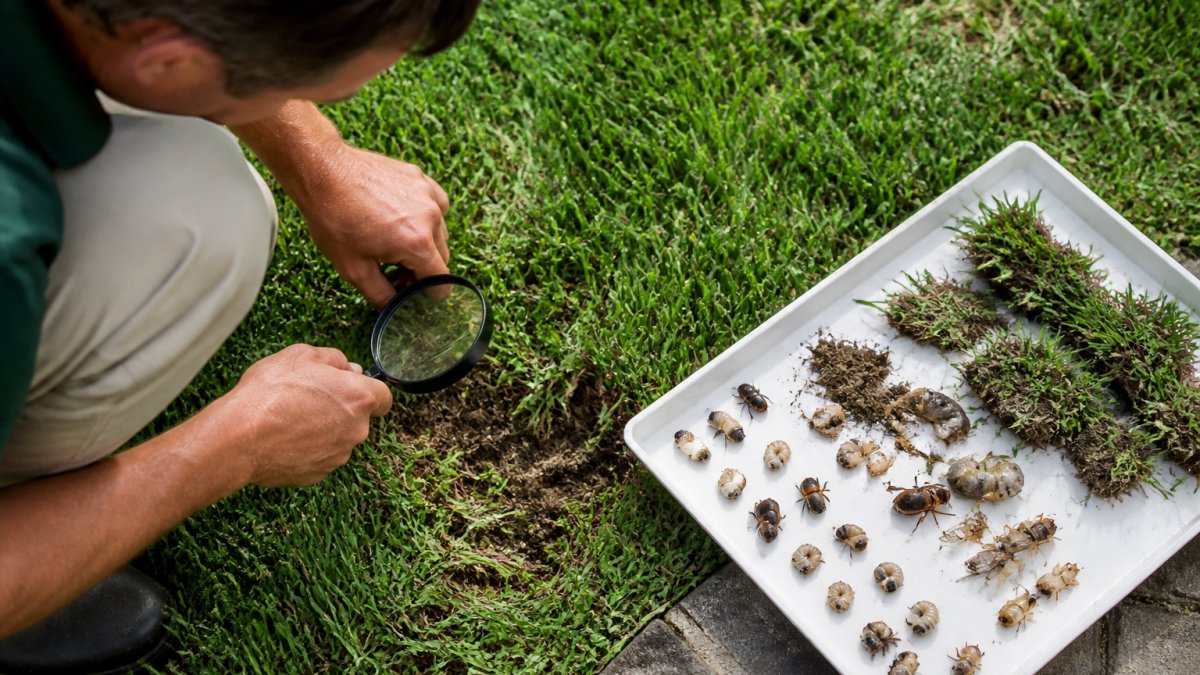
Choose a spot where you see damage. Use a flat shovel to cut out a 12-inch square of turf about 3 inches deep, peel back the sod, and look at the soil beneath the grass roots and in the thatch layer.
What you'll need:
- Flat shovel or spade
- A bucket or container
- Gloves (optional but helpful)
Grubs live in the upper 2-3 inches of soil where grass roots are densest, they won't be deeper.
The Soil Inspection Method
Dig samples in at least three spots across the affected area. Grub populations aren't uniform and may be concentrated in one section.
When you pull up the sod, examine the soil closely:
- Count the white grubs you find in each sample
- Look for their dark heads and legs
- Check the underside of the turf mat itself
- Break apart soil clumps to spot grubs hiding inside
Fewer than five grubs per square foot usually don't require treatment. Damage becomes visible around 10-15 per square foot; above 20, your lawn will show significant stress.
Record what you find. Take photos if possible. This information guides your treatment decision later.
Common Lawn Pests Found in Northeast Ohio
Learning how to identify common lawn pests in northeast in Ohio is crucial, as our region hosts a specific lineup of lawn-damaging insects. Each has a distinct appearance, feeding pattern, and seasonal timeline.
White Grubs: Identification and Appearance
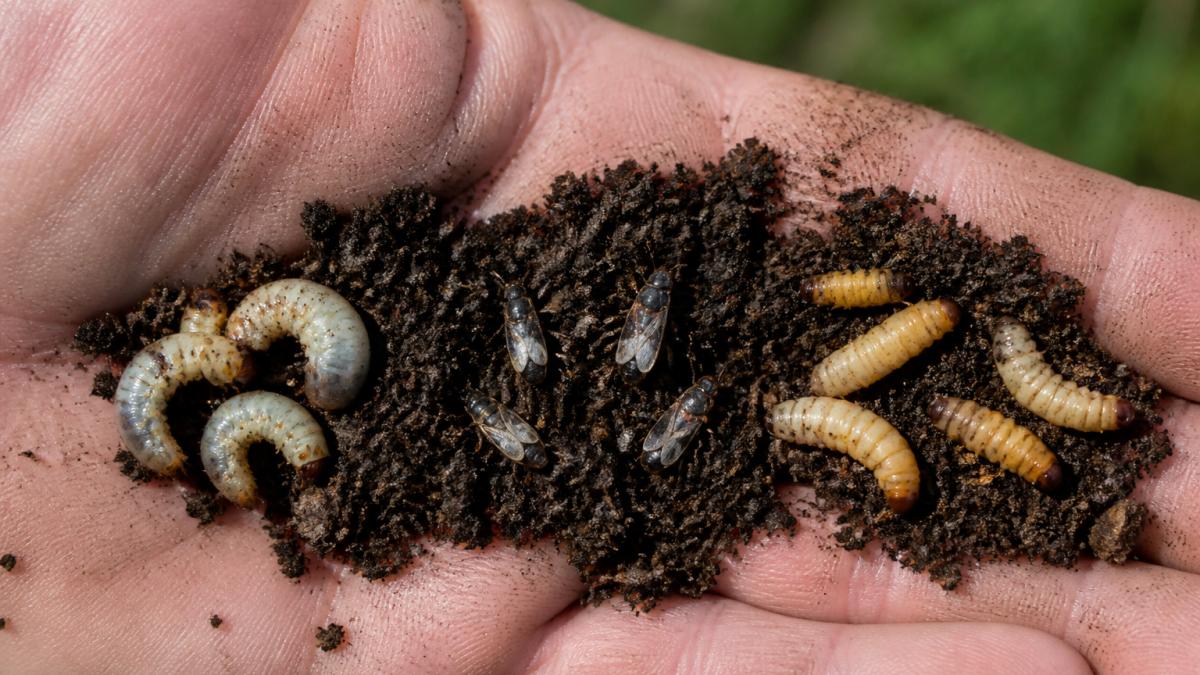
White grubs are the larval stage of beetles, most commonly Japanese and May beetles here.
What they look like:
- Fat, C-shaped bodies
- White or cream-colored
- Dark brown head
- Approximately half an inch to 1 inch long
In soil they curl into a tight C shape; on a flat surface, they uncurl slightly.
Grub damage appears as irregular brown patches, and the grass pulls up easily because roots are eaten away. In severe infestations you can roll back the turf like a carpet.
Chinch Bugs: What to Look For
Chinch bugs are small but destructive, common in Northeast Ohio especially in dry years. Unlike grubs, they feed on the grass blade itself, not the roots.
Identifying chinch bugs requires looking closely:
- Tiny insects, about the size of a pinhead to a sesame seed
- Black body with white or reddish wings
- Often found in the thatch layer near the soil surface
- Move quickly when disturbed
To find chinch bugs, part the grass at the edge of a brown patch and check the soil surface and thatch.
Chinch bug damage differs from grub damage: yellowing spreads outward from a central point, typically starting in the hottest, driest part of the lawn.
Billbugs and Sod Webworms
Billbugs are beetles with a distinctive long snout. Adults lay eggs in grass stems, and hatching larvae tunnel inside the stems, killing the plant from the inside out.
Billbug signs include:
- Small holes in grass stems
- Dead grass that pulls up easily
- Sawdust-like frass (insect droppings) in the thatch
- Damage that appears in patches
Sod webworms are moth larvae that lay eggs in the thatch.
Sod webworm damage looks like someone took scissors to your grass: blades are chewed, not cleanly cut, in irregular patches. Dig carefully and you may find small silk-lined tunnels in the thatch.
Fall Armyworms and Cutworms
Fall armyworms are caterpillars that migrate north in late summer. They appear suddenly and feed aggressively, causing noticeable damage in a few days.
Fall armyworm identification:
- Green or brown caterpillars, about an inch long
- Distinctive light stripe down the back
- Found in the thatch and on grass blades
- Active during the day
Cutworms are caterpillars that hide in the soil by day and feed at night. Their damage looks like grass stems cut off at ground level, hence the name.
Cutworm signs:
- Grass cut off at the soil surface
- Wilted, dead shoots
- Small holes in the soil where cutworms hide
- Damage concentrated in patches
Both cause damage that looks intentional, like mower or trimmer damage, not disease.
Signs of Grub Damage in Lawn: Recognizing Turf Damage Patterns
Grub damage has specific patterns; recognizing them separates a confident diagnosis from a guess.
Early grub damage appears as small brown patches, roughly circular or irregular, starting around 6 inches across and expanding over weeks. The grass pulls up easily with no resistance when you tug.
Grub damage is often irregular, with healthy grass right next to dead grass, because grub populations concentrate in certain areas based on soil moisture and thatch depth.
One key distinction: grub damage appears in late summer through fall. If you're seeing lawn damage in spring or early summer, grubs are probably not the cause.
Lawn Insects vs Lawn Disease: How to Tell the Difference
Lawn disease and insect damage often look similar at first glance. Both create brown patches. Both kill grass.
Here's how to tell them apart:
Insect damage typically shows:
- Irregular patch boundaries
- Grass that pulls up easily (when caused by root feeders like grubs)
- Visible insects or damage signs when you dig
- Concentrated damage in specific microclimates (hot, dry areas for chinch bugs; moist areas for grubs)
Disease damage typically shows:
- Circular or ring-shaped patches
- Grass that doesn't pull up easily
- No visible insects when you dig
- Damage spreading uniformly across the lawn
The most reliable test is the dig-and-inspect method. If you find insects in the soil or thatch, you have an insect problem.
Some diseases create very specific patterns. Dollar spot creates small, circular patches about the size of a silver dollar.
If you're unsure, photograph the damage and contact a local extension office.
When to Treat Lawn Grubs: Timing and Treatment Thresholds
Not every grub requires treatment. Small populations often don't cause visible damage.
Treatment thresholds depend on your lawn's tolerance and the pest involved:
White grubs: Treat when you find more than 10-15 grubs per square foot and see visible damage, or when you find more than 20 grubs per square foot regardless of current damage.
Billbugs and sod webworms: Treat when you see fresh damage and can confirm the pest is present.
Fall armyworms and cutworms: These often appear suddenly and cause rapid damage. Treat immediately upon confirmation.
Timing matters significantly. Grubs are most vulnerable to treatment in early fall when they're actively feeding.
For other pests, treatment timing depends on their life cycle.
The best approach is to monitor your lawn regularly. Early detection often means you can avoid treatment altogether through cultural practices like improved watering or aeration.
Northeast Ohio Pest Calendar: Seasonal Activity Timeline
Understanding when pests are active helps you know what to look for and when.
Spring (March-May): Overwintering grubs are transitioning to pupae. Billbug adults are laying eggs.
Late Summer (August-September): Newly hatched grubs are feeding voraciously. This is peak grub season.
Fall (October-November): Grubs are still feeding but moving deeper into the soil as temperatures drop.
Winter (December-February): Grubs are dormant in the soil.
Knowing this timeline helps you time inspections and treatments effectively.
Common Mistakes to Avoid When Identifying Lawn Pests
Even experienced homeowners make identification mistakes.
Mistake 3: Treating too early or too late. Timing matters enormously.
Mistake 4: Inspecting only in one spot. Pest populations vary across your lawn.
Mistake 5: Overlooking environmental factors. Chinch bugs thrive in hot, dry conditions.
Mistake 6: Ignoring cultural practices. Many pest problems worsen because of lawn maintenance practices.
Identifying lawn pests correctly is the foundation of effective lawn care.
Frequently Asked Questions
How do I identify lawn pests in my yard?
Start by inspecting your soil and grass closely. Look for visible insects like white grubs (C-shaped larvae), chinch bugs (small red and black insects), or billbugs. Check for damage patterns: brown patches, spongy turf, loose grass that pulls up easily, or wilting blades. Use a spade to dig small sections of turf and examine the soil and roots. Different pests leave distinct signs, grubs feed on roots causing dead grass, while chinch bugs pierce grass blades creating stippled damage. Combine visual inspection with damage assessment to narrow down the pest type.
What does grub damage in a lawn look like?
Grub damage typically appears as irregular brown patches or dead grass areas that expand over time. Affected turf feels spongy and pulls up easily because grubs feed on grass roots, weakening the plant. You may notice animals like raccoons or birds tearing up sections of lawn searching for grubs. In severe infestations, large areas of grass thin out and die. Unlike disease, grub damage doesn't follow a circular pattern and worsens in late summer and early fall when larvae are most active. If you lift affected turf, you'll find white, C-shaped grubs in the soil.
When should I treat lawn grubs?
Treatment timing depends on the grub lifecycle in your region. In Northeast Ohio, grubs are most vulnerable to treatment in early fall (August through September) when larvae are small and actively feeding near the soil surface. Spring treatments (April through May) target emerging grubs before they cause significant damage. Preventive treatments applied in late summer can stop grub populations before they establish. Before treating, confirm you actually have grubs by inspecting soil, treatment isn't necessary if pest counts are below economic thresholds. Consult local extension resources or a lawn care professional to determine if treatment is warranted for your specific situation.
How can I tell if my lawn has insects or a disease?
Lawn insects and diseases create different damage patterns. Insect damage (from chinch bugs, billbugs, or cutworms) often shows bite marks, wilting blades, or stippled discoloration on leaf surfaces, and you can typically find the pest itself by inspecting closely. Disease appears as circular patches, uniform discoloration, or fuzzy fungal growth. Insect damage worsens during specific seasons and correlates with pest activity; disease spreads more evenly and may develop in wet conditions. Dig up affected turf: if you find insects or larvae in the soil or on grass blades, it's a pest problem. If you see no insects but the grass is mushy or has fungal signs, it's likely disease. When uncertain, photograph the damage and contact a local extension office or lawn care professional.