 listicle
Signs You Need to Hire Professional Lawn Services
Last Updated: October 31, 2026
Quick Summary
You should hire professional lawn services when grass repeatedly outgrows your mowing schedule, turf shows damage or disease that keeps returning, or your schedule no longer leaves time for regular yard work. Other signs include needing equipment like aerators, or failing at treatments or diagnosis after trying two fixes.
- Repeated mowing gaps, clumping clippings, and ragged edges signal the job has outgrown your calendar.
- Mowing above one third of blade height in a single cut stresses turf and invites weeds.
- Patches that return each season in the same spot suggest disease or soil problems, not equipment errors.
- If you have tried two fixes and the problem returned, you are past diagnosis and into costly trial and error.
- Ward's offers free estimates and has served Greater Cleveland since 1986.
Table of Contents
- Recurring Gaps in Mowing and Basic Upkeep
- Visible Turf Damage, Dead Patches, and Disease Symptoms
- When Your Schedule No Longer Leaves Room for Lawn Care
- What Does Lawn Care Service Include?
- Professional Lawn Care vs DIY: Where the Line Falls
- Lawn Care Service Cost: What Affects the Price
- Lawn Care Quotes: What to Look For Before You Sign
- Booking Your First Consultation With Ward's
- Frequently Asked Questions
Most homeowners don't decide they need a lawn service in one dramatic moment. It happens gradually: the mower sits in the garage a little longer each week, a few brown patches appear by the driveway, and the yard starts to look like it belongs to someone else. Knowing when to hire professional lawn services can save you a full season of frustration and a yard that's harder to recover. This guide from Ward's Lawn Care & Landscape Co. walks through the warning signs, what a good service includes, and how to compare quotes without getting blindsided later.
Industry scale is one useful signal. According to the National Association of Landscape Professionals industry statistics, the landscaping sector includes roughly 692,777 service businesses, so professional help is widely available in most metro areas. Availability alone doesn't tell you that you need it, though. The clues below do.
Recurring Gaps in Mowing and Basic Upkeep
A lawn that gets skipped once is a scheduling hiccup. A lawn that gets skipped every other week is a sign that the job has outgrown your calendar. The most common warning sign is grass that repeatedly grows past the point where a normal mow can recover it.
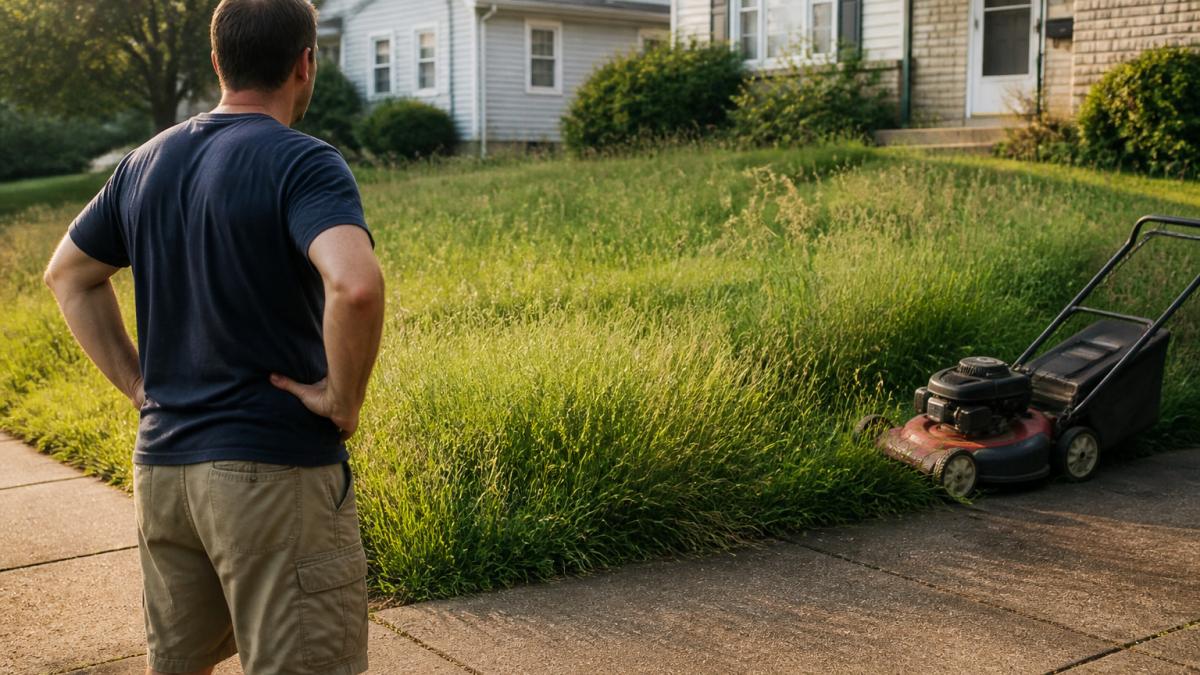
Watch for these patterns:
- The grass is regularly more than a third taller than your mower's cutting height
- Clippings clump on the lawn because the grass is too long to mulch
- Edges along walkways and beds look ragged for most of the season
- Neighbors' yards look noticeably tidier than yours
When any of these show up repeatedly, the problem is consistency, not effort. A professional crew mows on a fixed cycle, which is what keeps turf healthy over time.
Visible Turf Damage, Dead Patches, and Disease Symptoms
Not every brown patch means the same thing, and the fix depends entirely on the cause. A homeowner who reseeds a chemically burned strip will watch it die again; a homeowner who fertilizes a fungal infection will often make it worse.
Scalping. Scalping happens when a mower deck is set too low or a heavy mower runs over an uneven grade. The tell is a patch that looks shaved to the soil, often in stripes or along a slope where the deck dug in.
Chemical burn. Fertilizer burn shows up as irregular brown or yellow streaks, often with a crisp edge where a spreader overlapped or dropped a heavy pass. It typically appears within a few days of an application and follows the pattern of the spreader, not the shape of the lawn.
Fungal disease. Disease patches tend to be circular or crescent-shaped, expand outward over days, and often have a darker ring at the margin. They appear when moisture, temperature, and thatch line up, frequently after a stretch of humid nights or an irrigation schedule that waters in the evening.
A simple triage test: if the damage follows a straight line, a spreader pattern, or a mower stripe, suspect equipment or application error. If it spreads in a circle and returns in the same spot each season, suspect disease or a soil problem. If it appears only in shade or along a downspout, suspect drainage.
Persistent weed growth is its own signal. If you have treated the same weed patch twice and it returns within a few weeks, the underlying issue is usually a thin turf canopy, compacted soil, or a pH imbalance, not a weak herbicide.
Keep a simple log: date, what you applied or what was done, and what the lawn looked like a week later. That record is the difference between a provider who can diagnose the pattern and one who starts from scratch every visit.
When Your Schedule No Longer Leaves Room for Lawn Care
Time is the most common reason homeowners hire out lawn work, and it's often the least examined. Mowing, edging, blowing, fertilizing, and leaf cleanup add up to several hours a month in season, and that's before any repairs.
Ask yourself a few plain questions. Do you regularly push mowing to the weekend and then to the following week? Do you avoid the yard because the to-do list feels too long? If the answer is yes, the lawn is already costing you something, even if you're not paying a service for it.
Ward's offers curbside leaf cleanup, which can help homeowners reclaim fall weekends.
What Does Lawn Care Service Include?
A lawn care service typically bundles recurring tasks into a single plan. The core package usually covers mowing, edging, trimming around obstacles, and blowing clean hard surfaces. Many providers add fertilization and weed control on a seasonal schedule, and some include aeration or leaf removal.
Before you sign, confirm exactly what is in the plan. "Lawn care" can mean very different things from one company to the next. Ask whether fertilizer and pest or weed treatments are included or billed separately, how many visits are scheduled per month, and what happens if weather cancels a visit.
Professional Lawn Care vs DIY: Where the Line Falls
Most articles about hiring lawn care assume you have already decided to fire someone. The harder question, and the one almost no competitor answers, is when a lawn's complexity has quietly outgrown what a homeowner can do with a weekend and a big-box mower. The line is not about laziness or budget alone.
1. The equipment threshold. A basic DIY kit, walk-behind mower, string trimmer, edger, and blower, is a real upfront cost, and the maintenance, fuel, and storage add up every season. The gap widens once your lawn needs aeration, dethatching, overseeding, or slit-seeding.
2. The timing threshold. Fertilization and weed control are calendar-driven, not effort-driven. Pre-emergent has to go down before soil temperatures cross the germination window; grub control has a narrow application window; fall overseeding needs enough warm soil to establish before frost.
3. The diagnosis threshold. Routine mowing is a skill almost anyone can learn. Diagnosing why a patch is thinning, compaction, pH, thatch, shade, irrigation coverage, disease, is a different skill. The practical test: if you have tried two fixes and the problem returned, you are past the diagnosis threshold and into trial-and-error spending.
4. The risk threshold. Slopes, retaining walls, beds close to the house, irrigation heads, and septic fields all raise the cost of a mistake. A trimmer that nicks a sprinkler line or a mower that scalps a slope is a repair bill, not a cosmetic issue.
A reasonable middle path exists, and it is worth naming. Many homeowners keep routine mowing in-house and hire out the tasks that require timing, equipment, or diagnosis, fertilization, weed control, aeration, and overseeding. That split captures most of the savings of DIY while removing the tasks most likely to fail.
A short self-audit helps. Count the hours you actually spend on the yard in a peak month, including equipment maintenance and trips for supplies. Then list the tasks you have postponed or gotten wrong in the last two seasons. If the second list is longer than one item, the lawn has outgrown the DIY approach, and the next section on cost will show you what closing that gap actually runs.
The four thresholds where DIY stops making sense are summarised below.
| Threshold | Warning sign | What to do |
|---|---|---|
| Equipment | Lawn needs aeration, dethatching, or overseeding | Hire out; core aerators are impractical to own |
| Timing | Cannot commit to a treatment calendar | Hire out; wrong-week applications waste money |
| Diagnosis | Two fixes tried, problem returned | Get a soil test, then consider hiring |
| Risk | Slopes, walls, sprinklers, septic field | Hire out; mistakes become repair bills |
Lawn Care Service Cost: What Affects the Price
Pricing depends on lot size, grass type, how often the lawn is serviced, and which add-ons are included. A small, flat residential lot on a weekly plan costs far less than a large property with slopes, beds, and seasonal treatments.
Pricing depends on the scope of each project. For a clear picture of what your yard needs, book a free estimate. Requesting several written quotes from providers is a practical way to see how different scopes compare.
Ask every provider what is included in the stated price, whether there are extra charges for debris removal or repeat treatments, and how mid-season changes are billed. Surprise charges usually come from unclear scope, not from the base rate.
Lawn Care Quotes: What to Look For Before You Sign
A good quote is specific. It lists the services, the visit frequency, the season the plan covers, and the total price. Be cautious of quotes that describe the work only in general terms, or that leave out fertilization and weed control while still promising a "healthy lawn."
Before signing, check these items:
- Written scope of services for each visit
- Cancellation and rescheduling terms, including what happens after a missed visit
- Whether the contract renews automatically, and how to end it
- Insurance coverage and how property damage is handled
- Whether the provider offers references you can contact
Read the contract length and termination terms closely.
Booking Your First Consultation With Ward's
If several of the signs above sound familiar, the next step is a conversation about your specific property. Ward's Lawn Care & Landscape Co. has served Greater Cleveland since 1986, providing routine lawn care, fertilization, and landscape construction for homes and commercial properties. Our team offers free estimates.
To book a consultation, [contact Ward's Lawn Care & Landscape Co. | wardslawncare.com] for scheduling details and to request a quote. Bring a list of your concerns, any photos of problem areas, and your questions about cost and scope. A clear plan now is often cheaper than a lawn that has to be rebuilt later.
Frequently Asked Questions
What does lawn care service include?
A typical residential lawn care service includes mowing, edging along walks and beds, trimming around obstacles, and blowing clippings off hard surfaces. Many providers also offer fertilization, weed control, aeration, and seasonal cleanup such as curbside leaf removal. Scope varies by company, so ask for a written list of included services before comparing quotes. Ward's Lawn Care & Landscape Co. offers full-service outdoor maintenance and fertilization, and details for your property are best confirmed on a free estimate.
How much does lawn care service cost?
Lawn care pricing depends on lot size, the services requested, how often visits occur, and the condition of the turf. A basic mowing contract costs less than a package that adds fertilization, weed control, or cleanup. Price references from national sources vary widely, so treat them only as a rough guide. For an accurate figure, request a written estimate that itemizes each service and states how any extra charges would be handled.
What should I look for in lawn care quotes?
A useful quote lists every service, the visit frequency, the total price in USD, and whether the price is per visit or per season. Check for clauses on contract length, cancellation terms, and how additional work is billed. Confirm that the company is insured and that crews are trained. Free estimates let you compare scope side by side, which is the most reliable way to avoid surprise charges later in the project.
Is it cheaper to hire a lawn care service or do it yourself?
Doing it yourself avoids labor charges but requires equipment, fuel, fertilizer, and the time to apply everything correctly. Hiring a service costs more per visit but can make sense if you lack time, struggle to keep a mowing schedule, or need treatments timed correctly. Compare your total annual spending, including equipment repairs, against a written service quote before deciding.