 listicle
5 Best Organic Fertilizers for Ohio Lawns
Table of Contents
- Why Organic Fertilizers Work for Ohio Lawns
- Understanding N-P-K Ratios and Ohio Soil Needs
- 5 Top Organic Fertilizer Products for Ohio
- When to Fertilize Your Lawn in Ohio
- How Often to Fertilize Your Lawn
- Soil Testing for Lawns: The First Step
- Application Rates and Coverage for Organic Fertilizers
- Choosing the Right Organic Fertilizer for Your Grass Type
- Frequently Asked Questions
Last Updated: October 18, 2026
Why Organic Fertilizers Work for Ohio Lawns
The 5 best organic fertilizers for Ohio lawns deliver steady nutrition while building soil health over time.
Ohio's cool-season turfgrass thrives on consistent feeding. The state's cold winters and moderate summers favor grasses like Kentucky bluegrass and perennial ryegrass, which benefit from the sustained nutrient availability organic fertilizers provide.
At Ward's Lawn Care & Landscape Co., we've worked with hundreds of lawns across the region since 1986. Homeowners who switch to organic fertilizers see thicker turf, fewer bare patches, and soil that holds moisture better.
Organic matter also feeds the soil ecosystem. Earthworms, beneficial bacteria, and fungi thrive in organically enriched soil, improving structure, reducing compaction, and helping the lawn resist drought and disease. It's a cycle that builds year after year.
Understanding N-P-K Ratios and Ohio Soil Needs
The three numbers on any fertilizer bag represent nitrogen (N), phosphorus (P), and potassium (K). A 10-0-1 ratio means 10% nitrogen, 0% phosphorus, and 1% potassium by weight, helping you match the product to what your lawn actually needs.
Ohio soils typically have adequate phosphorus and potassium already present. Most lawns benefit most from nitrogen, which drives green growth and leaf development.
Spring applications should prioritize nitrogen for green-up. A ratio like 9-0-0 or 10-0-1 supports vigorous growth as temperatures warm. Fall applications can shift slightly toward balanced nutrition, a 5-1-2 ratio, for example, to encourage root development before dormancy.
Soil testing removes guesswork. A basic test from your local extension office reveals N-P-K levels, pH, and organic matter content, telling you exactly what your lawn is missing.
5 Top Organic Fertilizer Products for Ohio
1. Jonathan Green Organic Lawn Food 10-0-1
Jonathan Green Organic Lawn Food 10-0-1 leads our list for Ohio lawns because its nitrogen-heavy ratio matches what cool-season grass needs most.
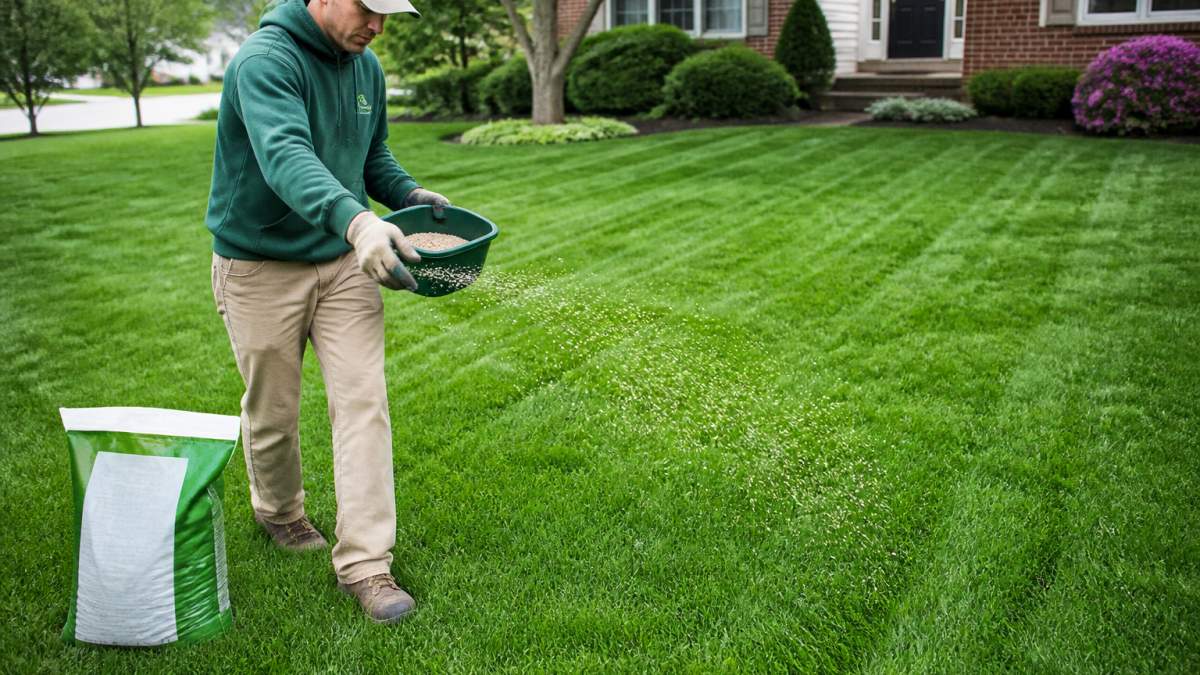
This product works well for general lawn feeding during the growing season. Its organic formulation releases nutrients gradually as soil temperature and moisture activate microbial breakdown, translating to steady feeding over 6-8 weeks per application for Ohio lawns.
The main consideration is availability and cost. Check local retailers or contact Ward's Lawn Care & Landscape Co. for current pricing and coverage recommendations for your lawn size.
2. Espoma Organic All Season 9-0-0
Espoma Organic All Season 9-0-0 positions itself as a year-round option, and for Ohio lawns, the 9-0-0 ratio works during most of the growing season. The high nitrogen content supports the spring green-up and fall recovery that cool-season grass demands.
This product includes beneficial soil microbes and humic substances that improve soil structure and water retention, especially valuable in compacted yards or heavy clay. The microbial component accelerates nutrient availability and builds the soil ecosystem over multiple applications.
Espoma products typically feed for 8-10 weeks per application, so two to three applications from April through October maintain consistent nutrition. The all-season label is slightly misleading, since winter dormancy doesn't require feeding, but the product performs well during active growth.
3. Milorganite 6-4-0
Milorganite 6-4-0 offers strong value for homeowners comparing cost per application. The 6-4-0 ratio is lower in nitrogen than some competitors, but the product feeds for 8-10 weeks, reducing application frequency and total cost over a season.
Milorganite is a byproduct of wastewater treatment, processed into pellet form. It's organic by definition, and Ohio homeowners appreciate the consistent availability and straightforward application. The 6-4-0 ratio works best as supplemental feeding or for lawns that don't need maximum nitrogen.
One trade-off: the 6-4-0 analysis differs from the nitrogen-focused ratios that Ohio State guidance typically recommends for cool-season turf. If your soil test shows you need strong nitrogen feeding, Milorganite alone may not deliver enough.
4. Compost-Based Organic Blends
Compost-based fertilizers are the ultimate soil-building option, combining finished compost with added organic nutrients to deliver both immediate feeding and long-term organic matter improvement. For Ohio lawns, they address nutrient deficiency and poor soil structure at once.
Many regional suppliers can source compost-based blends tailored to Ohio soil conditions. The advantage is customization to match your soil test results; the disadvantage is variable availability and higher upfront cost than bagged products.
Compost-based blends work best applied in fall or early spring when you can water them in thoroughly. The coarser texture means slower nutrient release, but the organic matter benefit justifies it. Over 2-3 seasons, Ohio lawns show measurable improvements in water retention, microbial activity, and resilience.
5. Specialty Organic Options
Bone meal, blood meal, and other single-ingredient organic fertilizers offer targeted nutrition. Bone meal delivers phosphorus and calcium, useful if a soil test shows phosphorus deficiency, rare in Ohio but possible in heavily leached soils. Blood meal provides concentrated nitrogen as a supplemental boost during peak growing season.
These specialty products typically cost more per pound of actual nutrient than blended fertilizers, so use them strategically: bone meal for spring root development, blood meal for mid-summer green-up if needed.
Seaweed-based and fish-based fertilizers are other specialty options, providing trace minerals and growth hormones that can improve stress tolerance. For Ohio lawns dealing with compaction, disease pressure, or extreme weather, a spring seaweed application can help turf recover faster.
When to Fertilize Your Lawn in Ohio
Ohio's cool-season grass grows most actively in spring and fall. These windows, April through May and September through October, deliver the best fertilizer results. Growth slows during summer heat and stops entirely during winter dormancy.
A typical Ohio lawn program includes two to three applications annually. Spring feeding (late April or early May) supports green-up as soil temperatures reach 50-60°F. Early fall feeding (late August or early September) prepares grass for winter and encourages root development.
Many homeowners add a winterizer application in late October or November. This final feeding supports root growth through fall and early winter, strengthening the lawn before dormancy. The timing matters, apply too early and the grass keeps growing into winter; too late and the nutrients won't be available before the soil freezes.
How Often to Fertilize Your Lawn
Most Ohio lawns need feeding every 6-8 weeks during the growing season, matching how long organic fertilizers typically release nutrients. Jonathan Green 10-0-1 applied in mid-April feeds through May into early June; a follow-up in late June or early July keeps nutrition consistent through summer.
Exact frequency depends on product and lawn condition. Slow-release organics like Espoma feed for 8-10 weeks, so you might apply only twice per season, spring and fall. Faster-releasing products or lawns with very poor soil might need applications every 4-6 weeks.
Soil testing helps determine if you're feeding enough or too much. A lawn that's deep green and growing vigorously is getting adequate nutrition. A lawn that's pale or slow-growing needs more frequent applications.
Soil Testing for Lawns: The First Step
Before buying any fertilizer, get a soil test. This single step eliminates guesswork and prevents wasting money on nutrients your lawn doesn't need. Ohio State University Extension offers soil testing through county offices at nominal cost.
A basic soil test reveals pH, organic matter percentage, and available N-P-K levels, with specific recommendations for your lawn type. If your soil is high in phosphorus, choose a fertilizer with little or no P; if nitrogen is depleted, you'll know exactly how much to apply.
Most Ohio soils are slightly acidic, with pH in the 6.0-6.5 range, which cool-season grass prefers, so adjustment is rarely needed. Organic matter is often the limiting factor, with many Ohio lawns below 3%, reducing water retention and microbial activity.
Application Rates and Coverage for Organic Fertilizers
Read the product label for application rates, they vary significantly. Jonathan Green Organic Lawn Food 10-0-1 typically recommends 20 pounds per 5,000 square feet. Espoma 9-0-0 might suggest 25 pounds per 5,000 square feet.
Calculate your lawn area in square feet before buying. A typical residential lot ranges from 3,000 to 8,000 square feet of turfgrass. Measure length and width, multiply, and subtract any hardscape or planting beds.
Most bagged organic fertilizers cover 2,500 to 5,000 square feet per bag. A 40-pound bag might cover 5,000 square feet at the recommended rate. For a 7,500-square-foot lawn, you'd need three bags per application.
Application method matters. Broadcast spreaders distribute product evenly across the lawn. Drop spreaders work well for smaller areas or lawns with planting beds nearby.
| Product | Typical Rate | Coverage per Bag | Feeding Duration | Best Season |
|---|---|---|---|---|
| Jonathan Green 10-0-1 | 20 lbs/5K sq ft | 5,000 sq ft | 6-8 weeks | Spring & Fall |
| Espoma 9-0-0 | 25 lbs/5K sq ft | 5,000 sq ft | 8-10 weeks | Spring & Fall |
| Milorganite 6-4-0 | 32 lbs/5K sq ft | 5,000 sq ft | 8-10 weeks | Fall & Spring |
| Compost Blend | Variable | 2,500-5K sq ft | 10-12 weeks | Fall & Spring |
Choosing the Right Organic Fertilizer for Your Grass Type
Ohio lawns are almost always cool-season grass, primarily Kentucky bluegrass, perennial ryegrass, or tall fescue. These species thrive on nitrogen-rich feeding in spring and fall, which is why 10-0-1 or 9-0-0 products dominate the recommendations.
If your lawn includes warm-season grass patches (unlikely in most of Ohio except southern regions), the feeding schedule shifts. Warm-season grasses grow most vigorously in summer and need less spring feeding.
Your soil type also influences product choice. Clay-heavy soils common in northern Ohio benefit most from compost-based fertilizers that improve structure and water movement.
Lawn condition guides the decision too. A thick, healthy lawn maintaining itself well can use lower-nitrogen products or less frequent applications.
Choosing the right 5 best organic fertilizers for Ohio lawns means matching product N-P-K ratios to your soil test results and lawn growth cycle. Our highly trained technicians know Ohio's soil and climate intimately. Contact Ward's Lawn Care & Landscape Co. to discuss your lawn's specific needs and receive a customized feeding plan tailored to your property.
Frequently Asked Questions
What is the best organic fertilizer for Ohio lawns?
The best organic fertilizer depends on your grass type and soil test results. For cool-season grasses common in Ohio, Jonathan Green Organic Lawn Food 10-0-1 and Espoma Organic All Season 9-0-0 are strong choices. Jonathan Green's higher nitrogen content supports spring and fall greening, while Espoma's balanced formula works year-round. Always conduct a soil test first, it reveals your lawn's exact nutrient gaps and prevents over-application.
When should you fertilize a lawn in Ohio?
Ohio lawns benefit from spring and fall applications. Apply your first organic fertilizer in mid-April to early May as growth accelerates. A second application in late August or early September strengthens roots before winter dormancy. Some homeowners add a light winterizer in November. Avoid summer feeding during heat stress; nitrogen applications then increase drought vulnerability and disease pressure.
How often should you fertilize an Ohio lawn?
Most Ohio lawns need two to three organic fertilizer applications per year. Spring and fall feedings align with active growth periods for cool-season grasses. If using slow-release organic products like Espoma or Jonathan Green, each application feeds for 8-10 weeks, reducing the need for frequent reapplication. A soil test every two to three years confirms whether your schedule matches your lawn's nutrient demands.
Should you test your soil before fertilizing your lawn?
Yes. Soil testing is the foundation of effective fertilization. A test from your local extension office reveals pH, organic matter, and exact nitrogen, phosphorus, and potassium levels. This prevents costly over-application and environmental runoff. Ohio State University recommends testing every two to three years. Results guide your N-P-K ratio selection and application rate, ensuring your organic fertilizer delivers what your lawn actually needs.
Can you use compost as lawn fertilizer?
Compost is an excellent organic amendment for lawns. It improves soil structure, increases microbial activity, and slowly releases nutrients. Apply ¼ to ½ inch of finished compost in spring or fall, working it lightly into existing turf or topdressing new seed. Compost builds long-term soil health better than synthetic products, though its N-P-K analysis varies widely. Pair compost with a targeted organic fertilizer for faster nutrient availability during active growth.