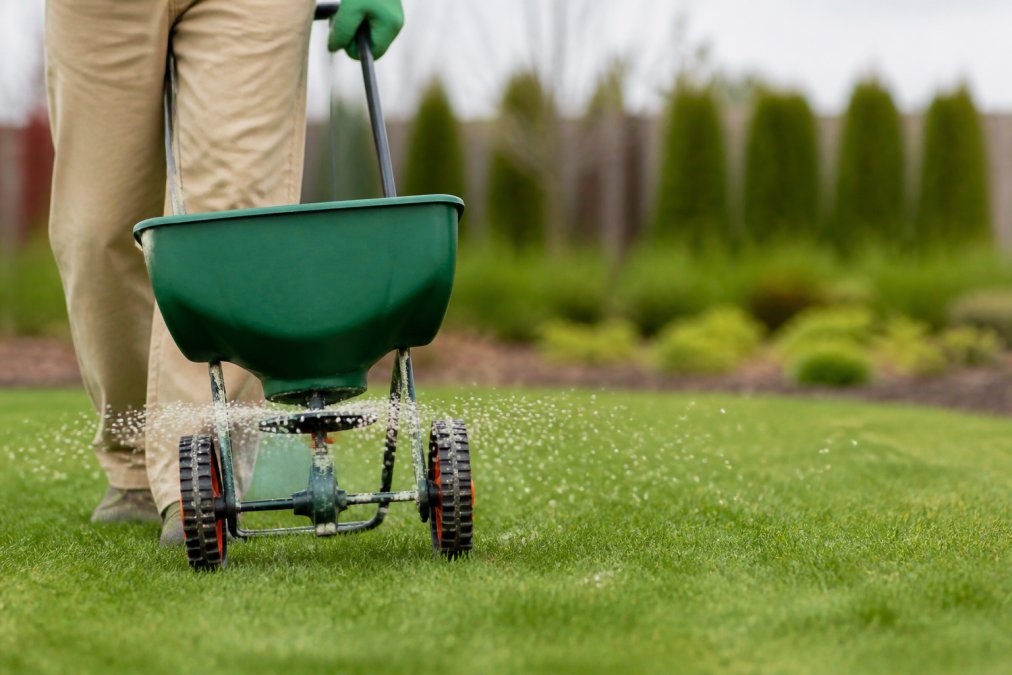
 how-to
Lawn Fertilization Schedule for Ohio: 2026 Guide
Table of Contents
- Why Ohio Lawns Need a Specific Fertilization Schedule
- Step 1: Test Your Soil Before You Start
- Step 2: Choose the Best Fertilizer for Cool-Season Grass
- Step 3: Know When to Apply Pre-Emergent Herbicide
- Spring Fertilization Schedule for Ohio Lawns
- Summer and Fall: Aeration, Overseeding Timing, and Winterizer
- Common Fertilization Mistakes to Avoid
- Get a Custom Fertilization Plan for Your Cleveland Lawn
- Frequently Asked Questions
Last Updated: September 9, 2026
Why Ohio Lawns Need a Specific Fertilization Schedule
Most lawn care advice online is generic, which is a problem in Ohio. Ohio sits in the cool-season grass zone, where Kentucky bluegrass, perennial ryegrass, and fine fescues surge in spring and fall, then slow through summer heat. Feeding at the wrong time wastes product and stresses turf.
A lawn fertilization schedule only matters if it respects plant biology. Cool-season grasses build roots in autumn, so the key feeding windows are late spring and, above all, early fall.
Step 1: Test Your Soil Before You Start
Before you buy a single bag of fertilizer, test your soil. Ohio's clay-heavy soils are notorious for locking up nutrients and holding pH outside the ideal 6.0 to 7.0 range, which directly affects how well grass absorbs nitrogen, phosphorus, and potassium. A basic soil test through your county extension office tells you exactly what your lawn needs, and more importantly, what it doesn't.
Many homeowners skip this step and apply a "balanced" fertilizer every season, which often means dumping phosphorus into soil that already has plenty. Excess phosphorus doesn't help your lawn; it runs off into storm drains and streams. The Ohio State University Extension's soil testing guidance recommends testing every three years to track pH and nutrient levels over time.
The test report gives you three numbers: soil pH, phosphorus (P), and potassium (K). If your pH is below 6.0, lime is the fix, not fertilizer. If potassium is low, your fall application should carry a higher K number. This is the difference between guessing and managing.
How to Read Your Ohio Soil Test Report
Most Ohio county extension labs return results in ppm for phosphorus and potassium, plus pH and cation exchange capacity (CEC). CEC tells you how well soil holds nutrients like potassium and ammonium. Ohio's clay soils have CEC values between 15 and 30, holding nutrients well but prone to compaction.
Here is how to interpret the key numbers on an Ohio soil test report:
- pH below 6.0: Your soil is acidic, which is common in eastern and southern Ohio where rainfall is higher. Apply pelletized lime at the rate recommended on the report, typically 50 to 100 pounds per 1,000 square feet for a pH shift of 0.5 to 1.0 units. Do not apply fertilizer until the pH is corrected, because grass cannot efficiently take up nitrogen below a pH of 5.5.
- pH above 7.0: This is more common in northern Ohio, where limestone bedrock influences soil chemistry. Alkaline soil ties up phosphorus and micronutrients like iron, causing yellowing that fertilizer won't fix. Elemental sulfur or ammonium sulfate can lower pH, but this is a slow process that takes months.
- Phosphorus (P) above 50 ppm: Your soil has enough phosphorus for several years. Use a fertilizer with a middle number of 0, such as 30-0-10 or 24-0-12. Ohio law restricts phosphorus application in many municipalities when soil tests show adequate levels, so skipping it is both legal and agronomically correct.
- Potassium (K) below 100 ppm: This is a common deficiency in Ohio's leached, acidic soils. Your fall fertilizer should carry a high potassium number, such as 24-0-18 or 20-0-20, to support root development and cold hardiness.
The Ohio Phosphorus Index and Local Restrictions
Ohio fertilizer regulations vary by county and watershed. The Ohio Department of Agriculture bans phosphorus-containing lawn fertilizer unless a soil test shows a deficiency, with exceptions for new lawns or agricultural use. Several Lake Erie watershed municipalities prohibit phosphorus application between December 15 and March 1.
Check whether your county has adopted the Ohio Phosphorus Index or a local nutrient management plan. A soil test showing phosphorus above 50 ppm means you should choose a zero-phosphorus product. Many national brands offer 30-0-10 or 32-0-10 formulations to comply with these regulations.
When to Test and How Often
Test in early spring (March or April) before the first application, or in late fall (November) after the last. Early spring testing gives you time to apply lime or sulfur before the growing season.
A standard soil test through an Ohio county extension office costs $15 to $25 and includes pH, phosphorus, potassium, calcium, magnesium, and CEC. Some labs offer a micronutrient panel for iron, manganese, and zinc, but these are rarely deficient in Ohio's clay soils.
Step 2: Choose the Best Fertilizer for Cool-Season Grass
The best fertilizer for cool-season grass in Ohio is a slow-release granular formula with an N-P-K ratio around 24-0-12 or 30-0-10, unless your soil test shows a phosphorus deficiency. Slow-release nitrogen feeds the lawn steadily over six to eight weeks.
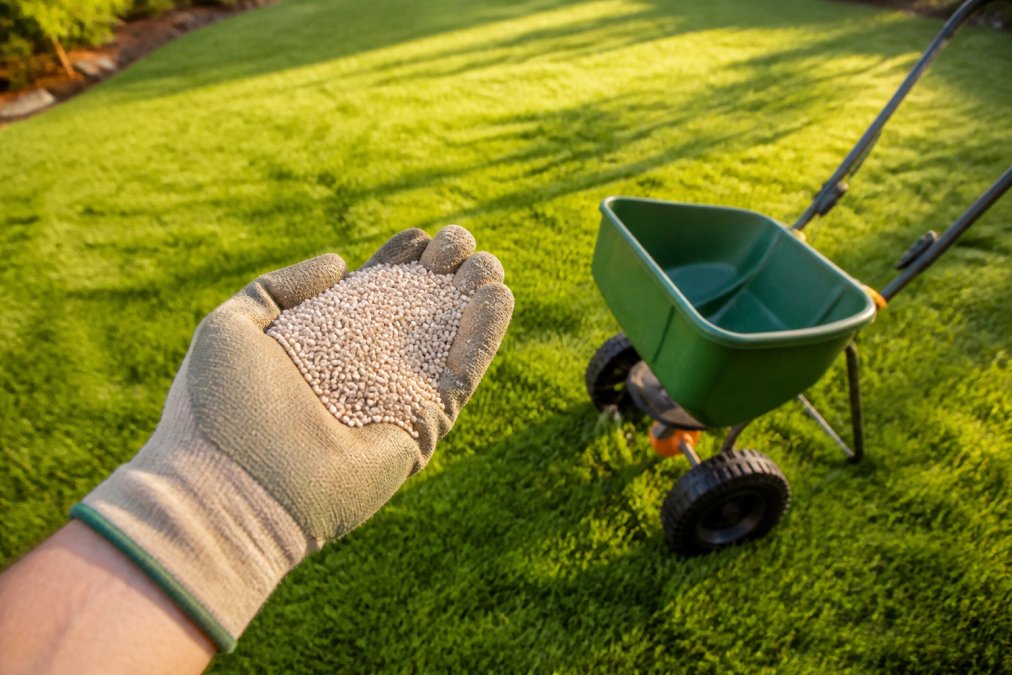
Liquid fertilizers work faster but require more frequent applications and burn more easily in summer heat. Granular is the practical choice for a standard schedule. Calibrate your broadcast spreader before each use.
What the N-P-K Numbers Actually Mean for Ohio Lawns
The three numbers on a fertilizer bag represent the percentage by weight of nitrogen, phosphorus, and potassium. A bag labeled 30-0-10 contains 30 percent nitrogen, 0 percent phosphorus, and 10 percent potassium.
For Ohio's clay-heavy soils, the nitrogen source matters more than the total percentage. Nitrogen comes in three main forms:
- Quick-release (water-soluble nitrogen): This is typically urea or ammonium sulfate. It dissolves rapidly and greens up the lawn within days, but it also leaches through the soil quickly and can burn the grass if applied too heavily. Products with more than 50 percent quick-release nitrogen are risky for summer applications.
- Slow-release (water-insoluble nitrogen or sulfur-coated urea): This form breaks down gradually over six to ten weeks, feeding the lawn steadily without a growth surge. Look for products that list at least 30 to 50 percent slow-release nitrogen on the label. These are ideal for Ohio's spring and fall applications because they match the grass's natural growth curve.
- Polymer-coated nitrogen: This is the most advanced form, where each prill is coated with a semi-permeable membrane that releases nitrogen based on temperature and moisture. Products like these are more expensive but provide the most even feeding and the lowest runoff risk.
Phosphorus (the middle number) should be 0 for most Ohio lawns unless your soil test shows a deficiency below 20 ppm. Ohio's clay soils naturally hold phosphorus well, and excess phosphorus is the primary driver of algal blooms in Lake Erie and the Ohio River.
Potassium (the last number) is often overlooked but is critical for Ohio lawns. Potassium strengthens cell walls, improves drought tolerance, and helps the grass survive freeze-thaw cycles in winter. Ohio's acidic, leached soils are frequently low in potassium, so a fall fertilizer with a potassium number of 12 to 20 is a wise choice.
Organic vs. Synthetic Fertilizers: A Practical Comparison
Organic fertilizers release nutrients slowly as soil microbes break them down and improve soil structure, valuable for Ohio's compacted clay. However, they have lower N-P-K numbers (such as 5-3-3), requiring more product for the same nitrogen.
Synthetic fertilizers offer precise control over nutrient ratios and release rates, which is why most turf professionals prefer them. The trade-off is that they do nothing to improve soil biology or structure.
A hybrid approach works well: use a synthetic slow-release product for main spring and fall applications, and top-dress with a quarter-inch of compost once a year. This combines synthetic precision with organic soil-building benefits.
Matching Fertilizer to Ohio's Regional Soil Types
Ohio's soils vary. The western half has high-pH, clay-rich glacial till soils that hold nutrients but drain poorly, so apply smaller, more frequent doses. The eastern and southern parts have acidic, silt-loam soils that leach nitrogen quickly.
In newer subdivisions where topsoil was stripped, your lawn may grow in pure clay or compacted fill. A soil test is essential, and you may need a starter fertilizer with phosphorus (such as 18-24-6) for the first year. Check with your local extension office for new-lawn exemptions.
Step 3: Know When to Apply Pre-Emergent Herbicide
Pre-emergent timing depends on soil temperature, not calendar date. Crabgrass germinates when soil hits roughly 55 degrees Fahrenheit at a two-inch depth.
In Ohio, that window typically arrives in mid-to-late April, shifting by a week or two depending on location. "Weed and feed" products force you to feed on the herbicide's schedule; instead, apply a standalone crabgrass preventer in April, then run your first nitrogen application separately.
Spring Fertilization Schedule for Ohio Lawns
Your spring lawn fertilization schedule for Ohio should be lighter than you think. The first application goes down in late April or early May, after the crabgrass preventer. Use a higher-nitrogen product to kick-start green-up, but keep the rate moderate.
A better spring schedule looks like this:
- Late April: Apply crabgrass preventer (pre-emergent) as a standalone product.
- Early May: Apply a slow-release fertilizer with an N-P-K around 24-0-12 at a rate of roughly 0.75 to 1 pound of nitrogen per 1,000 square feet.
- Mid-June: Skip this window unless the lawn is showing clear signs of nitrogen deficiency, such as pale yellow-green color. If you do feed, cut the rate in half.
Grass clippings are not waste. Leave them on the lawn during spring mowing; they return nitrogen to the soil and reduce your total fertilizer needs by a meaningful margin.
Summer and Fall: Aeration, Overseeding Timing, and Winterizer
Summer in Ohio is a survival period. Cool-season grasses slow when daytime highs push into the mid-80s. In July and August, mow higher, around 3.5 to 4 inches, to shade soil and protect the crown. Skip fertilization during peak heat.
The real work happens in late summer and fall. Lawn aeration and overseeding timing in Ohio centers on late August through mid-September, when grass enters its second growth surge. Core aeration relieves compaction and lets oxygen, water, and nutrients reach roots. Overseeding immediately after gives seed direct soil contact.
Here's the fall sequence that builds a thick lawn for next year:
- Late August to mid-September: Core aerate, then overseed with a cool-season blend.
- Early September: Apply your heaviest nitrogen feeding of the year, roughly 1 to 1.25 pounds per 1,000 square feet.
- Late October to early November: Apply a winterizer fertilizer, high in potassium, which hardens the turf for winter and feeds root development through the cold months.
The winterizer application in late fall is what separates healthy Ohio lawns from average ones. Potassium strengthens cell walls and improves cold tolerance, helping the grass survive freeze-thaw cycles and come back green earlier in spring. The Purdue University Extension's turfgrass fertility research confirms that fall nitrogen applications produce better turf density and root growth than equivalent spring applications.
Common Fertilization Mistakes to Avoid
The most common fertilization mistake in Ohio is over-application driven by the belief that more product equals a better lawn. Too much nitrogen burns the grass blades, creates excessive thatch buildup, and sends nutrients into local waterways. The U.S. Environmental Protection Agency's guidance on nutrient pollution identifies lawn fertilizer as a contributing source of nutrient runoff, which is why many Ohio municipalities have restrictions on phosphorus use during certain months.
Other errors include applying before heavy rain, which washes product into storm drains, and ignoring spreader patterns, which leave stripes of uneven feeding. Don't bag clippings all season; they return nitrogen to the soil, and removing them forces you to buy more fertilizer.
Get a Custom Fertilization Plan for Your Cleveland Lawn
Every lawn is different, and a written schedule can't account for your yard's microclimate, shade, or compaction. A soil test plus a season-by-season plan is the foundation, but execution matters.
Ward's Lawn Care & Landscape Co. has served Greater Cleveland since 1986, and our highly trained technicians handle routine fertilization, core aeration, overseeding, and full landscape construction. We offer free estimates and discounts when you bundle services, and we stand behind the work with dependable, professional results.
Frequently Asked Questions
What is the best fertilizer for Ohio grass?
Ohio lawns are typically cool-season grasses like Kentucky bluegrass, perennial ryegrass, and fine fescue. The best fertilizer for cool-season grass in Ohio has a higher nitrogen ratio, such as a 32-0-4 or 30-0-10 mix. The first number (N) drives leaf growth and color. A slow-release nitrogen source feeds the lawn steadily for 6-8 weeks. Match the product to your soil test results to avoid wasting nutrients.
When is the best time to apply pre-emergent in the spring?
Apply pre-emergent herbicide when soil temperatures reach 55°F at a 2-inch depth, which typically happens in Ohio between mid-April and early May. Crabgrass seeds germinate once soil warms past this mark. Timing matters: too early and the barrier breaks down before seeds sprout; too late and crabgrass is already growing. Use a broadcast spreader for even coverage and water it in lightly if rain is not forecast.
Can I fertilize my lawn every 2 weeks?
No, fertilizing every 2 weeks is too frequent for cool-season Ohio lawns. Most granular fertilizers are designed to feed for 6-8 weeks. Applying more often than that builds up salts in the soil, which burns grass blades and roots, and increases nitrogen runoff into waterways. A standard lawn fertilization schedule calls for 3-4 applications per year: spring, early summer (optional), fall, and late fall before the ground freezes.
How does soil pH affect fertilizer absorption in local lawns?
Soil pH controls how well grass roots absorb nutrients. Ohio soils often test acidic, sometimes below 6.0. At that level, nitrogen, phosphorus, and potassium bind to soil particles and stay unavailable to roots. Lime raises pH toward the 6.5-7.0 sweet spot for cool-season grass. A soil test tells you your starting pH. If it is low, apply lime in fall or spring and retest the following year to track progress.
A healthy Ohio lawn doesn't happen by accident. It comes from testing your soil, choosing the right fertilizer for cool-season grass, and hitting the timing windows that matter: pre-emergent in April, a light feeding in May, and the critical aeration, overseeding, and winterizer sequence in fall. Contact Ward's Lawn Care & Landscape Co. for a custom fertilization plan that fits your Cleveland lawn, and let our technicians handle the calendar so you can enjoy the results.