 how-to
How to Avoid Surprise Landscaping Costs
Table of Contents
- Why Landscaping Costs Go Over Budget
- How to Read a Landscaping Estimate Before You Sign
- Questions to Ask a Landscaper Before Hiring
- Average Landscaping Project Cost: What Drives the Range
- Permits, Utility Lines, and Compliance Costs
- Smart Planning Strategies to Control Landscaping Costs
- Frequently Asked Questions
Last Updated: September 2, 2026
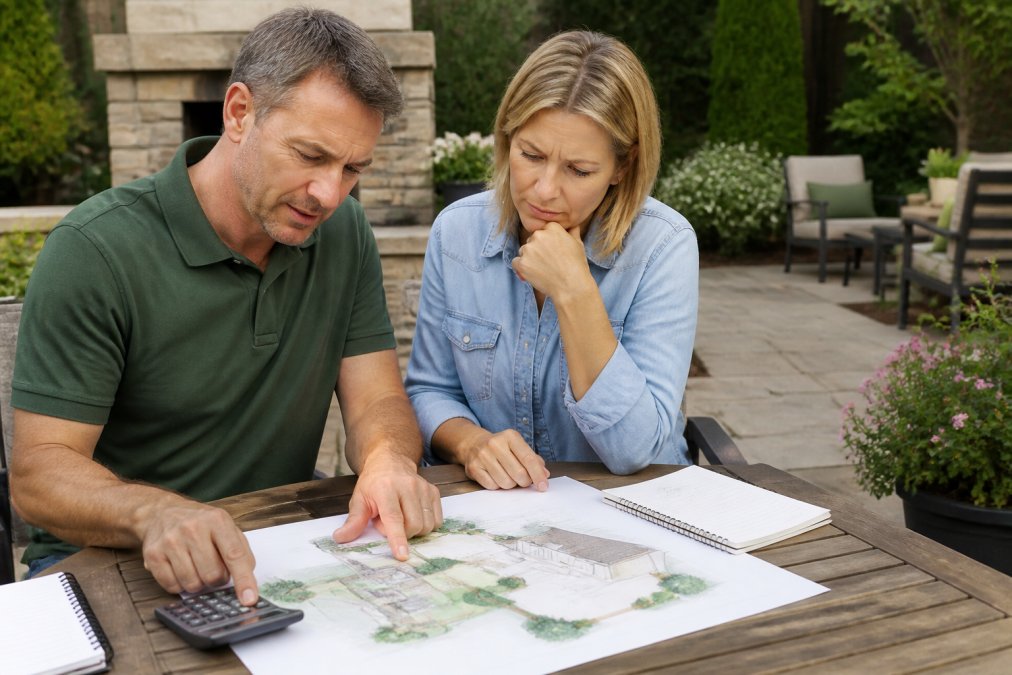
Surprise landscaping costs are one of the most common complaints homeowners raise after a project wraps up. At Ward's Lawn Care & Landscape Co., we've spent decades working through residential and commercial landscape projects, and the pattern is consistent: most budget overruns aren't random. They're predictable. This guide breaks down exactly where landscaping costs go wrong, how to read an estimate before you sign, and what planning decisions protect your budget from the start.
Why Landscaping Costs Go Over Budget
The biggest mistake most homeowners make is treating a landscaping quote as a fixed price. A quote reflects what a contractor knows at the moment they wrote it. The moment conditions change, the number changes with them.
Site Preparation and Drainage Surprises
Site preparation is the most underestimated line item in landscape construction. What looks straightforward on the surface can hide compacted subsoil, buried debris, tree roots, or poor drainage that only becomes visible once digging starts.
Drainage is a particular culprit. A yard with inadequate drainage requires grading work, French drains, or catch basins before any decorative installation can proceed. According to the University of Minnesota Extension's guidance on landscape drainage, improper site drainage is one of the leading causes of landscape failure and often requires correction before any planting or hardscaping begins.
Ask directly: "Have you assessed the drainage on this site, and what happens to the estimate if we find drainage problems?"
Scope Creep and Design Changes Mid-Project
Scope creep is the slow accumulation of small additions that collectively blow the budget. A homeowner asks to extend the patio two feet, then adds a retaining wall, then wants different stone. Each change seems minor. The total is not.
Design changes mid-project are expensive because labor is already mobilized and materials may already be ordered. Lock in the design before work starts and build a contingency buffer of around 10-15% into your budget for genuine unknowns.
How to Read a Landscaping Estimate Before You Sign
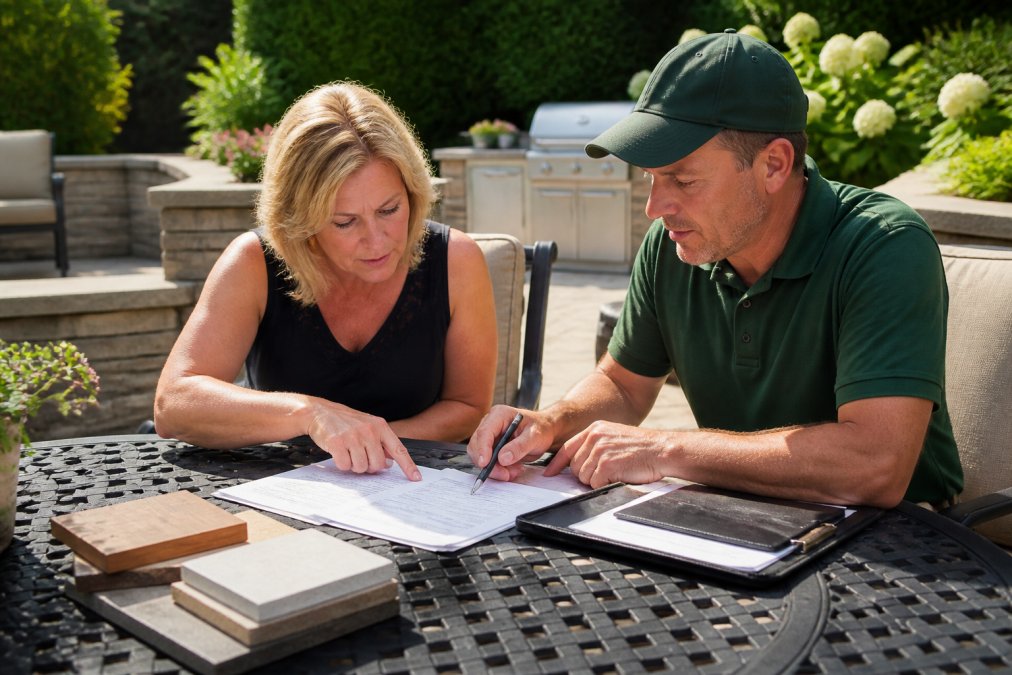
A well-structured landscaping estimate is a document you should be able to read line by line and understand completely. If you can't, that's a problem before you've spent a dollar.
Labor Costs vs. Material Markup
Most landscape estimates bundle labor and materials together, making it nearly impossible to evaluate fairness. A transparent contractor will break these out separately.
Labor costs cover the crew's time for site preparation, installation, and cleanup. Material markup is the percentage a contractor adds to the wholesale cost of plants, stone, mulch, and hardscape materials. Both are legitimate business costs. The issue is when they're hidden.
A contractor who won't separate labor from materials makes it difficult to comparison shop or spot inflated line items. Ask for the breakdown. If they resist, that tells you something.
| Estimate Line Item | What to Look For | Red Flag |
|---|---|---|
| Labor | Broken out by phase or task | Bundled with materials, no detail |
| Materials | Itemized with quantities | Lump sum with no specification |
| Allowances | Named with specific caps | Open-ended "allowance" items |
| Site Prep | Listed as a separate line | Absent entirely |
| Contingency | Defined percentage | Not mentioned |
Hidden Fees and Allowance Line Items
Allowance line items are placeholders in an estimate for costs that haven't been fully specified yet. When real selections are made, that allowance almost always runs over.
Hidden fees to watch for include debris hauling, equipment access surcharges, material escalation clauses, and change order fees. Ask every contractor: "Are there any fees or costs that could arise after signing that aren't reflected in this estimate?"
Questions to Ask a Landscaper Before Hiring
Vetting a landscaper before hiring is where most homeowners skip steps they'll later regret. The goal is to understand exactly what you're agreeing to.
Here are the questions that matter most:
- Can you provide a detailed written estimate with labor and materials separated?
- What is your process when unexpected site conditions arise?
- Who will be on-site managing the project daily?
- What permits are required for this project, and who pulls them?
- Do you carry liability insurance and workers' compensation coverage?
- What is your change order process?
- Can you provide references from similar projects completed in the past 12 months?
- What is the project timeline, and what are the milestones?
Average Landscaping Project Cost: What Drives the Range
Average landscaping project costs vary enormously because "landscaping" covers everything from mulch installation to full outdoor living space construction. According to the American Society of Landscape Architects' guidance on project planning, engaging a landscape architect or design professional early consistently reduces total costs by avoiding design revisions during construction.
What drives the cost range most significantly:
- Site conditions (drainage, grade, soil quality, access)
- Hardscaping vs. softscaping ratio (hardscape costs more per square foot)
- Material quality tier selected
- Labor market conditions in your area
- Permit and compliance requirements
Hardscaping vs. Softscaping Cost Differences
Hardscaping refers to permanent structural elements: patios, retaining walls, walkways, driveways, and outdoor kitchens. Softscaping refers to living elements: plants, lawn, mulch, and soil.
Hardscaping typically costs significantly more per square foot because it requires skilled labor, heavy equipment, and durable materials. Hardscape errors are expensive to fix because they're structural. A retaining wall installed without proper drainage will fail and require full reconstruction. Softscape errors are generally cheaper to correct because plants can be moved and soil amended.
Material Quality Tiers and Long-Term Value
Choosing the lowest-cost hardscape materials often results in accelerated deterioration, higher maintenance costs, and earlier replacement.
The three broad material quality tiers:
- Entry-level materials: Lower upfront cost, higher maintenance, shorter lifespan.
- Mid-grade materials: Balance of cost and durability. Suitable for most residential applications.
- Premium materials: Higher upfront investment, lower long-term maintenance, significantly longer lifespan.
Permits, Utility Lines, and Compliance Costs
Permits are the cost category most homeowners discover after committing to a project scope. Retaining walls above a specified height, structures, irrigation systems, and work near property lines or easements require permits.
Before any excavation, federal law requires that underground utilities be marked through the 811 Call Before You Dig program administered by the Common Ground Alliance. This step is free, but the cost of skipping it is not. Contractors who don't mention 811 compliance are a red flag.
Smart Planning Strategies to Control Landscaping Costs
The most effective cost control happens before a single plant goes in the ground.
Phased Installation and Seasonal Purchasing
Phased installation spreads a landscape design over multiple seasons rather than all at once. This approach spreads costs over time, allows you to evaluate each phase before committing to the next, reduces the scope of any single contractor engagement, and gives plants time to establish before adjacent work disrupts the site.
Seasonal purchasing reduces material costs without reducing plant quality. Plant material costs fluctuate with season and availability. Contractors who plan purchases around seasonal pricing pass those savings on to clients who give them flexibility.
Cost-Saving Plant Selection and Native Plants
Plant selection has a larger impact on long-term landscaping costs than most homeowners realize. Irrigation requirements, maintenance needs, replacement frequency, and susceptibility to regional pests all affect the true cost over time.
Native plants are adapted to local soil conditions, precipitation patterns, and temperature ranges. They require less supplemental irrigation, less fertilization, and less intervention. According to the Native Plant Society's guidance on landscape cost reduction, landscapes planted primarily with native species consistently require less maintenance than those planted with non-native ornamentals.
Perennials offer similar long-term value advantages over annuals by eliminating annual replanting costs.
A smart plant selection strategy for cost control:
- Prioritize native species for at least 50% of planting areas
- Use perennials as the backbone of planting beds
- Select plants rated for your USDA hardiness zone without supplemental protection
- Avoid plants with known irrigation dependencies unless an irrigation system is already planned
- Confirm soil amendment requirements before finalizing plant selections
Controlling landscaping costs isn't about cutting corners. It's about making informed decisions before work begins, asking the right questions of the right contractors, and understanding what drives the numbers in front of you. The homeowners who end up with surprise charges are almost always the ones who signed an estimate without fully understanding it.
Ward's Lawn Care & Landscape Co. offers free estimates with transparent line-item breakdowns for both residential and commercial landscape projects. If you've been burned by unexpected charges before, that's exactly the kind of clarity we're built to provide. Contact us to get started with an honest assessment of your project scope and a straightforward estimate you can actually read.
Frequently Asked Questions
How do I get an accurate landscaping quote?
Request itemized quotes from at least two contractors, with labor and materials listed separately. Walk the site with each contractor before they price the job so they account for drainage issues, slope, and soil conditions. Ask what's excluded from the estimate and whether a contingency allowance is built in. A detailed, written quote is the clearest sign a contractor has actually thought through your project rather than ballparking a number to win the job.
What should be included in a professional landscaping contract?
A solid landscaping contract should specify the full scope of work, a materials list with quality grades, a project timeline with milestones, payment schedule, change-order procedures, permit responsibilities, and a warranty or workmanship guarantee. It should also name who is responsible if utility lines are damaged during excavation. Anything discussed verbally but left out of the contract is unlikely to be honored if a dispute arises.
What landscaping increases property value?
Mature trees, defined hardscaping like patios and walkways, well-maintained lawn areas, and low-maintenance native plant beds consistently show a positive return on investment. Curb appeal improvements, particularly front-yard landscape design and clean edging, have the most immediate impact on perceived value. Irrigation systems also add value by protecting existing plantings. Avoid over-investing in high-maintenance features that future buyers may see as a burden rather than an asset.
Is it cheaper to do landscaping yourself?
DIY maintenance tasks like mowing, mulching, and basic planting can reduce ongoing costs. However, DIY hardscaping, drainage solutions, or irrigation system installation often costs more in the long run when mistakes require professional correction. Site preparation errors in particular, such as improper grading, can cause drainage problems that are expensive to fix. For design and installation work, professional project management typically prevents the scope creep and rework that make DIY projects exceed their original budgets.