 how-to
How to Hire a Landscape Designer: Questions to Ask
Last Updated: November 4, 2026
Quick Summary
Before hiring a landscape designer, confirm their insurance and licensing, review finished projects, call past clients, and get the full scope, price and change-order process in writing. Choose a landscape architect instead when your project needs major grading or permit-heavy drawings.
- Verify insurance and licensing directly with the issuing agency, not just the designer's word.
- Ask to see finished projects, not only renderings, and call two or three past clients.
- Use a clear stage-by-stage process where each stage produces a deliverable you can review.
- Get every cost category, exclusion and change-order price in writing before work starts.
- Walk through the contract line by line and treat any pressure to sign quickly as a red flag.
Table of Contents
- Why the Right Questions Matter Before You Sign
- Questions About Credentials, Licensing and Insurance
- Questions About Portfolio, References and Process
- How to Avoid Surprise Landscaping Costs
- What Is an Average Landscape Design Consultation Fee?
- Landscape Design Contract Checklist: What to Confirm in Writing
- Red Flags to Watch for During Your Interview and Your Next Step
- Frequently Asked Questions
Why the Right Questions Matter Before You Sign
Hiring a landscape designer is one of the biggest outdoor decisions you will make for your home. The questions you ask before you sign will shape your budget, your timeline and the final result. Ward's Lawn Care & Landscape Co. has served Greater Cleveland since 1986, and a few clear questions up front can help prevent problems later.
Many homeowners focus only on how a design looks. A better approach is to check how the designer works, who stands behind the work and what you will pay. Our guide to the landscape design process for homeowners walks through each stage so you can compare it with what a designer offers. A good designer should be glad to answer these questions in plain language.
Here is what to focus on before you sign:
- Credentials: Who is qualified to design and install your project
- Process: How the design moves from first idea to finished yard
- Cost: What you will pay, and what could change the price
- Contract: What is written down, and what is left to memory
Questions About Credentials, Licensing and Insurance
Start with the basics. Ask whether the designer carries liability insurance and workers' compensation coverage. If a worker is hurt on your property and the company has no coverage, you could face the bill. Ask for a copy of the certificate of insurance and check that it is current.
Next, ask about licensing. Requirements vary by state and by the type of work, so ask which licenses the designer holds and which agency issued them. Confirm them directly with that agency rather than taking the designer's word for it.
Ask how long the company has been in business and whether it has a physical office.
Designer vs. Landscape Architect: Which Do You Need?
These two titles are not the same, and the difference matters. A landscape architect typically holds a professional degree and a state license, and can handle complex grading, drainage plans and permit-heavy projects. A landscape designer focuses on planting, layout and the look of the space, and often works alongside installers.
Choose a landscape architect when your project involves major grading, retaining walls, structural changes or permits that require stamped drawings. Choose a designer for planting plans, patio layouts and garden makeovers. Some firms offer both, which can simplify coordination.
Questions About Portfolio, References and Process
Ask to see a portfolio of completed projects, not just renderings. Photos of finished work tell you more about final quality than sketches do. Ask whether the designer has projects similar to yours in size, style and site conditions, a firm that mostly builds large estate gardens may not be the right fit for a compact urban courtyard.
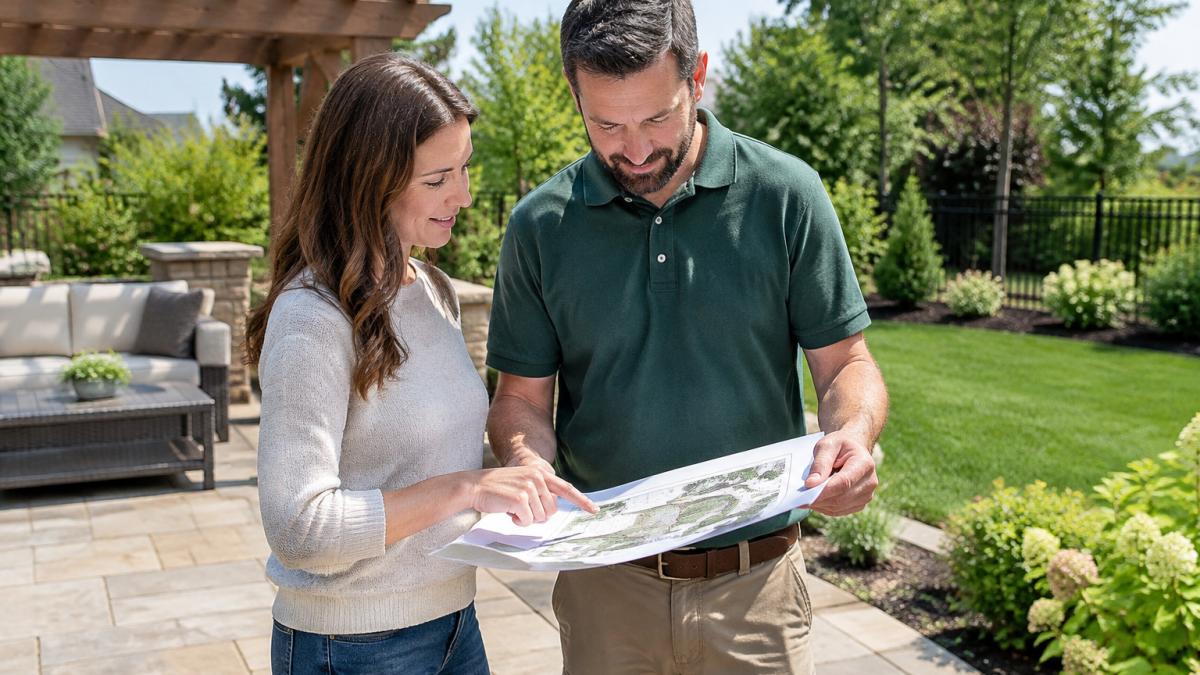
A portfolio is easy to stage, so verify it. Ask for the project address or at least the neighborhood and year of completion, then check whether the same project appears in the designer's public reviews or social posts.
Ask for two or three references from past clients, and call them. Do not rely on emailed testimonials. Use a short script so the calls are comparable:
- Did the project finish on the date and at the price in the contract?
- How were change orders handled, was the price agreed in writing before work started?
- Did the designer or a crew leader manage the site day to day, and how often did you get updates?
- What went wrong, and how quickly was it fixed?
- Would you hire this company again, and why or why not?
Then ask about the process itself. A typical process runs through distinct stages, and each stage should produce a deliverable you can review:
- Site visit and site analysis. The designer walks the property, notes sun exposure, slope, drainage, soil, existing trees and utility easements, and asks how you want to use the space.
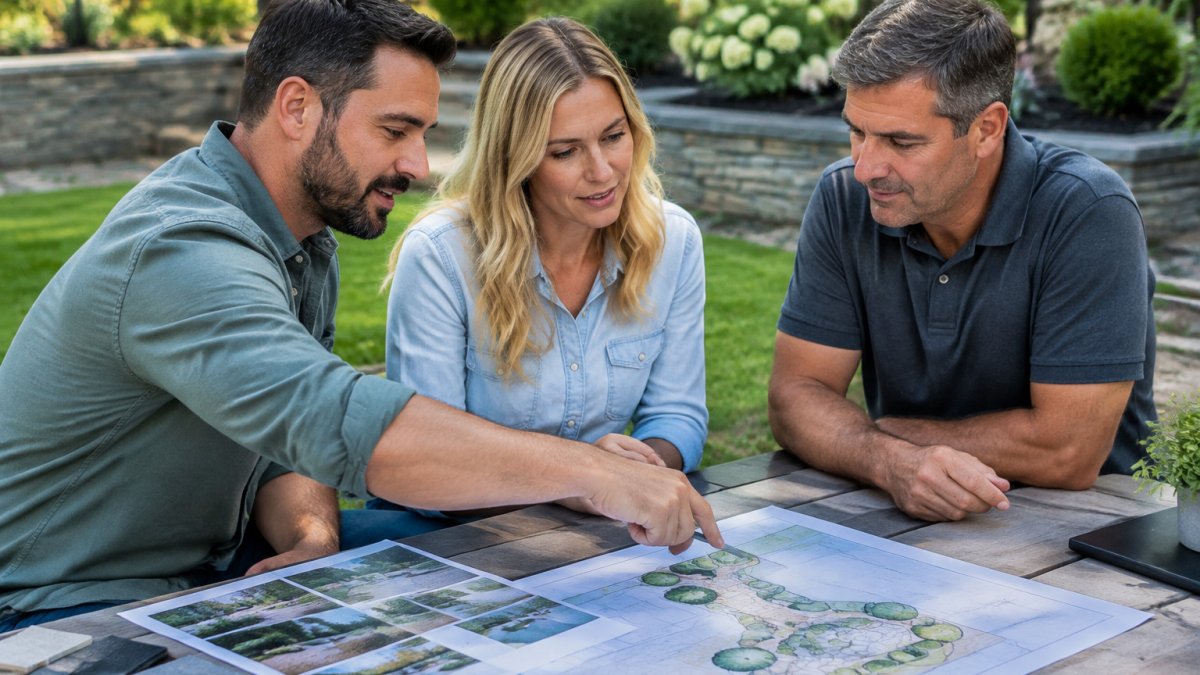
- Program and concept. You receive one or more concept options, often a bubble diagram or rough layout, showing zones, circulation and major features before any plant is specified.
- Design development. The chosen concept becomes a scaled plan with plant lists, hardscape materials, dimensions and quantities.
- Written proposal and contract. Scope, price, payment schedule and timeline are put in writing.
- Installation and punch list. The crew installs, and you walk the site against the plan before final payment.
Ask who will manage your project day to day, the designer you interviewed or a crew leader you have not met, and how often you will get updates. Ask what happens if a plant on the plan is unavailable at install time and who approves substitutions.
This is also where you can separate designers on technology and visualization. Ask whether they use 3D rendering, CAD, or hand-drawn sketches, and ask to see a sample of each. A 3D rendering helps you understand massing and sightlines, but it can look more finished than the installed result; hand-drawn plans are often more flexible during concept stages.
The article lays out the typical design process stages, and each one produces a deliverable you can review.
| Stage | Deliverable | What to check |
|---|---|---|
| Site visit and site analysis | Walk-through of sun, slope, drainage, soil and easements | Designer asks how you want to use the space |
| Program and concept | Concept options, often a bubble diagram or rough layout | Zones and circulation shown before plants are specified |
| Design development | Scaled plan with plant lists, materials and quantities | Dimensions and quantities are included |
| Written proposal and contract | Scope, price, payment schedule and timeline | Everything is in writing |
| Installation and punch list | Installed work reviewed against the plan | Site walked before final payment |
How to Avoid Surprise Landscaping Costs
Surprise charges are one of the most common complaints homeowners raise. Many of them are avoidable if you ask the right questions before work starts.
Ask the designer to list every cost category in writing: design fees, materials, labor, delivery, permits, disposal and any site preparation. Ask what is not included. Soil testing, irrigation and removal of old concrete are common add-ons that surprise people.
Ask how changes are priced. A clear change-order process, with a written price before any extra work starts, protects you from unexpected bills midway through a project. For a deeper look at planning, read our guide on how to budget for backyard landscaping projects and our overview of hidden costs to plan for in a landscaping budget.
What Is an Average Landscape Design Consultation Fee?
Most guides dodge this question, so here is the useful version: instead of chasing a single average, learn the fee models designers use and how each one changes your total cost. Consultation fees vary with property size, project complexity and whether the fee is credited toward installation, but the structure of the fee is usually one of four types:
- Hourly consultation. You pay for time only, often for a single walkthrough and verbal advice. Good for early-stage homeowners who are not ready for a full plan.
- Flat design fee. A fixed price for a defined deliverable, concept, scaled plan and plant list. Ask exactly what is included and how many revision rounds are covered.
- Percentage of project cost. Some designers charge a design fee calculated as a percentage of the installed project value. This aligns the designer's incentive with project scope, but it also means the fee rises as the project grows, so ask for the percentage in writing.
- Fee credited toward installation. Some firms apply part or all of the design fee to the installation contract if you hire them to build. Ask whether the credit is full or partial, and what happens to the fee if you use a different installer.
Ask each designer to explain four things in writing: whether the fee is hourly or fixed, what deliverable you receive at that price, how many revisions are included, and whether the fee is credited toward installation. Those four answers let you compare proposals that otherwise look nothing alike.
Also ask what the fee does not cover. Common add-ons include soil testing, topographic survey, permit drawings, irrigation design and 3D rendering. A low design fee with several add-ons can cost more than a higher all-in fee.
For current pricing and a free estimate, contact Ward's Lawn Care & Landscape Co. for details on our landscape design and construction services in Greater Cleveland.
Watch out: a designer who will not put the fee structure and deliverables in writing before you pay is the same designer who will be vague about change orders later.
Landscape Design Contract Checklist: What to Confirm in Writing
A verbal promise is hard to enforce. Before you sign, confirm these items in the written contract:
- Full scope of work, with plant counts, materials and dimensions
- Total price and payment schedule, with due dates
- Start date, expected completion date and what causes delays
- Warranty terms on plants, hardscape and workmanship
- Change-order process and how extra work is priced
- Cleanup and debris removal responsibilities
- Insurance and license numbers
- Cancellation and refund terms
Ask the designer to walk you through the contract line by line. Any item you do not understand should be explained in writing before you sign.
Red Flags to Watch for During Your Interview and Your Next Step
Watch for warning signs during your interview. Be cautious if a designer:
- Pushes you to sign quickly or offers a discount that expires today
- Will not provide proof of insurance or licensing
- Cannot show past projects or refuses to give references
- Gives a price without a written scope of work
- Asks for a large deposit before any plan is drawn
Post-installation support also matters. Ask what happens if a plant fails or a hardscape section settles. Ask whether the designer offers maintenance plans and how warranty claims are handled. Some homeowners also ask about sustainability, including whether the designer recommends native plants that need less water and fertilizer.
Frequently Asked Questions
How much does a landscape designer typically charge?
Landscape designers commonly structure fees as an hourly rate, a fixed fee for a defined scope, or a percentage of the installation cost. Pricing depends on property size, the level of detail required and how many revisions are included. Ask each designer to explain how their fee is calculated and what it covers. Ward's Lawn Care & Landscape Co. can provide a current quote after a free estimate, so you can compare the scope of work before committing.
Do I need a licensed landscape architect or is a landscape designer enough?
It depends on the project. Landscape designers typically handle planting plans, layouts and aesthetic design for residential properties. Landscape architects are licensed professionals who can handle grading, structural elements and projects that require stamped drawings for permits. Ask the professional which services they can legally provide, and confirm that any required permits or zoning reviews are handled before construction begins.
How do I verify a landscape designer's insurance?
Ask for a current certificate of insurance that lists general liability and, if they employ crews, workers' compensation coverage. Contact the insurer directly if you want to confirm the policy is active. Make sure the policy names you as certificate holder when work will happen on your property. Uninsured contractors can leave you liable for injuries or property damage on your site.
What should I ask a landscape designer's past clients?
Ask references whether the project finished on schedule, whether the final result matched the approved design and how the designer handled changes or problems. Ask whether costs stayed close to the original estimate. Request references for projects similar in size and style to yours, and visit a completed project if the owner allows it.
Your next step is simple. Write down your answers to the questions above, compare them across at least two firms, and choose the designer who answers clearly and puts everything in writing. When you are ready, contact Ward's Lawn Care & Landscape Co. for a free estimate and we will walk you through each of these points for your property.