 how-to
How to Prevent Weeds in Residential Lawns: 2026 Guide
Table of Contents
- Step 1: Test Your Soil and Fix the pH Balance
- Step 2: Choose the Best Pre-Emergent for Residential Lawns
- Step 3: Master Lawn Mowing Height for Weed Control
- Step 4: How to Thicken Grass to Choke Out Weeds
- Step 5: Water Deeply and Infrequently to Discourage Weed Growth
- Step 6: Fertilize for Turf Density, Not Just Color
- Common Mistakes That Undo Your Weed Prevention
- Conclusion
- Frequently Asked Questions
Last Updated: September 13, 2026
Step 1: Test Your Soil and Fix the pH Balance
The best way to prevent weeds starts below the surface. A soil test reveals whether your lawn has the pH and nutrient levels turf needs to outcompete weeds, and it is the most skipped step in residential lawn care.
Most homeowners guess at lime and fertilizer, and that guessing game favors weeds. Turfgrass thrives in a narrow pH window, generally 6.0 to 7.0 for Midwest cool-season grasses. Outside that range, nutrients lock up, turf thins, and bare spots open the door for germination.
Here is the practical sequence:
- Pull soil samples from 4 to 6 spots across the lawn, 3 to 4 inches deep
- Mix them in a clean bucket and submit roughly a cup to your county extension office
- Read the pH and nutrient report before buying anything
- Apply lime to raise pH or sulfur to lower it, based on the results
Test every two to three years, and watch for moss and plantain, which signal acidic, compacted soil.
Step 2: Choose the Best Pre-Emergent for Residential Lawns
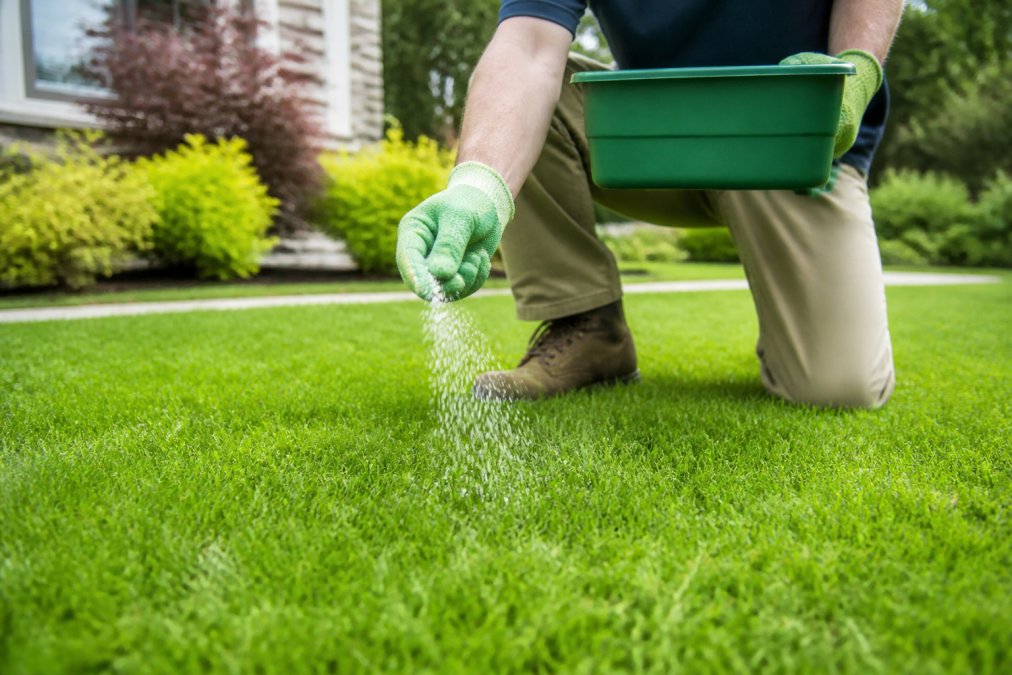
The best pre-emergent for residential lawns matches your grass type, target weeds, and regional germination window, applied before seeds germinate, not after you see sprouts. Timing beats brand loyalty, but timing without the right active ingredient wastes a season.
Pre-emergent herbicides form a chemical barrier in the top inch of soil. Emerging shoots absorb the herbicide and die before breaking the surface. Once you see the weed, you are already late.
university turfgrass extension guidance on pre-emergent timing
The Two Main Pre-Emergent Families
Almost every residential pre-emergent falls into one of two chemical families, and the family matters more than the brand.
- Dithiopyr and prodiamine are the workhorses for crabgrass, goosegrass, and many annual grasses. Prodiamine lasts longer but is harder on new seed; dithiopyr has early post-emergent activity on tiny crabgrass, buying a grace period if you apply late.
- Dimension (dithiopyr) and Barricade (prodiamine) are the trade names most homeowners see on shelves. Both are safe on established turf at the label rate.
- Pendimethalin is common in combination products and granular "weed and feed" blends. It is effective but breaks down faster in high heat, so it is a weaker choice for a full-season barrier in the South.
If you overseed in fall, note that most pre-emergents kill new grass along with weeds. Skip the fall application or use a product labeled safe for seeding, such as mesotrione-based options.
Timing Pre-Emergent Around Soil Temperature
Soil temperature, not the calendar, drives germination. Crabgrass seeds germinate when soil at 1-inch depth holds near 55°F for several consecutive days (extension.psu.edu). Apply pre-emergent about two weeks before that window.
A cheap soil thermometer takes the guesswork out. Check mid-morning at a 1-inch depth in several spots. When readings approach the mid-50s, you are in range.
A Regional Soil-Temperature Calendar
Most guides give one generic window, but the right week shifts by a month or more depending on location and grass type. Use this as a starting frame, then confirm with a soil thermometer:
- Cool-season lawns in the upper Midwest and Northeast: apply when forsythia blooms, typically late March to mid-April. A split application six to eight weeks later extends the barrier through summer.
- Transition-zone lawns (mid-Atlantic, Ohio Valley, lower Midwest): apply late February to mid-March for the first pass. Crabgrass pressure here is heavy, so a split application is almost always worth it.
- Warm-season lawns in the Southeast and lower South: apply when soil hits 55°F, often late February to early March, with a second application in late spring.
- Warm-season lawns in the desert Southwest: apply in late January to February, before the first warm spell. Summer rains can push a second germination wave, so a follow-up in June is common.
Reading the Label: What to Look For
The label tells you three things: which grass species the product is safe on, the active ingredient, and the application rate.
- Check that your turf type is listed. Some products injure fine fescue or newly seeded lawns.
- Note the active ingredient so you can rotate products and avoid resistance.
- Follow the rate exactly: over-application damages turf, under-application leaves gaps in the barrier.
- Note the re-entry interval and watering-in requirement. Most granular pre-emergents need about half an inch of irrigation within a few days to activate.
Step 3: Master Lawn Mowing Height for Weed Control
Lawn mowing height for weed control is the most underrated tool you own. Taller grass shades the soil, and shaded soil means fewer weed seeds germinate. But the equipment delivering that height is where most homeowners quietly lose the battle.
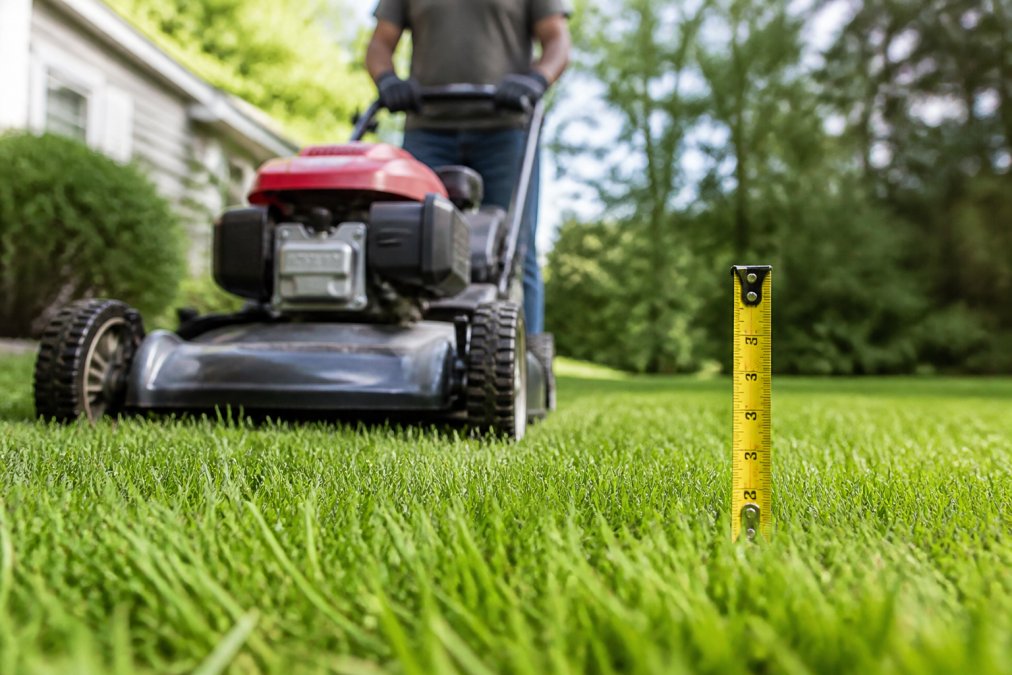
Set your mower to cut no more than one-third of the blade at a time. For most cool-season lawns, that means a finished height of 3 to 3.5 inches during the growing season. Scalping to 2 inches opens the canopy and invites crabgrass and dandelions within weeks.
Calibrate Your Deck Height, Don't Trust the Dial
Most mower deck height levers are approximate. A deck reading "3 inches" can cut at 2.5 or 3.5 depending on tire pressure, deck pitch, and wear.
- Park on a flat, hard surface like a driveway, not grass.
- Measure from blade tip to ground with a tape measure, not from the deck housing.
- Check all four corners; a deck pitched forward even a quarter inch thins turf in stripes.
- Recheck tire pressure first, underinflated drive tires lower the deck without any change to the lever.
A common pattern: a homeowner sets the lever to 3.5 inches, then wonders why the lawn looks scalped along tire tracks. Nine times out of ten, the deck is pitched or the tires are soft.
Blade Sharpness and Balance
Keep your blade sharp. A dull blade tears grass instead of slicing it, leaving ragged tips that lose moisture, invite disease, and slow recovery, exactly the condition weeds exploit.
- Sharpen every 8 to 10 mowings, roughly monthly in peak season.
- Replace the blade if you find deep nicks, a bent edge, or a crack near the center hole.
- Balance after every sharpening; an unbalanced blade vibrates, damages the spindle bearing, and leaves a washboard cut.
- Torque the blade bolt to spec, a loose blade is a safety hazard, not just a cut-quality problem.
Clipping Management and Mowing Pattern
Vary your mowing direction each time. Repeated passes in the same pattern create ruts and compact soil, weakening turf density within a season.
- Alternate north-south and east-west patterns each mow.
- Change your starting point so you are not always turning on the same corner.
- Leave clippings in place when following the one-third rule; they return nitrogen and do not build thatch on a regular schedule.
- Bag only when disease is present or the lawn has gotten ahead of you and clippings would smother turf.
Engine and Airflow Maintenance
A mower that runs poorly cuts poorly. A clogged air filter, fouled spark plug, or packed deck reduces blade speed and leaves a ragged cut.
- Clean the deck underside every few mowings; packed clippings reduce airflow and drop clumps.
- Replace the air filter and spark plug each season.
- Check the oil before every use in peak season.
- Sharpen or replace the blade when you service the engine, keeping both tasks on one schedule.
Step 4: How to Thicken Grass to Choke Out Weeds
Thick grass is the best way to prevent weeds there is. Learning how to thicken grass to choke out weeds comes down to two moves: overseeding and aeration, done in the right order and season.
A dense canopy blocks light from weed seeds; bare patches give every seed a landing pad. Close those gaps and you cut the weed population without a single spray.
Overseeding and Aeration Timing
Aerate first, then overseed. Core aeration relieves compaction and gives seed direct soil contact. Spread seed immediately after and keep the area moist until germination.
Late summer to early fall is ideal for cool-season grasses: soil is warm, air is cooling, and weed pressure drops. Spring overseeding works but competes with crabgrass germination.
- Aerate when soil is moist but not saturated
- Choose seed matched to your existing turf and sun exposure
- Water lightly and often until new grass reaches mowing height
Step 5: Water Deeply and Infrequently to Discourage Weed Growth
Deep, infrequent irrigation builds deep roots; shallow daily watering trains roots to the surface, where they dry out and stress.
Water once or twice a week, delivering roughly an inch total, in early morning so foliage dries before evening. Crabgrass and goosegrass tolerate drought better than turf, so a stressed lawn hands them the advantage.
Check output with a tuna can test: place a few straight-sided cans around the lawn during a cycle and measure how long it takes to collect an inch. That is your real runtime, not the dial guess.
Step 6: Fertilize for Turf Density, Not Just Color
Fertilizer should build density, not just a green flash. Nitrogen drives top growth, but a lawn fed for color alone grows fast and weak, and weak turf invites weeds.
Balance matters. A soil test tells you what your lawn needs; nitrogen without adequate phosphorus and potassium produces top-heavy growth with shallow roots. Split applications across the season instead of one heavy dose.
- Feed in early fall to support root growth before dormancy
- Use a slow-release nitrogen source to avoid surge growth
- Skip summer applications during heat stress
At Ward's Lawn Care & Landscape Co., we provide comprehensive outdoor maintenance and landscape construction services for residential and commercial properties throughout Greater Cleveland. Since 1986, our highly trained technicians have delivered honest, dependable, and professional results, ranging from routine lawn care and fertilization to elaborate landscape installations.
Common Mistakes That Undo Your Weed Prevention
The biggest mistake is treating weeds after they appear and calling it prevention. Post-emergent spot treatment handles what is growing but does nothing to stop the next generation of seeds.
Other repeat offenders:
- Scalping the lawn short in spring to "wake it up," which exposes soil and triggers germination
- Watering lightly every day instead of deeply once or twice a week
- Skipping aeration for years, letting soil compaction thin the turf
- Applying pre-emergent too late, after soil temperature has already crossed the germination threshold
- Mowing with a dull blade and spreading stress across the whole lawn
EPA guidance on safe pesticide use around homes
Conclusion
Weed prevention is a season-long system, not a single product. Test the soil, time your pre-emergent to soil temperature, mow tall, thicken the turf, water deep, and fertilize for density. Miss one step and the others work harder to compensate.
If you would rather hand the whole schedule to someone who does this every day, Ward's Lawn Care & Landscape Co. has served Greater Cleveland since 1986 with routine lawn care, fertilization, and full landscape services. Our technicians handle soil testing, aeration, overseeding, and timed applications so your lawn stays thick without the guesswork. We offer free estimates and discounts when you combine multiple services.
Get started with Ward's Lawn Care & Landscape Co. and build a lawn that crowds weeds out on its own.
Frequently Asked Questions
What is the best time of year to apply pre-emergent weed control?
Apply pre-emergent when soil temperatures reach 50-55°F for several consecutive days, which typically happens in early spring before weed seeds germinate. In northern states, this usually falls between late March and mid-April. A second application in early fall helps block winter annuals like henbit and chickweed. Check your local extension office for current soil temperature data.
Does mowing height affect weed growth in residential lawns?
Yes. Taller grass shades the soil surface, which blocks sunlight that weed seeds need to germinate. Cool-season grasses do best at 3 to 3.5 inches during growing season. Scalping your lawn below 2 inches opens the canopy and gives crabgrass, dandelions, and other broadleaf weeds a clear path to establish. Raise your mower deck gradually in spring as growth picks up.
How does proper fertilization help prevent lawn weeds?
Fertilizer feeds the grass, not the weeds. A thick, actively growing lawn outcompetes weed seedlings for water, nutrients, and sunlight. Nitrogen drives blade growth and tillering, which fills in bare spots where weeds take hold. Apply the right amount at the right time, usually 3 to 4 feedings per year for cool-season turf, and avoid over-applying, which can burn grass and create thin patches.
What will kill weeds in a lawn but not grass?
Post-emergent broadleaf herbicides formulated for turf selectively target dandelions, clover, and plantain without harming established grass. For grassy weeds like crabgrass, you need a different product applied at the right growth stage. Spot treatment works best for isolated outbreaks. Always read the label to confirm your grass type is listed as tolerant, and avoid spraying when temperatures exceed 85°F to prevent turf damage.