 how-to
How to Fix Lawn Damage From Weed Killer
Table of Contents
- Assess the Extent and Pattern of Lawn Damage From Weed Killer
- Stop Further Herbicide Application and Manage Exposure
- Identify the Weed-Killer Product and Active Ingredient
- Why Grass Turns Brown After Weed Killer Application
- How Long for Grass to Recover From Weed Killer Damage
- Lawn Burn Spots Treatment: Removing Dead Material and Preparing Soil
- When to Reseed After Weed Killer and Restoration Methods
- Common Mistakes to Avoid During Lawn Recovery
- Frequently Asked Questions
Last Updated: October 17, 2026
Assess the Extent and Pattern of Lawn Damage From Weed Killer
When you discover weed killer damage on your lawn, learning how to fix lawn damage from weed killer starts with figuring out exactly what happened.
Walk your lawn and note where damage appears. Brown patches in a clear path often mean overlapping passes; random dead spots may indicate spray drift from a neighbor.
Identifying selective versus non-selective herbicide damage
Selective herbicides target specific weeds and leave desirable grass alone.
Non-selective herbicides like glyphosate kill almost everything they touch: complete brown-out with sharp borders where the spray stopped, typically requiring full renovation.
To tell them apart, check the label's active ingredient list: non-selective herbicides almost always list glyphosate or similar broad-spectrum ingredients.
Distinguishing temporary discoloration from dead turf
Not all brown grass is dead grass, and this distinction changes your recovery plan.
Temporary discoloration appears as yellowing or light browning.
Dead turf shows complete browning or blackening, pulls up easily, and snaps when bent. It won't recover, remove it and replant.
The easiest test: wait three to five days.
Stop Further Herbicide Application and Manage Exposure
If you are actively spraying when you notice damage, stop immediately. Shut off the sprayer, set it away from plants and storm drains, and do not resume in that area. The next steps protect people, pets, desirable plants, and water, not just the lawn.
Read the label's exposure and re-entry language
Every herbicide label has sections that matter in an accidental overspray: Signal Word, First Aid, Personal Protective Equipment (PPE), Environmental Hazards, and Re-entry Interval. Read them first.
- Signal Word tells you the relative hazard: "Caution," "Warning," or "Danger." A "Danger" product requires more careful handling and faster action.
- First Aid gives product-specific instructions for skin, eye, and inhalation exposure. Follow those, not generic advice.
- PPE lists gloves, eye protection, long sleeves, and footwear the label requires. If you weren't wearing them, change clothes and wash exposed skin with soap and water.
Protect people and pets
Keep children and pets off the treated area for at least the label's re-entry interval, longer if the grass is wet.
If a person or pet shows symptoms after exposure, drooling, vomiting, lethargy, skin irritation, or breathing difficulty, call the Poison Control Center at 1-800-222-1222 for people, or your veterinarian for pets, and have the product label in hand.
Protect nearby plants and water
Herbicide drift can damage ornamental beds, vegetable gardens, and trees even when the lawn looks fine. Check downwind plants for curling, cupping, or yellowing leaves; if drift is suspected, rinse foliage with plain water and hold off fertilizing until they recover.
Keep spray, rinse water, and runoff out of storm drains, ditches, and waterways. Mix and rinse sprayers on a hard, contained surface and dispose of rinse water per the label.
Store and secure the product
Close the container tightly, keep it in its original labeled container, and store it locked and out of reach of children and pets. Never transfer herbicide into a food or drink container. For disposal, follow the label and local household hazardous waste guidance rather than pouring it down a drain.
Document what happened
Take photos of the damaged area, sprayer settings, and product label, and note the date, time, weather, and wind direction at application. This record helps you time replanting, explain the situation to a professional, and avoid repeating the mistake.
Identify the Weed-Killer Product and Active Ingredient
Find the product container or label and look for the active ingredient section.
Write down the product name and active ingredient, and photograph the label if you still have it.
If you don't know what was applied, ask neighbors or check whether a landscape service treated the area.
Why Grass Turns Brown After Weed Killer Application
Grass turns brown after weed killer application because the herbicide disrupts the plant's ability to process water and nutrients, leaving it too stressed to maintain its green pigment.
Selective herbicides interfere with growth hormones, so susceptible grass browns the same way target weeds do.
The timeline varies: some grasses brown within 24 hours, others take several days.
How Long for Grass to Recover From Weed Killer Damage
Recovery time depends on three factors: the herbicide type, the grass type, and the extent of damage. Temporary discoloration might resolve in two to four weeks with proper care. Dead turf requires complete removal and replanting, which takes six to twelve weeks for full recovery.
Recovery timeline by grass type
Cool-season grasses like fescue and bluegrass recover faster in spring and fall.
Warm-season grasses like St. Augustine grass and Bermuda grass recover fastest in late spring through early summer.
The key is timing your recovery efforts to match your grass type's growing season. Planting new seed or sod during dormancy wastes money and seed.
Lawn Burn Spots Treatment: Removing Dead Material and Preparing Soil
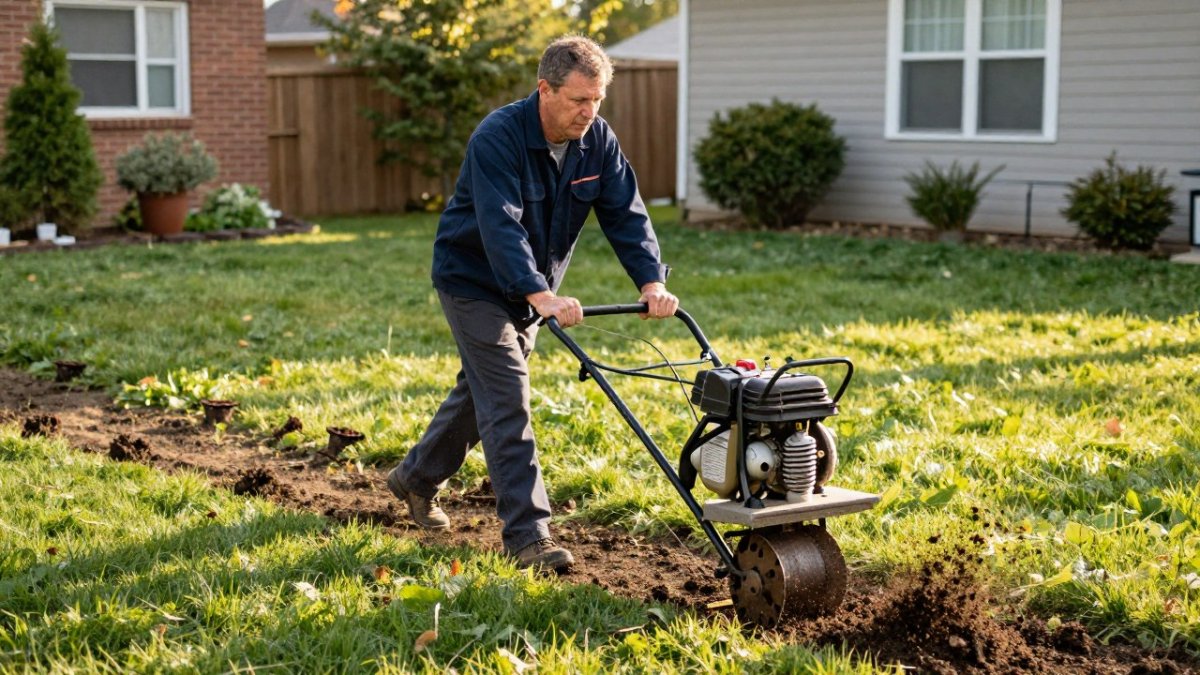
Once you've confirmed the grass is dead, remove it. Dead grass won't regenerate. Leaving it in place blocks sunlight and moisture from reaching the soil where new grass will grow.
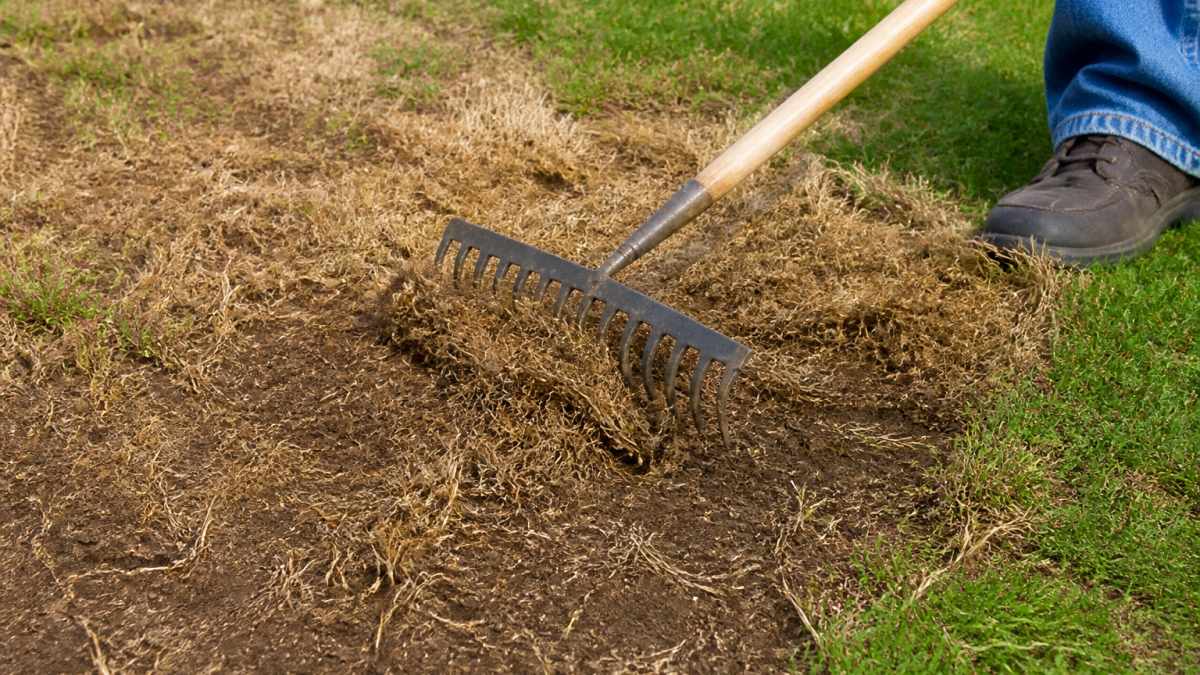
Raking, loosening soil, and clearing debris
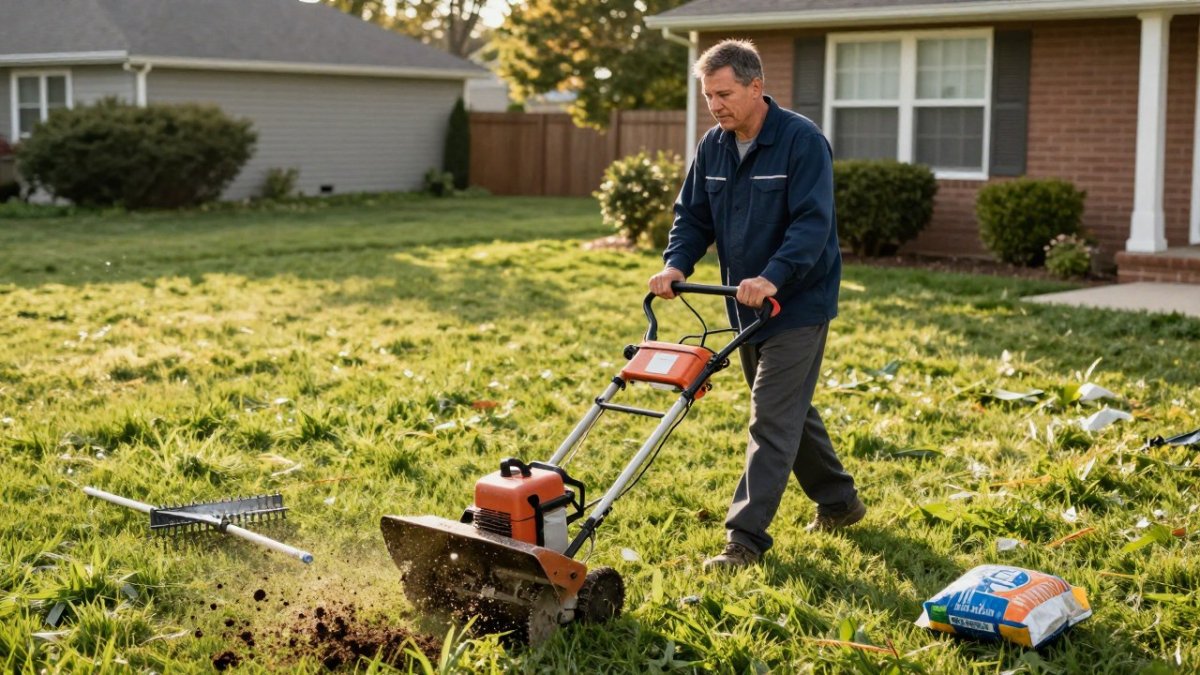
Start by raking the dead grass and thatch away from the damaged area.
After raking, loosen the soil with a garden fork or hand cultivator. Work the top two to three inches of soil.
Clear away all dead material from the bare patch. This includes dead grass, roots, and thatch.
Watering affected areas after accidental herbicide application
Before replanting, water the area thoroughly two or three times over several days. This helps flush any remaining herbicide residue from the soil.
Check soil moisture by pushing your finger two inches into the soil. It should feel damp but not soggy. If the soil feels dry, water again.
When to Reseed After Weed Killer and Restoration Methods
Understanding how to fix lawn damage from weed killer means timing your replanting correctly, as this is the single most common failure point in lawn recovery. Plant too soon and herbicide residue can stop seed germination or kill new sod before it roots. Wait too long and weeds colonize the bare patch.
Read the label first, then build a waiting plan
The product label is the authority on replanting intervals. Look for a section usually titled "Replanting," "Plant Back," or "Rotational Restrictions." That section tells you how long to wait before seeding, sodding, or planting ornamental plants in treated soil. If the label gives a range, use the longer end for bare soil and the shorter end only when you have incorporated and watered the area repeatedly.
A practical method:
- Record the active ingredient, the application rate, and the date of the final application.
- Find the replanting interval on the label and add a safety buffer of 7 to 14 days for bare-soil seeding.
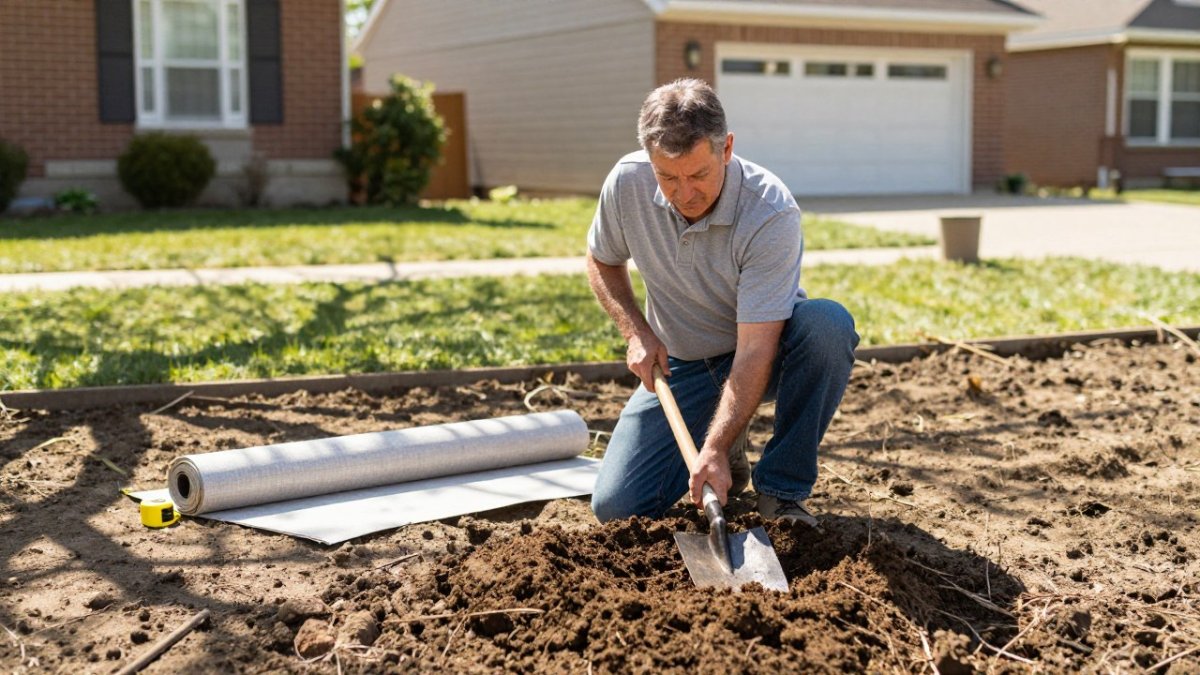
- Before planting, run a simple bioassay: fill two small pots with soil from the damaged patch, plant a few fast-germinating grass seeds (ryegrass is a common choice), and keep them moist indoors. If the seeds germinate and grow normally in 10 to 14 days, the soil is likely ready. If they stall or yellow, wait and repeat.
Reseeding intervals by active ingredient
Use these as general starting points only, the label always overrides them.
- Glyphosate: Most labels allow reseeding 7 to 14 days after the final application, once the treated vegetation is fully dead. Glyphosate binds tightly to soil and has little soil residual activity, so the main risk is surviving plant tissue, not the soil itself.
- 2,4-D and other growth-regulator herbicides: Labels commonly require 2 to 4 weeks before reseeding, and longer for sensitive broadleaf ornamentals. These products can persist in thatch and plant crowns longer than in bare soil.
- Atrazine and other triazine herbicides: These can carry soil residual activity that affects germination for several weeks to months depending on rate and soil pH. Many labels restrict reseeding to the next full growing season. Do not assume a two-week wait is enough.
If you cannot identify the product, assume a residual herbicide and wait at least 4 weeks, then run the bioassay before committing seed.
Match the restoration method to the damage and the grass
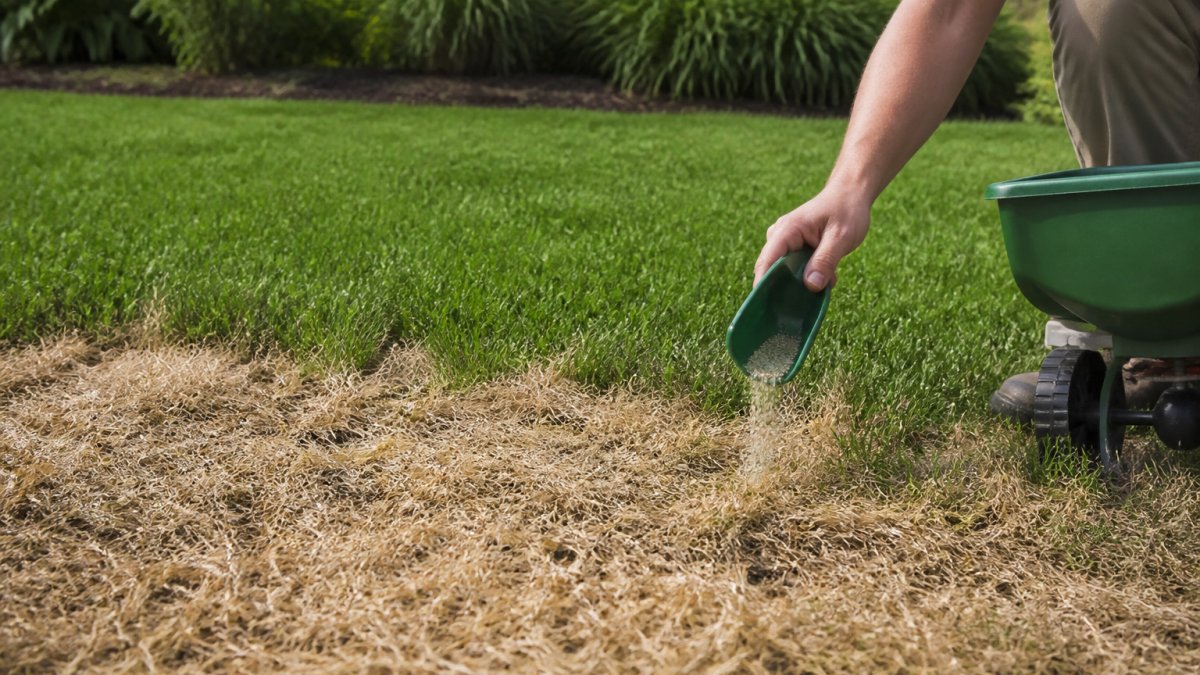
Reseeding works best for bare patches under about 25 square feet where the surrounding grass is healthy.
Overseeding suits thin or partially damaged turf where some grass survived.
Sod or plugs are the fastest route to visual recovery and the best choice for larger bare areas, slopes, or when erosion is a concern.
Grass-type considerations before you plant
Cool-season grasses such as tall fescue and Kentucky bluegrass establish best when seeded in early fall, when soil is warm but air is cooling (Practical Lawn Establishment and Renovation). Spring seeding is possible but requires more irrigation through summer. Warm-season grasses such as Bermuda, zoysia, and St.
What to do while you wait
Keep the bare patch covered with a thin layer of straw or erosion control blanket if rain is forecast, and pull weeds by hand so they do not set seed before you replant. Water the area lightly once a week to keep soil biology active without leaching residual herbicide deeper.
Common Mistakes to Avoid During Lawn Recovery
Don't replant into herbicide residue. This is the biggest mistake.
Don't use the same herbicide product again without reading the label carefully.
Don't ignore temporary discoloration. Monitor stressed grass for green growth at the base.
Don't forget about soil preparation.
Don't overwater during recovery. Soggy soil prevents seed germination and encourages fungal disease.
Lawn damage from weed killer feels permanent, but most damage is recoverable with the right approach. At Ward's Lawn Care & Landscape Co., we help homeowners restore damaged lawns.
Frequently Asked Questions
What should you do immediately after accidentally spraying weed killer on your lawn?
Stop application right away and prevent further exposure to the herbicide. If the spray drift is still occurring, move people and pets away from the affected area. Check the product label for the active ingredient and any safety instructions. Water the area lightly to dilute any herbicide residue on the grass blades, but do not oversaturate. Document the damage by taking photos and noting the date, time, and weather conditions. This information helps determine whether the damage is temporary discoloration or permanent turf death.
How long does it take for grass to recover from weed killer damage?
Recovery time depends on the herbicide type, application rate, grass species, and weather. Temporary discoloration from selective herbicides may fade within 1-2 weeks as new growth emerges. Non-selective herbicides like glyphosate typically kill the turf permanently in affected areas, requiring reseeding or sod replacement within 2-4 weeks after damage assessment. Cool-season grasses (fescue, bluegrass) often recover faster than warm-season varieties like St. Augustine grass. Full lawn restoration with new seed germination and establishment typically takes 4-8 weeks depending on growing season and maintenance.
When is the right time to reseed after weed killer application?
Wait at least 2-4 weeks after herbicide application before reseeding, depending on the product's persistence. Check the label for soil residue breakdown time. For non-selective herbicides like glyphosate, most break down within 3-7 days, but soil residue can persist longer in cool, wet conditions. Remove all dead grass and debris, loosen the soil, and ensure good seed-to-soil contact. Reseed during the appropriate growing season for your grass type: spring or early fall for cool-season grasses, late spring through early summer for warm-season varieties. Water gently and consistently until germination occurs.
Can you tell if grass damaged by weed killer will actually recover?
Temporary discoloration appears as yellowing or browning of leaf blades while the crown and roots remain intact; new growth will emerge within 1-3 weeks. Dead turf shows complete browning, brittle texture, and no new shoots emerging after 2-3 weeks of observation. Gently pull on damaged grass; if it resists and roots are still attached, recovery is likely. If grass pulls away easily with no root resistance, the plant is dead and requires removal and reseeding. Selective herbicides are more likely to allow recovery than non-selective types. Grass-type matters: cool-season varieties often recover better than warm-season grasses from accidental overspray.