 how-to
How to Create Outdoor Living Spaces: A Step-by-Step Guide
Table of Contents
- Assess Your Site and Plan Your Outdoor Living Space
- Define How Your Outdoor Living Space Will Be Used
- Design the Layout and Create Functional Zones
- Outdoor Living Space Ideas for Your Yard
- Small Outdoor Living Space Ideas and Design Solutions
- Select Hardscaping, Materials, and Backyard Patio Design
- Budget Planning and Outdoor Living Space Cost Considerations
- Add Furnishings, Lighting, and Final Touches
- Frequently Asked Questions
Last Updated: October 12, 2026
Assess Your Site and Plan Your Outdoor Living Space
Creating outdoor living spaces starts with understanding your yard's conditions and constraints before you pick a single plant or piece of furniture.
Evaluate climate, drainage, and sunlight
Your climate shapes what survives in your outdoor living spaces.
Walk your yard at different times to track how sun and shade shift, and notice where water pools after rain, those are your drainage problem spots.
Sunlight matters for plants and comfort: a seating area in full afternoon sun gets uncomfortably hot, while a shaded dining zone stays cooler but may feel damp. Most people prefer a mix.
Test your soil by digging a hole and observing drainage. Sandy soil drains fast but dries quickly, clay holds water and compacts, and loamy soil is ideal but rare.
Measure your yard and note existing features
Sketch your yard to scale, measuring length, width, slopes, and grade changes, and mark existing trees, structures, utilities, and underground lines.
Existing features become design anchors: a mature tree shades a seating zone, a fence defines a boundary, and an existing patio gives you a starting point. Don't remove them without reason, they often solve problems you'd otherwise have to fix.
Before digging or installing anything, call your local utility locating service. It's free and prevents expensive damage.
Document what works: note areas that stay dry versus flood, or corners that always feel windy. These observations guide your layout.
Define How Your Outdoor Living Space Will Be Used
The best outdoor living spaces match how your family actually lives. Function drives design, not the reverse, don't build a dining zone if you eat indoors.
Identify primary activities and entertaining needs
List what you actually do outside, entertaining, dining, playing with kids, relaxing, exercising, or gardening. Most yards serve multiple purposes, but usually 2-3 activities dominate.
Entertaining needs differ from everyday use: a gathering space might need seating for 10-12, a family relaxation zone comfort for 4, and a play area open ground.
Think about timing too: summer entertaining happens at dusk, morning coffee at sunrise, evening relaxation after work.
Talk with everyone who uses your yard, kids may want a play area, your partner a garden, you a fire pit.
Design the Layout and Create Functional Zones
Organizing your outdoor living spaces into zones makes them feel purposeful. Each zone needs a clear function and enough space to serve it well.
Map seating areas, dining zones, and activity spaces
Seating areas need at least 10-12 feet of clear space. A dining zone needs 15-20 feet to accommodate a table and movement around it.
Position zones to flow naturally, don't make people walk through the dining area to reach the fire pit. Use pavers or stepping stones to create pathways that organize the space and guide movement.
Consider sight lines: from your seating area, design so you look at something pleasant, a garden or view, not a utility box or neighbor's garage.
Establish focal points and visual flow
A focal point, a fire pit, water feature, large planter, or beautiful tree, draws the eye and anchors the space. Without one, outdoor living spaces feel scattered.
Create visual flow so your eye moves naturally: a path leads from the house to a seating area, the seating faces a focal point, and plantings frame views. This makes the space feel intentional and inviting.
Use repetition to create rhythm, the same shrub in three locations, matching pavers, repeated colors in furniture and plantings, to tie zones together visually.
Outdoor Living Space Ideas for Your Yard
Real outdoor living spaces combine elements that work together. Here are proven combinations for comfortable, usable yards.
Incorporate seating, dining, and fire pit areas
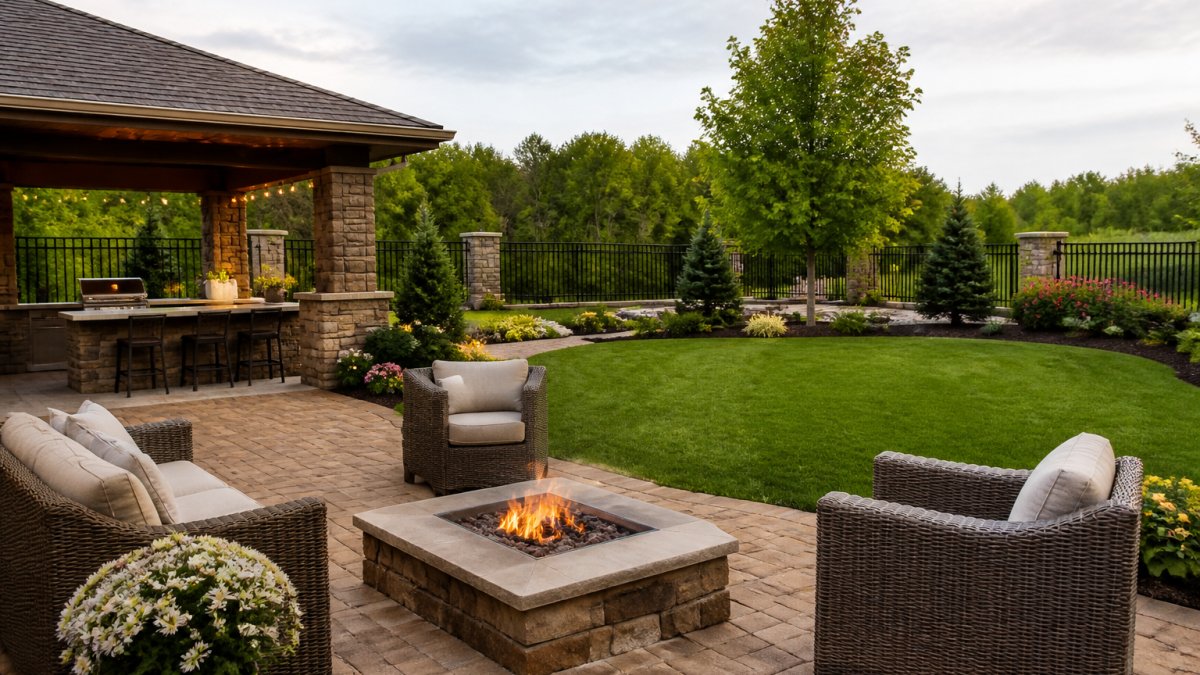
A complete outdoor living space usually has three zones: seating for relaxation, dining for meals and gathering, and a fire pit or focal point for evening entertainment.
Seating areas work best with comfortable chairs, a small table, and shade from a tree or pergola, positioned to catch morning sun or afternoon shade.
Dining zones need a sturdy table, chairs, and wind protection from an umbrella or pergola.
Fire pits create gathering points and extend the outdoor season into fall and spring.
Add an outdoor kitchen or beverage station
An outdoor kitchen or simple beverage station keeps people in the yard longer. Start with a small prep table, a cooler, and a grill, then add a sink and storage as your budget allows.
Position the kitchen zone near the dining area but separate from the main seating zone so cooking doesn't interfere with relaxation.
Shade over the kitchen, a pergola or umbrella, makes cooking more comfortable, and good drainage matters since water use increases there.
Small Outdoor Living Space Ideas and Design Solutions
Small yards need different strategies. The goal is to make compact spaces feel open and purposeful, not cramped.
Maximize compact yards with multipurpose furniture
In small outdoor living spaces, every element must earn its place. Choose multipurpose furniture: an ottoman doubles as seating or a footrest, a bench provides seating and storage, and a table with shelves adds function.
Vertical elements maximize small spaces: tall planters draw the eye upward, wall-mounted shelves add storage without floor space, and trellises grow plants upward. These make small yards feel larger.
Keep sight lines clear and avoid clutter. A few quality pieces work better than many cheap ones, and open space makes small yards feel bigger.
Use vertical elements and strategic borders
Borders define zones without taking much space: a low fence, hedge, or planter row separates seating from dining, creating the feeling of separate rooms in a small yard.
Trellises and arbors add height and structure, framing views, creating shade, and growing climbing plants vertically. An arbor over a pathway transitions between zones.
Strategic plantings create privacy without walls: tall grasses, bamboo, or shrubs screen neighbor views and soften hard edges in outdoor living spaces.
Select Hardscaping, Materials, and Backyard Patio Design
Hardscaping, patios, decks, pathways, and borders, forms the foundation of outdoor living spaces. Material choices affect durability, maintenance, cost, and appearance.
Choose durable patios, decks, and pathways
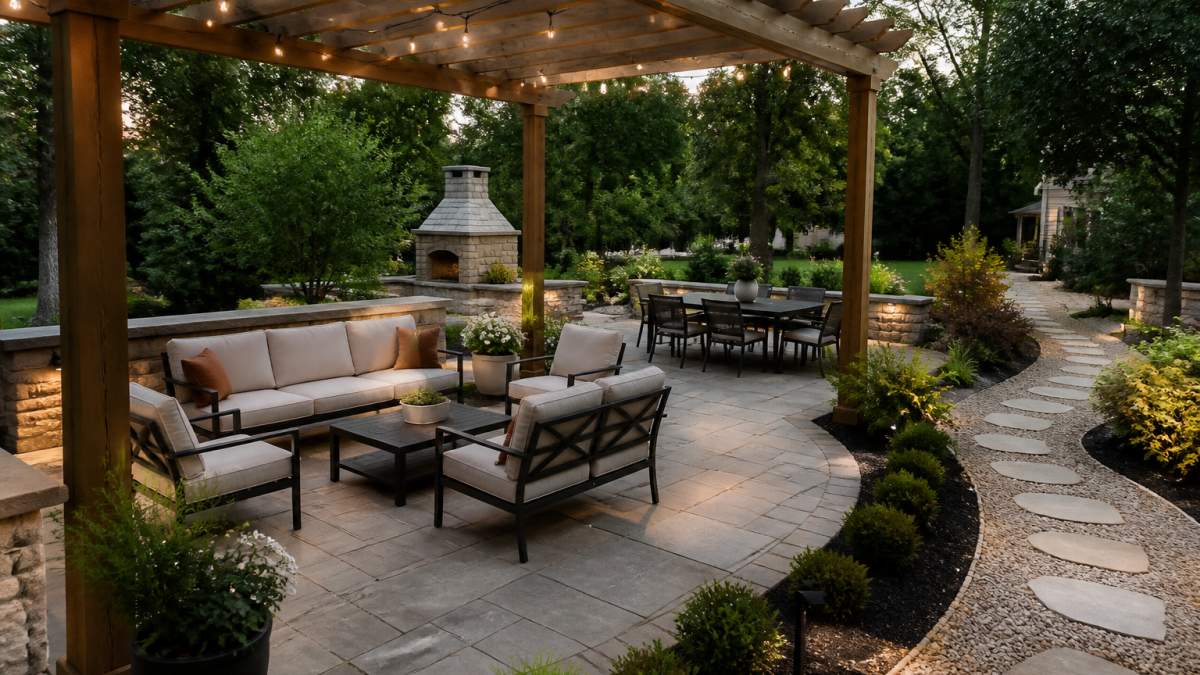
Patios need materials that withstand weather and foot traffic.
Decks work well on sloped yards. Wood needs regular staining, sealing, and board replacement, composite costs more upfront but needs less maintenance, and pressure-treated wood is affordable but needs regular staining.
Pathways connect zones and guide movement: gravel is inexpensive but needs raking, mulch is soft but breaks down, and pavers or stepping stones are durable and create clear routes.
Choose materials that match your climate and maintenance tolerance. In wet climates, choose materials that drain well and resist rot. In freeze-thaw areas, choose materials that expand and contract without cracking.
Add fencing, dividers, and decorative borders
Fencing defines property lines and creates privacy. Wood is classic and affordable but needs maintenance, vinyl lasts longer with less upkeep, metal suits modern designs, and chain-link is affordable but less attractive.
Dividers create separate zones without full walls: lattice panels are open and light, solid panels provide more privacy, and hedges are natural but take time to establish.
Decorative borders frame planting beds and define edges. Raised beds separate zones, low stone or metal edging keeps mulch in place, and borders add structure and polish to outdoor living spaces.
Budget Planning and Outdoor Living Space Cost Considerations
Creating outdoor living spaces requires planning to avoid surprises. Understanding cost drivers helps you decide where to invest and where to save.
Understand cost drivers and itemized expenses
Hardscaping typically costs the most: patios, decks, and pathways require materials and labor, fencing and walls add significant expense, and grading and drainage cost extra.
Plants and landscaping cost less than hardscaping but add up quickly. Trees cost more than shrubs. Shrubs cost more than perennials.
Furniture and accessories vary widely. Quality outdoor furniture costs more but lasts longer. Budget pieces need replacing more often. Lighting, fire pits, and water features add expense.
Labor costs depend on complexity: laying pavers and planting cost less, while grading, drainage, and electrical cost more. Multiple quotes help you understand local pricing.
Plan a phased DIY or professional approach
Most homeowners benefit from mixing DIY work with professional help, installing simple plantings yourself but hiring professionals for hardscaping or drainage.
Start with priority zones: Phase 1 a patio and seating area, Phase 2 a dining zone, Phase 3 a kitchen or fire pit. This spreads costs over time and lets you enjoy improvements as you build.
DIY work saves money on labor but takes time. Digging, planting, and mulching are manageable for most people. Concrete work, electrical, and drainage require more skill. Be honest about your abilities.
Professional installation costs more upfront but ensures quality work and proper drainage.
Add Furnishings, Lighting, and Final Touches
Furnishings and lighting transform outdoor living spaces from empty yards into inviting rooms, determining whether people actually use the space.
Select weather-resistant outdoor furniture and accessories
Outdoor furniture must withstand sun, rain, and temperature swings.
Cushions and pillows add comfort but need storage or covers. Choose outdoor-rated fabrics that resist fading and mildew, and store cushions in winter or weatherproof boxes.
Outdoor rugs define zones, add color, soften hard surfaces, and reduce noise. Choose rugs rated for outdoor use, they dry faster and resist mildew.
Accessories finish the space. Planters, lanterns, and decorative elements add personality. Keep accessories minimal in small spaces but generous in large ones. Too many small items feel cluttered.
Plan lighting, electrical, and landscaping
Lighting extends outdoor living space use into evening. String lights create ambiance. Path lights guide movement safely.
Electrical outlets power grills, fans, and entertainment equipment. Installing outdoor circuits requires a licensed electrician.
Landscaping completes the design. Plants soften hard edges and add color.
Maintenance planning matters. Low-maintenance plants work better than high-maintenance ones. Mulch reduces weeds and conserves moisture.
Creating outdoor living spaces transforms your yard from empty ground into a true extension of your home.
At Ward's Lawn Care & Landscape Co., we've been helping Greater Cleveland homeowners create outdoor living spaces since 1986.
Frequently Asked Questions
How do you start planning an outdoor living space?
Begin by assessing your site: evaluate sunlight patterns, drainage, and climate conditions. Measure your yard and note existing trees, slopes, or structures. Identify how you'll use the space, entertaining, dining, relaxation, or play. Sketch a rough layout showing functional zones, then prioritize elements like patios, seating, and landscaping. This foundation prevents costly mistakes and ensures your design fits your lifestyle and property conditions.
What should an outdoor living space include?
A complete outdoor living space typically includes a hardscape base (patio or deck), seating and dining areas, a focal point like a fire pit or outdoor kitchen, landscaping with plants and borders, and adequate lighting. Add weather-resistant furniture, outdoor rugs, and decorative elements to enhance comfort. For smaller yards, prioritize multipurpose pieces. The specific elements depend on your intended use, entertaining, family gathering, or personal relaxation, and your budget.
How much does it cost to create an outdoor living space?
Costs vary significantly based on size, materials, and complexity. A basic patio with seating may cost less than a full outdoor room with kitchen and lighting. Hardscaping, professional installation, and premium materials increase expenses. Rather than estimate, contact a professional landscape contractor for a detailed quote based on your specific site and design. Many companies offer phased approaches, allowing you to spread costs over time by completing elements in stages.
What are some small outdoor living space ideas?
For compact yards, use multipurpose furniture like storage benches and side tables that serve multiple functions. Install vertical elements such as wall-mounted planters and trellises to maximize space. Define zones with decorative fencing or natural wood dividers to create visual separation. Choose a single focal point, a small fire pit or water feature, rather than multiple features. Potted plants and border plantings add greenery without consuming floor space, making a small yard feel like a complete outdoor room.