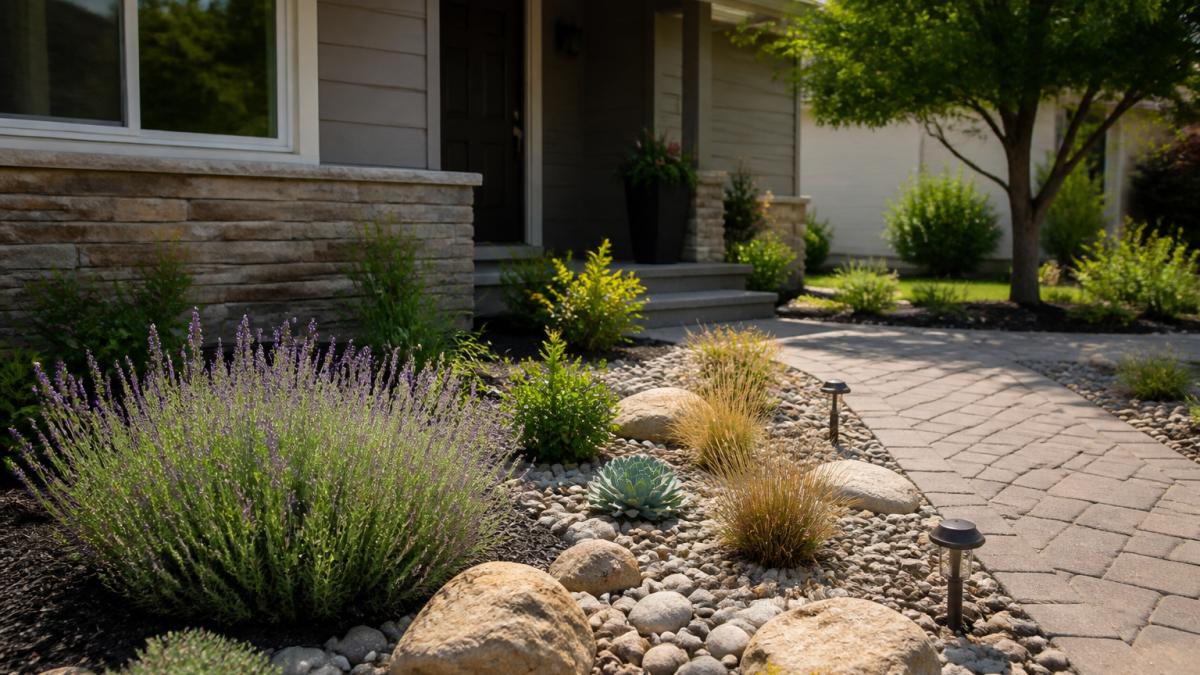
 blog
blog
7 Low-Maintenance Front Yard Landscaping Ideas
Table of Contents
- Why Low-Maintenance Front Yard Landscaping Matters
- Idea 1: Drought-Tolerant Plants and Hardy Perennials
- Idea 2: Gravel and Rock Ground Covers
- Idea 3: Mulch-Based Planting Beds
- Idea 4: Lawn-Free Landscaping with Hardscape Features
- Idea 5: Native Plants Suited to Your Climate
- Idea 6: Layered Planting and Ground Cover Combinations
- Idea 7: Defined Walkways and Path Edging
- Frequently Asked Questions
Last Updated: October 5, 2026
Why Low-Maintenance Front Yard Landscaping Matters
Your front yard is the first impression visitors have of your home. Yet many homeowners struggle to keep it looking polished without spending hours on maintenance each week. The solution isn't to accept an overgrown mess or invest in expensive weekly services, it's to design your outdoor space intentionally from the start.
Low-maintenance front yard landscaping eliminates the constant cycle of mowing, weeding, and watering that drains your time and energy. When you choose the right plants, hardscape materials, and layout, your yard practically maintains itself.
The seven ideas in this guide address the most common pain points: overgrown lawns, persistent weeds, water waste, and labor-intensive maintenance routines. Each approach is practical, implementable, and designed to work in various climate conditions. Whether you're starting from scratch or retrofitting an existing yard, these strategies will help you reclaim your weekends.
Idea 1: Drought-Tolerant Plants and Hardy Perennials
Drought-tolerant plants thrive in dry conditions and require minimal watering once established, making them ideal for low-maintenance front yard landscaping. These plants are engineered by nature to survive with limited moisture, which means less work for you.
Hardy perennials like coreopsis, thyme, and Russian sage return year after year without replanting. They develop deep root systems that access soil moisture even during dry spells. Ornamental grasses add texture and movement to planting beds while requiring just annual pruning.
When selecting drought-tolerant plants for your low-maintenance front yard landscaping design, consider your local climate and sun exposure. Full-sun areas are perfect for sedums, lavender, and blanket flower. Partial-shade spots work well with hellebores and coral bells.
Spacing matters too. Plant these perennials far enough apart to reach their mature size without crowding. This reduces competition for water and soil nutrients, and it minimizes disease pressure.
Idea 2: Gravel and Rock Ground Covers
Gravel and decorative rock eliminate the need for mowing while creating visual interest and defining garden spaces. Unlike lawn, gravel requires no watering, fertilizing, or cutting, just occasional raking to maintain appearance.
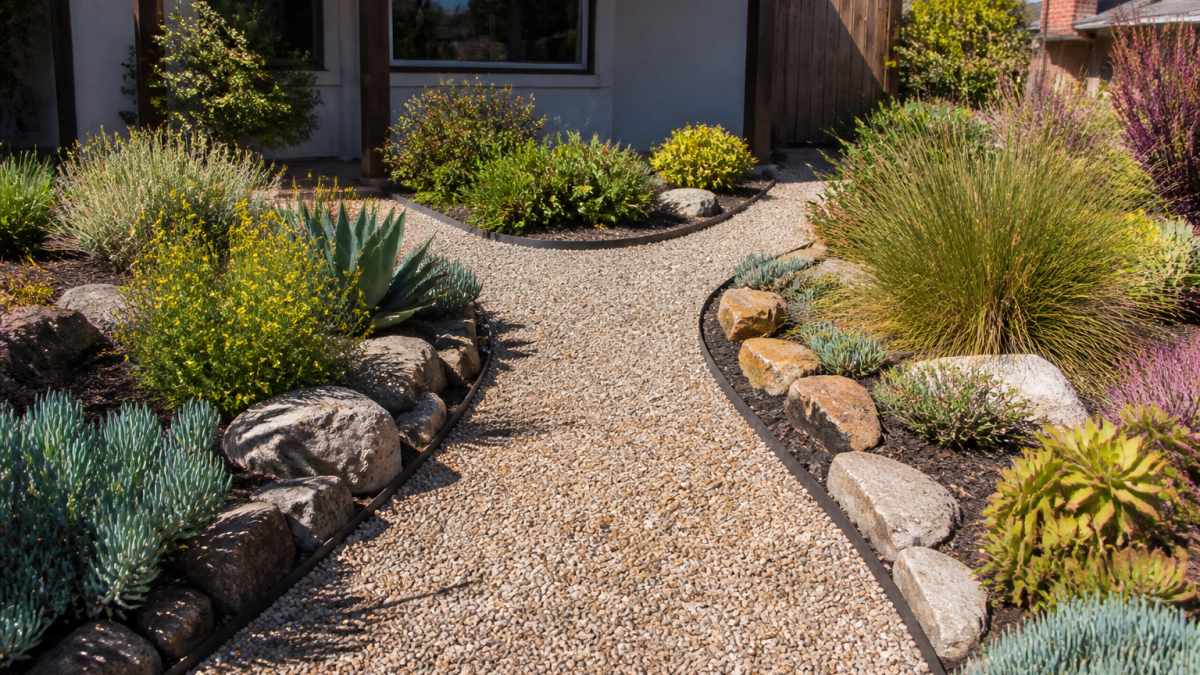
A gravel garden works best when layered properly. Start with landscape fabric to suppress weeds, then add 2-3 inches of gravel or crushed stone.
For low-maintenance front yard landscaping with gravel, choose angular stones rather than round ones. Angular gravel locks together and stays in place better, reducing the need for frequent raking.
Gravel gardens work especially well in arid and semi-arid climates where water conservation matters most. They also suit small front yards, where traditional lawn takes up precious space without adding much value.
Idea 3: Mulch-Based Planting Beds
Mulch is the cheapest way to cut front-yard maintenance, but the type you choose changes how much work you actually save. A well-mulched bed can reduce watering needs substantially and cut weeding time dramatically, because the layer blocks sunlight from reaching weed seeds while slowing evaporation from the soil surface.
Match the mulch to the job
- Shredded hardwood or bark mulch: The default for most planting beds. It knits together, resists washing out on slopes, and breaks down over two to three seasons, feeding the soil as it goes. Refresh depth every spring.
- Pine straw: Light, acidic, and good around acid-loving shrubs such as azaleas, rhododendrons, and blueberries. It settles quickly but breaks down faster than bark, so plan on topping it up more often.
- Compost: Best worked into soil or used as a thin topdressing rather than a thick weed barrier. It feeds soil biology but suppresses weeds less effectively at the same depth.
- Gravel or crushed rock: Inorganic, so it never decomposes and never needs replacing, but it does not improve soil and is hard to remove if you change your mind. Better suited to the gravel-and-rock approach in Idea 2.
Depth, edges, and the weed-fabric question
Apply 2 to 4 inches of organic mulch around plants and shrubs. Less than 2 inches and weeds push through; more than 4 inches and you risk smothering roots and creating a habitat for rodents. Keep mulch a few inches back from trunks and stems so bark stays dry and disease pressure stays low.
A common pattern is to skip landscape fabric under organic mulch. Fabric slows the breakdown that feeds your soil, and as mulch decomposes, weed seeds germinate on top of the fabric anyway. Fabric earns its keep under gravel and rock, where you are not trying to build soil.
Edging matters as much as the mulch itself. A clean spade-cut edge or a steel or stone border keeps mulch from spilling into the lawn and keeps grass from creeping into the bed, which is where most of the trimming labor comes from.
What upkeep actually looks like
- Spring: Top up to depth, fluff compacted mulch with a rake, and pull any weeds that germinated over winter.
- Summer: Spot-check depth after heavy rain; add mulch where it has washed thin. Little else is needed.
- Fall: Remove leaves from beds rather than letting them mat down, which can smother low ground covers.
- Winter: Leave mulch in place for root insulation; avoid piling it against trunks.
Cost and DIY trade-offs
Bagged mulch is sold by volume, and bulk delivery is almost always cheaper per cubic yard if you can accept a full load and have somewhere to dump it. A rough rule most homeowners use: one cubic yard covers about 100 square feet at 3 inches deep. Spreading mulch is genuinely DIY-friendly work, but if your beds total more than a few hundred square feet, a bulk delivery plus a wheelbarrow and a rake will save you money over bags, and hiring it out is usually priced by the cubic yard installed.
For low-maintenance front yard landscaping, the goal is a bed that looks finished year-round with one or two afternoons of work. Mulch delivers that better than almost any other single material, provided you pick the right type for your climate and refresh it on schedule.
Idea 4: Lawn-Free Landscaping with Hardscape Features
Hardscape, patios, pathways, stone borders, and retaining walls, eliminates lawn while creating functional outdoor spaces. Hardscape features require no mowing, watering, or fertilizing, making them perfect for low-maintenance front yard landscaping.
A front patio or seating area extends your living space while reducing the lawn footprint. Stone pavers, stamped concrete, or composite decking create attractive gathering spots. Curved pathways add visual interest and guide visitors through your landscape.
Retaining walls serve practical and aesthetic purposes. They manage slope, define planting areas, and add architectural interest. Stone or timber walls create natural-looking transitions in your landscape while requiring minimal maintenance beyond occasional inspection.
When designing hardscape for your front yard, plan for accessibility. Ensure pathways are wide enough for comfortable walking and have slip-resistant surfaces. Proper grading prevents water from pooling on patios or walkways. These practical considerations make your landscape both beautiful and functional.
Idea 5: Native Plants Suited to Your Climate
Native plants are adapted to your local climate, soil, and water availability, which means they thrive with minimal intervention. They've evolved to survive your region's temperature extremes, rainfall patterns, and soil conditions, no special care required.
Native plants also support local pollinators and wildlife, creating an ecosystem that sustains itself. Butterflies, hummingbirds, and beneficial insects find food and shelter in native plant gardens.
Research native plants for your specific region and hardiness zone. Native plant societies and university extension offices provide excellent resources for identifying appropriate species. Visit local botanical gardens to see how native plants look in landscape settings.
Native shrubs like serviceberry, ninebark, and viburnum offer seasonal interest with minimal pruning. Native perennials such as black-eyed Susan, purple coneflower, and bee balm bloom reliably without fertilizer. Native grasses like little bluestem and switchgrass provide structure and movement year-round.
Idea 6: Layered Planting and Ground Cover Combinations
Layered planting creates visual depth while maximizing plant coverage and minimizing bare soil. This approach combines tall plants in back, medium plants in the middle, and ground covers in front, a structure that reduces weeds naturally.
Ground covers like creeping thyme, sedum, and ajuga spread across bare soil, preventing weeds from establishing. These low-growing plants require minimal maintenance once established and tolerate foot traffic better than bare soil.
When designing layered plantings for low-maintenance front yard landscaping, space plants appropriately for their mature size. Crowded plants compete for water and nutrients, increasing stress and disease risk. Well-spaced plants develop stronger root systems and require less intervention.
Combine different plant textures and colors to create visual interest. Pair fine-textured grasses with bold-leaved perennials. Mix cool-toned plants with warm-toned foliage. Vary heights to create a dynamic landscape that looks intentional rather than random.
Idea 7: Defined Walkways and Path Edging
Clear pathways guide visitors through your landscape while protecting plants from foot traffic. Well-defined edges between lawn and planting beds reduce maintenance by preventing grass from creeping into garden areas.
Metal, plastic, or stone edging creates clean lines that make your landscape look maintained and intentional. Edging also prevents mulch from spreading into lawn areas and reduces the time spent trimming lawn edges.
Walkway materials affect both appearance and maintenance. Gravel paths are affordable and informal but require occasional raking. Stone pavers create a polished look and last for decades with minimal care. Mulch paths work well in woodland settings and blend naturally into planting beds.
For small front yards, a single curved pathway to your front door is often sufficient. For larger properties, multiple pathways create visual interest and improve accessibility.
| Landscaping Approach | Best For | Maintenance Level | Water Needs |
|---|---|---|---|
| Drought-tolerant plants | All climates | Low | Minimal after establishment |
| Gravel and rock | Arid regions, small yards | Very low | None |
| Mulch-based beds | Weed suppression | Low | Reduced by 50% |
| Hardscape features | Functional spaces | Very low | None |
| Native plants | Ecological value | Low | Climate-appropriate |
| Layered planting | Visual depth | Low | Reduced by spacing |
| Defined pathways | Organization | Low | Depends on material |
Transforming your front yard into a low-maintenance landscape is one of the best investments you can make in your home.
Ward's Lawn Care & Landscape Co. specializes in designing and installing low-maintenance front yard landscaping that enhances your home's curb appeal while respecting your time. From initial design through installation, we handle every detail so you can enjoy your outdoor space without the burden of constant maintenance. Contact Ward's Lawn Care & Landscape Co. today for a free estimate on your front yard transformation.
Frequently Asked Questions
What are some low-maintenance plants I can use for my front yard landscaping?
Drought-tolerant perennials like coreopsis, thyme, and ornamental grasses require minimal watering once established. Succulents such as aloe and agave thrive in dry conditions with little care. Native plants suited to your climate and soil conditions naturally adapt to local conditions, reducing the need for supplemental watering, fertilizer, and pest management. Hardy ground covers like creeping thyme and sedums spread to fill space while suppressing weeds.
Is mulch or rock better for a low-maintenance front yard?
Both work well for low-maintenance landscaping, but serve different purposes. Mulch breaks down over time, enriching soil and retaining moisture, making it ideal for planting beds with perennials and shrubs. Gravel and decorative rocks require no decomposition, last longer, and create a cleaner aesthetic with minimal upkeep. Many homeowners combine both: mulch in active planting beds and rock in pathways or accent areas. Your choice depends on your design preference and climate.
How can I landscape my front yard so it needs less maintenance?
Start by choosing hardy perennials, native plants, and ground covers suited to your climate and soil. Reduce lawn area by replacing it with hardscape features like gravel pathways, raised beds, or decorative stone. Use mulch or rock to suppress weeds and retain moisture. Install defined edging around planting beds to minimize maintenance. Group plants by water needs so you can water efficiently. Plan for seasonal tasks like spring cleanup and fall pruning, but avoid high-maintenance elements like annual flowers or complex irrigation systems.
What is the cheapest way to landscape my front yard?
Start with lawn-free or reduced-lawn designs using gravel, mulch, and native plants rather than expensive sod or elaborate hardscape features. Choose hardy perennials and ground covers over annuals, which require replanting each season. DIY installation of simple elements like mulch beds and gravel pathways saves labor costs. Phased installation over time allows you to spread expenses. Contact a professional like Ward's Lawn Care & Landscape Co. for a free estimate to understand what fits your budget and property.