 how-to
How to Stop Persistent Lawn Weeds: 7 Proven Methods
Table of Contents
- Why Persistent Weeds Keep Coming Back
- How to Identify Common Lawn Weeds
- Step 1: Apply Pre-Emergent Herbicide Before Weeds Germinate
- Step 2: Use the Best Post-Emergent Herbicide for Lawns
- Step 3: Prevent Weeds with Proper Mowing Height and Frequency
- Step 4: Lawn Aeration Benefits for Weed Control
- Step 5: Scarify, Dethatch, and Build Turf Density
- Step 6: Maintain Soil Health and Overseeding
- Frequently Asked Questions
Last Updated: October 4, 2026
Why Persistent Weeds Keep Coming Back
Persistent lawn weeds aren't just annoying. They're a sign that your lawn isn't thick enough to defend itself. When grass is thin, bare soil shows through. Weed seeds find that bare soil and germinate.
Most homeowners treat weeds one at a time. They pull a dandelion here, spray a patch of crabgrass there.
To stop persistent lawn weeds requires a two-part strategy. First, you eliminate the weeds that are already there. Second, you make your lawn so thick and healthy that new weeds can't take hold.
The good news: you can break this cycle. The methods below work because they target the root cause, not just the symptoms.
How to Identify Common Lawn Weeds
Knowing what you're fighting matters. Different weeds need different treatments. Some respond to one herbicide. Others need a completely different approach.
Annual vs. Perennial Weeds
Annual weeds live for one season. They grow, produce seeds, and die. Crabgrass is the most common annual weed. It germinates in spring, spreads through summer, and dies when frost hits.
Perennial weeds come back every year from the same root system. Dandelions and clover are perennial weeds. They're harder to kill because the root survives winter underground.
This distinction matters for treatment timing. Annual weeds need prevention before they germinate. Perennial weeds need a direct hit to the root system.
Regional Weed Patterns
Weeds vary by climate and soil type. Cool-season regions see different persistent weeds than warm-season regions.
In cooler climates, you're likely dealing with:
- Dandelions (perennial)
- Clover (perennial)
- Chickweed (annual or winter annual)
- Plantain (perennial)
In warmer climates, common persistent weeds include:
- Crabgrass (annual)
- Spurge (annual)
- Bermudagrass (perennial, in cool-season lawns)
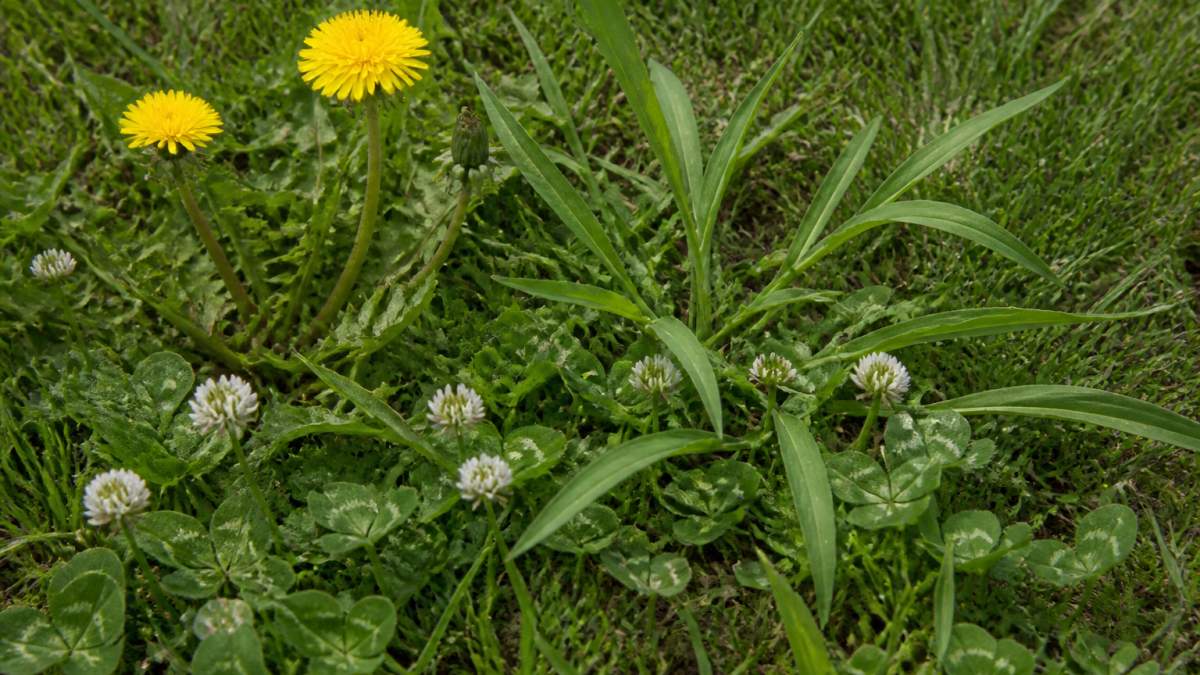
The best way to identify what you have is to look at the leaf shape and growth pattern. Weeds with broad, flat leaves respond to selective herbicides. Weeds with narrow, grass-like leaves need different chemistry.
Step 1: Apply Pre-Emergent Herbicide Before Weeds Germinate
Pre-emergent herbicide is your first line of defense. It stops weed seeds from germinating in the first place.
Think of pre-emergent as a soil barrier. It sits on top of the soil and blocks germination. It doesn't kill existing weeds. It prevents new ones from starting.
Timing is everything with pre-emergent. Apply it just before weed seeds germinate.
Most pre-emergent products last 8-12 weeks. One application in spring covers the main germination window. Some lawns benefit from a second application in fall to prevent winter annual weeds.
Pre-emergent works best on healthy, thick turf. If your lawn has bare spots, seeds will find those gaps and germinate anyway. That's why pre-emergent alone isn't enough. You need the full strategy.
Step 2: Use the Best Post-Emergent Herbicide for Lawns
Post-emergent herbicide kills weeds that are already growing. It's your tool for dealing with the persistent weeds you see right now. However, not every homeowner wants to use synthetic chemicals. Understanding your options, both chemical and organic, helps you choose the right approach for your lawn and values.
Selective vs. Non-Selective Chemical Options
Selective herbicides kill broadleaf weeds but leave grass alone. They work on dandelions, clover, and plantain. They don't work on grass-like weeds like crabgrass.
Non-selective herbicides kill everything they touch, including grass. Glyphosate (Roundup) is the most common non-selective option. Use it only on weeds you want to kill completely, not on your lawn.
For most lawn situations, selective herbicide is the right choice. It targets the broadleaf persistent weeds while leaving your grass untouched.
Organic and Non-Chemical Alternatives
If you prefer to avoid synthetic herbicides, several proven alternatives work on persistent weeds:
Vinegar spray (20% acetic acid) kills broadleaf weeds on contact. Household vinegar (5% acetic acid) is less effective. Horticultural vinegar (20% acetic acid) works better but requires careful application, it kills grass too. Spray on a calm, sunny day. Weeds brown and die within 24-48 hours, though roots may survive and regrow. Best for isolated weeds or small patches.
Corn gluten meal is a pre-emergent alternative to synthetic pre-emergent herbicide. It prevents weed seeds from germinating without harming established grass or soil life. Apply in early spring before soil temperature reaches 55 degrees.
Flame weeding uses a propane torch to kill weeds by rupturing their cell structure. It works on any weed type and leaves no chemical residue.
Hand-pulling and digging remains the most reliable method for perennial weeds like dandelions. Remove the entire root system, even a small piece left behind will regrow.
Boiling water kills weeds instantly by denaturing plant cells. Pour directly on the weed and surrounding soil.
Timing Your Application
Apply post-emergent herbicide (chemical or organic) when weeds are actively growing. Spring and fall are ideal. Weeds are stressed in summer heat and winter cold, so herbicide works less effectively.
Spray on a calm day with no rain expected for 24 hours. Wind carries spray away from the target. Rain washes it off before it works.
Most herbicides take 7-14 days to show results. Weeds don't die overnight. Be patient and don't reapply too quickly. Organic options like vinegar work faster (24-48 hours) but may need repeat applications for deep-rooted perennials.
Step 3: Prevent Weeds with Proper Mowing Height and Frequency
How you mow directly affects weed germination. Cutting grass too short opens the door for weeds.
Mow at 3 to 3.5 inches tall. This height shades the soil. Shade prevents weed seeds from germinating. It also keeps your grass thick and healthy.
Never remove more than one-third of the blade in a single mowing. If your grass gets tall, mow twice in one week instead of cutting it all at once.
Mow frequently during the growing season. Once a week is ideal in spring and fall. Twice a week in peak summer growth is even better.
A thick, healthy lawn is your best weed prevention tool. Proper mowing height and frequency build that thick turf.
Step 4: Lawn Aeration Benefits for Weed Control
Compacted soil stops grass roots from growing deep. Shallow roots mean thin turf. Thin turf means weeds win.
Aeration punches small holes in the soil. This relieves compaction and lets air, water, and nutrients reach the root system. Grass grows thicker and deeper.
Aerate in spring or fall when grass is actively growing. Use a core aerator, not a spike aerator. Core aerators remove plugs of soil. Spike aerators just poke holes, which can actually increase compaction.
Aerate once per year. Some heavily trafficked areas benefit from twice-yearly aeration.
After aeration, your lawn will look rough for a few weeks. The soil plugs break down and feed the lawn. This is normal. Don't panic.
Step 5: Scarify, Dethatch, and Build Turf Density
Thatch is a layer of dead grass and organic material that builds up on the soil.
Dethatching removes this layer. Scarifying (also called power raking) tears up thatch and dead grass. Both open up the soil and improve conditions for new grass growth.
Perform dethatching or scarifying in spring or fall. Don't do it in summer when grass is stressed by heat.
After scarifying, overseed your lawn. New grass fills in bare spots before weeds can. A thick turf is the best long-term weed control.
Turf density is the key metric. Dense grass crowds out weeds. Thin grass invites them in. Build density through proper mowing, aeration, overseeding, and nutrition.
Step 6: Maintain Soil Health and Overseeding
Healthy soil grows healthy grass. Healthy grass helps you stop persistent lawn weeds. But you don't need a complex soil management program to see results. A simplified, low-effort approach works for most homeowners.
The Lazy Lawn Care Approach to Soil Health
If you're tired of complicated lawn schedules, focus on these three high-impact, low-effort actions:
One soil test, then one annual nitrogen application. Test your soil pH and nutrient levels once (contact your local extension office for a kit, usually $15-$30). Most grass grows best in slightly acidic soil (6.0 to 7.0 pH). If your soil is too acidic or alkaline, grass struggles and weeds move in. Once you know your pH, you only need to adjust it if it's severely off.
Then apply nitrogen once per year in fall (September through November). Fall nitrogen is the single most important nutrient application because it strengthens roots before winter and promotes spring growth.
Overseed only the thin or bare spots, not the whole lawn. You don't need to overseed your entire lawn every year. That's overkill. Instead, overseed only the areas where grass is thin or bare, these are the exact spots where weeds will take hold.
Water deeply once per week instead of shallow, frequent watering. This is the easiest change to make and has the biggest impact. Deep watering (1 to 1.5 inches per week, delivered in one session) encourages deep root growth.
When to Invest in More Intensive Soil Work
If your lawn is severely compacted, has heavy thatch, or is extremely thin despite following the steps above, consider soil testing for specific nutrient deficiencies (phosphorus, potassium, micronutrients). A full soil test costs $30-$50 and tells you exactly what your lawn needs. But for most homeowners, the three actions above, fall nitrogen, targeted overseeding, and deep weekly watering, solve 80% of soil-related weed problems.
The Complete Picture
Thick, healthy, dense turf stops persistent lawn weeds. You don't need to be a lawn expert to build it. Focus on the high-impact, low-effort actions: proper mowing height, one fall nitrogen application, targeted overseeding, and deep weekly watering. Add pre-emergent in spring and post-emergent herbicide (or organic alternatives) as needed. By year two, you'll have a lawn that stops most weeds on its own, without spending hours on maintenance or becoming a soil chemistry expert.
Frequently Asked Questions
What kills lawn weeds but not grass?
Selective post-emergent herbicides target specific weed types while leaving desirable turfgrass unharmed. Broadleaf weed control products, for example, kill dandelions and clover but spare grass. Non-selective herbicides like glyphosate kill everything they touch, so they're only safe for spot-treating isolated weeds. Always read the label to confirm your grass species is listed as safe before applying any herbicide to stop persistent lawn weeds.
When is the best time to apply weed control?
Pre-emergent herbicides work best in early spring (before soil temperature reaches 55°F consistently) and fall to prevent weed seeds from germinating. Post-emergent herbicides are most effective when weeds are actively growing and still young, typically in spring and early summer. Avoid applying during extreme heat or drought, as stressed weeds may not absorb the herbicide effectively. Always check weather forecasts and apply when rain isn't expected within 24 hours.
Can proper mowing height really prevent weeds?
Yes. Mowing at the correct height for your grass species keeps the turf dense and shades bare soil where weed seeds would otherwise germinate. Taller grass (typically 2.5 to 3.5 inches, depending on variety) competes better for nutrients and water, suppressing weed growth. Cutting too short weakens the grass and opens space for weeds to establish. Consistent mowing at the right height is one of the most cost-effective ways to stop persistent lawn weeds without extra chemicals.
How does lawn aeration help control weeds?
Aeration relieves soil compaction, allowing grass roots to penetrate deeper and access more water and nutrients. A stronger root system means thicker turf that crowds out weed seedlings. Aeration also improves water infiltration and nutrient availability, supporting overall lawn health. Combine aeration with overseeding to fill bare patches before weeds can colonize them. Fall is typically the best time for aeration in cooler climates.