 listicle
Fire Pit Stone Veneer Design Trends That Hold Up Outdoors
Last Updated: November 12, 2026
Quick Summary
Stone veneer remains the leading fire pit finish because it delivers the look of full masonry without the structural weight or the full-masonry budget. Current trends favor clean, linear compositions, stacked stone and ledgestone patterns, and neutral palettes like soft gray, beige, and taupe. Match the pattern to the pit shape and confirm the fire rating of your specific product before installation.
- The U.S. stone veneer market was valued at $675.7 million in 2023, projected to reach $974.2 million by 2032.
- Linear fire pits pair best with ledgestone or sawn limestone, while round pits can carry fieldstone and river rock.
- Decorative stone veneer is not a substitute for fire-rated materials inside the firebox or high-heat areas.
- A properly overhanging cap sheds water away from the veneer and is the biggest factor in freeze-thaw survival.
- Rinse the veneer two or three times a season with a garden hose and skip the pressure washer.
Table of Contents
- Why Stone Veneer Still Leads Fire Pit Design
- Natural Stone Veneer Fire Pit Ideas Built Around Texture and Color
- Clean Lines and Stacked Stone: The Shapes Defining Fire Pits Now
- Natural Versus Manufactured Stone Veneer for a Fire Pit
- DIY Fire Pit Stone Veneer: What You Can and Cannot Do Yourself
- Fire Pit Stone Veneer Installation: Clearances, Caps, and Coping
- Fire Pit Stone Veneer Cost: What Drives the Price
- Keeping a Stone Veneer Fire Pit Looking New
- Frequently Asked Questions
Why Stone Veneer Still Leads Fire Pit Design
Stone veneer remains the leading fire pit finish because it delivers the look of full masonry without the structural weight or the full-masonry budget.
A fire pit is the one hardscape element guests sit around, so it should look like it was built to stay. At Ward's Lawn Care & Landscape Co., we have served Greater Cleveland since 1986, and the questions we hear have shifted. Homeowners no longer ask whether to face a fire pit in stone.
Below, we break down the fire pit stone veneer design trends worth building around, plus the safety, cost, and maintenance details to plan for. If you want the wider picture first, our backyard fire pit design review covers how the veneer decision fits the whole build.
Natural Stone Veneer Fire Pit Ideas Built Around Texture and Color
Texture and color do more visual work than the stone's price tag. A mid-priced fieldstone in the right palette will outperform an expensive stone chosen for the wrong setting.
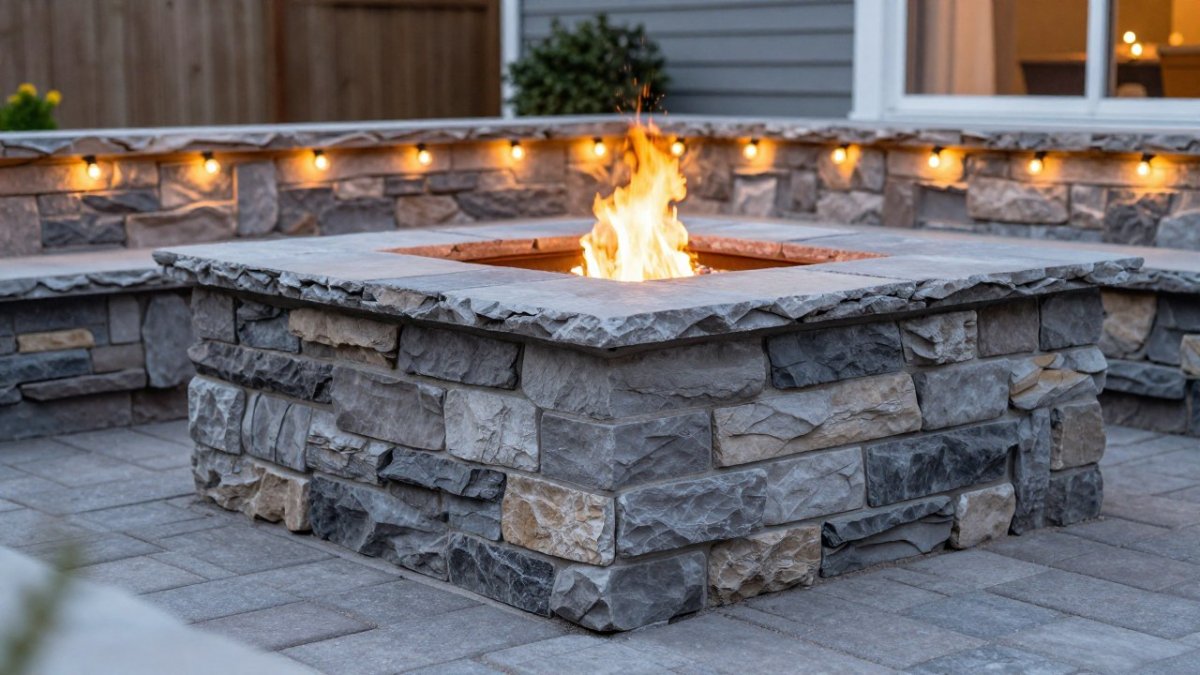
River Rock, Limestone, and Fieldstone Looks
Choosing a veneer you can repeat across features keeps the yard from looking pieced together.
- River Rock reads rounded and informal. Best for rustic settings and naturalized plantings.
- Limestone runs smoother and more uniform. It suits clean-lined patios and modern seating walls.
- Fieldstone mixes sizes and tones. It hides weathering better than uniform stone, which is why we often recommend it for fire pits that see heavy use.
Neutral Palettes: Soft Gray, Muted White, Beige, and Taupe
Neutral tones such as soft grays, muted whites, beige, and taupe are common choices for stone veneer, and they tend to fit surrounding landscapes well. Earthy colors also photograph well under firelight, which is when most people actually use the space. Once the fire pit look is set, our guide to creating outdoor living spaces shows how to carry the same palette into the surrounding patio and seating area.
Clean Lines and Stacked Stone: The Shapes Defining Fire Pits Now
Clean, linear compositions have replaced busy, convoluted stonework as the dominant direction in outdoor veneer. Simpler, more professional-looking designs have become a common direction in outdoor veneer, with fewer pattern changes and shapes that read clearly from across the yard.
Linear, Modern, and Rustic Styles Side by Side
Three shapes cover most of what homeowners ask for now.
- Linear fire pits run long and low, often as a divider between a patio and a lawn. They suit modern design and double as seating walls.
- Stacked stone and ledgestone deliver strong horizontal lines. The pattern emphasizes width, so it works best on rectangular and square fire pits.
- Rustic styles lean on irregular fieldstone and rounded river rock, with a wider cap and a chunkier profile.
A common mistake is pairing a linear fire pit with a busy, mixed-size stone. In practice, the cleanest results come from matching the pattern to the shape: linear pits want ledgestone or sawn limestone, and round or irregular pits can carry fieldstone and river rock.
Natural Versus Manufactured Stone Veneer for a Fire Pit
Manufactured stone veneer is cast from concrete and colored to imitate natural stone; natural stone veneer is cut from real quarried rock. Both are decorative facing materials, and that distinction drives the entire safety conversation.
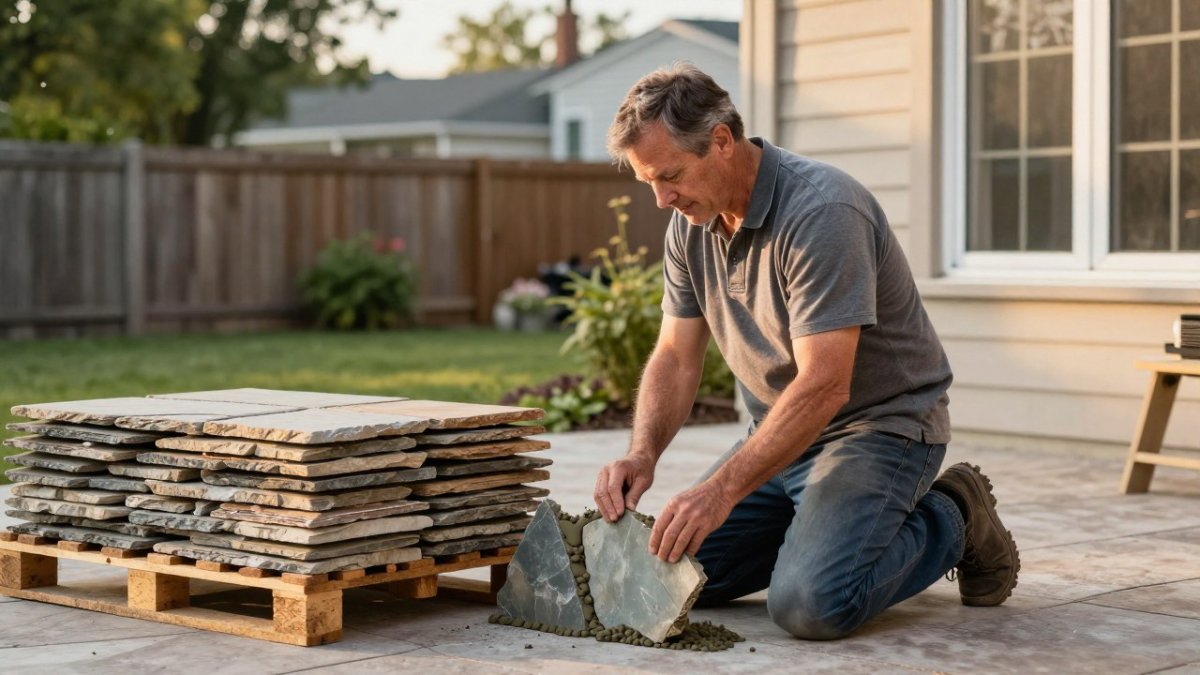
Natural stone offers genuine variation, holds up to freeze-thaw cycles, and can be repointed decades later. The trade-offs are weight and cost, and no two pieces match exactly, which some homeowners love and others do not.
Manufactured veneer costs less, installs faster, and comes in consistent lots. It also raises a question worth asking directly.
Here is how the two veneer types compare on the points the article raises.
| Option | Best for | Key difference |
|---|---|---|
| Natural stone veneer | Genuine variation and freeze-thaw durability | Cut from real quarried rock; heavier and costlier; can be repointed decades later |
| Manufactured stone veneer | Lower cost and faster installs | Cast from concrete and colored to imitate stone; consistent lots; confirm fire rating of specific product |
DIY Fire Pit Stone Veneer: What You Can and Cannot Do Yourself
You can reasonably handle layout planning, stone selection, and finish decisions on your own. You cannot safely handle the firebox, gas line, or structural base without the right trade and the right permits.
What a confident DIYer can do:
- Sketch the footprint and check clearances to the house, fence, and overhead branches
- Choose the veneer style and order samples
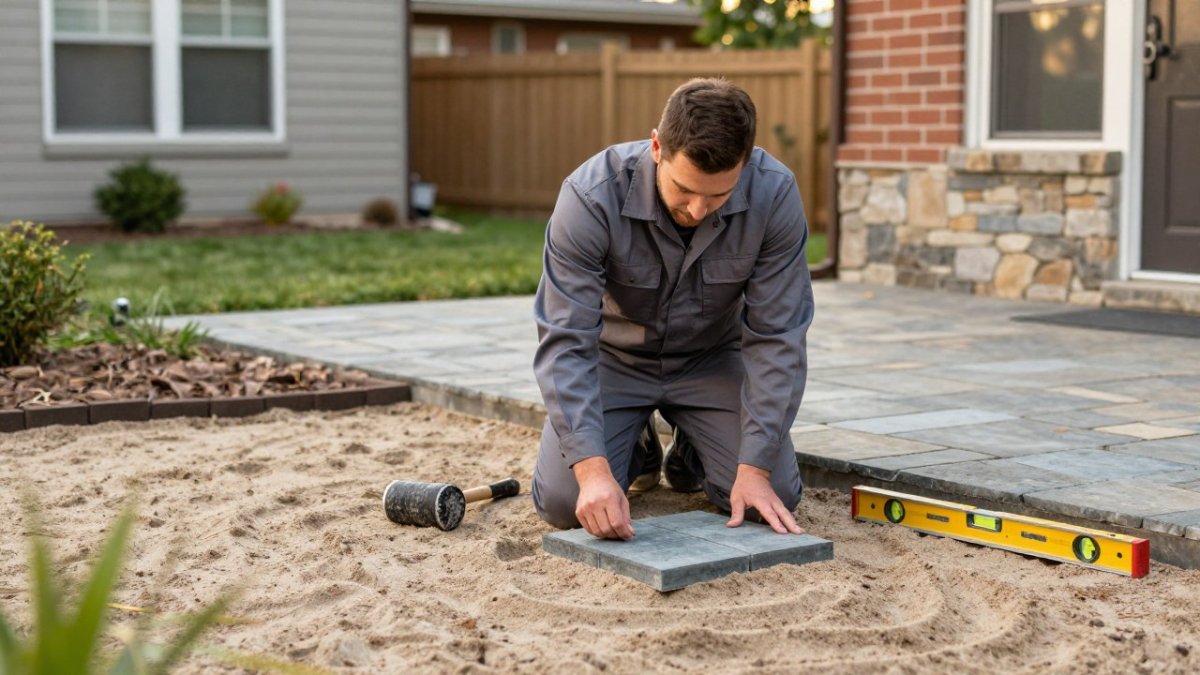
- Build a paver or gravel pad under a wood-burning bowl
- Apply veneer to a flat, cured, sound block wall using the manufacturer's specified mortar
What should go to a professional:
- Gas connections and burner installation
- Firebox construction and any fire-rated interior lining
- Structural footings and retaining walls
- Anything within the clearance distances your local code requires
Watch out: veneer applied directly over a firebox opening, or mortar that is not rated for the heat, can crack and fail within a season. If you are weighing the hire, our guide on how to hire a landscape designer lists the questions to ask before signing.
Fire Pit Stone Veneer Installation: Clearances, Caps, and Coping
Installation is where a good-looking fire pit becomes a permanent one. Three details decide it: clearance to combustibles, the cap, and the coping.
Planning guidance from Braen Supply's fire pit project planning notes is direct about the first point: decorative stone veneer is not a substitute for fire-rated materials inside the firebox or other high-heat interior areas.
Clearances are where most plans go wrong. Clearances depend on the burner, the pit size, and local code, so the exact figures should be confirmed for your project.
The cap and coping are the horizontal stone pieces that finish the top of the wall.
Surface prep matters too. When you are ready to have the work done, contact Ward's Lawn Care & Landscape Co. for details on the landscape construction services we provide.
Fire Pit Stone Veneer Cost: What Drives the Price
Fire pit stone veneer cost depends on four things: the square footage of the face, the stone you choose, the cap material, and how much site work the base needs. There is no honest flat number, because a 36-inch round pit and a 12-foot linear pit are not the same project. What you can do is estimate the face area first, then price each layer separately so nothing gets buried in a lump-sum quote.
Start with the math. A round fire pit 36 inches across and 18 inches tall has a face of roughly 14 square feet (3.14 x 3 x 1.5). A 12-foot linear pit 18 inches tall has about 18 square feet of face on the long side alone, plus the ends.
Pricing depends on the square footage of the face, the stone you choose, the cap material, and how much site work the base needs. For current pricing and a quote specific to your project, visit Ward's Lawn Care & Landscape Co.'s website.
The biggest cost drivers, in order:
- Stone type. Natural stone costs more per square foot than manufactured veneer, and premium profiles cost more than standard ones.
- Face area. Linear pits have more vertical face than round pits of the same footprint.
- Cap and coping. A thick natural stone cap is a real line item, and it is not where you want to save.
- Base and site work. Footings, gas rough-in, and access to the yard all add labor.
- Firebox and burner. Gas burners, inserts, and fire-rated lining sit outside the veneer budget entirely.
Watch out: a quote that covers only the veneer and not the firebox, cap, or base is not a complete quote. For help planning the fire pit inside the larger project, see our guide on how to budget for backyard landscaping projects.
Keeping a Stone Veneer Fire Pit Looking New
Maintenance is simpler than most homeowners expect, and it starts with the cap. A fire pit that sheds water properly will outlast one that does not, regardless of stone quality.
The routine that works:
- Rinse the veneer two or three times a season with a garden hose. Skip the pressure washer, which can drive water into joints and strip mortar.
- Inspect the cap and joints each spring for hairline cracks and re-seal or repoint before winter.
- Keep the firebox clear of ash and debris, and never burn treated lumber or trash against stone.
- Cover the pit or keep it drained if it holds water, since standing water is what splits stone in a freeze.
Weather resistance and freeze-thaw durability are where cheap installations fail first. A properly built fire pit with a good cap and correct flashing will hold its appearance for decades. That is the real argument for doing it once and doing it right.
A fire pit is a long-term addition to your yard, and the veneer decision is the one you will look at every time you use it. Ward's Lawn Care & Landscape Co. has handled outdoor maintenance and landscape construction across Greater Cleveland since 1986, with highly trained technicians, free estimates, and discounts when you hire us for multiple services.
Frequently Asked Questions
What stone veneer styles work best around an outdoor fire pit?
River Rock, Limestone, and Fieldstone are the three veneer styles most often named for fire pit applications, and each gives a different look. River Rock reads rounded and casual, Limestone gives a cleaner, more tailored face, and Fieldstone brings irregular texture for a rustic feel. Match the style to your patio material and house exterior so the fire pit looks built in rather than added on. Neutral tones such as soft gray, beige, and taupe stay current longer than bold color choices.
Can you use stone veneer around a wood-burning fire pit?
Yes, with one important limit. Decorative stone veneer belongs on the outside face of the fire pit structure, not inside the firebox. The firebox and any high-heat interior area need fire-rated materials, and the veneer should sit behind the required clearance from the heat source. Some manufactured stone veneer products may also contain materials that affect whether they are truly non-combustible, so confirm the product's rating before you buy. A professional installer can set the clearances correctly.
How much does fire pit stone veneer cost?
There is no single price, because fire pit stone veneer cost depends on the square footage of the face, whether you choose natural or manufactured stone, the cap material, and how much prep and labor the base needs. Manufactured options generally cost less than natural stone. Get a written estimate that lists materials, labor, and disposal separately so nothing shows up as a surprise charge later.
Is DIY fire pit stone veneer realistic for a homeowner?
Small cosmetic work is within reach for a careful DIYer, but a full veneer job is harder than it looks. The block core has to be square and level, the mortar has to be mixed and applied correctly, and the cap and clearances have to be right for the fire pit to be safe and to last through freeze-thaw cycles. If the base is off, the veneer will crack or pop loose within a season or two. Many homeowners handle the design choices and leave the build to a crew.