 how-to
Organic Weed Control Safety for Pets
Last Updated: October 24, 2026
Quick Summary
Organic weed control pets can safely live around requires reading the active-ingredient list, not just marketing claims. Organic ingredients like acetic acid, citric acid, and essential oils can irritate skin and eyes when wet, so keep pets off treated areas until completely dry, typically 2-4 hours. Once dry, most organic herbicides pose minimal risk to pets.
- Organic certification describes ingredient origin, not pet safety; check the active-ingredient list to assess actual risk.
- Keep pets off wet-treated areas; drying time is typically 2-4 hours for vinegar-based herbicides depending on weather.
- Boiling water, hand-pulling, and corn gluten meal are chemical-free pet-safe weed control options with different trade-offs.
- Essential oils and salt are higher-risk for pets; cats lack enzymes to metabolize many plant oils, and salt persists in soil.
- If your pet ingests weed control product, contact your veterinarian or ASPCA Animal Poison Control Center at (888) 426-4435 immediately.
Table of Contents
- What Organic Weed Control Really Means for Pet Safety
- Organic vs. Natural vs. Non-Toxic Weed Killers
- Pet-Safe Weed Killer Options That Work
- Using Vinegar Weed Killer and Pets Safely
- Boiling Water Weed Control Without Pet Risk
- How Long to Keep Pets Off Treated Grass
- What to Do If Your Pet Is Exposed to Weed Control
- Creating Your Pet-Safe Weed Management Plan
- Frequently Asked Questions
What Organic Weed Control Really Means for Pet Safety
Organic weed control refers to weed management methods that rely on naturally derived ingredients rather than synthetic chemicals. But organic doesn't automatically mean safe for pets.
Some organic herbicides can still cause issues if a dog or cat ingests them or contacts them before they dry. The real protection comes from knowing what's in the product, how long it takes to become safe, and what to do if exposure happens.
Organic vs. Natural vs. Non-Toxic Weed Killers
Organic weed control uses ingredients allowed under USDA organic standards, such as acetic acid (vinegar), citric acid, clove oil, pine oil, and fatty-acid-based soaps.
Natural weed control is broader and far less regulated. A "natural" product may contain nature-derived ingredients but isn't necessarily certified organic, and may include synthetic additives or surfactants.
Non-toxic weed control is a performance claim, not an ingredient category.
What is actually in the bottle: ingredient-by-ingredient pet risks
The label's active-ingredient list is where pet safety actually lives. Here's how common ingredients behave around dogs and cats.
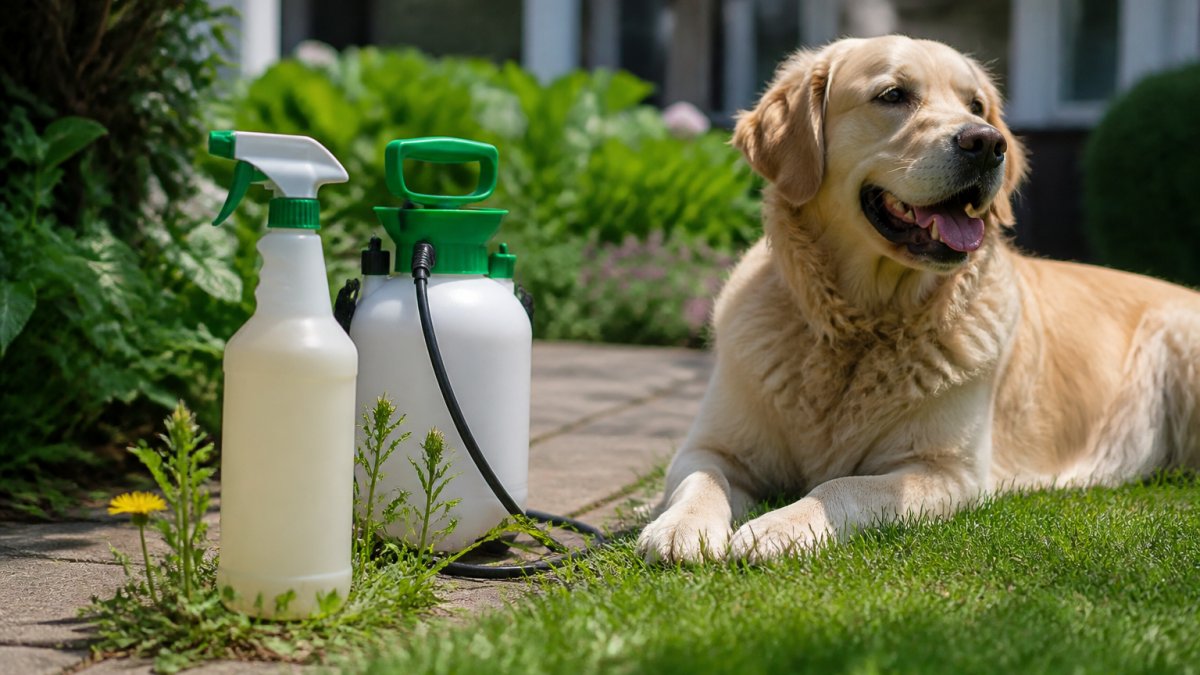
- Acetic acid (vinegar). Household vinegar is about 5% acetic acid; commercial organic herbicides often use 20% or higher. These can irritate a pet's skin, eyes, and mouth. The main risk is a pet licking or chewing treated vegetation while it is still wet. Once dry, residue is minimal, but concentrated product should never be stored where a pet can reach it.
- Citric acid. Often blended with vinegar, this contact herbicide damages cell membranes. It's generally low-risk on dry foliage, but concentrate can sting eyes and open cuts, and ingesting it can cause mouth irritation and drooling.
- Clove oil and other essential oils. These contact herbicides can also act as irritants. Essential oils are a known concern for cats, which lack certain liver enzymes used to metabolize many plant compounds. A cat that walks through a wet clove-oil spray and then grooms its paws is the realistic exposure route. Keep cats off treated areas until dry, and store concentrates out of reach.
The takeaway
Read the active-ingredient list, not just the marketing claim. "Organic" and "natural" describe origin; "non-toxic" describes a claim about use. The ingredient list, concentration, and whether the product is wet or dry determine risk.
Pet-Safe Weed Killer Options That Work
Several approaches control weeds while reducing pet exposure risk, each with trade-offs in effort, speed, and effectiveness. Learn comprehensive weed control methods to evaluate all your options before selecting pet-safe approaches.
Vinegar-based herbicides burn down plant tissue.
Boiling water kills weeds instantly through heat damage.
Hand-pulling and mechanical removal use tools like a weeding fork or hoe to remove weeds at the root.
Corn gluten meal is a pre-emergent that prevents weed seeds from germinating.
For comprehensive weed control guidance, explore proven weed control methods that you can evaluate for pet safety.
Several organic and chemical-free methods control weeds with different trade-offs in effort, speed, and pet safety.
| Method | Active Ingredient or Process | Drying Time | Pet Safety After Drying |
|---|---|---|---|
| Vinegar-based herbicides | 20% or higher acetic acid | 2-4 hours | Safe once dry |
| Boiling water | Heat damage to plant cells | Immediate once cooled | Safe once cooled |
| Hand-pulling and mechanical removal | Physical removal at root | None | Safe immediately |
| Corn gluten meal | Pre-emergent seed germination blocker | Per label, water in | Safe when used as directed |
Using Vinegar Weed Killer and Pets Safely
Vinegar-based pet-safe weed killer products appeal to homeowners because they feel safer than synthetics, but they require careful use to avoid pet exposure risks.
Commercial vinegar herbicides contain 20% acetic acid or higher, far stronger than household vinegar. They desiccate plant tissue, drying out leaves and stems.
Application safety for pets:
- Spray when pets can stay indoors or away from the treated area
- Allow the product to dry completely before pets return, typically 2-4 hours depending on weather
- Avoid spraying on windy days when drift could carry the product toward pet areas or water sources
The risk to pets comes mainly from contact with wet product or ingestion before drying. Once dry, vinegar-based herbicides pose minimal risk.
Boiling Water Weed Control Without Pet Risk
Boiling water weed control is the simplest pet-safe option: boil water, pour it on weeds, and they die. No chemicals, no drying time, no chemical residue. Boiling water damages plant cell walls instantly, and the weed dies within hours.
Safety steps for pets:
- Boil water indoors, away from pets
- Carry the boiling water carefully to avoid spills
- Pour directly on target weeds only
The main drawback: boiling water kills everything it touches, including desirable plants. For weeds in cracks or isolated patches, this precision is an advantage. For weeds scattered across a lawn, it becomes tedious.
How Long to Keep Pets Off Treated Grass
There is no single universal waiting period. The real answer comes from three inputs: what the label says, whether the product is wet or dry, and how your pet behaves around the treated area. Work through those in order and you'll land on a defensible re-entry time.
Step 1: Read the label first, and let it override general advice
The label is the manufacturer's legal directions for use and the only source that accounts for that product's concentration, carrier, and surfactants. Look for the re-entry statement (often "keep people and pets off treated areas until dry" or a specific number of hours) and any grazing or foraging restriction. If the label says 24 hours, that's the floor, no matter what a blog or neighbor says.
Step 2: Decide whether the product is wet or dry, and treat "dry" as a real threshold
Wet product is the main exposure route: a dog that runs through wet herbicide picks it up on paws and belly fur and grooms it off, and a cat that walks the same path and licks its paws gets a dose too. The practical rule is no paws on wet treated ground. "Dry" means the foliage and soil surface are visibly dry to the touch, not merely that the sprayer is off.
Step 3: Match the wait to the product type
- Vinegar- and citric-acid-based contact herbicides. Keep pets off until the foliage is dry, typically a few hours in good drying conditions. The label governs. Do not let a pet chew treated weeds even after drying, because concentrated residue can remain on leaf surfaces.
- Essential-oil and pine-oil products. Same wet-to-dry rule, with extra caution for cats, who groom thoroughly and metabolize many plant oils poorly. Add a buffer and keep them off until the area is dry plus a little longer if the label allows.
- Fatty-acid soap herbicides. Keep pets off until dry. These are lower-risk but still irritate eyes and mouths when wet.
Step 4: Factor in your pet, not just the product
A 90-pound dog that ignores the lawn and a 9-pound cat that patrols the same six feet of garden edge are not the same risk. Puppies and kittens explore with their mouths, and grass-eating dogs and constantly grooming cats have higher exposure. If your pet is small, young, a heavy groomer, or a grass-eater, extend the wait beyond the label minimum; if your pet is indifferent to the treated area, the label minimum is usually enough.
A simple decision process
- Read the label and note the re-entry statement and any grazing restriction.
- Confirm the treated area is visibly dry before allowing access.
- Add buffer time for cats, small pets, puppies, kittens, and grass-eaters.
- Keep concentrates and treated clippings out of reach, and wash your own hands and shoes after applying.
- If the label and your judgment conflict, follow the label and add time.
That process will serve you better than memorizing a single number, because it adapts to the product you actually bought and the pet you actually have.
What to Do If Your Pet Is Exposed to Weed Control
Accidental exposure happens. Knowing what to do next protects your pet.
If your pet ingests weed control product:
- Note the product name and active ingredients if possible
- Contact your veterinarian immediately or call the ASPCA Animal Poison Control Center at (888) 426-4435 (ASPCA Poison Control | (888) 426-4435)
- Have the product label available when you call
- Describe your pet's symptoms and the amount ingested if known
If your pet has skin contact:
- Rinse the affected area with plain water for 5-10 minutes
- Wash with mild soap and water
- Monitor for signs of irritation
- Contact your veterinarian if irritation develops or persists
If your pet has eye contact:
- Rinse gently with plain water for 5-10 minutes
- Contact your veterinarian immediately
- Do not allow your pet to rub the eye
Signs of concern to watch for:
- Vomiting or diarrhea
- Excessive drooling
- Difficulty breathing
- Tremors or unusual behavior
Most organic herbicides cause mild symptoms if any. Serious reactions are rare when products are used as directed. Early contact with your veterinarian ensures your pet gets appropriate care if needed.
Creating Your Pet-Safe Weed Management Plan
A sustainable approach combines prevention, safe treatment, and ongoing monitoring.
Step 1: Assess your current weed problem
Step 2: Choose your primary control method
For light weed pressure, hand-pulling or boiling water works well.
Step 3: Plan your treatment schedule
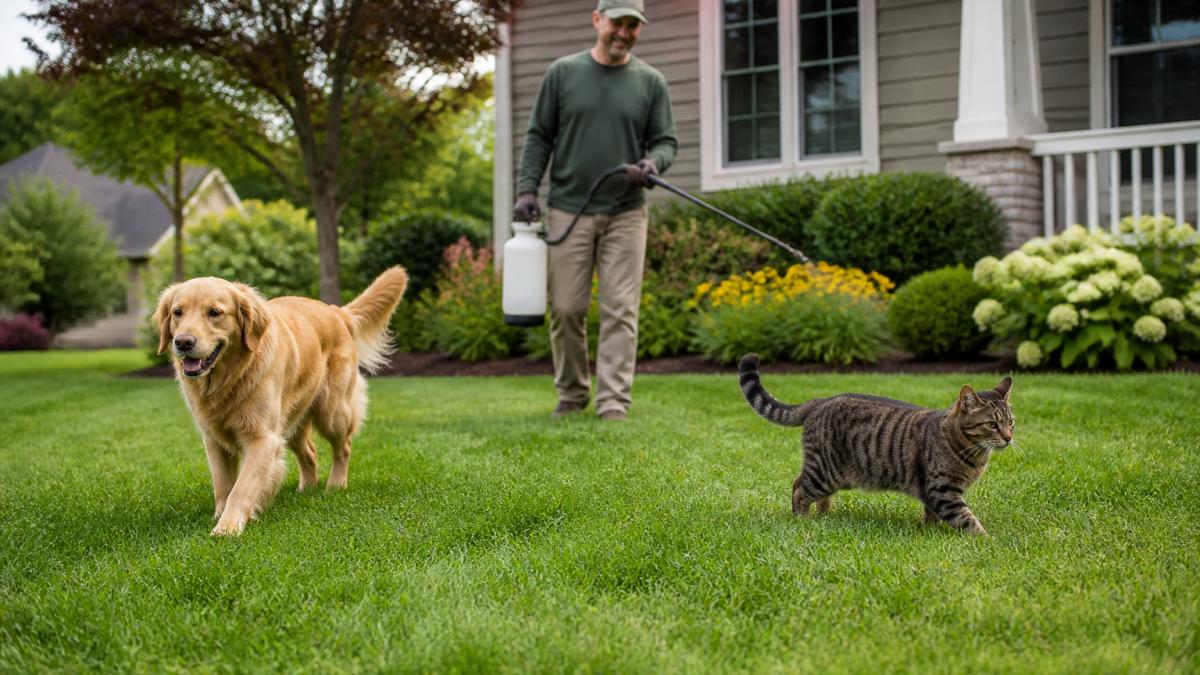
Treat during times when pets can stay indoors or in a separate area.
Step 4: Establish re-entry protocols
Step 5: Monitor and adjust
After treatment, observe which methods work best for your specific weed types and lawn conditions.
Step 6: Integrate prevention
Once you've addressed existing weeds, focus on preventing new ones.
For a complete prevention strategy, review comprehensive weed prevention methods that integrate pet safety into your long-term lawn care plan.
Many homeowners find that professional lawn care takes the guesswork out of pet-safe weed management. Ward's Lawn Care & Landscape Co. helps residential and commercial property owners throughout the area maintain healthy lawns while protecting pets and wildlife. Contact us to discuss your specific weed challenges and pet safety concerns.
Protecting your pets while managing weeds is entirely achievable.
Frequently Asked Questions
Is organic weed control safe for pets?
Organic weed control can be safe for pets when you follow the product label directions and keep pets away from treated areas until they dry completely. However, organic does not automatically mean safe. Some organic weed killers contain compounds that can harm dogs or cats if ingested or contacted before drying. Always check the label for pet safety information and consult your veterinarian if you have concerns about specific ingredients.
How long should I keep pets off treated grass?
Keep pets off treated grass until the product is completely dry. Check your product label for the exact re-entry time. Wet or damp residue poses the greatest risk of contact exposure. Once the treated area is fully dry and any visible product has settled, the risk of pet exposure drops significantly.
Is vinegar a safe weed killer for yards with pets?
Vinegar-based weed killers are generally considered a pet-friendly option because vinegar itself is non-toxic to dogs and cats. However, concentrated horticultural vinegar (20% acetic acid) can cause skin or eye irritation if contacted directly. Allow vinegar spray to dry before pets return to the treated area. Homemade vinegar solutions are weaker and pose less risk, but follow the same drying protocol.
What should I do if my pet walks through treated weed control?
If your pet walks through wet treated grass, rinse their paws and fur with clean water immediately and monitor them for signs of irritation such as vomiting, drooling, or lethargy. If they show symptoms or you suspect ingestion, contact your veterinarian or the ASPCA Animal Poison Control Center at 888-426-4435. Provide the product name and label information. Most exposures are mild when pets are rinsed quickly, but professional guidance is important for peace of mind.