 ultimate-guide
How to Control Weeds in Your Lawn: 2026 Guide
Table of Contents
- Identify Your Weeds Before You Treat Them
- Pre-Emergent Weed Control Timing: When to Apply
- Best Selective Herbicide for Lawns: Choosing the Right Product
- Cultural Practices That Control Weeds in Your Lawn
- Natural and Organic Weed Control Methods
- Lawn Care Maintenance Schedule to Stay Weed-Free Year-Round
- Post-Treatment Lawn Recovery: What to Do After Herbicide Application
- Frequently Asked Questions
Last Updated: September 1, 2026
Identify Your Weeds Before You Treat Them
Proper weed identification is the single most important factor in effective weed control. Identification tells you which herbicide class to use, when to apply it, and whether your lawn's cultural practices are creating conditions weeds need to thrive.
Broadleaf Weeds vs. Grassy Weeds: What to Look For
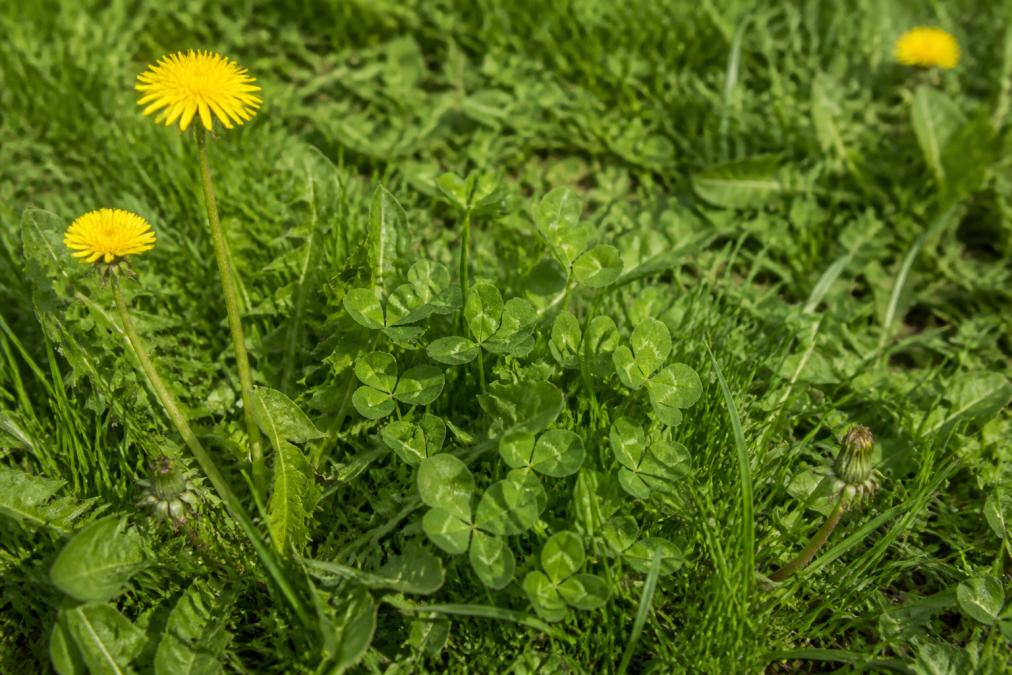
Broadleaf weeds have wide, flat leaves with visible veins, dandelions, clover, plantain, ground ivy, and chickweed are common examples. Their distinctly different leaf structure makes them easy to target with selective herbicides that won't harm your lawn.
Grassy weeds are trickier. Crabgrass, nutsedge, goosegrass, and annual bluegrass look similar to desirable turf at first glance. Nutsedge grows faster than surrounding grass and has a distinctive triangular stem, feel it between your fingers and you'll notice the difference immediately. If you can't tell whether it's a weed or grass by looking, check the stem: round means grass family; triangular or square means something else.
Annual vs. Perennial Weeds and Why It Matters
Annual weeds like crabgrass, spurge, and foxtail complete their full life cycle in one growing season, dropping thousands of seeds before dying. Pre-emergent herbicide timing is critical for this group.
Perennial weeds like dandelion, ground ivy, and bindweed come back from the same root system year after year. Cutting them off at the surface does almost nothing. These require systemic herbicides that travel to the root, or persistent cultural pressure over multiple seasons.
Pre-Emergent Weed Control Timing: When to Apply
Pre-emergent herbicide is the most underused tool in residential lawn care, and timing is everything. A pre-emergent creates a chemical barrier in the soil that prevents weed seeds from germinating; it does not kill existing weeds.
According to University of Illinois Extension's weed management resources, soil temperature is a more reliable trigger than calendar date alone. Most annual grassy weed seeds, including crabgrass, begin germinating when soil temperatures consistently reach 50-55°F at a 2-inch depth.
Spring Application Windows by Region
Pre-emergent timing varies across the country. In the upper Midwest and Northeast, including Ohio, spring applications typically fall between late March and mid-April. Forsythia bloom is a commonly cited natural indicator: when forsythia finishes blooming, soil temperatures are generally in the target range for crabgrass germination.
Warmer southern regions need earlier applications, often February through early March. The Pacific Northwest runs later due to cooler spring soil temperatures. Checking your local soil temperature data through the NOAA Climate Data Online portal gives you a precise, location-specific trigger. A second application 6-8 weeks after the first extends protection through the full germination period.
Fall Pre-Emergent Applications for Winter Annuals
Fall is the overlooked pre-emergent window. Winter annuals like annual bluegrass, henbit, and chickweed germinate in late summer and fall, overwinter as small plants, and set seed the following spring. Applying a pre-emergent in late August through September stops this cycle before it starts.
Best Selective Herbicide for Lawns: Choosing the Right Product
Choosing the best selective herbicide comes down to two things: what weed you're targeting and what turfgrass you're growing. A selective herbicide kills specific plant types while leaving others unharmed. A non-selective herbicide like glyphosate kills everything it contacts and is appropriate only for spot treatment.
| Herbicide Type | How It Works | Best For | Key Caution |
|---|---|---|---|
| Pre-emergent selective | Blocks seed germination | Annual grassy weeds | Apply before germination window |
| Post-emergent selective | Kills emerged broadleaf weeds | Dandelion, clover, plantain | Avoid application in heat or drought |
| Contact herbicide | Kills only plant tissue it touches | Annual weeds | Does not affect roots |
| Systemic herbicide | Travels through plant to roots | Perennial weeds | Slower visible results |
| Non-selective | Kills all vegetation | Spot clearing | Never broadcast over turf |
Contact vs. Systemic Herbicides
A contact herbicide kills the plant tissue it touches on application, with results visible within days. The problem is that contact herbicides don't reach the root system, so perennial weeds resprout from undamaged roots within weeks. Contact products work well for annual weeds.
Systemic herbicides are absorbed by the plant and translocated throughout its vascular system, including the roots. This is what you need for perennial weeds. Results take 2-3 weeks, but the weed dies from the root up.
Spot Treatment vs. Broadcast Application
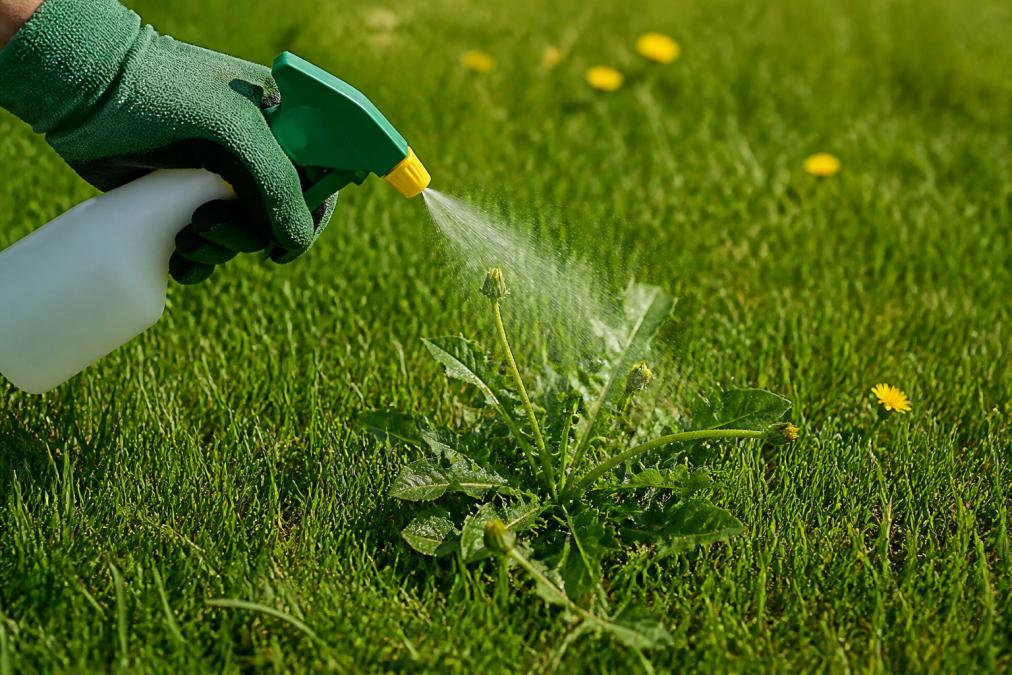
Spot treatment applies herbicide only to individual weeds or small infested patches. It's more precise, uses less product, and reduces the risk of off-target damage.
Broadcast application covers the entire lawn uniformly and makes sense when weeds are widespread, usually above roughly 30-40% coverage. Broadcast application of post-emergent herbicides carries more risk of turfgrass stress, especially in heat. The label is a legal document under federal law; following it is not optional.
Cultural Practices That Control Weeds in Your Lawn
The most durable way to control weeds is a dense, healthy stand of turfgrass that physically and competitively prevents weed establishment. Herbicides treat the symptom. Cultural practices address the cause.
Mowing Height and Turf Density
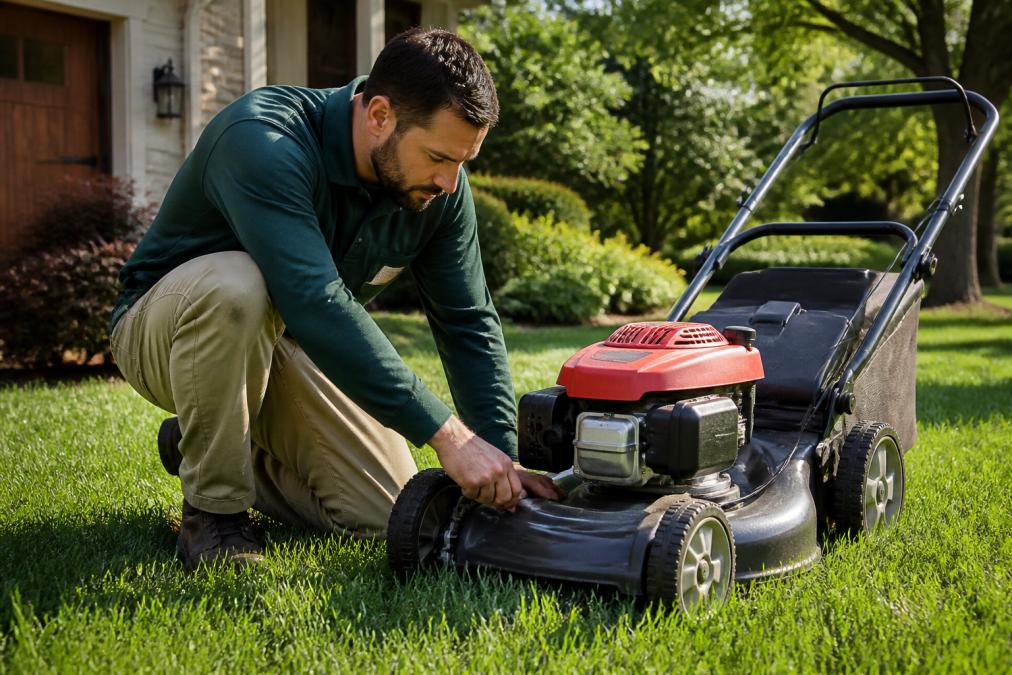
Mowing too short is one of the most consistent contributors to weed pressure. Low mowing height reduces the leaf surface available for photosynthesis, weakens the root system, and opens the canopy to allow sunlight to reach weed seeds at the soil surface. Crabgrass needs light to germinate; taller turf shades it out.
Most cool-season grasses like Kentucky bluegrass, tall fescue, and perennial ryegrass perform best mowed at 3 to 4 inches. Never remove more than one-third of the blade length in a single mowing. Consistent adherence improves turf density over time, the most effective long-term weed suppression mechanism available.
Irrigation Management to Discourage Weed Growth
Shallow, frequent watering encourages shallow root systems in turfgrass, weakening the lawn's competitive ability. The better approach is deep, infrequent irrigation, applying enough water to penetrate 6-8 inches into the soil, then allowing the surface to dry before watering again.
According to the EPA's WaterSense program guidelines on lawn irrigation, most lawns need roughly 1 inch of water per week from rain or irrigation combined, applied in one or two sessions rather than daily light watering. Morning watering is preferable to evening, as wet foliage overnight creates conditions that favor fungal disease.
Soil Aeration, Dethatching, and Overseeding
Compacted soil reduces root depth and creates surface conditions where weed seeds germinate easily. Core aeration relieves compaction, improves water infiltration, and enhances fertilizer uptake. For most lawns, annual fall aeration is sufficient.
The thatch layer, the dense mat of dead organic matter between the soil surface and live grass blades, blocks water and fertilizer penetration when it exceeds about half an inch. Dethatching removes this layer and allows the lawn to breathe. Pair aeration and dethatching with overseeding to fill bare or thin areas. Dense turf coverage is the most effective passive weed prevention available.
Natural and Organic Weed Control Methods
Organic weed control is genuinely effective for certain applications, but it requires honest expectations. Most organic options are contact-based; they damage plant tissue on contact but don't translocate to roots, making them well-suited for annual weeds and less effective against established perennials.
Corn gluten meal is the most commonly cited organic pre-emergent. Applied before germination windows, it inhibits root formation in germinating seeds and adds nitrogen to the soil. Consistent application over multiple seasons is necessary for meaningful results.
Horticultural vinegar (acetic acid at 20-30% concentration, not household vinegar) is a contact burndown option for emerged weeds. It's non-selective, so application requires care to avoid desirable plants.
Hand-pulling remains the most targeted organic method. For isolated perennial weeds, it's often the most practical. The key is removing the entire root system; dandelions can regenerate from a root fragment left in the soil.
Lawn Care Maintenance Schedule to Stay Weed-Free Year-Round
A consistent lawn care maintenance schedule separates homeowners who manage weed pressure from those who react to it.
| Season | Key Task | Purpose |
|---|---|---|
| Early Spring | Apply pre-emergent | Block crabgrass and annual grassy weed germination |
| Spring | Fertilize, mow high | Build turf density before peak weed pressure |
| Late Spring | Post-emergent spot treatment | Address broadleaf weeds before they set seed |
| Summer | Maintain mowing height, deep irrigation | Suppress germination through shade and root competition |
| Late Summer | Fall pre-emergent application | Stop winter annual germination |
| Fall | Aerate, overseed, fertilize | Thicken turf for next season's competitive advantage |
| Winter | Soil pH test, plan applications | Prepare for accurate spring timing |
Spring and Summer Tasks
Spring is the highest-use season for weed control. Apply pre-emergent before soil temperatures hit 50°F, then follow with a balanced fertilizer to encourage dense turf growth. If broadleaf weeds are already present, spot-treat with a selective post-emergent herbicide once temperatures are consistently between 60-85°F; applications outside this range reduce effectiveness and increase turfgrass injury risk.
Through summer, maintain mowing height at the upper end of the recommended range for your grass type. Continue deep, infrequent irrigation. Summer is when crabgrass becomes visible; a post-emergent crabgrass control product can help, but results are best when plants are young and small.
Fall and Winter Prep
Fall is the most important season for long-term weed suppression. Core aerate in September, overseed with quality grass seed matched to your turf type, and apply a fall fertilizer to support root development through winter dormancy. Apply a pre-emergent for winter annuals in late August through September.
Winter is the planning season. Pull a soil test through your local cooperative extension office to check pH and nutrient levels. Adjusting soil pH toward the 6.0-7.0 range improves nutrient availability and supports the dense, competitive turf growth that suppresses weeds.
Post-Treatment Lawn Recovery: What to Do After Herbicide Application
Post-treatment lawn recovery is the step most guides skip entirely. Herbicide application can temporarily stress turfgrass alongside the weeds it targets. Managing recovery correctly determines whether you end up with a thicker, healthier lawn or a patchy one that invites the next round of weed establishment.
Do not mow for at least 2-3 days after applying a post-emergent herbicide. Mowing too soon removes the treated leaf surface before the product has fully translocated, reducing effectiveness on perennial weeds. Avoid heavy fertilization immediately after herbicide application; the combination can amplify turfgrass stress, particularly in hot weather. Wait 2-4 weeks before applying nitrogen fertilizer following a broadcast post-emergent treatment.
Dead weed patches will appear as the herbicide takes effect; this is expected. Once weeds have fully browned out, lightly rake out dead material, apply topsoil or compost if the area is low, and overseed with appropriate grass seed. Keep the seeded area consistently moist until germination and establishment occur.
As documented in the Turfgrass Information File maintained by Michigan State University, proper post-treatment care and overseeding of treated areas significantly improves the long-term outcome of weed control programs compared to herbicide-only approaches.
Persistent weed pressure is rarely a product problem; it's a systems problem. The right herbicide applied at the wrong time, to the wrong weed, in a lawn too thin to compete, will fail every season. Ward's Lawn Care & Landscape Co. has been solving this for Greater Cleveland homeowners since 1986, combining pre-emergent timing, selective herbicide programs, and cultural practices like aeration, overseeding, and fertilization into a coordinated approach that addresses the root cause. Our highly trained technicians provide free estimates and honest assessments. Contact us to schedule your evaluation and get a weed control program that actually holds.
=== FAQ ANSWERS (audit these too, same rules) ===
[1] Q: What kills weeds but not grass? A: Selective herbicides are formulated to target specific weed types without harming turfgrass. Broadleaf selective herbicides, for example, kill dandelions and clover while leaving grass untouched. The key is matching the product's active ingredients to the weed type you're fighting. Always read the label to confirm the herbicide is safe for your specific grass variety, whether that's Kentucky bluegrass, fescue, or another type common in your region.
[2] Q: What is the best time of year to apply weed control treatments? A: Timing depends on the product type. Pre-emergent herbicides should go down in early spring, before soil temperatures reach 55°F, to block crabgrass and other summer annuals before seed germination. A second pre-emergent application in early fall targets winter annuals. Post-emergent herbicides work best when weeds are actively growing and small, typically mid-spring through early summer. Applying during heat stress or drought reduces effectiveness and can damage your lawn.
[3] Q: Can a thick, healthy lawn really prevent weeds on its own? A: Yes, turf density is one of the most reliable forms of weed suppression. Dense grass shades the soil surface, which prevents weed seeds from getting the light they need to germinate. Practices like proper mowing height, consistent nitrogen fertilization, overseeding thin areas, and soil aeration all contribute to a thicker lawn that naturally crowds out weeds over time. Chemical controls work faster, but cultural practices keep weeds from returning.
[4] Q: What should I do if my entire lawn is overrun with weeds? A: Start with weed identification to determine whether you're dealing with broadleaf weeds, grassy weeds, or both, since each requires a different treatment approach. A broadcast application of the appropriate post-emergent herbicide can address widespread infestations. After treatment, focus on lawn recovery: water consistently, fertilize to restore lawn health, and overseed bare patches so grass fills in before weeds can return. Severely damaged lawns may need a full renovation.
Frequently Asked Questions
Q: What kills weeds but not grass?
A: Selective herbicides are formulated to target specific weed types without harming turfgrass. Broadleaf selective herbicides, for example, kill dandelions and clover while leaving grass untouched. The key is matching the product's active ingredients to the weed type you're fighting. Always read the label to confirm the herbicide is safe for your specific grass variety, whether that's Kentucky bluegrass, fescue, or another type common in your region.
Q: What is the best time of year to apply weed control treatments?
A: Timing depends on the product type. Pre-emergent herbicides should go down in early spring, before soil temperatures reach 55°F, to block crabgrass and other summer annuals before seed germination. A second pre-emergent application in early fall targets winter annuals. Post-emergent herbicides work best when weeds are actively growing and small, typically mid-spring through early summer. Applying during heat stress or drought reduces effectiveness and can damage your lawn.
Q: Can a thick, healthy lawn really prevent weeds on its own?
A: Yes, turf density is one of the most reliable forms of weed suppression. Dense grass shades the soil surface, which prevents weed seeds from getting the light they need to germinate. Practices like proper mowing height, consistent nitrogen fertilization, overseeding thin areas, and soil aeration all contribute to a thicker lawn that naturally crowds out weeds over time. Chemical controls work faster, but cultural practices keep weeds from returning.
Q: What should I do if my entire lawn is overrun with weeds?
A: Start with weed identification to determine whether you're dealing with broadleaf weeds, grassy weeds, or both, since each requires a different treatment approach. A broadcast application of the appropriate post-emergent herbicide can address widespread infestations. After treatment, focus on lawn recovery: water consistently, fertilize to restore lawn health, and overseed bare patches so grass fills in before weeds can return. Severely damaged lawns may need a full renovation.