 comparison
Natural Alternatives to Chemical Weed Killers
Last Updated: October 25, 2026
Quick Summary
Natural alternatives to chemical weed killers include vinegar, boiling water, salt, mulch, manual removal, and corn gluten meal, each with specific strengths and limitations depending on weed type and location. Vinegar works best on young weeds in spot treatments, boiling water kills weeds instantly in cracks and pathways, while prevention methods like mulch and corn gluten meal reduce future weed problems more cost-effectively than repeated treatments.
- Household vinegar contains only 5% acetic acid and barely stresses weeds; horticultural vinegar at 20% acetic acid works better but still requires reapplication every 7-14 days.
- Manual removal with a weeding fork extracts entire root systems when soil is moist, preventing regrowth that surface treatments cannot stop.
- A 2-3 inch mulch layer blocks sunlight from reaching weed seeds and should be topped off annually as it decomposes.
- Salt-based weed mixtures are toxic to dogs and cats and should be avoided entirely in households with pets.
- Corn gluten meal prevents weed seed germination in early spring but only works on seeds, not established weeds, and should not be applied the same season as grass overseeding.
Table of Contents
- Why Natural Weed Control Matters for Your Lawn
- Vinegar Weed Killer: Effectiveness, Concentration, and Limitations
- Boiling Water for Weeds: When It Works and When It Doesn't
- Pet-Safe Weed Control Methods
- Manual Weed Removal Tools and Techniques
- Prevention-First Approach: Mulch, Barriers, and Corn Gluten Meal
- Getting Professional Help for Persistent Weed Problems
- Frequently Asked Questions
Why Natural Weed Control Matters for Your Lawn
When weeds take over, most homeowners reach for chemical herbicides without considering what those treatments do to soil health, pet safety, and long-term lawn resilience. Natural alternatives to chemical weed killers offer a different path, one that requires understanding both what works and what doesn't.
The reality is blunt: not all natural weed-control methods deliver consistent results. Some work brilliantly for specific situations. Others are hit or miss, depending on weed type, soil conditions, and application technique. We've worked with both chemical and organic approaches long enough to know which natural alternatives actually solve problems and which ones waste your time and money.
This guide breaks down the most common natural alternatives to chemical weed killers, vinegar, boiling water, salt, mulch, manual removal, and pre-emergent approaches. We'll show you what each method does well, where it falls short, and when to call in professional help instead of spinning your wheels with ineffective treatments.
Vinegar Weed Killer: Effectiveness, Concentration, and Limitations
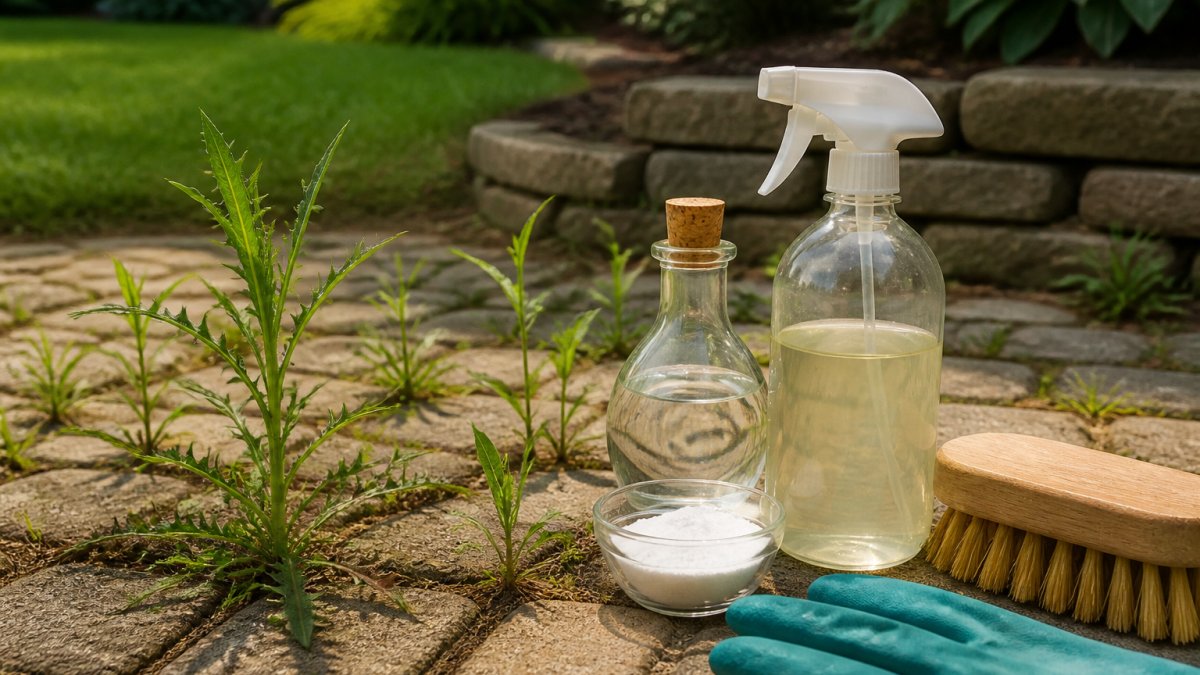
Vinegar is the poster child for natural weed control, but the version sitting in your kitchen pantry won't cut it. Standard household vinegar contains about 5% acetic acid, barely enough to stress most weeds (Publication : USDA ARS). Horticultural vinegar, which contains 20% acetic acid, works far better, but even that has serious limitations.
Vinegar kills weeds by burning down the above-ground foliage. It works fastest on young, tender weeds with thin leaves. Mature weeds with thick, waxy leaves? They shrug it off. Perennial weeds with deep root systems come back within weeks because vinegar doesn't touch the roots. You're treating the symptom, not the problem.
The real problem with vinegar is selectivity. It kills anything it touches. Spray it on dandelions in your lawn, and your grass dies too. This makes vinegar useful only for spot-treating weeds in driveways, pathways, or bare soil, places where collateral damage doesn't matter.
Concentration matters enormously. Higher-concentration vinegar works faster and more reliably than diluted versions. But even concentrated vinegar requires reapplication. Many weeds bounce back within 7-14 days.
Boiling Water for Weeds: When It Works and When It Doesn't
Boiling water is the simplest weed killer on the planet. Pour it directly on weeds, and heat kills plant tissue instantly. No mixing, no waiting, no toxic residue. For isolated weeds in cracks, gravel pathways, or between pavers, boiling water is genuinely effective and perfectly safe.
The catch is practical. Boiling water kills everything it touches, desirable plants included. You can't use it near plants you want to keep. It's also a one-shot treatment. The root system often survives, especially with perennial weeds. You'll be boiling water repeatedly to keep the same spots clear.
Temperature drops fast once water hits soil. By the time boiling water soaks down to reach deep roots, it's no longer hot enough to kill anything. For shallow-rooted annuals, boiling water works. For established perennials, expect to repeat the treatment multiple times per season.
Safety matters here too. Carrying boiling water across your yard poses burn risk. Splashing is inevitable. If you have pets or kids who play on the lawn, boiling water isn't practical for widespread weed control, it's useful only in specific, contained areas.
Pet-Safe Weed Control Methods
If you have dogs, cats, or other pets that spend time on your lawn, chemical herbicides create real health risks. Pets can ingest residues through grooming, chew treated grass, or absorb product through paw pads.
Start by ranking methods by actual pet risk, not by the "natural" label.
Lowest risk, no residue at all. Manual removal and boiling water leave nothing behind once you finish. Hand-pulling is safe the moment you stop.
High risk, salt. This is the remedy to avoid around pets. Salt-based mixtures are toxic to dogs and cats if ingested, and pets pick it up on their paws and lick it off.
High risk, concentrated vinegar and essential-oil sprays. Horticultural vinegar at 20% acetic acid is corrosive to skin and paw pads and should never be applied where pets walk until fully dry and, ideally, not at all in high-traffic pet areas.
Prevention products, check the label, not the marketing. Corn gluten meal is generally low-risk for pets once applied and dried, but some pets find the meal attractive and will eat it; store it sealed and apply at label rates.
A simple rule set covers most households: use manual removal and boiling water for spot problems, use household vinegar only on hardscape and only after pets are inside, avoid salt and essential-oil sprays entirely, and choose pet-safe mulch. For detailed guidance on keeping your pets safe while controlling weeds, organic weed control safety for pets covers specific strategies and product considerations.
Manual Weed Removal Tools and Techniques
Manual removal is the most reliable way to eliminate weeds permanently. You're extracting the entire root system, not just killing surface growth.
The right tools make manual removal fast and effective. A weeding fork (also called a fishtail weeder) works best for deep-rooted weeds like dandelions and thistles.
Timing matters. Pull weeds after rain when soil is moist. Dry soil holds roots tight and they snap off, leaving fragments behind that regrow. Moist soil releases roots cleanly.
Technique is simple but critical. Loosen soil around the weed first. Insert your tool at an angle, work it deeper while applying gentle pressure, then pry upward.
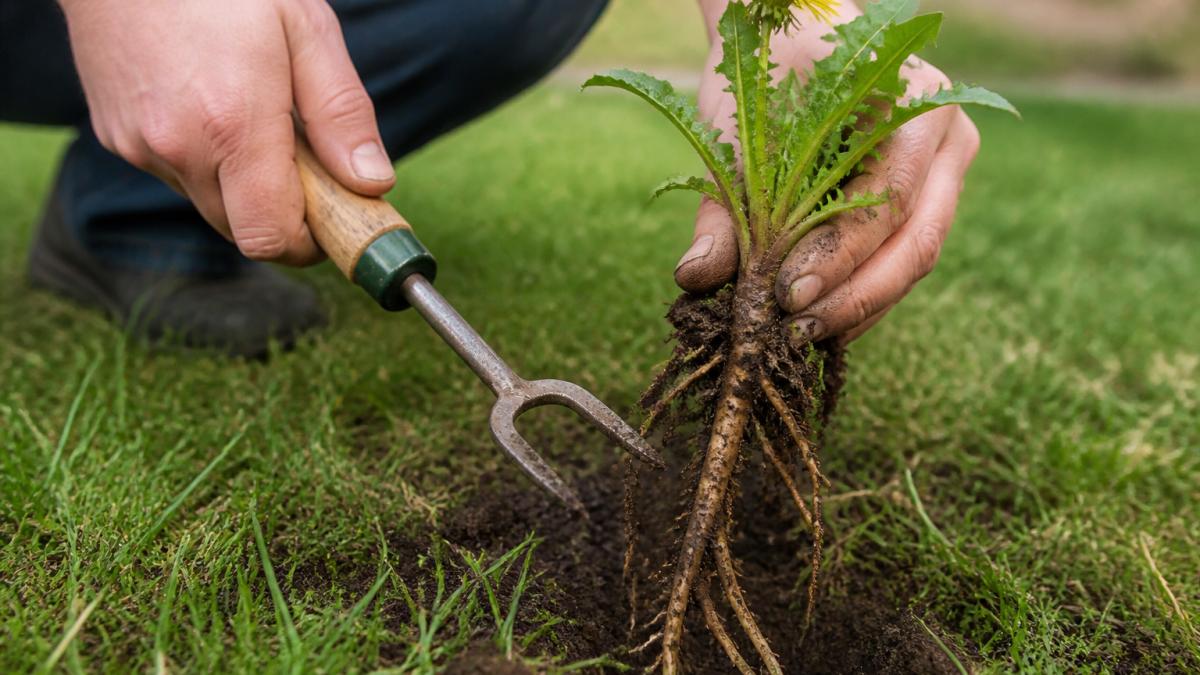
Manual removal works for small infestations and maintenance. For large weed problems covering significant lawn area, it becomes labor-intensive quickly. This is where professional help saves time and delivers faster results.
The right tools make manual weed removal faster and more effective for different situations.
| Tool | Best For | Key Advantage |
|---|---|---|
| Weeding fork (fishtail weeder) | Deep-rooted weeds like dandelions and thistles | Forked design extracts entire taproot intact |
| Hori-hori knife | Smaller weeds and tight spaces | Works well in confined areas |
| Stand-up weeder | Large areas | Lets you extract weeds without bending repeatedly |
Prevention-First Approach: Mulch, Barriers, and Corn Gluten Meal
The most effective weed strategy isn't killing weeds, it's preventing them from growing in the first place. Prevention requires less work, costs less over time, and delivers more consistent results than any reactive treatment. The trick is matching the barrier to the situation.
Mulch. A 2-3 inch layer blocks sunlight from reaching weed seeds in soil. Without light, seeds can't germinate. Mulch also moderates soil temperature and moisture, creating conditions that favor desirable plants over weeds. Wood-based mulch breaks down gradually, improving soil structure and nutrient content.
Newspaper and landscape fabric. Newspaper (4-6 sheets thick) blocks seeds while decomposing over a season, and it is essentially free if you already have it. Landscape fabric lasts longer but eventually tears and allows seeds to penetrate, and it can shed into the yard over time. Layer either material under mulch for enhanced protection. Newspaper is the budget option for vegetable beds; fabric suits permanent ornamental beds where you won't be digging.
Corn gluten meal. Corn gluten meal prevents weed seeds from germinating by inhibiting root development. Apply it in early spring before soil temperatures consistently exceed 60°F, and water it in lightly. It works only on seeds, not established weeds, so remove existing weeds first.
A practical integrated plan. Prevention works best as a layered sequence rather than a single product:
- Early spring: apply corn gluten meal to lawns you are not overseeding, and refresh mulch to a full 3 inches in beds.
- Late spring through summer: hand-pull or spot-treat the weeds that slip through, using boiling water or household vinegar on hardscape only.
- Fall: top off mulch, remove spent annuals, and address perennial weeds while soil is moist and roots release cleanly.
This layered strategy keeps weed pressure low without relying on any single method, and it costs far less than repeated spraying because you are buying prevention once instead of treatment again and again. For comprehensive prevention strategies, how to prevent weeds in residential lawns details timing, application rates, and integration with other methods.
Getting Professional Help for Persistent Weed Problems
Some weed situations exceed what DIY methods can handle. Established perennial weeds with deep root systems, large infestations across multiple lawn areas, or weeds resistant to manual removal all benefit from professional intervention.
Professional weed control combines multiple approaches tailored to your specific situation. Learn how to stop persistent lawn weeds with proven methods before deciding whether to hire professional help. Technicians identify weed types, assess soil conditions, and recommend integrated strategies that work.
Ward's Lawn Care & Landscape Co. has managed weed problems across residential and commercial properties throughout Greater Cleveland since 1986.
For persistent weed problems that keep returning despite your best efforts, professional help prevents the frustration of endless treatments. Lawn and landscape maintenance experts in Greater Cleveland can evaluate your specific situation and recommend the right solution.
The choice between natural alternatives to chemical weed killers and professional intervention depends on infestation severity, your time availability, and how quickly you need results. Small, manageable weed problems respond well to natural methods.
Frequently Asked Questions
Is vinegar a good weed killer?
Vinegar can kill weeds, but effectiveness depends on acetic acid concentration and application method. Household vinegar (5% acetic acid) shows inconsistent results on established weeds. Higher-concentration vinegar (20% acetic acid) works better but requires careful application to avoid damaging nearby plants and soil. Vinegar is nonselective, meaning it kills most plants it contacts, not just weeds. Repeated applications are often needed, and regrowth is common.
Is there a natural weed killer that doesn't affect animals?
Boiling water and manual removal are the safest options for homes with pets. Vinegar and salt mixtures can irritate paws and mouths if pets contact treated areas. Corn gluten meal is pet-safe once applied and dried. Mulch provides physical weed prevention without chemical risk. Always keep pets away from freshly treated areas until they dry completely, and consider consulting with a professional service to ensure safe application methods for your specific situation.
Does boiling water kill weeds?
Yes, boiling water kills weeds effectively by destroying plant tissue on contact. It works best on young, tender weeds and is completely nonselective, so it kills any plant it touches. Boiling water is safest for spot treatment in cracks, driveways, and isolated weeds away from desirable plants. It provides no residual control, so new weeds can germinate in the same spot. The method is free, immediate, and pet-safe once the water cools.
What's the best way to prevent weeds naturally without repeated treatments?
Mulch and weed barriers offer the most reliable long-term prevention. Mulch suppresses weed seed germination while improving soil health. Corn gluten meal works as a pre-emergent, stopping seeds from sprouting before they become a problem. Newspaper or cardboard under mulch provides an additional barrier. These methods require less frequent reapplication than sprays and reduce the overall weed population over time, making them cost-effective for integrated weed management.
Natural weed control works best when you match the method to the specific problem. Boiling water handles isolated weeds. Vinegar spot-treats tender growth. Manual removal eliminates roots permanently. Mulch and pre-emergents stop seeds before they sprout. But when weeds overwhelm your lawn despite these efforts, professional help delivers faster, more reliable results. Contact Ward's Lawn Care & Landscape Co. to discuss weed control strategies that fit your lawn's needs and your schedule.