 how-to
Soil pH and Weed Growth: What Lawn Owners Need to Know
Table of Contents
- How Soil pH Affects Weed Growth
- How to Test Soil pH in Your Lawn
- Weeds That Grow in Acidic Soil
- Identifying Alkaline-Loving Weeds
- How to Raise Soil pH for Weed Control
- How to Lower Soil pH for Weed Control
- Maintaining Optimal Soil pH for a Weed-Free Lawn
- Frequently Asked Questions
Last Updated: October 21, 2026
How Soil pH Affects Weed Growth
Understanding how soil pH weed growth are connected is one of the most overlooked factors in lawn care, yet soil pH directly controls which weeds thrive in your yard. Understanding this relationship is key to stopping persistent weeds before they start.
Soil pH measures how acidic or alkaline your soil is, on a scale from 0 to 14: 7 is neutral, below 7 is acidic, above 7 is alkaline. Most lawn grasses prefer 6.0 to 7.0, but weeds don't share those preferences, different weeds thrive in different pH ranges.
The relationship between soil pH weed growth becomes clear when pH drifts outside the ideal range, creating a welcome environment for specific weeds: acidic soil favors some, alkaline soil favors others. Fix the pH and you eliminate the weed's competitive advantage, grass grows stronger while weeds struggle.
This is why generic weed killers often fail: they treat the symptom, not the cause. If your soil pH is wrong, new weeds simply move in to fill the space.
How to Test Soil pH in Your Lawn
Testing soil pH is simple and inexpensive. You have three main options.
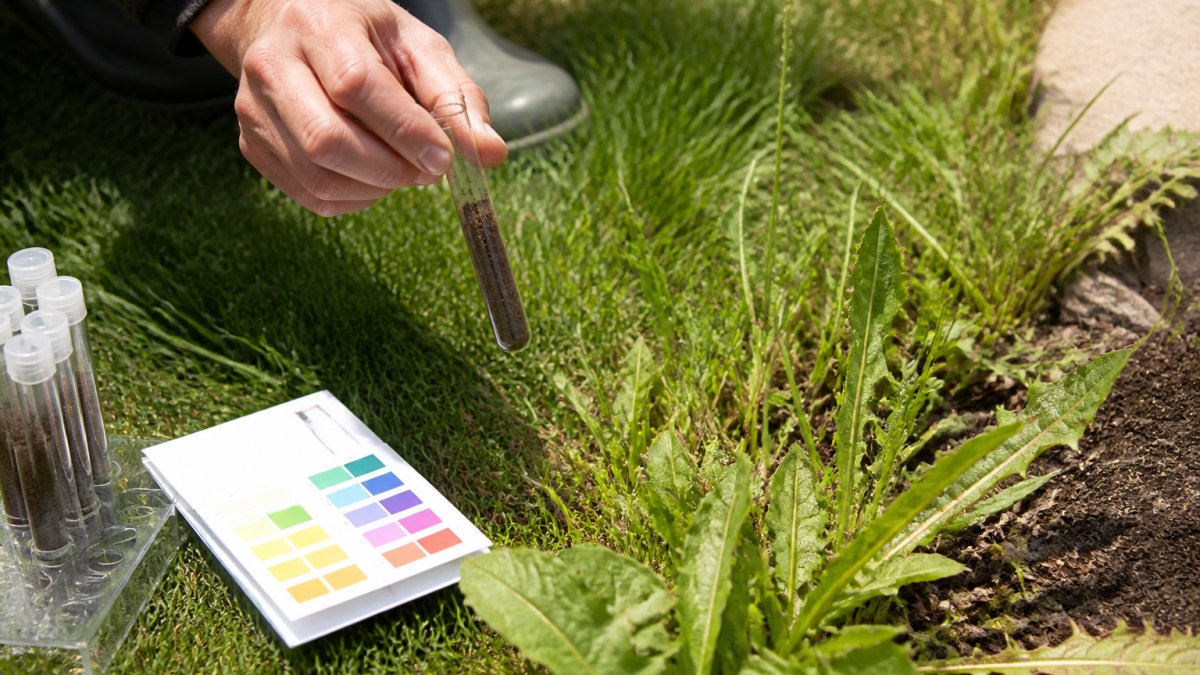
Home test kits are the fastest option. Buy them at any garden center, mix soil with the included solution, wait a few minutes, and compare the color to the chart. Results are approximate but good enough for most homeowners.
Digital pH meters give more precise readings. Insert the probe into moist soil, wait 30 seconds, and read the display. They cost more than test kits but are more accurate and work well for testing multiple spots.
Professional soil testing is the most reliable option. Send a sample to a local extension office or soil testing lab; they'll test pH, nutrient levels, and organic matter and return a detailed report with recommendations.
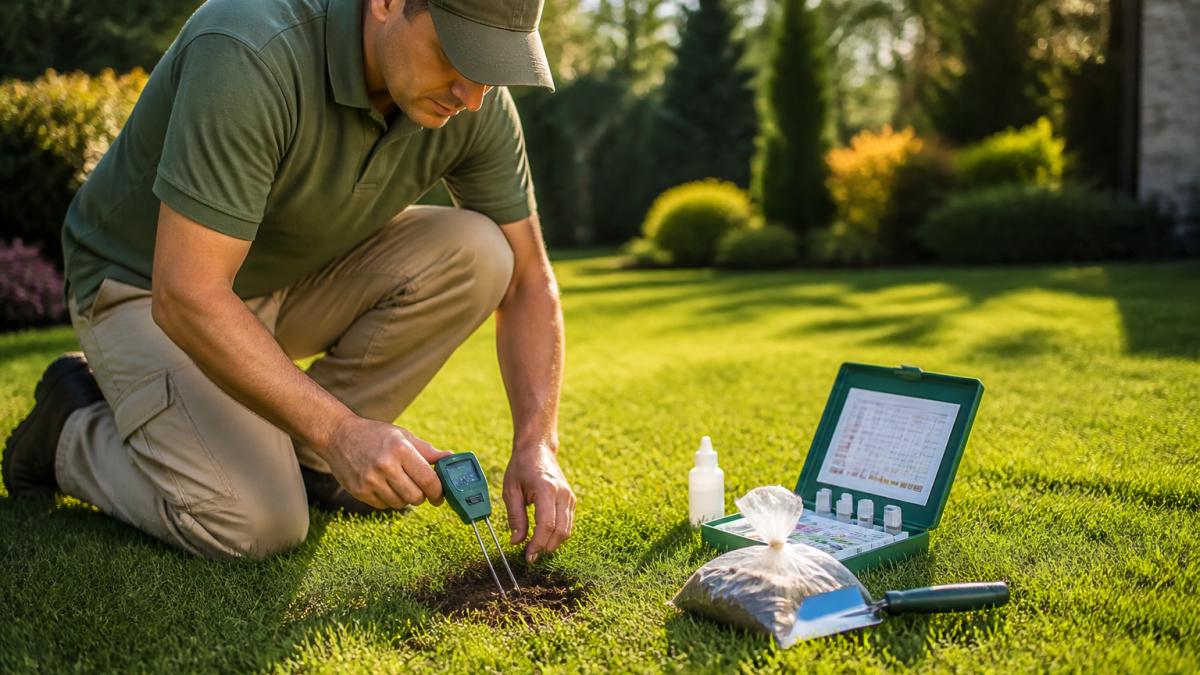
Test in spring or fall when soil is moist but not waterlogged, and sample multiple spots. Soil pH can vary from one area to another, especially in older neighborhoods where fill dirt or construction debris may have altered the soil.
Weeds That Grow in Acidic Soil
Acidic soil (pH below 6.0) doesn't magically summon weeds; it changes the competitive balance.
The indicator weeds below let you form a hypothesis before you ever open a test kit. Treat them as clues, not proof, a soil test is still the only way to confirm pH.
Broadleaf plantain (Plantago major). Broad, ribbed leaves in a tight basal rosette with a short seed spike in summer.
Sheep sorrel (Rumex acetosella). Small, arrow-shaped leaves with a reddish stem and a sour taste (the oxalic acid content).
Moss. Not a weed botanically, but the clearest visual signal of acidic, shaded, poorly drained, or compacted soil.
Mouse-ear chickweed (Cerastium vulgatum) and common chickweed (Stellaria media). Low, soft, mat-forming plants with small opposite leaves. Chickweed favors moist, fertile, low-pH soil and often appears in thin turf along edges and shade lines.
Hawkweed (Hieracium spp.) and hawksbeard (Crepis spp.). Yellow dandelion-like flowers on hairy or smooth stems with a basal rosette. Common in low-pH, low-fertility lawns and often mistaken for dandelions, they tolerate poor soil better than turfgrass.
Red sorrel and curly dock (Rumex crispus). Larger dock species with wavy or broad leaves and a deep taproot. Dock is a low-pH and low-calcium indicator, and its taproot makes hand removal difficult.
A practical diagnostic pattern: two or more of these species clustered in one area, with thin turf despite adequate water and mowing height, makes acidic pH a reasonable first hypothesis.
One more caution: the weed list above is a starting point, not a guarantee. Weed composition is driven by pH, fertility, moisture, compaction, mowing height, and shade together. A well-managed lawn at pH 5.8 may show few acidic-soil weeds; a compacted, shaded lawn at pH 6.5 may show many. Use the weeds to decide where to sample, and the lab result to decide what to apply.
Identifying Alkaline-Loving Weeds
Alkaline soil (pH above 7.5) is less common than acidic soil but more stubborn.
Alkaline pH usually has a specific source: calcareous fill dirt or construction rubble, leachate from concrete sidewalks, driveways, and foundations, irrigation water with high bicarbonate content, or over-application of lime or wood ash.
Field bindweed (Convolvulus arvensis). A climbing or trailing vine with arrow-shaped leaves and white-to-pink trumpet flowers.
Dodder (Cuscuta spp.). A leafless, thread-like parasitic plant that wraps around host plants and draws nutrients from them. It spreads quickly in alkaline, low-fertility soil.
Russian thistle (Salsola tragus). Also called tumbleweed: a tough, drought-tolerant annual with narrow, fleshy leaves and a spiny mature form. It favors alkaline, disturbed, sandy soil and is more common in the West than the East.
Licorice plant (Helichrysum petiolare) and wild licorice (Glycyrrhiza lepidota). The ornamental licorice plant is not a lawn weed, but wild licorice is a perennial with pinnate leaves and bur-like seed pods that tolerates alkaline soil.
Bur clover (Medicago polymorpha) and sweetclover (Melilotus spp.). Nitrogen-fixing legumes with trifoliate leaves and small yellow or white flowers. They tolerate alkaline, high-calcium soil and often appear where turf is thin, persisting in low-fertility spots that would starve grass.
Kochia (Bassia scoparia). A summer annual with a soft, bushy form that turns reddish in fall.
A practical diagnostic pattern: alkaline-indicator weeds concentrated along concrete edges, in strips where fill was placed, or in patches irrigated with high-bicarbonate water point to a localized pH problem. Test those zones separately.
One more distinction: alkaline-soil weeds and salt-tolerant weeds overlap but are not the same group. Kochia, Russian thistle, and some clovers tolerate both high pH and high salinity, so their presence near a salted sidewalk or driveway may indicate salt stress rather than, or in addition to, alkaline pH. If weeds cluster along a de-iced edge, test both pH and soluble salts.
How to Raise Soil pH for Weed Control
If your soil is too acidic, raising pH is straightforward. The process takes weeks to months, depending on how acidic the soil is.
Lime is the standard solution. Ground limestone (calcium carbonate) is inexpensive, widely available, and effective. Spread it according to the bag's application rate; most lawns need 1 to 3 tons per acre, depending on soil test results.
Apply lime in fall or early spring and water it in thoroughly. It takes 4 to 6 weeks to begin raising pH; full results may take several months.
Wood ash can also raise pH, but use it carefully: it works faster than lime yet is harder to apply evenly, and too much can spike pH too high. Apply lightly and retest in 4 weeks.
Hydrated lime works faster than ground limestone but is more caustic. It can burn grass if applied too heavily. Most homeowners are better off with ground limestone.
Apply lime only after a soil test confirms acidic pH. Raising pH too high creates its own problems, your goal is 6.0 to 7.0, not more alkaline soil.
Retest 6 to 8 weeks after application and adjust if needed. Once pH stabilizes in the target range, your grass will outcompete acidic-soil weeds naturally.
How to Lower Soil pH for Weed Control
Lowering soil pH is slower than raising it, but necessary if your soil is too alkaline.
Sulfur is the primary tool. Elemental sulfur (powdered sulfur) lowers pH gradually as soil microbes convert it to sulfuric acid. Spread sulfur according to the bag's application rate. Most lawns need 5 to 20 pounds per 1,000 square feet, depending on how high the pH is.
Apply sulfur in fall or early spring. Water it in. Sulfur takes 3 to 6 months to significantly lower pH. This is a patient process.
Aluminum sulfate (alum) works faster than elemental sulfur but is more expensive, lowering pH within weeks. It's practical for small areas; for large lawns, sulfur is more economical.
Acidifying fertilizers containing ammonium sulfate or ammonium nitrate lower pH slightly over time. They're not a primary solution but can support sulfur applications.
Never lower pH too quickly, rapid swings stress your grass. Apply sulfur in multiple light applications rather than one heavy one, retest every 8 to 12 weeks, and adjust based on results.
Maintaining Optimal Soil pH for a Weed-Free Lawn
Once you've corrected soil pH, keeping it stable is easier than fixing it again.
Test every 2 to 3 years. Don't wait until weeds return; regular testing catches pH drift before it becomes a problem. Most lawns naturally drift toward acidic over time, especially with acid rain.
Use pH-neutral fertilizers when possible. Some are acidifying, others alkaline; choose ones that maintain your target pH range. Your soil test report often includes fertilizer recommendations.
Add organic matter regularly. Compost and well-rotted leaves buffer soil pH and keep it stable, holding nutrients and moderating pH swings. Apply 1/4 to 1/2 inch of compost each fall.
Avoid over-liming. Many homeowners apply lime every year without testing. This pushes pH too high. Test first. Apply lime only when needed.
Monitor for weed changes. New weeds that didn't appear before may mean pH is shifting; early detection means smaller corrections.
When soil pH is in the 6.0 to 7.0 range, your grass has a massive competitive advantage. It grows thicker and healthier. Weeds struggle. This is the foundation of a weed-free lawn.
At Ward's Lawn Care & Landscape Co., we address soil pH as part of our comprehensive approach to lawn care. Once pH is right, grass can grow stronger, and your lawn can become healthier.
A weed-free lawn starts underground, not above it. Soil pH controls which plants thrive in your yard. If weeds keep coming back despite your best efforts, the soil pH is likely the real problem.
Frequently Asked Questions
Does soil pH affect weed growth?
Yes, soil pH significantly influences which weeds thrive in your lawn. Different weed species prefer different pH levels. Acidic soils (below 6.0) favor weeds like sorrel and plantain, while alkaline soils (above 7.5) encourage dandelions and clover. Most desirable lawn grasses prefer a pH between 6.0 and 7.0. By testing and adjusting your soil pH, you can create conditions that favor grass growth and suppress problem weeds.
How do I test my lawn's soil pH?
You can test soil pH using a home test kit, digital pH meter, or by sending a sample to your local cooperative extension office for professional analysis. Home kits are affordable and provide quick results. For the most accurate assessment, collect samples from multiple lawn areas, mix them together, and follow kit instructions carefully. Professional testing offers detailed nutrient analysis beyond pH and costs around $15-$30 per sample, helping you make informed adjustment decisions.
Can changing soil pH get rid of weeds?
Adjusting soil pH alone won't eliminate existing weeds, but it creates conditions that suppress weed germination and growth while favoring desirable grass. Combined with proper mowing, watering, and targeted weed removal, pH adjustment can support overall lawn health. For example, raising pH in acidic soil can help reduce sorrel and plantain populations, while lowering pH in alkaline soil can discourage dandelions. Results take several months as pH shifts gradually.
What soil pH is best for a healthy lawn?
Most lawn grasses thrive in soil with a pH between 6.0 and 7.0, slightly acidic to neutral. This range optimizes nutrient availability and promotes strong root development. Soil pH outside this range reduces grass vigor, making lawns more susceptible to weed invasion, disease, and stress. If your soil pH drifts significantly above or below this target, adjusting it improves grass health and naturally reduces weed pressure over time.