 how-to
How to Remove Fall Leaves From Flower Beds Safely?
Last Updated: October 27, 2026
Quick Summary
To remove fall leaves safely, wait until most have dropped but before the first hard freeze, and work when the soil is dry. Use a soft, flexible rake or gloved hands to lift leaves in small batches, and avoid raking deep into the soil. Thin layers can stay as mulch.
- Clear leaves when you can no longer see the soil or the crowns of your perennials.
- Measure the layer: a loose layer up to about an inch deep can usually stay as mulch.
- Use a flexible plastic or bamboo rake, not metal, near perennial crowns.
- Bag leaves from diseased plants separately instead of composting them.
- Check your municipality's yard-waste rules before bagging leaves for pickup.
Table of Contents
- Why Fall Leaves in Flower Beds Need Attention
- When to Remove Leaves From Flower Beds
- Leaf Removal Tools for Flower Beds
- Step-by-Step: How to Remove Fall Leaves Without Damaging Plants
- How to Mulch Leaves in Garden Beds
- What to Do With Leaves After Raking
- Common Mistakes to Avoid and Booking Help With Your Beds
- Frequently Asked Questions
Why Fall Leaves in Flower Beds Need Attention
Fall leaves look harmless, but a thick layer over your flower beds can cause real problems, which is why knowing when and how to remove fall leaves matters.
Leaves that pile up can block sunlight and air from reaching the soil and plant crowns. Our signs of unhealthy lawn grass guide shows how to tell when leaf cover is causing trouble. They can also trap moisture against stems, which may encourage rot and disease.
Leaves are not all bad, though. The Xerces Society says leaves can be raked into garden beds or around tree bases, where they can benefit soil. The trick is knowing when to leave them and when to clear them.
Here is a quick rule of thumb:
- Clear leaves that smother perennials, cover small plants, or sit on diseased plants
- Keep leaves that are loose, dry, and spread thinly across open soil
- Move leaves to a compost pile or a designated mulch area when the bed is too full
When to Remove Leaves From Flower Beds
The best time to remove leaves is after most of them have fallen, usually once the bulk of the leaf drop is done and before the first hard freeze. Doing it then keeps leaves from packing down under snow and wet weather.
Check your beds every week or two during peak leaf drop. A light layer is fine. A thick mat that you can barely see through needs attention.
Brooklyn Botanic Garden advises moving leaves from beds when they block plants' access to sunlight and air circulation. It also recommends removing leaves from plants that appear diseased or pest-infested.
Watch for these signs that a bed needs cleanup now:
- You can no longer see the soil or the crowns of your perennials
- Leaves stay wet and matted for several days in a row
- Plants look yellow or flattened under the leaf layer
- Disease spots are showing on the leaves that fell from nearby plants
Leaf Removal Tools for Flower Beds
You do not need expensive equipment to clear a flower bed. Most homeowners use a few simple tools that work well for small and medium beds.
Here is what we recommend:
- Leaf rake: A flexible plastic or bamboo rake that will not tear up perennial roots
- Garden hand rake: Good for tight spaces around shrubs and stems
- Leaf blower: Fast for open lawns, but use a low setting near delicate plants
- Tarp or large bin: Makes it easy to drag leaves out of the bed in one trip
- Work gloves and eye protection: Keep your hands and eyes safe from debris and sharp stems
Avoid metal rakes near perennial crowns. Their tines can scrape bark and tear up shallow roots. A soft rake is the safer choice for beds with tender plants.
Step-by-Step: How to Remove Fall Leaves Without Damaging Plants
Most leaf-cleanup advice stops at "rake gently." The steps below add the decision points that actually protect plants: when the bed is dry enough to work, how to read leaf depth, and how to handle the leaves you pull out.
- Check bed conditions before you start. Work when the top inch of soil is dry and the forecast shows no rain for at least 24 hours. Wet soil compacts under foot and wet leaves cling to crowns. Skip cleanup if a hard freeze is imminent and plants are still hardening off; bruised stems heal poorly in cold weather.
- Cut back dead stems first, but leave the leaves in place. Dead foliage marks where perennials sit, so clear stems before you rake. Leave the leaf layer until you can see which crowns are still green.
- Measure the leaf layer. A loose layer up to about an inch deep can usually stay as mulch. A mat you can barely see through, or one that stays wet for several days, needs removal. This threshold matters more than the calendar date.
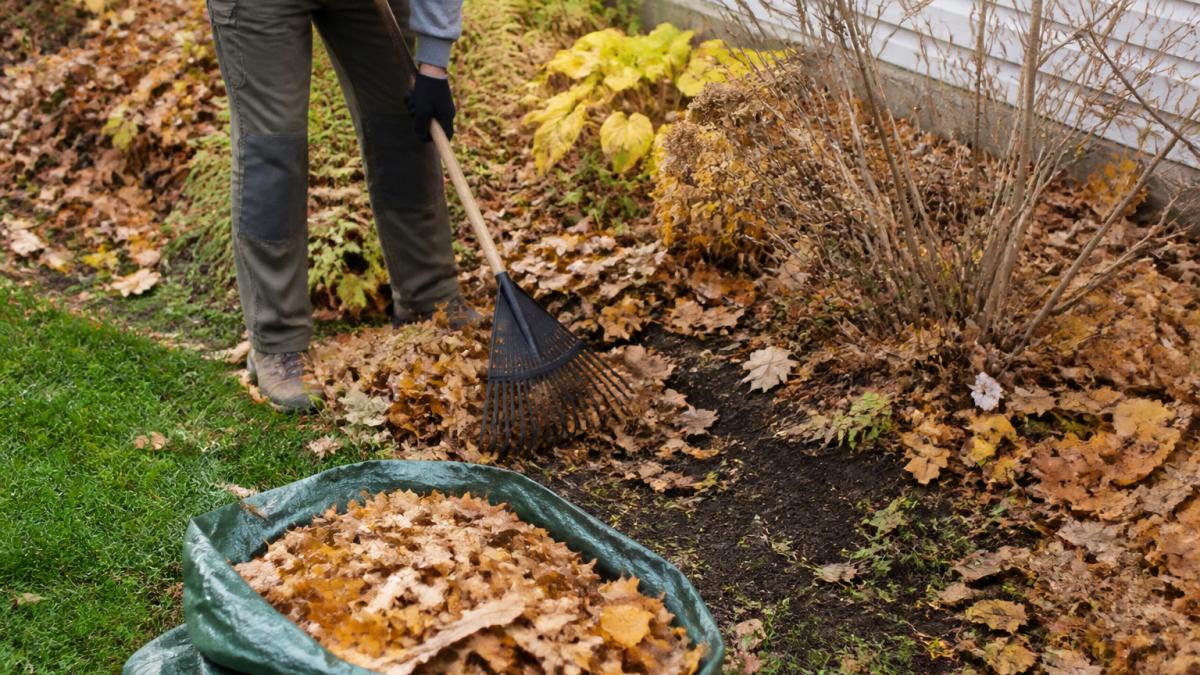
- Rake gently toward the bed edge. Use a flexible plastic or bamboo rake and pull leaves in the direction of plant growth, not against it. Keep tines out of the soil surface; shallow roots and beneficial soil life sit in the top few inches.
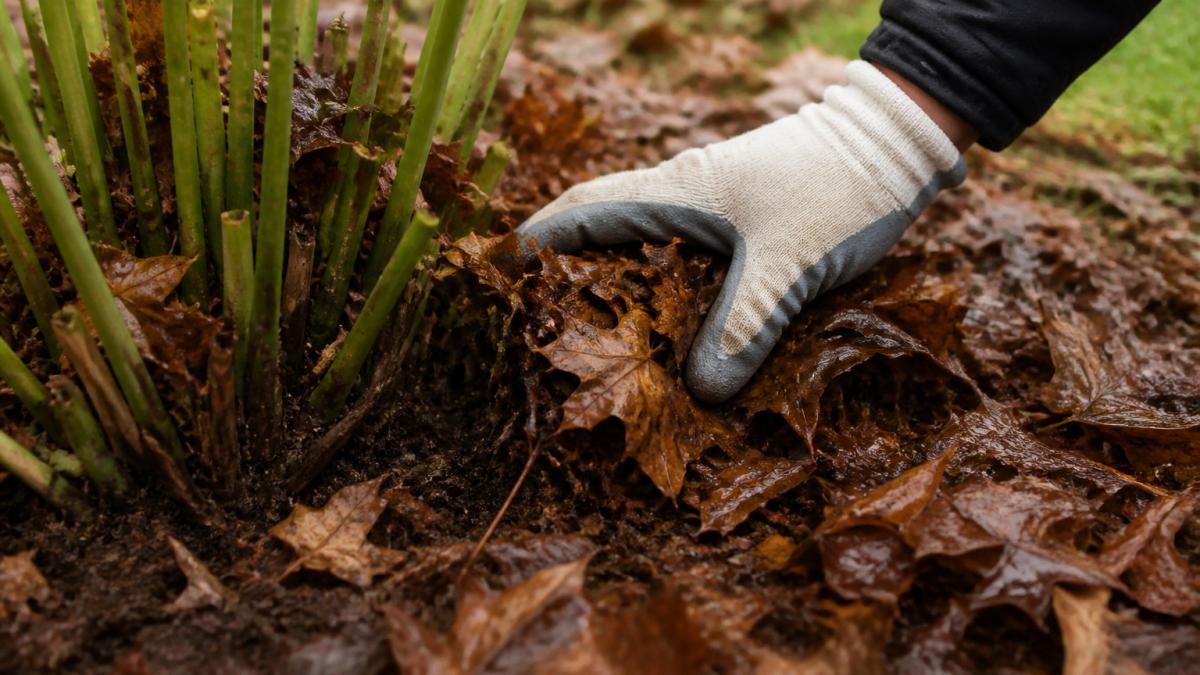
- Lift leaves out of crowns by hand. Gloved fingers are the safest tool around low perennials, rosettes, and ground covers. Work in small batches so you can feel stems instead of scraping them.
- Move leaves to a tarp, not a pile on the bed. Drag the tarp out in one trip. Piling leaves at the bed edge invites them to blow back in and can smother border plants.
- Inspect the soil surface. Look for buried stems, small plants, and disease spots. Bag leaves from diseased plants separately so problems do not return next season.
Watch out: Do not rake deep into the soil. You can damage shallow roots and disturb beneficial soil life.
Handling Wet Leaves Around Perennials
Wet leaves are heavier, stick to stems, and tear more easily. Wait for a dry afternoon when possible. If leaves are soaked, use a hand rake or gloved hands to lift them in small batches, and pull leaves off crowns by hand rather than dragging them across the plant. A common pattern is to work from the outside of the bed inward so you are not stepping on the plants you are trying to protect.
Matching the Method to the Bed
The right approach depends on what is growing in the bed:
- Low perennials and ground covers: Hand-lift leaves and use a soft rake only at the edges. Blowers are too forceful here.
- Shrubs and small trees: A hand rake works around trunks, and a low-setting blower can clear open ground between them.
- Open soil between plants: A flexible leaf rake is fastest, and a thin layer can be left as mulch.
- Diseased or pest-infested plants: Remove and bag leaves rather than composting them, and clean tools between beds.
How to Mulch Leaves in Garden Beds
Leaves make excellent mulch when you use them the right way. The goal is a thin, loose layer that lets water and air through.
Shred leaves first when you can. A mower with a bag or a leaf shredder breaks them into small pieces that break down faster and mat less.
Whole leaves can work too, but they tend to clump. Use them in areas where they will not smother small plants, such as around shrubs, trees, or the back of a bed.
The National Wildlife Federation describes raking leaves into garden beds as a next-best solution for creating natural mulch that preserves soil moisture. That makes leaves a useful resource when you apply them carefully.
What to Do With Leaves After Raking
What you do with the leaves matters as much as how you remove them. The right choice depends on volume, whether the leaves are diseased, and what your municipality accepts.
Start with volume. A few wheelbarrows of leaves fit a compost pile or a mulch layer. A yard full of leaves usually needs shredding first so it breaks down faster and takes up less space.
- Compost: Mix leaves with grass clippings and kitchen scraps. Shredded leaves break down in months rather than years, and the mix needs occasional turning and moisture. Keep the pile damp, not soggy.
- Leaf mold: Pile leaves in a wire bin or bag, keep them damp, and let them rot for a year or more. The result is a crumbly soil conditioner. This is the lowest-effort option for large volumes if you have space.
- Mulch: Use shredded leaves as a thin layer, about one to two inches deep, around shrubs and trees. Keep mulch away from stems and trunks.
- Curbside pickup: Check your municipality's yard-waste rules before bagging. Some programs accept leaves only in paper bags or loose at the curb, and some have seasonal pickup windows. Bagging leaves in plastic can disqualify them from composting programs.
Handle diseased leaves separately. Leaves from plants with disease or pest problems should be bagged and disposed of according to local rules, not composted.
Runoff and waterways. Keep leaf piles and shredded mulch away from storm drains, gutters, and waterways. Leaves that wash into drains can clog them, and decomposing leaves in water reduce oxygen for aquatic life. Bag or tarp leaves before moving them near a street.
Pets and people. Freshly shredded leaves and damp piles can harbor mold and pests. Keep pets out of leaf piles, and wash hands after handling leaves, especially from beds with diseased plants.
municipal yard waste and leaf collection rules
Common Mistakes to Avoid and Booking Help With Your Beds
Most leaf cleanup problems come from a few common habits. Watch for these:
- Raking too early: Leaves still falling will just cover the bed again.
- Using a leaf blower too close to plants: The force can knock over stems and strip mulch.
- Piling leaves on crowns: Wet leaves on the crowns of perennials can cause rot.
- Ignoring diseased leaves: Bagging them keeps problems from returning next season.
If raking and bed cleanup take more time than you have, a professional crew can handle it. Ward's Lawn Care & Landscape Co. offers free estimates. For current pricing, request a quote from our team or review our lawn and landscape maintenance services to see what fits your yard.
Whether you do it yourself or hire help, a clean, well-timed cleanup keeps your flower beds healthy through winter and ready for spring growth.
Frequently Asked Questions
Should you remove fall leaves from flower beds?
Not always. Leaves that block sunlight, trap moisture, or hide disease should be removed from beds, especially around perennials and plants showing spots or pest damage. Where leaves are clean and healthy, they can be raked into the bed or moved to a spot around tree bases, where they break down and feed the soil. The Brooklyn Botanic Garden recommends removing leaves that smother plants or carry disease, while the Xerces Society notes that leaves left in place can benefit soil. Match your choice to the condition of each bed.
Can you leave fallen leaves in flower beds over winter?
You can, as long as the layer is thin enough that perennial crowns can still get light and air. A thick mat of wet leaves can rot stems, invite slugs, and keep soil cold and soggy. A light, loose layer over the bed often protects soil and beneficial insects through winter. If you leave leaves, check in early spring and pull back any matted patches before new growth emerges.
How do you remove wet leaves from around perennials?
Wait for leaves to dry a little if you can, because wet leaves compact and tear plant stems. Gently lift them with a leaf rake or your gloved hands rather than dragging a rake through the crown. Work from the outside of the plant inward, and avoid stepping on the bed. Bag or move the leaves on a tarp so they do not fall back onto the cleared area.
What is the best tool for removing leaves from garden beds?
A plastic leaf rake with flexible tines works well for most flower beds because it moves leaves without digging into soil or snapping small stems. A stiff bamboo rake suits wider beds, while a hand-held leaf scoop or a tarp is helpful around small perennials. Avoid leaf blowers in planted beds, since the air stream can scatter mulch, uproot seedlings, and damage tender foliage.