 how-to
Protect Young Trees from Winter Salt: A Step-by-Step Guide
Table of Contents
- Why Winter Salt Threatens Young Trees
- Assess Your Young Trees for Road Salt Damage and Exposure
- Install Physical Barriers to Protect Saplings in Winter
- How to Protect Trees from Salt Spray and Windblown Deicing Salt
- Mulch and Root Zone Protection During Winter Months
- How to Flush Salt from Soil Around Trees in Spring
- Identify and Treat Salt Injury on Young Trees
- Frequently Asked Questions
Last Updated: October 20, 2026
Why Winter Salt Threatens Young Trees
Winter salt poses a serious threat to young trees, especially where heavy snow and ice removal is routine.
Salt burns plant tissue directly and pulls moisture from roots and soil, causing dehydration even in freezing conditions. Stressed saplings may not survive winter, or they struggle through spring with stunted growth, browning foliage, and weakened branches.
Salt spray and windblown salt coating bark and buds damage the protective layer of young bark and kill dormant buds before they break in spring. Trees near heavily salted roads and sidewalks face the highest risk.
You can prevent most salt injury with the right barriers and maintenance steps, so start before the next winter storm hits.
Assess Your Young Trees for Road Salt Damage and Exposure
Before you can protect young trees winter salt, you need to understand your specific exposure risk. Not all properties face equal salt pressure.
Walk your property and note where salt sources are located:
- Nearby roads and highways where plowing happens regularly
- Sidewalks treated with deicing salt
- Driveways and parking areas you salt yourself
- Areas where snow gets piled during clearing
Young trees within 50 feet of these sources face moderate to high exposure; closer than 20 feet is severe. Wind direction matters too: if winter winds blow from the road toward your trees, salt spray reaches them even from a distance.
Check the soil around existing young trees. Salt-damaged soil often appears crusty or compacted, and past winters' browning or stunted growth likely points to salt exposure.
Look for these salt-damage signs on trees already established on your property:
- Brown or scorched leaf edges
- Early leaf drop in fall
- Sparse or delayed budbreak in spring
- Stunted branch growth
- Bare branches on the side facing the salt source
Document which trees show these symptoms. They'll need extra protection this winter and soil remediation in spring.
Install Physical Barriers to Protect Saplings in Winter
Physical barriers are the most reliable way to keep deicing salt spray, windblown salt, and direct splash off young bark, buds, and foliage. What separates a helpful barrier from a harmful one comes down to material, distance from the tree, height relative to the salt source, and install/removal timing.
Choose the Right Barrier for the Salt Source
Match the barrier to how salt reaches the tree:
- Direct splash from a sidewalk, driveway, or plowed lane: a low, rigid screen on the source side plus a trunk guard handles most of the exposure.
- Windblown spray from a road or highway: a taller screen or windbreak positioned upwind, because salt particles travel with wind and settle on the exposed side.
- Snow piles pushed against the tree line: a sturdy fence that keeps plowed snow from being stacked in the root zone, since meltwater carries concentrated salt into the soil.
- Mixed exposure (road plus your own salted walk): combine a trunk guard with a source-side screen and reduce your own salt use.
Burlap, rigid plastic screening, wooden lattice, and hardware cloth all work; the material matters less than correct placement and airflow.
Burlap and Winter Screening
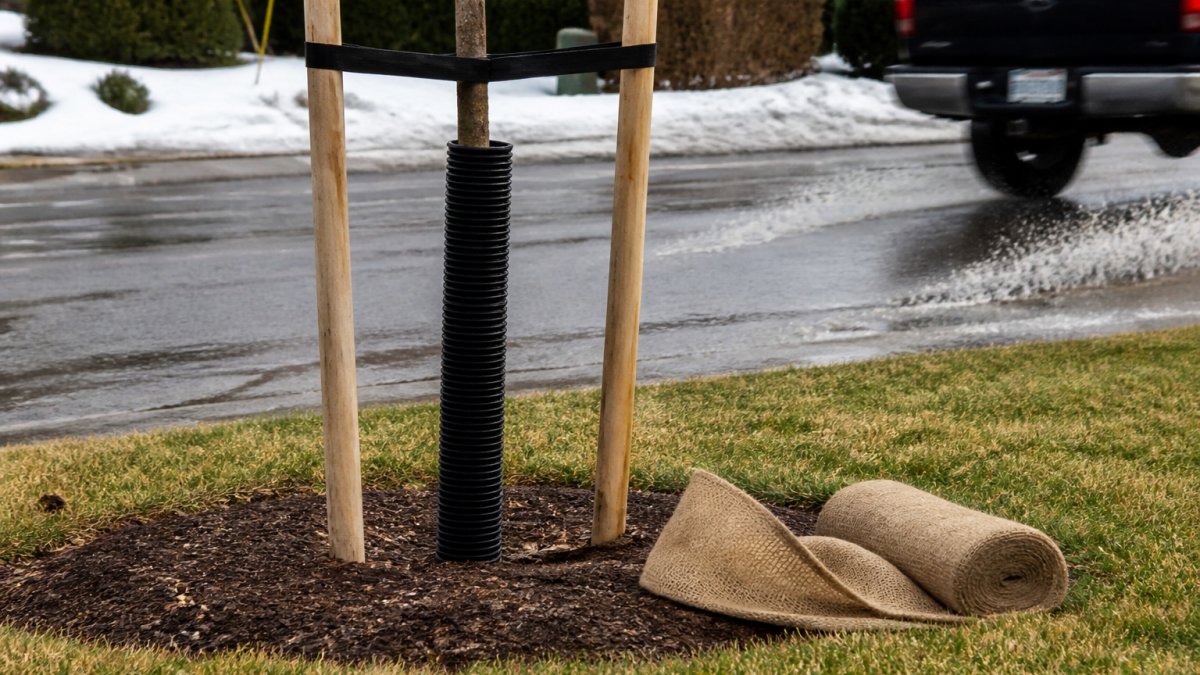
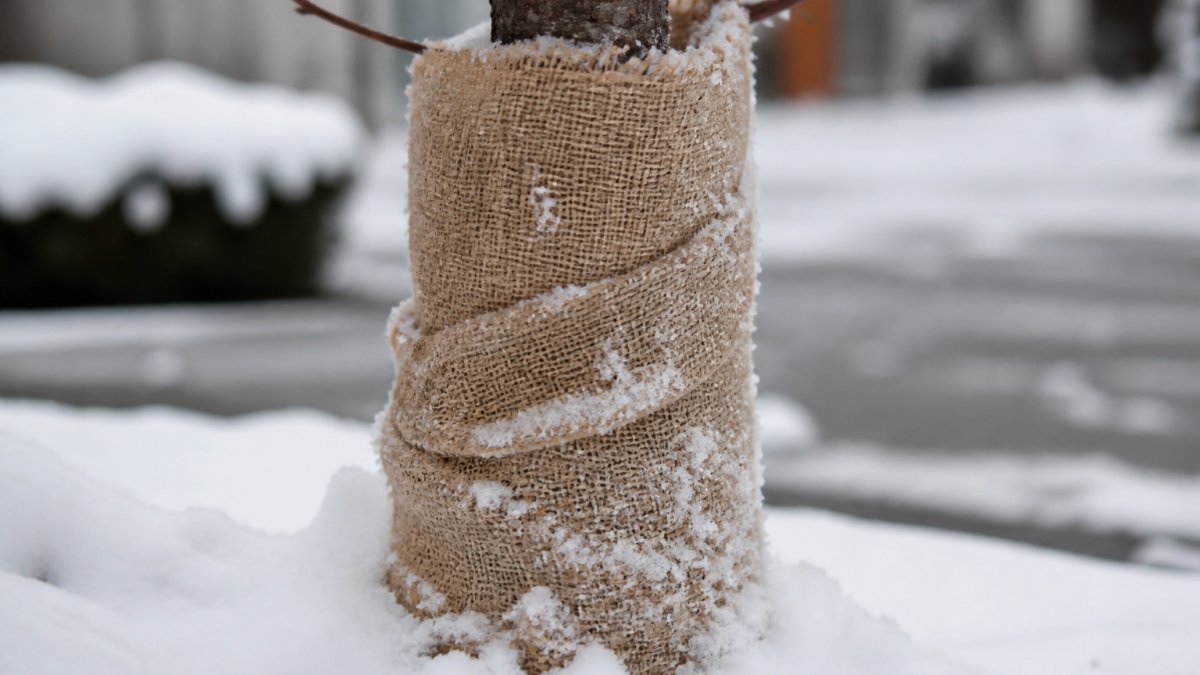
Burlap is a proven, breathable wrap for young trees. Wrap loosely from the base upward, leaving an air gap that insulates and prevents wind abrasion. Secure with twine or zip ties snug enough to hold the wrap but never tight enough to girdle the trunk.
For one-directional salt spray, a rigid screen on the source side often beats a full wrap because it blocks spray without trapping moisture around the whole crown. Position it on the windward side. Most practitioners find a 4-6 foot screen adequate for a sidewalk or driveway source; a regularly plowed road may call for 6 feet or more.
Tree Trunk Guards and Hardware Cloth
Trunk guards protect lower bark from salt splash, string trimmer damage, and wildlife. Hardware cloth wrapped with a 1-2 inch gap allows air circulation and prevents bark damage. Rigid plastic guards install more easily and should cover the splash zone, typically 18-24 inches above ground level.
Never let a guard or wrap contact the bark directly. Constant moisture against bark in winter invites rot and freeze injury, and a tight guard can abrade thin young bark. Check guards monthly and loosen anything that binds as the trunk grows.
Fencing and Windbreak Placement
For multiple young trees or a larger planting area, a temporary fence or windbreak between the trees and the salt source reduces exposure across the group. Set wood or plastic fencing on the windward side: a low garden fence stops snow-pile encroachment, while a 4-6 foot screen is the practical minimum for blocking road spray.
Leave gaps or use open materials so wind passes through rather than eddying around the barrier. A solid wall can create turbulence that drives salt-laden air down onto the trees behind it.
Timing, Maintenance, and Removal
Install barriers in late fall, ideally by mid-November, before the ground freezes and the first heavy snow. Once snow and ice set in, positioning becomes difficult and less effective.
After storms, re-secure loose twine, clear snow piled against screens, and confirm air gaps stay open. Remove burlap and solid wraps in late spring after hard frost risk passes, but leave trunk guards if wildlife pressure continues. Too-early removal exposes new growth to late cold; too-long leaves traps moisture and can deform branches.
The best barrier is the one placed on the source side, sized to the salt source, installed before the ground freezes, and removed before it traps spring moisture. Placement and timing matter more than the material you choose.
How to Protect Trees from Salt Spray and Windblown Deicing Salt
Windblown salt concentrates on the wind-facing side, where branches often show more severe damage than on the sheltered side. Young trees with thin bark are especially vulnerable.
The best defense against salt spray is a physical barrier on the exposed side. Burlap, screening, or fencing all work.
Keep salt piles away from young trees. Never store road salt or deicing materials near plantings, since runoff concentrates in the soil and causes severe damage.
Rinse salt from tree bark and foliage during winter warm spells. On days above 40°F, use a gentle spray from a hose to wash salt accumulation off branches and bark.
Mulch and Root Zone Protection During Winter Months
Mulch protects tree roots from salt infiltration and retains soil moisture through winter. Apply a thick layer around the base of young trees before winter arrives.
Organic mulch (wood chips, bark) is ideal: it breaks down over time, improving soil structure and adding organic matter that helps soil retain water and buffer against salt.
The thick layer slows salt penetration into the root zone and retains the moisture roots need to stay hydrated through winter.
In spring, don't remove the winter mulch immediately. Leave it in place through late spring. It continues protecting roots as the soil warms and salt begins to leach deeper.
How to Flush Salt from Soil Around Trees in Spring
Begin flushing in late spring, after the soil thaws completely. Soil temperature should be consistently above 40°F.
Deliver at least 1-2 inches per application. Shallow watering doesn't move salt far enough; deep watering leaches it below the root zone.
Repeat watering weekly for 4-6 weeks. This extended flushing removes accumulated salt more effectively than a single heavy watering.
Spring rain helps, but don't rely on it alone. Measure rainfall and supplement with irrigation when rain is light to ensure adequate salt removal.
Monitor soil moisture. The soil should stay moist but not waterlogged. Waterlogged soil can cause root rot, which compounds salt stress.
Identify and Treat Salt Injury on Young Trees
Even with good protection, some young trees show salt damage by late winter or early spring. The challenge is that salt injury looks like several other problems. Diagnosing it correctly determines whether you flush, prune, wait, or call for help.
Recognize the Salt-Injury Pattern
Salt injury on young trees tends to follow the salt source. Look for:
- Foliage browning on the exposed side first. Leaf edges and tips bleach to tan or scorched brown on the side facing the road, sidewalk, or snow pile, while the sheltered side stays greener.
- Early leaf drop in late summer or fall before normal dormancy.
- Delayed or uneven budbreak in spring, with bare branches on the exposed side while sheltered branches leaf out.
- Stunted branch growth and sparse canopy through the growing season.
- Bark damage on the lower trunk, including cracking, splitting, or oozing, which signals severe salt burn.
Distinguish Salt Injury from Look-Alikes
Salt injury is often confused with drought, cold injury, and disease. Use these distinctions:
- Drought stress browns foliage more evenly around the canopy and typically appears in summer dry spells, not in a pattern tied to a road or walkway.
- Cold injury usually hits the most exposed upper branches and new growth after a hard freeze, and damage is not consistently one-sided toward a salt source.
- Disease often brings spots, lesions, or fungal growth on leaves and stems, and symptoms spread irregularly rather than tracking the salt exposure side.
- Herbicide or fertilizer burn can mimic salt scorch, but it usually follows an application and affects a broader area, not just the source-facing side.
The strongest diagnostic clue is geography: if the worst damage faces the salted surface and improves as you move away, salt is the likely cause.
Remove Salt Safely
Rinse salt from bark and foliage on days above 40°F using a gentle hose spray. Wash from the top down and avoid high pressure, which can damage thin bark and buds. Do not rinse when temperatures are forecast to drop below freezing, because wet bark and buds are more vulnerable to freeze injury.
Flush the root zone in late spring after the soil thaws and stays consistently above 40°F. Apply 1-2 inches of water per session with a soaker hose or drip irrigation, and repeat weekly for 4-6 weeks. Deep, slow watering moves salt below the root zone; shallow watering does not.
Support Recovery Without Overcorrecting
Prune dead branches only after new growth appears in spring, so you can tell live wood from dead. Avoid fertilizing salt-injured trees immediately; wait until mid-summer when the tree shows new growth, because pushing top growth onto a stressed root system can do more harm than good. Water consistently through the growing season.
Document each affected tree with photos and notes on which side faces the salt source. That record makes next winter's protection plan faster and helps you track whether the tree is recovering year over year.
If bark is cracked or oozing, or if budbreak is severely uneven, a professional assessment can confirm the cause and recommend whether a biostimulant or growth regulator is appropriate for your site. The team at Ward's Lawn Care & Landscape Co. can evaluate salt-stressed young trees and build a recovery and protection plan.
Frequently Asked Questions
How can you protect young trees from road salt damage?
Combine multiple strategies: install physical barriers like burlap or tree guards before winter, apply a thick layer of mulch around the root zone, position fencing to block salt spray, and avoid planting salt-sensitive species near roads or sidewalks. After winter, flush accumulated salt from the soil with water and monitor the tree for injury symptoms like browning foliage or damaged buds.
What's the best way to protect saplings in winter from deicing salt?
Start with site assessment to identify salt exposure levels. For saplings near driveways or roads, wrap the trunk with burlap and install hardware cloth fencing 3-4 feet away to block windblown salt and brine spray. Apply 3-4 inches of mulch around the root zone to retain moisture and insulate roots. Remove barriers in spring after snow melts and ice-melting products are no longer applied.
How do you tell if a young tree has salt damage?
Salt injury appears as browning or scorching on foliage, particularly on the side facing roads or sidewalks. Buds may fail to open in spring, bark can become discolored or cracked, and roots may show stunted growth or decline. Damage typically occurs on the windward side of the tree. If you suspect salt damage, flush the soil with water in spring and consult a local arborist for recovery strategies.
Can road salt damage tree roots?
Yes. Road salt accumulates in the soil around the root zone, disrupting the tree's ability to absorb water and nutrients. Salt-laden soil can cause root damage, stunted growth, and long-term decline even if the above-ground portions appear unharmed. Young trees are especially vulnerable. Flushing salt from soil in spring by applying water to leach salt deeper into the soil profile helps protect roots and supports recovery.