 ultimate-guide
Maintaining Curb Appeal for Commercial Properties
Table of Contents
- Why Commercial Curb Appeal Drives Property Value and Tenant Retention
- Commercial Property Exterior Maintenance Tips That Prevent Costly Repairs
- Seasonal Commercial Groundskeeping Checklist for Year-Round Results
- Landscape Design, Softscaping, and Irrigation Efficiency
- Commercial Property Curb Appeal ROI: What Property Managers Should Track
- Sustainability, Lighting, and Compliance: Angles Most Guides Miss
- Conclusion
- Frequently Asked Questions
Last Updated: September 11, 2026
Why Commercial Curb Appeal Drives Property Value and Tenant Retention
Maintaining curb appeal for commercial properties means keeping a building's exterior, grounds, and entryways clean, safe, and visually consistent so tenants, customers, and prospects form a positive impression before they walk through the door. At Ward's Lawn Care & Landscape Co., we understand how much weight that first thirty seconds carries with the people who decide whether to sign or renew a lease.
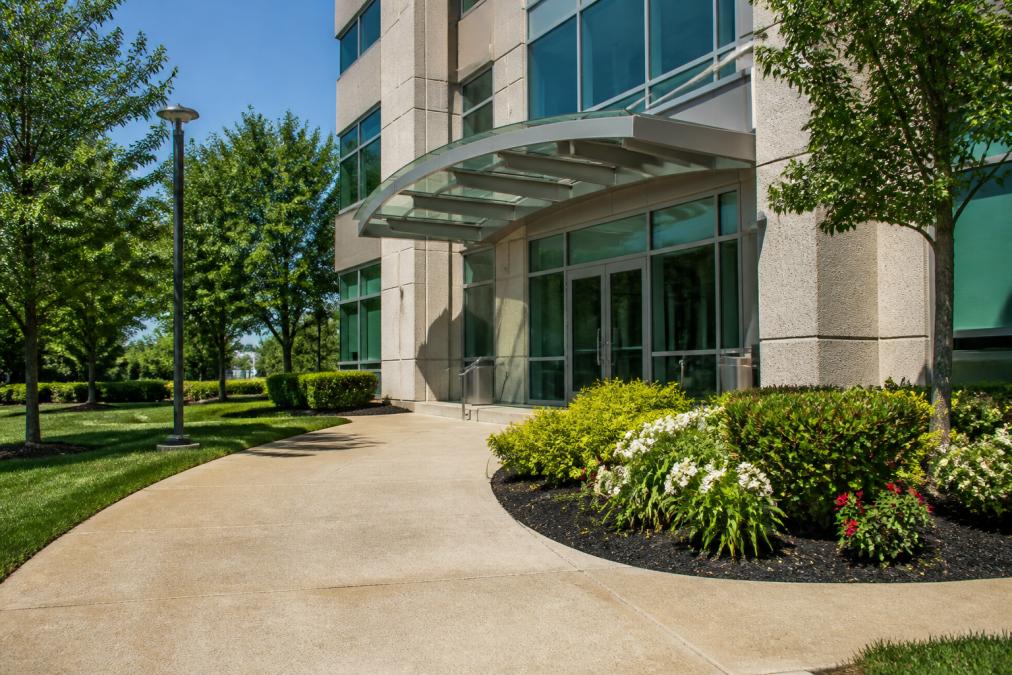
Curb appeal isn't a landscaping line item, it's a leasing tool.
Prospects judge a property before they reach the lobby. Cracked parking lots, patchy lawns, or faded signage stick, making every rent conversation harder. A cared-for property signals that management attends to details, exactly what tenants want before committing to a multi-year lease.
Many property managers treat exterior upkeep as reactive: fix things when a tenant complains. By then, the damage to perception has already happened. Preventative maintenance is cheaper and quieter.
Commercial Property Exterior Maintenance Tips That Prevent Costly Repairs
Commercial property exterior maintenance tips work best organized around the surfaces that deteriorate fastest: hardscaping, pavement, and signage. Handle those three consistently and you avoid most emergency spending.
Hardscaping and Walkway Safety
Walkways, steps, and retaining walls take constant punishment from weather and foot traffic. Small cracks and shifting pavers become trip hazards, and trip hazards become liability claims. Walk the full perimeter monthly and repair uneven surfaces before they spread, sealing joints and resetting loose pavers early costs far less than rebuilding after a freeze-thaw cycle.
Parking Lot Maintenance and Signage Visibility
Parking lots are the first thing drivers see and the last thing managers think about. Cracked asphalt, faded striping, and clogged drains signal that nobody's watching. Schedule crack filling and sealcoating to your climate, keep striping crisp, and clear drains before heavy rain seasons.
Signage visibility matters just as much. If a tenant's sign is obscured by overgrown shrubs or a monument sign is grimy, that tenant notices, and it becomes a renewal conversation. Trim around every sign on a set schedule and wash signage at least seasonally.
| Surface or System | Common Failure | Preventative Fix | Why It Matters |
|---|---|---|---|
| Walkways and steps | Cracked pavers, trip hazards | Monthly perimeter walk, reset loose pavers | Reduces liability and repair costs |
| Parking lot | Cracks, faded striping | Sealcoating cycle, annual restriping | Protects pavement and brand impression |
| Signage | Obscured by growth, grime | Scheduled trimming and washing | Supports tenant satisfaction |
| Drainage | Clogged drains, pooling | Pre-season clearing | Prevents erosion and water damage |
Seasonal Commercial Groundskeeping Checklist for Year-Round Results
A seasonal commercial groundskeeping checklist keeps exterior work predictable instead of panicked: every surface and planting bed gets attention before the season that stresses it. Shift each block by four to six weeks depending on your USDA Plant Hardiness Zone.
Late Winter (February-March)
- Walk the full perimeter and photograph each zone for year-over-year comparison
- Inspect hardscaping for frost heave, settled pavers, and cracked joint sealant
- Check drainage inlets, swales, and retention areas for debris before spring rain
- Prune dormant trees and shrubs while structure is visible and disease pressure is low
- Confirm irrigation backflow testing is scheduled before the system is charged
Early Spring (March-April)
- Charge and test the irrigation system zone by zone; replace broken heads and check the rain sensor
- Cut back ornamental grasses and perennials before new growth emerges
- Refresh mulch to a 2-3 inch depth, keeping it pulled back from trunks and building walls (extension.psu.edu)
- Aerate and overseed cool-season turf; apply pre-emergent where crabgrass is a recurring problem
- Repair winter pavement damage with crack fill before sealcoating season
Late Spring (May-June)
- Begin the mowing cycle at the correct height for the turf species; never remove more than one-third of the blade
- Edge all walkways, curbs, and bed lines
- Trim shrubs away from signage, lighting fixtures, and building faces
- Inspect retaining walls for movement, bulging, or weep-hole blockage
- Wash monument signs, building signage, and entry glass
Summer (July-August)
- Raise mowing height slightly during heat stress; sharpen blades monthly
- Monitor irrigation for dry spots and overspray onto pavement
- Spot-treat weeds in hardscape joints and bed edges
- Check parking lot striping and re-stripe high-traffic stalls and fire lanes as needed
- Clear trash receptacles on a fixed schedule; screen dumpster enclosures
Early Fall (September-October)
- Aerate and overseed cool-season turf; apply a fall fertilizer appropriate to the species
- Clear leaves from lots, walkways, and drainage inlets on a recurring schedule
- Plant spring-flowering bulbs and cool-season annuals for winter color
- Inspect and clean gutters and downspouts before leaf drop finishes
Late Fall (November)
- Winterize the irrigation system: blow out lines, shut down the backflow, drain exposed components
- Apply anti-desiccant to broadleaf evergreens in exposed locations
- Final mow at a slightly lower height to reduce winter fungal pressure
- Stage snow and ice removal equipment and confirm salt or alternative de-icer stock
Winter (December-February)
- Keep walkways, entries, and ADA-accessible routes clear of snow and ice
- Use de-icing products carefully; excessive chloride damages concrete, metal, and plantings (the EPA)
- Protect young or tender plantings with burlap or wind screens where appropriate
- Inspect for salt spray damage on evergreens along road frontage
- Continue monthly perimeter walks; freeze-thaw cycles are when hardscape failures appear
Turning the Checklist Into a Managed System
A checklist only works if it produces work orders. Assign each line item to a responsible party, attach a due date, and log completion in your existing work order system, a simple spreadsheet with zone, task, owner, due date, and status beats an elaborate platform nobody updates. Review monthly, roll incomplete items forward, and treat repeat failures (the same inlet clogging every fall, the same paver popping every spring) as a signal that the underlying design needs a permanent fix.
Climate-Adjusted Timing
The month ranges above assume a temperate four-season climate. In hot-arid regions, shift heavy planting to fall and spring and reduce summer mowing. In hot-humid regions, extend the growing season and add a fungicide rotation. In cold continental regions, compress the fall window and prioritize irrigation blowout before the first hard freeze. The structure stays the same; only the calendar moves.
Landscape Design, Softscaping, and Irrigation Efficiency
Landscape design for a commercial property must balance appearance and upkeep. Softscaping, plantings, mulch, turf, and seasonal color, is what visitors notice, but it costs the most to maintain when designed poorly.
The fix is choosing plant material that fits the site rather than fighting it. Native and climate-adapted plantings need less water, fewer replacements, and less chemical input, lowering long-term cost. Irrigation efficiency ties in directly: a system with a working rain sensor, matched heads, and zone-by-zone scheduling uses noticeably less water than one on a fixed timer, and an annual irrigation audit often pays for itself.
Commercial Property Curb Appeal ROI: What Property Managers Should Track
Commercial property curb appeal ROI is best measured through metrics already in your operating reports, not a separate spreadsheet nobody maintains. Connect exterior condition to occupancy and retention outcomes, then express the result in the language your ownership or asset manager already uses.
The Five Metrics Worth Tracking
1. Curb appeal audit score. Walk the property quarterly and score each zone 1-5 for cleanliness, safety, and appearance, weighting by visibility: the main entry, primary parking approach, and street-facing elevation matter more than a rear service area. Trends matter more than any single score, a drift from 4.5 to 3.5 over two quarters warns that deferred maintenance is accumulating.
2. Tenant retention rate. Renewals divided by leases expired in the period. Watch whether renewals improve as exterior consistency improves. Retention has many drivers, so treat this as directional rather than proof of causation, but sustained improvement alongside a rising audit score is worth documenting.
3. Work order volume by category. Sort exterior work orders into reactive (complaint-driven) and preventative (scheduled). A rising preventative share with flat or falling total volume is the clearest sign the program is working; fewer exterior complaints confirms it.
4. Vacancy duration and tour conversion. Track how long units sit empty and, if you have the data, what share of tours convert to applications. Curb appeal affects the top of that funnel, if tour volume is steady but conversion falls, audit exterior condition first.
5. Deferred maintenance backlog. Assign a dollar value to known exterior repairs not yet scheduled, the most honest measure of what you're borrowing from next year's budget. A backlog growing faster than maintenance spend is structural, not seasonal.
How to Frame the Return
The strongest ROI argument isn't a single ratio but a multi-year comparison: the cost of a preventative exterior program versus reactive repairs, accelerated component replacement, and lost rent from longer vacancies. Use your own historical numbers where available and conservative assumptions where not. The point isn't precision, it's showing ownership that exterior spending is a controllable input to occupancy, not unavoidable overhead.
| Metric | How to Calculate | What a Healthy Trend Looks Like |
|---|---|---|
| Curb appeal audit score | Weighted average of zone scores (1-5) | Stable or rising quarter over quarter |
| Tenant retention rate | Renewals ÷ expiring leases | Flat or rising as audit scores rise |
| Preventative share of work orders | Preventative ÷ total exterior work orders | Rising share, flat or falling total volume |
| Vacancy duration | Days vacant ÷ units turned | Falling, with stable or rising tour conversion |
| Deferred maintenance backlog | Sum of known unscheduled exterior repairs | Growing no faster than annual maintenance spend |
Budgeting the Program
Separate exterior spending into three buckets: recurring maintenance (mowing, trimming, irrigation checks, seasonal cleanup), cyclical capital (sealcoating, restriping, mulch refresh, irrigation audits), and reserve for unplanned repair (pavement failure, wall movement, storm damage). Fund the first two on a fixed annual schedule and size the third from your deferred maintenance backlog. Managers who budget this way find the recurring and cyclical lines predictable, and the reserve shrinks as preventative work reduces emergency calls.
Sustainability, Lighting, and Compliance: Angles Most Guides Miss
Most curb appeal advice stops at mowing and mulch. Properties that hold their value go further, into sustainability, lighting, and the rules governing what you can build and plant.
Eco-Friendly Landscaping and Waste Management
Eco-friendly landscaping isn't a marketing gesture, it's a cost strategy. Reducing turf, using native plantings, and composting green waste lower ongoing inputs. Waste management matters too: clearly placed receptacles, scheduled pickup, and screened, clean dumpster areas prevent the most common tenant curb appeal complaint.
Outdoor Lighting and Security Integration
Outdoor lighting does double duty: well-lit entries, walkways, and parking areas look better and reduce after-hours incidents. Pairing lighting upgrades with camera coverage and nighttime walkthroughs improves both tenant perception and actual safety.
Regulatory and zoning compliance is the angle almost nobody writes about. Signage dimensions, setback rules, parking ratios, and stormwater requirements vary by jurisdiction, and a well-intentioned improvement can run afoul of local code. Before any exterior project, confirm what your local planning office requires. The U.S. Small Business Administration guidance on local permits and licenses is a reasonable starting point, and your municipal planning department is the final word.
Conclusion
Exterior maintenance is one of the few operating expenses that pays back twice: lower repair costs and stronger tenant retention. Whether you manage one building or a portfolio, the work is the same, and repetitive by design.
At Ward's Lawn Care & Landscape Co., we've handled commercial groundskeeping and exterior maintenance since 1986, from routine mowing and fertilization to full landscape installations. We offer free estimates, and clients who bundle multiple services may receive additional discounts. Get started with Ward's Lawn Care & Landscape Co. and keep your property looking like the asset it is.
Frequently Asked Questions
What are common curb appeal mistakes for commercial properties?
The most frequent mistakes are inconsistent exterior maintenance, overgrown landscaping, poor signage visibility, and neglected parking lot upkeep. Property managers often focus on interior upgrades while letting the property exterior decline. A simple curb appeal audit twice a year catches these issues early. Patchy grass, cracked walkways, faded signage, and dim outdoor lighting all send the wrong signal to tenants and visitors. Preventing these problems costs far less than fixing them after they affect tenant retention and commercial property value.
How does landscaping impact commercial property value?
Landscaping directly influences both asset appreciation and tenant retention. A property with maintained softscaping, clean hardscaping, and visible signage creates a strong first impression that supports higher lease rates. Property managers who treat landscape design as a functional investment rather than a cosmetic expense see measurable returns through lower vacancy rates and stronger brand perception. Consistent exterior maintenance also prevents small issues like erosion or irrigation problems from becoming expensive structural repairs.
How often should commercial properties update their landscaping?
Commercial groundskeeping should follow a seasonal schedule rather than a one-time refresh. Spring and fall are ideal for major plantings, mulching, and seasonal color updates. Summer focuses on irrigation efficiency and mowing frequency, while winter calls for snow removal planning and protecting hardscaping from freeze damage. A written seasonal commercial groundskeeping checklist keeps the schedule consistent and makes it easier to spot maintenance gaps before they hurt your curb appeal strategy.
How can property managers improve exterior aesthetics on a budget?
Start with high-impact, low-cost improvements: fresh mulch, edged walkways, clean signage, and consistent mowing. These foundational tasks deliver visible results without a full landscape redesign. Next, prioritize preventative maintenance like irrigation checks and parking lot upkeep to avoid bigger expenses later. A professional curb appeal audit can identify which ROI-focused improvements matter most for your specific property. Bundling services with one provider often reduces total costs while keeping the exterior consistently maintained.