 ultimate-guide
Landscape Installation Timeline and Expectations
Table of Contents
- Landscape Design Process Steps: From Consultation to Master Plan
- Factors Affecting Landscape Installation Duration
- How to Prepare for Landscape Construction
- Breaking Down the Landscape Installation Timeline
- Setting Realistic Expectations for Your Landscape Installation
- Conclusion
- Frequently Asked Questions
Last Updated: September 22, 2026
Landscape Design Process Steps: From Consultation to Master Plan
A landscape installation timeline and expectations conversation starts long before the first shovel hits the ground. The design phase typically runs two to six weeks, and it is the single biggest variable in the entire project. At Ward's Lawn Care & Landscape Co., we understand the importance of a well-planned design phase.
Landscape design is the process of translating a property's site conditions, the homeowner's goals, and a working budget into a buildable plan. It covers the layout, materials, grading, and planting scheme before any construction begins.
The Initial Design Consultation and Site Assessment
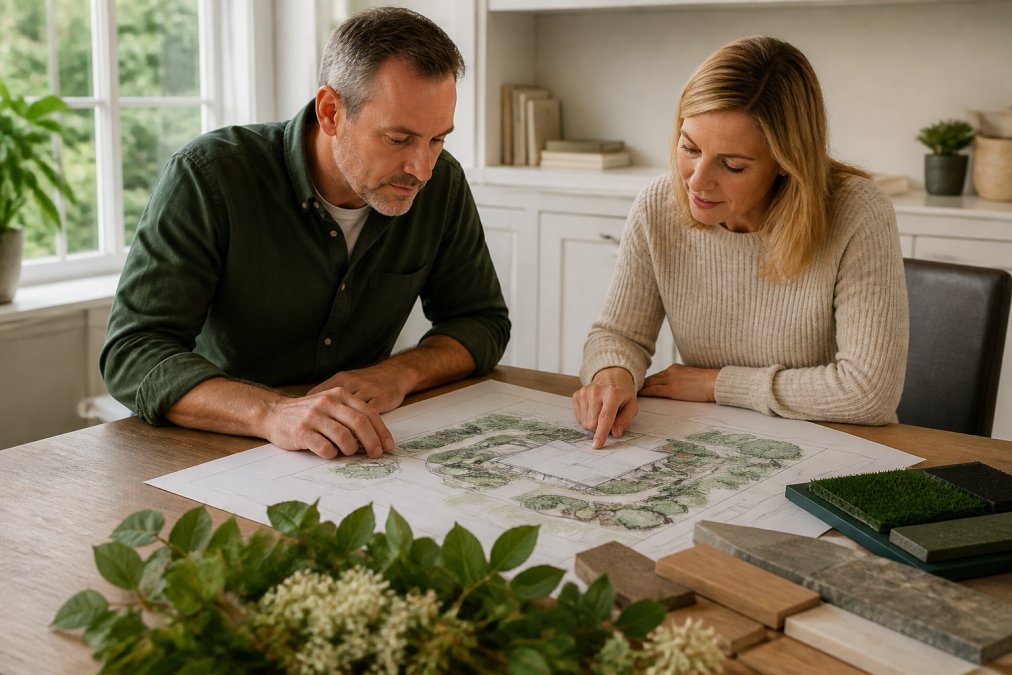
The first meeting is a walk of the property, not a sales pitch. A designer measures the lot, checks sun exposure, notes drainage patterns, and identifies what has to stay. This site assessment is where most surprises get caught early: a buried utility line, a slope that needs regrading, or soil that will not support the plants on your wish list.
Expect this visit to take one to two hours. Bring photos of what you like, but also bring your honest budget ceiling. A design that ignores the budget is just a drawing.
Creating the Master Plan and Selecting Materials
A master plan is the scaled drawing that shows every element of the project: patios, walkways, plant beds, irrigation, lighting, and lawn areas. It becomes the shared reference for you and the crew, which is exactly why projects that skip it tend to drift.
Material selection happens alongside the plan. This is where supply chain reality enters the picture. Certain natural stone, specialty pavers, and mature specimen trees can carry lead times of several weeks or longer depending on the season.
Factors Affecting Landscape Installation Duration
No two properties move at the same speed. The honest answer to "how long will this take" is that duration depends on scope, site conditions, and how fast permits clear. A simple planting refresh and a full outdoor living space build are different animals entirely.
Project Scope, Site Conditions, and Permitting
Project scope is the primary driver. A landscape renovation focused on beds and lawn can wrap in days. A design-build project with hardscaping, grading and drainage work, and an irrigation system can run for weeks.
| Factor | Typical Impact on Timeline | What You Can Control |
|---|---|---|
| Project scope | Days to several weeks | Phasing the work |
| Site conditions | Adds days for rock, slope, drainage | Early site assessment |
| Permitting and approvals | Adds weeks if required | Applying early |
| Material lead times | Adds weeks for specialty items | Ordering before groundbreaking |
| Weather and season | Adds days of delay | Scheduling in a workable window |
How to Prepare for Landscape Construction
Preparation is where homeowners save the most time and money. Clearing the site, protecting what stays, and settling decisions before work begins prevents the mid-project changes that wreck schedules.
Here is a practical pre-construction checklist:
- Confirm the final master plan and sign off on all materials
- Clear vehicles, furniture, and personal items from the work zone
- Mark irrigation heads, utility lines, and anything buried
- Protect plants and hardscape you are keeping
- Confirm permit approvals are in hand
- Verify material delivery dates with your contractor
- Agree on a communication schedule for progress updates
Breaking Down the Landscape Installation Timeline
Once the plan is set, installation follows a predictable sequence. Timelines vary by project, but the order rarely does. Knowing the sequence, and roughly how long each phase runs on a typical residential project, helps you judge whether a schedule is realistic before you sign anything.
| Phase | Typical Duration | What Happens | Common Hold Point |
|---|---|---|---|
| Site protection and layout | 1 day | Mark utilities, fence off keep-zones, stake out the plan | Homeowner confirms stake-out matches the master plan |
| Demolition and excavation | 1-3 days | Remove old hardscape, strip sod, dig for base and footings | Utility locate confirmed before digging |
| Grading and drainage | 1-2 days | Establish slopes, set drainage, prep subgrade | Inspection if required by jurisdiction |
| Hardscape base and installation | 5-15 days | Compact base, lay pavers or stone, build walls and steps | Base compaction verified before surface goes down |
| Irrigation and lighting rough-in | 2-4 days | Trench lines, set valves, run low-voltage conduit | Pressure test before backfill |
| Softscape installation | 2-5 days | Plant trees, shrubs, perennials, lay sod, spread mulch | Plant placement approved before backfill |
| Cleanup and walkthrough | 1 day | Final grade, wash-down, system calibration, punch list | Signed punch list closes the project |
Site Preparation, Excavation, and Hardscape Installation
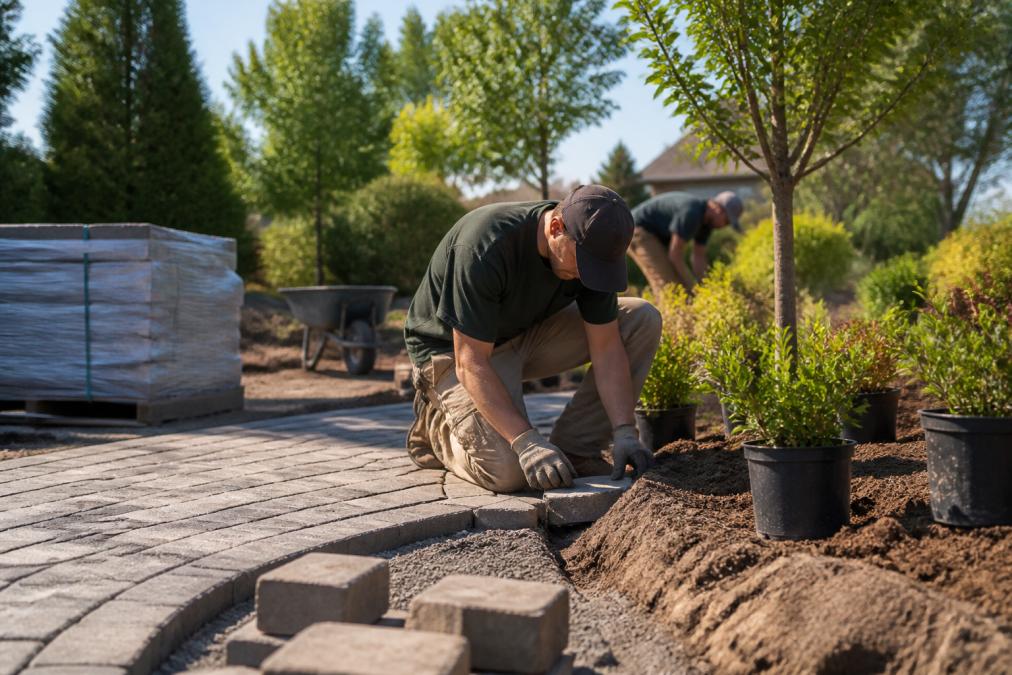
Site preparation comes first. Crews clear the area, protect existing features, and begin excavation for patios, walkways, and retaining walls. Grading and drainage work happens here too, because water that pools against a foundation will undo everything built on top of it. If your jurisdiction requires a drainage or grading inspection, this is the phase where the schedule can pause for a day or more waiting on a reviewer.
Softscape Installation and Final Project Delivery
Softscaping is the living layer: trees, shrubs, perennials, sod, and mulch. Softscape installation is usually the fastest phase, often two to five days, but the planting schedule matters more than the duration. Installing in the wrong season stresses new plants and lowers their survival rate, and a specimen tree that goes in during a heat wave may need supplemental watering for months.
Setting Realistic Expectations for Your Landscape Installation
The biggest source of homeowner frustration is not slow work. It is a mismatch between what was promised and what actually happens. Setting clear expectations up front protects both sides, and the three drivers below account for most timeline surprises.
How Change Orders Shift the Delivery Date
A change order is any modification to the signed scope after construction begins. The reason a change order is so disruptive is not the change itself, it is the sequence. Once a crew has excavated, graded, and begun setting base, adding a feature means backing up: re-excavating, re-grading, re-inspecting, and re-ordering material. A change that would have cost one day during design can cost a week mid-build.
Budget-to-Timeline Correlation
Budget and duration move together, but not linearly. A larger budget buys more scope, and more scope means more phases, more trades, and more coordination. The matrix below shows the general pattern most residential projects follow.
| Budget Tier | Typical Scope | Realistic Duration |
|---|---|---|
| Refresh | Bed re-mulch, plant swaps, minor edging | 1-3 days |
| Single-phase | One patio or walkway, or a planting-only install | 1-2 weeks |
| Multi-phase | Patio plus planting plus irrigation, phased over a season | 3-6 weeks |
| Full design-build | Hardscape, softscape, irrigation, lighting, drainage | 6-12+ weeks |
Post-Installation Care: When the Project Is Actually Finished
A dependable contractor will give you a realistic range, not a single optimistic number, and will put the change-order process, the budget-to-timeline logic, and the post-install care plan in writing before work starts.
Conclusion
Landscape installation timelines come down to planning, not luck. Homeowners who lock their design, order materials early, and settle decisions before groundbreaking consistently finish closer to schedule than those who improvise along the way.
Frequently Asked Questions
How long does the average residential landscape project take from start to finish?
A typical residential landscape installation takes 2 to 6 weeks of on-site work, though the full process from design to completion often spans 2 to 4 months. The landscape design process steps, including consultation, site assessment, and master plan creation, usually take 2 to 4 weeks. Permitting can add another 2 to 6 weeks. Material lead times and weather delays can extend the schedule further.
What factors can cause delays in a landscape installation timeline?
Common delays include material lead times for hardscape products like pavers or natural stone, weather conditions such as heavy rain that halts excavation, and permitting backlogs. Changes to the project scope after construction begins also push the timeline. Site conditions, like hidden rock or poor drainage, can add days or weeks. Planning for these factors helps set realistic expectations.
How should I prepare my property for a landscape installation crew?
Clear the work area of vehicles, patio furniture, and fragile items. Mark irrigation heads or invisible fences. Ensure the crew has access to water and power if needed. Remove pets and children from the construction zone for safety. Confirm the project scope and schedule with your contractor in advance. This preparation helps the crew start on time and reduces the risk of accidental damage.
What is the difference between the design phase and the installation phase?
The design phase focuses on planning: site assessment, design consultation, and creating a master plan. It ends with a signed contract and material selections. The installation phase is construction: site preparation, excavation, hardscaping, softscaping, and final walkthrough. Design typically takes 2 to 4 weeks, while installation takes 2 to 6 weeks on site. Both phases require clear communication to stay on schedule.