 how-to
Landscape Construction Project Management Tips for 2026
Table of Contents
- Define the Scope Before You Break Ground
- Create a Realistic Landscape Construction Schedule
- Managing Landscape Project Budgets Without Surprises
- Use Landscape Construction Scheduling Software
- Write a Landscape Project Communication Plan
- Coordinate Subcontractors and Material Deliveries
- Common Mistakes to Avoid in Landscape Management
- Conclusion: Hand Off With a Punch List
- Frequently Asked Questions
Last Updated: September 4, 2026
Most landscape construction delays come from poor planning, vague scopes, and communication gaps, not bad workmanship. Tips that work on paper often fail on site because they ignore weather, material lead times, and subcontractor availability. This guide from Ward's Lawn Care & Landscape Co., serving Greater Cleveland since 1986, covers the systems that keep installations on track, on budget, and free of surprise charges.
The difference between a smooth project and a nightmare comes down to preparation. Below, we show how to structure each phase, from initial scope through final punch list. Most guides get this wrong: they treat landscape construction like generic project management, when the real challenges are material procurement and weather contingency.
Define the Scope Before You Break Ground
A detailed scope of work is the single most important document in landscape construction. It transforms a vague conversation about "a nicer backyard" into a measurable plan that prevents scope creep and cost overruns.
Document the full project lifecycle in writing. Break the work into a structure separating hardscape elements like patios and retaining walls from softscape work such as planting and sod. For each element, specify materials, dimensions, and installation method. When the scope is precise, the estimate is precise.
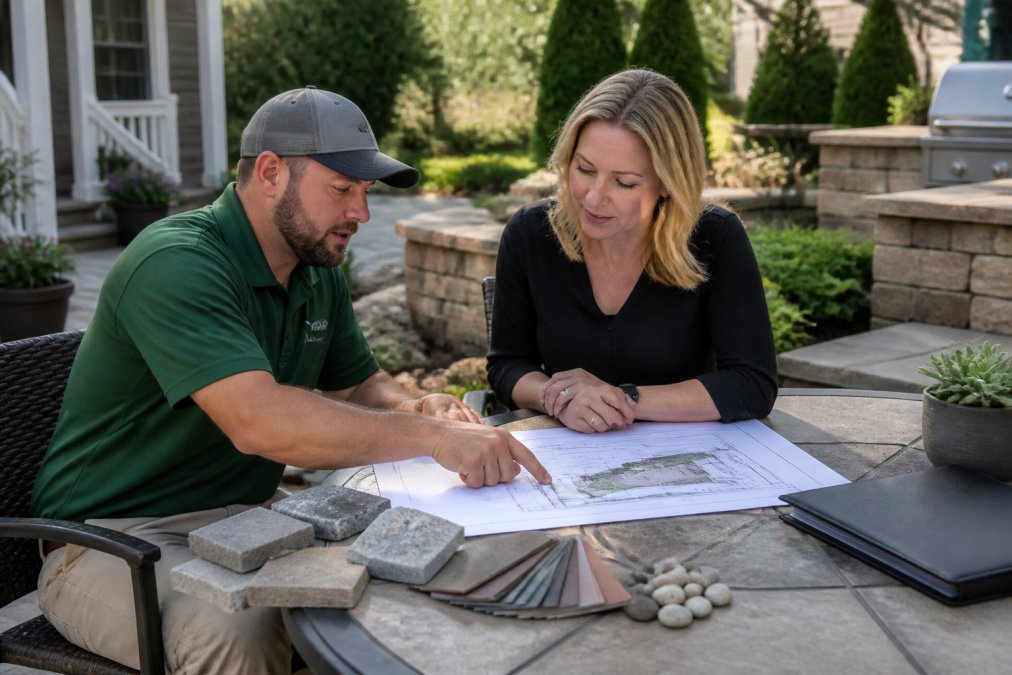
Include a site assessment in this phase. Walk the property, noting drainage patterns, utilities, and equipment access. A scope written without visiting the site will miss conditions that become change orders. Confirm landscape design integration here so installation matches the plan.
Create a Realistic Landscape Construction Schedule
A master schedule sequences every task from demolition to final planting, accounting for site realities. The critical path usually runs through hardscape work, since concrete and masonry need cure time. Map the sequence so each crew arrives when the site is ready, not when the calendar says so.
Build the schedule around milestones for grading, hardscape, irrigation, and planting, giving checkpoints to measure progress and catch delays early. Each milestone should name the responsible party and acceptance criteria.
Build in Weather Contingency Days
Weather wrecks most landscape schedules. Rain stops excavation, freezing stops concrete pours, and high winds stop planting. Build contingency days into weather-sensitive tasks and track the forecast weekly, adjusting crew schedules as conditions shift.
Managing Landscape Project Budgets Without Surprises
Budget overruns accumulate through small mistakes: an unapproved material upgrade, extra rental equipment, a subcontractor billing for idle time. Track budget variance from week one, not just at the end.
Establish a budget line item for every scope element and track actual costs weekly. When a line item runs over, decide immediately whether to offset it or issue a change order, so the client approves costs before work happens.
Material lead times for hardscape products can stretch for weeks, and rush shipping destroys budgets. Order materials when the scope is approved, not when the crew is ready, to lock in prices and prevent schedule stalls.
Use Landscape Construction Scheduling Software
Landscape construction scheduling software replaces spreadsheet-and-phone-call chaos with a single source of truth, combining master schedule, budget tracking, and daily crew assignments where the office, field manager, and client can all see them.
The best tools let you assign tasks to crews, attach photos and notes, and update progress in real time from a mobile app. This feeds the budget, so the office knows what was installed today and what materials remain.
| Project Phase | Key Software Feature | How It Prevents Problems |
|---|---|---|
| Scheduling | Drag-and-drop Gantt charts | Visualizes task dependencies and delays |
| Budget tracking | Live cost-to-complete reports | Flags budget variance before it grows |
| Field updates | Mobile app with photo uploads | Documents completed work for the punch list |
| Client communication | Shared project portal | Reduces "what's the status?" calls |
Choose software matching your crew's technical comfort level. A powerful platform your foreman refuses to use is worse than a simple one updated daily.
Write a Landscape Project Communication Plan
A communication plan defines who hears what, and when, before the project starts. Most client frustration comes from silence, not bad work. Regular communication prevents homeowners from assuming the worst and helps property managers plan.
Decide on cadence upfront. A weekly written update works for most projects, with immediate calls for anything affecting schedule or budget. Cover what was completed, what is next, and any issues needing a decision.
Name a single point of contact for the project and ensure the design team, subcontractors, and property managers all have that person's number. The communication chain should be obvious, not improvised.
Coordinate Subcontractors and Material Deliveries
Subcontractor coordination is where projects either hum or stumble. Sequence trades correctly: excavation before hardscape, hardscape before planting, planting before cleanup. A sub who arrives to find the previous trade unfinished will bill for the wasted trip.
The real bottleneck is rarely the on-site sequence. It's the procurement lag weeks before a crew shows up. Most delays trace back to a material order placed too late, not a trade that worked too slow.
Vet Subcontractors Before You Need Them
Find an irrigation specialist or masonry crew during estimating, not the week before excavation. Keep a pre-qualified list of subs for each trade with current availability and lead time noted, so you know who to call when scope is approved.
Ask every sub for proof of workers' compensation and general liability insurance before they step on site (osha.gov). Verify their license and call two references from the last year, asking about schedule adherence and cleanup habits.
Lock in Material Lead Times at Scope Approval
The biggest scheduling mistake is ordering materials after work begins. Hardscape materials often have lead times of two to six weeks, and many premium paver lines are made to order (nbm.org). Ordering after excavation starts adds a month to your schedule.
Place material orders the day scope is approved and deposit collected, locking in pricing and reserving product. For long-lead items, confirm delivery two weeks out, then again three days before arrival, in writing or through the supplier's portal.
Schedule Deliveries to Match Crew Availability
Schedule deliveries to arrive just before the crew needs them, not weeks early where they clutter the site or a day late where they stop production. For a typical paver patio:
- Week 1: Excavation and base preparation. Order delivered: geotextile fabric, gravel base, edge restraints.
- Week 2: Base compaction and grading. Order delivered: pavers, polymeric sand, plate compactor rental.
- Week 3: Paver installation. Order delivered: any special cuts or accent pieces, joint sand.
Staging deliveries this way keeps the site clean and ensures the crew has what they need. Verify quantities against the purchase order on delivery; a short load discovered mid-install stops the job for days. Count pallets, check for damage, and sign only after confirming the count.
Build a Subcontractor Schedule With Buffer Windows
Schedule subcontractors for a window, not a single day, such as a three-day window with a call the day before to confirm the exact start. This absorbs minor delays from the previous trade. If the site is not ready, shift the sub to another project or have your own crew handle prep.
Give each trade their full scope in writing, confirm start dates a week ahead, and verify the day before. Pay on time, and they will prioritize your jobs. Reliable trade relationships become a competitive advantage no software can replace.
Common Mistakes to Avoid in Landscape Management
The most common mistakes share a root cause: optimism about things that should be treated with skepticism.
- Skipping the site assessment. Guessing at drainage or soil conditions leads to change orders. Walk the site and document everything first.
- Ignoring material lead times. Ordering pavers after the excavation starts adds weeks to the schedule. Order at scope approval.
- Approving changes verbally. Verbal approvals create disputes. Use written change orders for every adjustment.
- Failing to document progress. Photos and notes from each day protect you in disputes and guide the punch list. Documentation is your evidence.
- Letting the schedule slip quietly. When a milestone slips, tell the client immediately with a revised plan. Bad news delivered late destroys trust.
- Neglecting the punch list. The punch list is the final quality assurance step. Walk the site with the client, note every incomplete item, and set a date to finish them.
Quality assurance is a daily habit. The field manager should walk the site each morning, checking that yesterday's work matches the plan before the next crew starts. Catching a misaligned paver on day one costs an hour; catching it at final walkthrough costs a full reinstall.
Conclusion: Hand Off With a Punch List
Schedule a punch list walk with the client, going through the scope item by item. Note every incomplete element, agree on a completion date, and follow through. This closeout is also the moment for a maintenance handoff explaining how to care for new plantings, irrigation, and hardscape.
The handoff is a structured transfer of knowledge most contractors skip, and that gap erodes client satisfaction in the months after the crew leaves.
The Maintenance Walkthrough: What to Cover
Schedule the walkthrough for two to three weeks after substantial completion, giving plantings time to settle and irrigation time to run. Walk the site and cover four areas:
- Planting care: Which plants need supplemental water for the first season, which are drought-tolerant once established, and how to identify common pest or disease issues before they spread. Show them how to check soil moisture rather than guessing.
- Irrigation system: How the controller works, how to adjust watering frequency seasonally, and where the shutoff valve is located. Walk them through the zones so they know what each one covers.
- Hardscape maintenance: How to clean pavers, when to reapply polymeric sand (typically every two to three years), and how to seal natural stone if it was specified (icpi.org). Explain what not to do, like using a pressure washer on polymeric sand joints.
- Drainage features: Where the drainage outlets are, how to keep them clear of debris, and what to do if water ponds in a low spot after a heavy rain.
Provide a Written Maintenance Schedule
A verbal explanation is forgotten within a week. Provide a one-page written schedule listing monthly tasks (checking irrigation heads, clearing drainage inlets), quarterly tasks (pruning, fertilizing), and annual tasks (paver cleaning, sand replenishment, irrigation system check).
This document sets realistic expectations and reduces warranty callbacks by showing the client was informed of their responsibilities. Most first-year plant failures trace back to overwatering or underwatering, not the original installation.
Schedule the Follow-Up Inspection
Book a follow-up inspection for 90 days after completion before the crew leaves. This proactive check catches settling around hardscape edges, shifted irrigation heads, and plants that did not establish, fixing them cheaper during the warranty period than a service call a year later.
Landscape construction demands the same delivery discipline as any construction trade, plus tolerance for weather and growing things you cannot fully control. Clear scopes, realistic schedules, tracked budgets, and honest communication turn that uncertainty into a manageable process. At Ward's Lawn Care & Landscape Co., our highly trained technicians have applied these principles across Greater Cleveland since 1986, backing every installation with free estimates and a commitment to your complete satisfaction.
Frequently Asked Questions
What is the 80/20 rule for project managers?
The 80/20 rule, also called the Pareto Principle, suggests that roughly 80% of project issues stem from 20% of the causes. In landscape construction, this often means a few critical tasks, like site grading or material procurement, drive most of your schedule risk. Focus your daily management energy on identifying and solving those few high-impact bottlenecks first, rather than spreading attention evenly across every minor task.
How do you manage a landscape construction timeline effectively?
Effective timeline management starts with a detailed schedule that sequences tasks logically, from site assessment through final walkthrough. Build in buffer days for weather and material lead times, which often run longer than expected. Use landscape construction scheduling software to track progress daily and identify delays early. Review the critical path each morning and reallocate crews or resources to keep the project moving.
How do you handle scope creep in residential landscape projects?
Scope creep happens when a client requests extra work that wasn't in the original contract. Handle it by documenting the approved scope clearly before work starts. When a client asks for an addition, such as a new planting bed or a different paver pattern, pause and explain the impact on the budget and schedule. Provide a written change order for the extra work before proceeding to avoid disputes.
What software tools are best for landscape construction project management?
The best software for managing landscape construction projects provides scheduling, budget tracking, and client communication in one place. Look for a tool that offers a visual timeline, like a Gantt chart, and the ability to track change orders and budget variance in real time. Mobile access is essential so your crew can update progress from the field, which keeps the office and clients informed without constant phone calls.
Running a landscape project without these systems is how delays and surprise charges happen. Ward's Lawn Care & Landscape Co. handles the full scope of landscape construction, from the first site assessment to the final punch list, so you never have to coordinate subcontractors or chase material deliveries yourself. Contact us for a free estimate and see how professional project management changes the outcome.