 listicle
Commercial Groundskeeping Services: A 2026 Guide
Table of Contents
- What Commercial Groundskeeping Services Include
- Core Maintenance: Turf Management and Lawn Care
- Seasonal Services: Snow Removal and Cleanup Programs
- Understanding Commercial Landscaping Maintenance Contracts
- Seasonal Groundskeeping Checklist for Property Managers
- Commercial Lawn Care Pricing Factors and Budget Planning
- Choosing the Right Commercial Groundskeeping Contractor
- Frequently Asked Questions
Last Updated: September 26, 2026
What Commercial Groundskeeping Services Include
Commercial groundskeeping services encompass the full spectrum of outdoor property maintenance designed to keep commercial landscapes looking professional year-round. These services go far beyond basic mowing, they're comprehensive programs that protect your property's curb appeal, safety, and long-term value.
Commercial properties need consistent, reliable groundskeeping that reflects business standards, which is why commercial groundskeeping services typically bundle multiple service lines into coordinated maintenance plans.
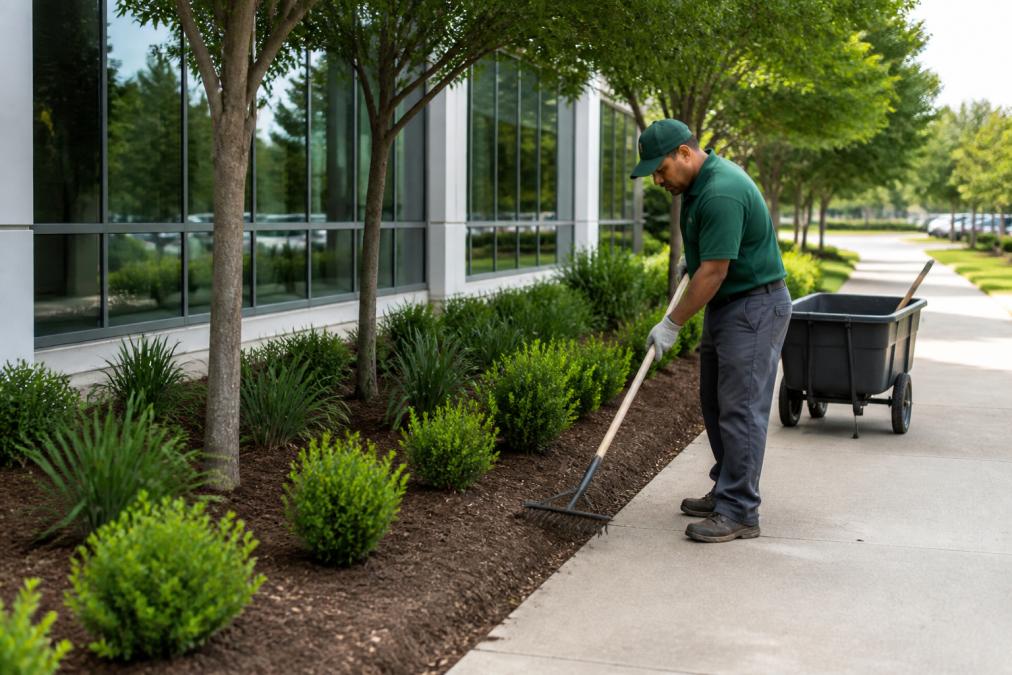
Core components include turf management, seasonal cleanups, bed maintenance, tree care, and snow removal. The key difference from residential lawn care is scale, frequency, and predictable scheduling that doesn't disrupt business operations.
Most property managers choose bundled service agreements because they simplify vendor management and often reduce per-service costs. You get one point of contact, consistent crews, and integrated planning across all your landscape needs.
Core Maintenance: Turf Management and Lawn Care
Turf management forms the backbone of commercial groundskeeping services. This isn't just weekly mowing, it's a strategic approach to keeping grass healthy, dense, and attractive while managing the wear and tear that commercial foot traffic creates.
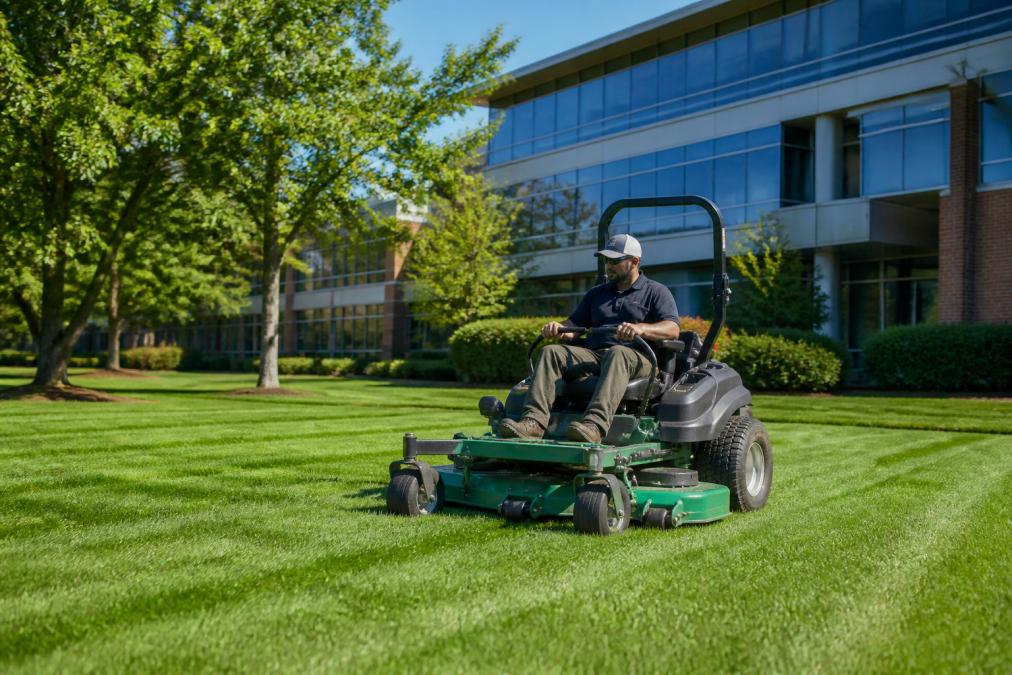
Professional turf management includes weekly mowing during growing season, edging, fertilization, and spring/fall aeration and overseeding to maintain density and prevent bare patches.
Professional turf management prioritizes plant health through tailored fertilization and aeration, which improves drainage, strengthens roots, and reduces the need for emergency treatments.
Pre-emergent weed control is another critical component. Applied in early spring and fall, pre-emergents prevent weed seeds from germinating rather than killing existing weeds. This approach reduces the need for chemical treatments throughout the season and keeps your landscape looking cleaner with less intervention.
A well-maintained lawn signals competence and reliability to clients, customers, and employees, it's often the first impression visitors receive.
Seasonal Services: Snow Removal and Cleanup Programs
Commercial snow management requires rapid response times, around-the-clock availability, and liability management, while also addressing environmental responsibility.
Professional Snow Removal Programs
Professional snow removal programs guarantee clearing within 2-4 hours of snow cessation, maintaining accessibility and reducing slip-and-fall liability. Most contractors maintain 24/7 response teams and pre-position equipment during winter months.
Beyond snow pushing, winter services usually include:
- Ice management and de-icing applications
- Walkway and entrance clearing
- Parking lot line marking (often obscured by snow)
- Salt or ice melt application
- Equipment maintenance and staging
Contractors typically offer tiered service levels: standard (4-hour response), premium (2-hour response with dedicated equipment), and economy (next-day clearing). Matching service level to actual property needs reduces costs.
Eco-Friendly De-icing and Sustainability Considerations
Rock salt damages concrete, asphalt, vehicles, and vegetation while contaminating groundwater. Many municipalities restrict salt use or impose fees. Forward-thinking property managers are shifting to sustainable alternatives that meet safety requirements while aligning with ESG goals.
Alternative De-icing Products:
- Calcium chloride: More expensive than rock salt but works at lower temperatures (down to -25°F vs. rock salt's -6°F), requires less frequent application, and causes less environmental damage. It's gentler on concrete and vegetation.
- Magnesium chloride: Similar performance to calcium chloride with slightly lower environmental impact. Commonly used in environmentally sensitive areas.
- Liquid de-icers: Pre-treatment with liquid products (often brine-based) prevents ice from bonding to pavement, reducing the amount of solid de-icer needed. This cuts material costs and environmental impact by 30-50%.
- Organic alternatives: Products made from beet juice, pickle brine, or other agricultural byproducts provide traction and de-icing properties with minimal environmental harm. Cost is higher, but they appeal to properties pursuing sustainability certifications.
Ask contractors about their de-icing strategy and willingness to blend alternatives. Premium eco-friendly products often offset costs through reduced environmental liability and improved sustainability alignment.
Spring and Fall Seasonal Cleanup Programs
Spring cleanups remove winter debris and prepare gardens for growing season; fall cleanups handle leaf removal, plant cutback, and irrigation winterization. These services maintain property appearance during transitions.
Spring cleanup typically includes:
- Removal of winter-damaged branches and debris
- Bed cleanup and removal of dead perennials
- Mulch refresh in planting beds
- Irrigation system startup and inspection
- Aeration and overseeding of turf
Fall cleanup typically includes:
- Leaf removal and composting (or disposal)
- Plant cutback and perennial preparation for dormancy
- Irrigation system winterization and drain-down
- Pre-emergent weed control application
- Final fertilization for winter hardiness
Water Conservation in Seasonal Maintenance
Spring cleanup should include irrigation system audits to check for leaks and inefficient zones. Poorly maintained systems waste 20-50% of water; professional contractors can reprogram controllers to reduce waste.
Fall winterization includes system drain-down and planning for efficiency improvements. Smart controllers reduce water consumption by 15-30% while maintaining plant health.
Scheduling and Budget Considerations
Pairing seasonal services with maintenance contracts ensures consistent quality and priority scheduling, while allowing contractors to plan labor and equipment efficiently, often passing savings to you.
Budget a 10-15% reserve for seasonal overages to prevent mid-year surprises. Discuss historical patterns with contractors to establish realistic budgets accounting for weather variability.
Understanding Commercial Landscaping Maintenance Contracts
A commercial landscaping maintenance contract commits both parties to deliver specific services on a defined schedule for a set period, typically one or two years.
These contracts should clearly specify:
- Which services are included (mowing frequency, fertilization schedule, snow removal response times)
- What's excluded or available as add-ons
- How pricing adjusts for seasonal variations
- Communication protocols and who to contact for issues
- Guarantee or warranty terms if work doesn't meet standards
Strong contracts include detailed scope documents referencing site plans, specifying turf types, and outlining seasonal variations, not generic promises without clear definitions.
Contracts should specify liability coverage and clarify who's responsible if damage occurs during service delivery, protecting both parties.
Ward's Lawn Care & Landscape Co. offers free estimates and can walk through your property to develop a customized contract that fits your actual needs rather than a one-size-fits-all template.
Seasonal Groundskeeping Checklist for Property Managers
Staying on top of commercial groundskeeping requires planning ahead. Use this checklist to ensure your property receives appropriate care throughout the year:
| Season | Priority Tasks | Typical Timing |
|---|---|---|
| Spring | Aeration, overseeding, bed cleanup, mulch refresh | March-May |
| Summer | Weekly mowing, fertilization, irrigation checks, weed control | June-August |
| Fall | Leaf removal, plant cutback, winterization, pre-emergent application | September-November |
| Winter | Snow/ice removal, salt management, equipment maintenance | December-February |
Beyond this basic framework, your specific checklist depends on your property type and regional climate. A retail center might prioritize entrance appearance and parking lot safety. An office park might focus on landscape aesthetics and environmental sustainability. An industrial facility might emphasize durability and low-maintenance design.
Most property managers benefit from scheduling a mid-year review with their groundskeeping contractor. This gives you a chance to discuss what's working, what needs adjustment, and whether seasonal services are aligning with your property's actual needs. It's also an opportunity to plan for the next year and lock in pricing before peak season demand drives costs up.
Commercial Lawn Care Pricing Factors and Budget Planning
Understanding pricing variables helps you budget accurately and compare quotes fairly while calculating ROI and structuring defensible budgets.
Understanding Cost Drivers
Cost drivers include property size, service frequency, local labor rates, and complexity.
Calculating Landscaping ROI for Property Managers
Commercial groundskeeping delivers measurable ROI across multiple dimensions:
Tenant Retention and Lease Rates: Well-maintained landscapes command premium lease rates, often 5-10% higher than comparable properties. A 50,000-square-foot office building at $20/sq ft with a 7% premium generates an additional $70,000 annually.
Creating a Multi-Year Budget Model
- Year 1 baseline: Establish your current annual spend across all groundskeeping services (mowing, snow removal, bed maintenance, tree care, etc.). This becomes your baseline.
- Annual escalation: Most contractors increase rates 3-5% annually to account for labor and fuel cost inflation. Budget this predictably rather than treating it as a surprise.
- Seasonal reserve: Set aside 10-15% of your annual budget as a reserve for emergency services, storm cleanup, unexpected tree removal, or extended snow seasons. This prevents budget overruns when weather or emergencies strike.
- Capital improvements: Separate routine maintenance from landscape enhancements (new plantings, irrigation upgrades, hardscape repairs). Budget these separately on a multi-year cycle so you're not competing for funds with operational expenses.
Comparing Contractor Quotes on True Cost Basis
- Mowing frequency and equipment type (standard mower vs. zero-turn for faster coverage)
- Fertilization schedule and product type
- Snow removal response time guarantee and pricing per inch
- Seasonal cleanup labor hours
- Add-on costs for services beyond the contract scope (emergency storm cleanup, special projects, landscape enhancements)
Locking in Multi-Year Pricing
Choosing the Right Commercial Groundskeeping Contractor
Selecting a contractor for commercial groundskeeping services is one of the most important decisions a property manager makes. The wrong choice leads to inconsistent quality, communication breakdowns, and unexpected costs. The right choice means your property stays attractive, safe, and well-maintained with minimal management overhead.
Frequently Asked Questions
What services are included in commercial groundskeeping services?
Commercial groundskeeping services typically include routine lawn mowing, edging, mulching, bed detailing, weed control, fertilization, tree pruning, seasonal cleanups, and snow removal. Many contractors also offer irrigation system maintenance, landscape enhancements, and specialized treatments for turf health. The exact scope depends on your service agreement and property needs. Contact a local provider for a detailed breakdown of what's available for your specific property.
How often should commercial properties be serviced for lawn care?
Most commercial properties require weekly or bi-weekly lawn maintenance during the growing season, typically spring through fall. Winter services shift to snow and ice removal as needed. The frequency depends on your property size, local climate, turf type, and aesthetic standards. Property managers often establish a fixed maintenance schedule within a commercial landscaping maintenance contract to ensure consistent appearance and reduce emergency calls.
What factors affect commercial lawn care pricing?
Commercial lawn care pricing depends on property size, service frequency, scope of work (mowing only versus full maintenance), seasonal add-ons like snow removal, equipment and labor availability, and local market rates. Contracts may also factor in landscape enhancements, irrigation maintenance, and emergency response capabilities. Most contractors provide custom quotes after assessing your property. Ask about bundled service discounts when combining multiple services.
Why is professional groundskeeping important for commercial properties?
Professional groundskeeping maintains curb appeal, protects your investment in landscaping, supports site safety by removing hazards, and creates a positive first impression for clients and visitors. Well-maintained grounds signal professionalism and reliability. For HOA and association properties, consistent groundskeeping keeps residents satisfied and property values stable. Professional contractors also ensure seasonal tasks are completed on schedule, reducing liability and extending the life of your landscape.