 listicle
Best Lawn Care for Small Yards: 2026 Guide
Table of Contents
- Why Small Yards Need a Different Lawn Care Approach
- Best Tools for Small Lawn Mowing and Maintenance
- A Simple Lawn Maintenance Schedule for Beginners
- DIY vs. Professional Care: What Makes Sense for a Small Lawn?
- The Real Cost of Professional Lawn Care Services
- How We Evaluated the Best Options for Your Yard
- Which Lawn Care Route Should You Pick?
- Final Thoughts on Lawn Care for Small Yards
- Frequently Asked Questions
Last Updated: September 8, 2026
When your entire outdoor space fits on a single lot, the standard advice about acreage, ride-on mowers, and sprawling irrigation zones simply doesn't apply. Lawn care for small yards is a different discipline, one where precision beats power and a weekend of focused effort often replaces a recurring service contract. At Ward's Lawn Care & Landscape Co., we've spent decades working on properties across Greater Cleveland, and the biggest mistake we see is homeowners treating a small lawn like a scaled-down version of a large one. Below, we'll show you exactly how to tailor your approach, covering the best lawn care for small yards in 2026, from tool selection to scheduling.
Why Small Yards Need a Different Lawn Care Approach
Small lawns fail for the opposite reason large ones do. Where big properties suffer from neglect and scale, compact yards get over-managed: mowed too short, watered too often, and crowded with equipment that damages more than it helps. A small lawn is a high-visibility space, often the centerpiece of your curb appeal, so every mistake shows.
The core difference comes down to economics and effort. A professional crew can mow a quarter-acre in minutes, but on a tiny plot, the setup time often outweighs the actual work. That means the DIY route is frequently more practical for small yards, provided you have the right tools and a realistic schedule. Many homeowners also find that a small space is the perfect testing ground for learning soil health and grass type basics before committing to larger projects.
Best Tools for Small Lawn Mowing and Maintenance
For a small yard, the right tool kit is compact, quiet, and easy to store. The goal is to minimize your equipment footprint while maximizing efficiency. Here’s a closer look at the best categories, with specific considerations for tight spaces.
Mowers: The Case for Battery and Reel
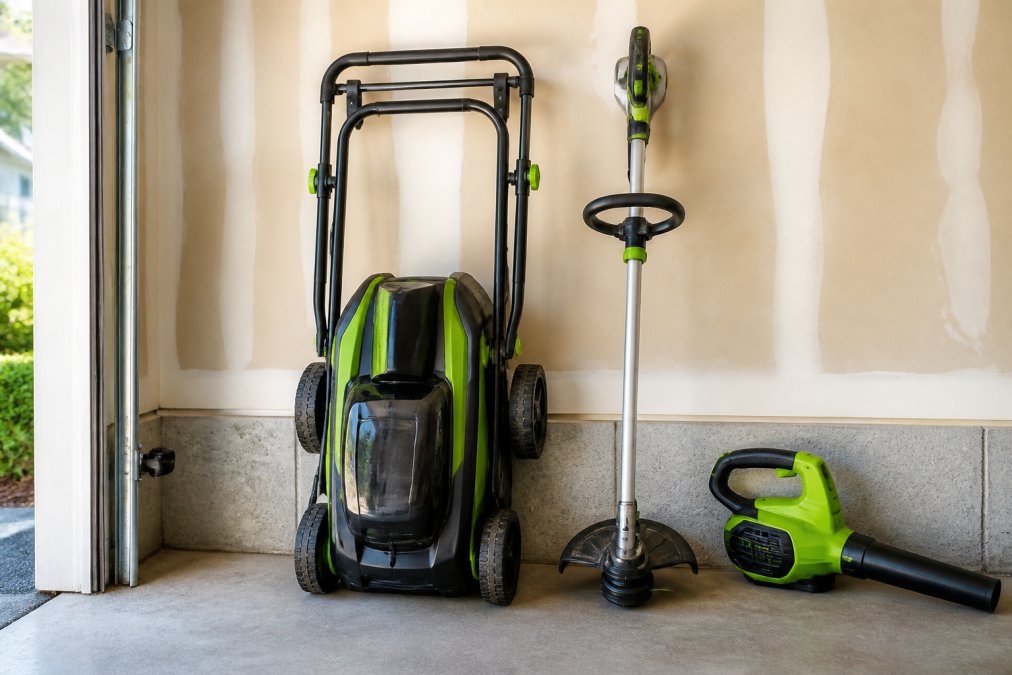
A battery-powered walk-behind mower is the clear winner over a gas model for suburban plots (the EPA). Look for models with a 16- to 20-inch cutting deck, which is ideal for maneuvering around flower beds and gates. Key features to prioritize are a mulching mode (to return nutrients to the soil), a foldable handle for vertical storage, and a battery runtime of at least 30 minutes, which is typically more than enough for a quarter-acre or less. Brands like EGO, Ryobi, and Greenworks all offer compact models in this class.
For very small, flat lawns, under 1,500 square feet, a manual reel mower is a surprisingly effective and eco-friendly option. Modern reel mowers, such as those from Fiskars or Scotts, feature a single-lever height adjustment and a cutting action that slices grass cleanly, promoting healthier turf than a rotary blade that tears (extension.psu.edu). They are silent, require no fuel or charging, and offer a light workout. The trade-off is that they struggle with tall, thick, or wet grass, so you must mow more frequently during peak growth.
Trimming and Edging: Precision Over Power
Skip the heavy, gas-powered string trimmers. A lightweight, cordless trimmer with an adjustable head and a bump-feed line is all you need. Look for a model with a rotating head that allows you to edge vertically along walkways and driveways without a separate edger. For the tightest spots, around tree trunks and fence posts, a manual edging tool or a pair of grass shears offers more control and avoids the risk of nicking bark or plastic edging.
Leaf and Debris Management
A leaf blower is a timesaver on a small lot, but a full-size backpack model is overkill. A compact, handheld battery blower is sufficient for clearing grass clippings from patios and driveways. For those with a lot of beds, consider a blower with a vacuum and mulching function to collect leaves directly into a bag, which simplifies compost management.
The Storage Factor
A significant advantage of small yards is that you don't need a large shed. Prioritize tools that hang on a wall or fold flat. Many battery-powered mowers now fold vertically, and trimmers can be disassembled for compact storage. This approach keeps your garage or shed organized and makes the weekly maintenance routine quicker to start and finish.
A Simple Lawn Maintenance Schedule for Beginners
A lawn maintenance schedule for beginners does not need to be complicated. The key is to anchor tasks to the growing season and stick to a rhythm. For a small yard, plan on mowing once per week during the active growing season, typically spring through early fall, and adjust based on growth rather than a fixed calendar date.
| Task | Frequency | Best Time | Notes |
|---|---|---|---|
| Mowing | Weekly (growing season) | Mid-morning | Never cut more than one-third of grass blade height |
| Watering | 1-2 times per week | Early morning | Deep, infrequent watering beats daily sprinkling |
| Fertilizing | 3-4 times per season | Spring, summer, fall | Follow product label; small yards need less product |
| Edging & trimming | Weekly | After mowing | Keeps beds and walkways looking sharp |
| Weed control | As needed | Spring and fall | Spot-treat rather than broad applications |
| Aeration | Once per year | Early fall | Improves soil compaction on high-traffic areas |
For beginners, the biggest adjustment is mowing height. Keep grass blades around 3 inches tall during summer; taller grass shades the soil, retains moisture, and naturally suppresses weeds (extension.umn.edu). Water deeply but infrequently, aiming for about one inch per week including rainfall, and always water in the early morning to reduce evaporation and disease risk. Fertilizing should follow a simple schedule tied to the season, using a product suited to your grass type and local climate.
A Sustainable Twist for Small Lawns
Small yards offer a unique opportunity to rethink the traditional lawn. Because the area is manageable, you can experiment with eco-friendly practices that are harder to scale on larger properties. Here are a few ways to make your small lawn more sustainable and lower-maintenance:
- Water-Wise Grass Seed: If you are establishing a new lawn or overseeding, choose a grass variety suited to your region that requires less water. For example, in cooler climates, fine fescues are drought-tolerant and thrive in shade. In warmer zones, consider Bermuda grass or zoysia grass, which are heat and drought resistant. These choices can cut your watering needs significantly.
- Organic Fertilizer Options: Instead of synthetic fertilizers, use compost or a slow-release organic option like milorganite or a seaweed-based product. These feed the soil microbiome, improving long-term soil health and reducing the risk of nutrient runoff.
- Pollinator-Friendly Patches: Dedicate a small corner of your yard to native flowering ground covers like creeping thyme or clover. These require no mowing, attract pollinators, and add visual interest. Clover, in particular, fixes nitrogen in the soil, naturally fertilizing the surrounding grass.
- Integrated Pest Management (IPM): For small yards, you can often manage pests without broad-spectrum chemicals. Hand-picking grubs, encouraging beneficial insects like ladybugs, and using targeted treatments like neem oil for fungal issues are all viable, small-scale strategies.
- Mulching Mower Blades: Always use the mulching setting on your mower. The fine clippings decompose quickly, returning nitrogen and moisture to the soil, reducing the need for additional fertilizer by up to 25%.
DIY vs. Professional Care: What Makes Sense for a Small Lawn?
The decision between DIY and professional care for a small lawn often comes down to time and patience rather than cost. If you enjoy the work and have an hour or two each week, DIY is entirely manageable with the compact tool kit described above. The educational resources from major lawn care brands are extensive, covering everything from mowing heights to seasonal schedules, and the personal satisfaction of a well-kept yard is real.
However, professional care makes sense when your time is limited, when physical limitations make the work difficult, or when you want guaranteed consistency without thinking about it. A full-service provider handles mowing, edging, fertilization, and weed control on a set schedule, so your yard looks maintained even when you are traveling or busy. Many homeowners also turn to professionals for specific services, like aeration or leaf cleanup, while handling weekly mowing themselves.
The Real Cost of Professional Lawn Care Services
Professional lawn care costs vary widely based on your location, lot size, and the specific services you request. For a small yard, expect pricing to be based on a per-service visit or a seasonal package, not the acreage-based quotes common on larger properties. Many providers now offer online booking and transparent quotes through digital platforms, which helps you compare options before committing.
Because every property is different, the most reliable way to understand your costs is to request free estimates from a few local providers. Be clear about exactly what you want: basic mowing only, a fertilization program, or full-service maintenance including edging and cleanup. Getting multiple quotes ensures you are paying a fair rate for the scope of work, and it reveals which providers are transparent about their pricing versus those who add surprise charges later.
How We Evaluated the Best Options for Your Yard
We evaluated lawn care approaches for small yards across four criteria: practicality for compact spaces, cost-effectiveness, consistency of results, and the balance of effort versus reward. Local service providers, including Ward's Lawn Care & Landscape Co., were assessed on reliability, transparency in quoting, and the range of services offered for residential properties.
DIY resources, including product manufacturers and educational guides, were measured on the quality of their advice and the accessibility of their products. Finally, we considered the equipment itself, prioritizing compact, low-maintenance tools suited to suburban lots.
Which Lawn Care Route Should You Pick?
For most homeowners with a small yard, the best route depends on your weekly availability and your comfort with routine maintenance. If you have a regular hour or two and enjoy the work, the DIY path with a battery-powered mower and trimmer is satisfying and cost-effective. Follow a simple schedule, mow high, water deeply, and you will see steady improvement.
If your time is scarce or you value guaranteed consistency, professional care is the stronger choice. A local full-service company removes the mental load of scheduling and the physical effort of the work. When you hire a provider, look for one that offers free estimates, clear scopes of work, and a track record of reliability in your area.
| Route | Best For | Time Commitment | Cost Profile |
|---|---|---|---|
| DIY | Enthusiasts with weekly availability | 1-2 hours per week | Upfront equipment cost, low ongoing |
| Digital platforms | Convenience seekers wanting flexible scheduling | Minimal | Per-service fees, varies by provider |
| Full-service professional | Busy homeowners wanting consistent results | None | Seasonal package or per-visit pricing |
Final Thoughts on Lawn Care for Small Yards
The best lawn care for small yards is the approach you can sustain consistently. Whether you choose to maintain it yourself with the right compact tools or hire a professional to handle the details, the fundamentals remain the same: mow at the proper height, water deeply and infrequently, and feed your lawn according to a seasonal schedule. A small yard rewards attention, and the results show directly in your home's curb appeal.
When professional help is the right call, look for a provider with local experience and a transparent process. Ward's Lawn Care & Landscape Co. has served Greater Cleveland since 1986, offering full-service outdoor maintenance and landscape construction for residential properties. Our highly trained technicians handle everything from routine mowing and fertilization to complete landscape installations, and we provide free estimates so you know your costs upfront. Contact us to regain your free time and see what consistent, professional care can do for your outdoor space.
Frequently Asked Questions
How often should you mow a small residential lawn?
During the active growing season, a small lawn typically needs mowing about once a week. The 1/3 rule is the key guideline: never remove more than one-third of the grass blade height in a single mowing. If your grass grows faster, you may need to mow twice a week. During slower growth periods or drought, you can extend the interval to every 10 to 14 days.
Is it better to hire a professional or DIY for small yard maintenance?
It depends on your time, budget, and goals. DIY with a battery-powered mower gives you control and can be cheaper if you already own equipment. Hiring a professional service saves you time and ensures consistent care, including fertilization and weed control. For small yards, some services offer competitive pricing, but the cost of professional lawn care services is determined by your specific needs. Get a free estimate to compare.
What are the most effective fertilizers for small, high-traffic lawns?
For small lawns that see a lot of foot traffic, choose a fertilizer with a balanced ratio like 10-10-10 or one formulated for high-traffic areas. Look for slow-release nitrogen to feed the lawn steadily and promote recovery. A soil test will tell you exactly what nutrients your lawn is missing. Apply fertilizer according to the label, typically in early spring and fall, and water it in well.
What is the 1/3 rule in lawn care?
The 1/3 rule is a simple guideline to keep your grass healthy: never cut off more than one-third of the grass blade's current height at one time. Cutting more than that stresses the plant, weakens the roots, and makes it more vulnerable to weeds and disease. If your grass has grown too tall, raise the mower deck and cut it down gradually over a few days to avoid shock.