 comparison
Permeable Driveway vs Asphalt Cost: 2026 Comparison
Table of Contents
- Permeable Driveway vs Asphalt Cost: A Side-by-Side Comparison
- Permeable Paver Installation Cost Per Square Foot
- Asphalt Driveway Maintenance Requirements and Long-Term Costs
- Driveway Drainage Solutions: Why Permeable Surfaces Win on Water
- Installation Process and Base Preparation Costs
- Lifespan, Durability, and Repair Costs Compared
- Stormwater Rebates and Zoning Incentives That Lower Your Cost
- Conclusion: Which Driveway Fits Your Budget and Property?
- Frequently Asked Questions
Last Updated: September 10, 2026
Permeable Driveway vs Asphalt Cost: A Side-by-Side Comparison
The permeable driveway vs asphalt cost gap is real, and it runs the opposite direction of what most homeowners expect. Traditional asphalt typically starts around $3 to $9 per square foot, while permeable paver systems run $10 to $40 per square foot, according to industry paving cost data. That upfront difference is only half the story. Ward's Lawn Care & Landscape Co. has served Greater Cleveland since 1986, and we understand that the answer rarely comes down to sticker price alone.
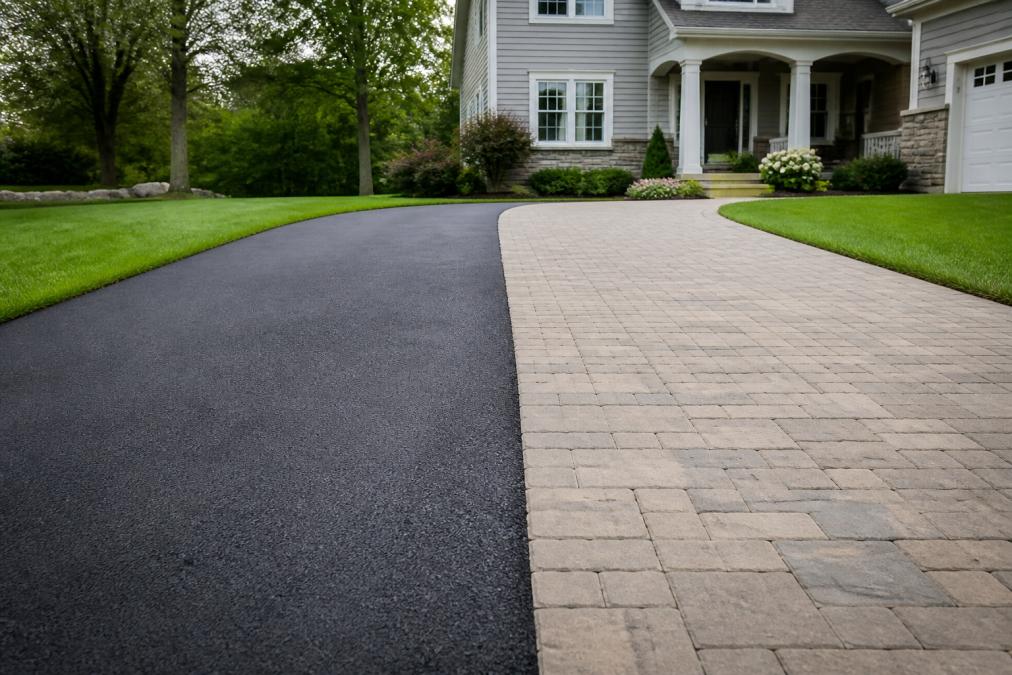
A permeable driveway is engineered to let stormwater drain through voids or gaps into a prepared sub-base rather than running off into the street. Asphalt is a solid petroleum-based surface that sheds water entirely. That distinction drives every cost category that follows: materials, base depth, labor, maintenance, and repair.
Here's the quick verdict. If your priority is the lowest upfront number, asphalt wins. If you're factoring in drainage efficiency, freeze-thaw performance, and long-term durability, the permeable driveway vs asphalt cost comparison favors permeable systems over a ten-year horizon.
| Factor | Traditional Asphalt | Permeable Pavers | Porous Asphalt |
|---|---|---|---|
| Starting cost per sq ft | $3-$9 | $10-$40 | $7-$13 |
| Lifespan | 15-20 years | 25-30+ years | 15-20 years |
| Sealcoating needed | Yes, every 2-3 years | No | No |
| Stormwater runoff | High | Minimal | Minimal |
| Individual repairs | Full-section patching | Single-unit replacement | Full-section patching |
| Best for | Tight budgets | Drainage + curb appeal | Asphalt look + drainage |
Permeable Paver Installation Cost Per Square Foot
Permeable paver installation cost per square foot is the biggest line item separating these options. Paver systems land in the $10 to $40 per square foot range, depending on material choice, pattern complexity, and how much excavation your site requires.
Permeable paver installation cost per square foot includes several layers standard asphalt doesn't need:
- Excavation and removal of existing surface and unsuitable soil
- Geotextile fabric laid over the subgrade to prevent fines from migrating upward
- Aggregate base in graded lifts, typically much deeper than an asphalt base
- Compaction at each lift to hit the required load-bearing capacity
- Bedding course of crushed stone for leveling the pavers
- Joint aggregate filling the void space between units
Labor drives the spread more than materials. A simple running-bond pattern in a rectangular driveway sits near the low end; herringbone patterns, curved edges, and tight access lots push toward the high end because every extra cut adds time.
Asphalt Driveway Maintenance Requirements and Long-Term Costs
Asphalt driveway maintenance requirements are modest but relentless: sealcoating every two to three years, crack filling as hairline fractures appear, and eventual patching where the freeze-thaw cycle opens seams. None are optional if you want the surface to reach its expected lifespan.
Asphalt is a consumable surface. It oxidizes in sunlight, hardens, and loses flexibility; once it stops flexing, it cracks. Water enters the cracks, freezes, expands, and the cycle accelerates. Cleveland's winters are hard on asphalt for exactly this reason.
Permeable pavers invert that math. There's no sealcoating schedule; a clogged section gets vacuumed or power-washed, and a cracked or settled unit gets pulled and reset individually. That repairability is where permeable systems quietly win on total cost of ownership despite the higher entry price.
Asphalt still makes sense if you're selling within a few years, the driveway is short, or your budget won't stretch. Just budget for the sealcoating and patching that follow.
Driveway Drainage Solutions: Why Permeable Surfaces Win on Water
Driveway drainage solutions matter more than most homeowners realize until water pools against the garage door. Traditional asphalt generates surface runoff that has to go somewhere: a swale, French drain, dry well, or the municipal storm system. Each adds cost and maintenance.
Permeable surfaces handle water at the source. Rain passes through the void space between pavers or the pores in porous asphalt and pervious concrete, filters through the aggregate base, and recharges the soil below, reducing hydrostatic pressure against foundations and cutting erosion at the driveway edges.
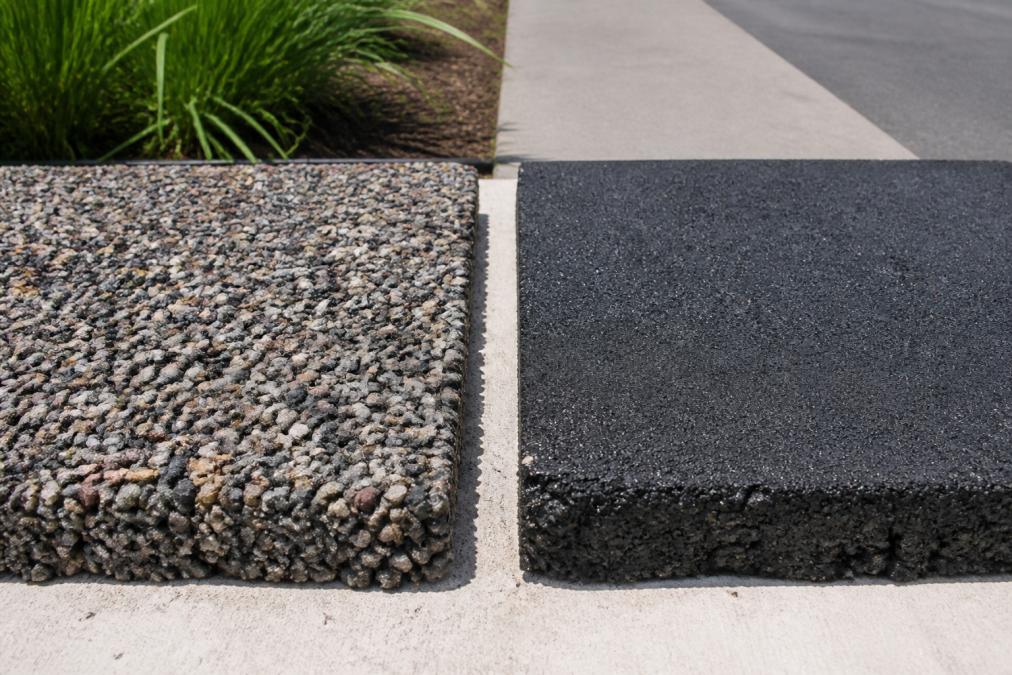
Porous asphalt keeps the look of a conventional black driveway while draining water through the surface, and typically runs $7 to $13 per square foot. Pervious concrete, a high-porosity mix, sits at $8 to $15 per square foot with strong load-bearing capacity. Both are cheaper than permeable pavers and both solve the drainage problem, but neither offers unit-by-unit repairability.
Installation Process and Base Preparation Costs
Base preparation is where the permeable driveway vs asphalt cost gap actually lives, and it's the most under-explained line item in most cost guides. Asphalt needs a compacted aggregate base, but permeable systems need a deeper, more carefully graded one because the base does the drainage work, not just supports the load. That difference in depth and grading tolerance separates a $12 per square foot quote from a $30 per square foot quote on the same footprint.
A typical permeable installation runs through these stages, each with its own cost driver:
- Excavation to the required depth, often 12 to 24 inches depending on soil type and local frost line. Deeper frost lines mean more spoils hauled away, billed by the truckload.
- Subgrade compaction and slope verification. A poorly drained clay subgrade forces an engineer to specify an underdrain, adding pipe and labor.
- Geotextile fabric placement to separate subgrade from base. Cheap material, labor-intensive step, and the most common corner cut.
- Aggregate base installed in lifts and compacted between each. A permeable base is typically 6 to 12 inches deeper than an asphalt base, and every inch is tons of crushed stone delivered and compacted.
- Bedding layer screeded to consistent thickness. Uneven bedding is the number one cause of paver lippage and rocking.
- Paver or porous surface installation. Pattern complexity drives cut waste, and cut waste drives material cost.
- Joint aggregate swept into voids and compacted. This is the drainage pathway, so under-filling it defeats the system.
For asphalt, the process is faster: grade, base, compact, lay hot mix, roll, cure. Fewer steps, less material, lower labor, that speed is the honest reason asphalt costs less. A standard asphalt base runs 4 to 6 inches of compacted aggregate, while a permeable paver base commonly runs 8 to 16 inches of open-graded stone plus the bedding course (fdot.gov). That extra stone is the biggest material delta between the systems.
Labor is the largest variable in any paving quote, which is why the same square footage produces wildly different bids. A contractor who skips compaction checks or uses a thinner base will quote lower and deliver a driveway that fails early. When comparing quotes, ask for the specified base depth in inches and the compaction method; if a bid doesn't state both, it isn't comparable.
Lifespan, Durability, and Repair Costs Compared
Lifespan is where the permeable driveway vs asphalt cost comparison tilts decisively. A well-built asphalt driveway lasts roughly 15 to 20 years with consistent sealcoating (asphaltpavement.org). Permeable paver systems routinely reach 25 to 30 years or more, and individual units can be replaced without touching the rest of the surface.
Repair costs tell a similar story. An asphalt repair means cutting out the failed section, cleaning the edges, and patching with new hot mix. The patch never matches perfectly, and the seam becomes a future failure point. A paver repair means pulling the affected units, resetting the bedding, and reinstalling. The surface looks untouched when it's done.
Freeze-thaw cycles are the great equalizer in cold climates. Asphalt flexes with temperature swings until it stiffens and cracks. Permeable pavers move independently, so frost heave affects individual units rather than tearing the whole surface apart. That's a durability advantage worth paying for in northern markets.
Stormwater Rebates and Zoning Incentives That Lower Your Cost
Stormwater rebates and zoning incentives can meaningfully reduce the real cost of a permeable driveway, and most homeowners never ask about them. This is the angle competitors miss, and it can flip the permeable driveway vs asphalt cost math in the right jurisdiction.
Three mechanisms are worth investigating, and they stack differently by jurisdiction:
- Stormwater utility fee credits. Many municipalities that bill a separate stormwater fee offer a recurring credit for properties that infiltrate runoff on site. Credits are typically calculated per square foot of treated impervious area and recur annually, compounding over the life of the driveway. Even a modest monthly credit adds up over a 25-year paver lifespan.
- Impervious-cover zoning allowances. A growing number of zoning codes cap the percentage of a lot that can be covered by impervious surface. In those jurisdictions, a permeable surface may count as partially or fully pervious, letting you build a driveway or parking pad that would otherwise be prohibited. That can be worth more than a rebate if the alternative is not building at all.
- Grant and cost-share programs. Some regional stormwater authorities and conservation districts reimburse a portion of qualifying green infrastructure installation. These are competitive and budget-limited, so timing matters.
Rules vary widely, so check your local building codes and stormwater authority directly rather than relying on a contractor's summary. The savings can be substantial, but only if you claim them. Two questions to ask before signing:
- Does your municipality offer a stormwater utility credit for on-site infiltration, and is it a one-time rebate or a recurring bill credit?
- Does your local zoning code limit impervious surface coverage? If it does, a permeable surface may let you expand a driveway or patio that would otherwise be prohibited.
Conclusion: Which Driveway Fits Your Budget and Property?
The honest answer: asphalt wins on day one, permeable systems win on year fifteen. If cash flow is tight and you need a surface now, asphalt at $3 to $9 per square foot gets the job done. If you're staying long term, dealing with drainage problems, or facing impervious-cover limits, permeable pavers at $10 to $40 per square foot pay that premium back through longevity, repairability, and drainage efficiency.
A third path: porous asphalt at $7 to $13 per square foot and pervious concrete at $8 to $15 per square foot both drain water and cost less than full paver systems, though neither offers unit-by-unit repair.
Choosing between a permeable driveway and asphalt comes down to numbers most homeowners can't easily assemble on their own: base depth, drainage requirements, local rebates, and long-term maintenance. Ward's Lawn Care & Landscape Co. has handled landscape construction and outdoor maintenance for Greater Cleveland properties since 1986, and we provide free estimates. Our highly trained technicians deliver professional results, and we offer additional discounts when you hire us for multiple services. Contact us to get started with Ward's Lawn Care & Landscape Co. and build a driveway that drains right and lasts.
Frequently Asked Questions
What are the downsides of permeable driveways?
Permeable driveways cost more upfront than asphalt, typically $7 to $40 per square foot depending on the material. They also need regular cleaning to keep pores or joints from clogging with dirt and debris. In cold climates, freeze-thaw cycles can stress the base if it wasn't built deep enough. Permeable pavers and porous asphalt also require a specialized contractor, which limits who you can hire.
How much does a 2,000 sq ft asphalt driveway cost to install?
Traditional asphalt paving runs about $3 to $9 per square foot installed, so a 2,000 square foot driveway typically falls in the $6,000 to $18,000 range. That figure covers excavation, a crushed stone aggregate base, and the asphalt surface. Sealing every two to three years adds to the long-term cost. Get a written estimate from a local contractor to confirm pricing for your specific site.
How does the lifespan of permeable pavers compare to asphalt?
Permeable paver systems last significantly longer than asphalt. A well-installed asphalt driveway typically needs resurfacing within 15 to 20 years, while permeable pavers can last 30 to 50 years with proper base preparation. Individual paver units can also be replaced if damaged, whereas asphalt repairs often require patching larger sections. That longer lifespan offsets the higher upfront investment.
Do permeable driveways require more maintenance than asphalt?
Yes, but the type of maintenance differs. Asphalt needs sealcoating every two to three years and crack filling as it ages. Permeable surfaces need periodic sweeping and vacuum cleaning to prevent the void spaces from clogging. A permeable driveway that isn't cleaned regularly loses its permeability rate and can stop draining effectively. Both surfaces benefit from prompt repair of any damage.