 comparison
Exscape Alternatives for Landscape Design in 2026
Table of Contents
- What to Look for in a Landscape Design Alternative
- Top Exscape Alternatives for Landscape Design Software
- Full-Service Landscape Design Alternatives for Your Property
- How to Avoid Surprise Landscaping Costs
- Questions to Ask a Landscape Contractor Before You Hire
- Landscape Design Project Budget Tips for 2026
- Conclusion
- Frequently Asked Questions
Last Updated: September 22, 2026
What to Look for in a Landscape Design Alternative
Choosing the right landscape design alternative depends on whether you need software to plan a project yourself or a full-service firm to design and install it for you. Most homeowners searching for exscape alternatives for landscape design fall into one of those two camps, and the tools that serve them look nothing alike.
The distinction matters more than most people expect. Design software gives you control and a lower upfront commitment. A full-service firm gives you a finished outdoor space without the learning curve. Picking the wrong category wastes either money or weekends.
Software vs. Full-Service Firms: Which Do You Need?
Landscape design software is a digital tool that lets you model plants, hardscaping, and structures before anything gets built. Full-service firms handle site planning, design and installation, and project management as a package.
Ask yourself three questions:
- Do you enjoy planning and measuring your own space?
- Is your project mostly visual (plantings, small patios) rather than structural?
- Do you want to manage contractors yourself?
Two or more yes answers point toward software. Otherwise, a design-build firm will save you time and rework.
Top Exscape Alternatives for Landscape Design Software
Four tools dominate this category, and each fits a different user. Vip3D suits professionals who need polished presentations. iScape fits homeowners who want to see changes on their own yard through a phone camera. Realtime Landscaping Pro appeals to buyers who prefer a one-time purchase. DynaSCAPE serves landscape architects who need construction-grade drawings.
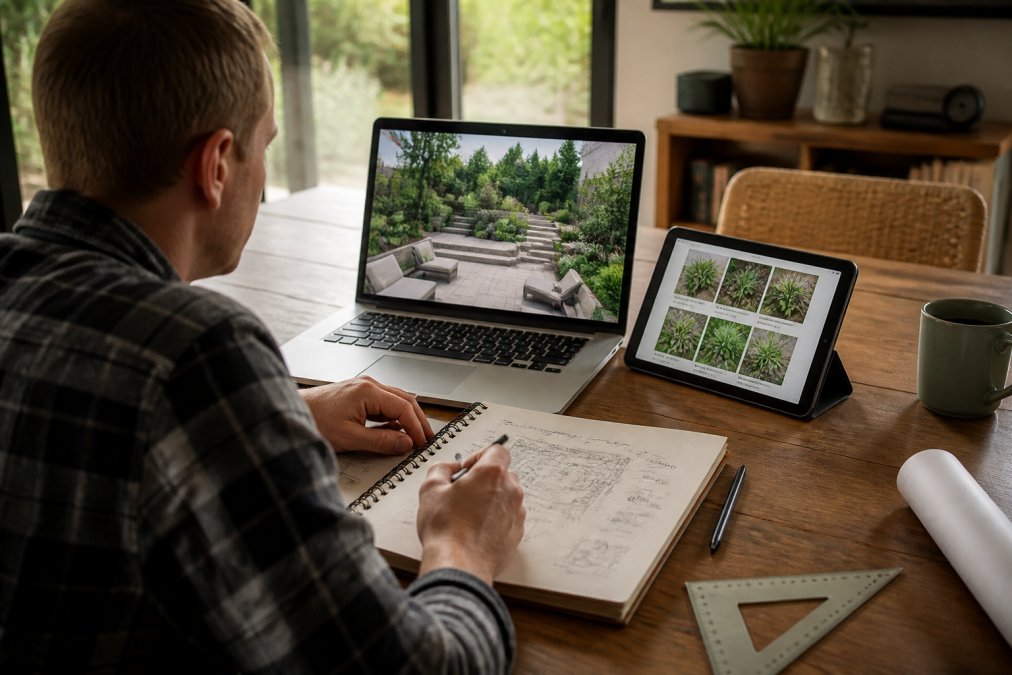
Here's how they compare at a glance:
| Tool | Pricing Model | Platform | Best For | Standout Feature | Main Limitation |
|---|---|---|---|---|---|
| Vip3D | Subscription (tiered) | Windows desktop | Design-build firms | Photorealistic 3D rendering | Steep learning curve; no true free tier |
| iScape | Freemium + subscription | iOS / Android | DIY homeowners | Augmented reality previews | Weak on structural drafting and scaled plans |
| Realtime Landscaping Pro | One-time purchase | Windows desktop | Detailed project planning | Built-in cost estimation | Desktop-only; no live AR |
| DynaSCAPE | Subscription (quote-based) | Windows desktop | Landscape architects | CAD drafting precision | Requires formal training; not a homeowner tool |
A few patterns hold across all four.
Vip3D: Professional-Grade 3D Rendering
Vip3D is a professional-grade 3D design tool with high-end rendering and one-click presentation mode. Pricing starts at $97 per month on a subscription, with higher tiers that unlock additional rendering passes and presentation exports.
iScape: Augmented Reality for Homeowners
iScape is a mobile app that uses augmented reality to show landscaping changes on your actual property. It offers a free tier with premium subscription options.
Realtime Landscaping Pro: One-Time Purchase Power
Realtime Landscaping Pro is desktop software for detailed plans covering decks, patios, and pools. It costs $279 as a one-time purchase, with no recurring fees.
DynaSCAPE: CAD Precision for Professionals
DynaSCAPE is CAD-based software used for precise technical drawings in the landscape industry. Pricing requires contacting the company directly.
Full-Service Landscape Design Alternatives for Your Property
For many properties, the best alternative to design software is hiring a firm that handles everything from site planning through installation. Ward's Lawn Care & Landscape Co. has served Greater Cleveland since 1986, combining routine maintenance with full landscape construction.
Software vs. Full-Service: A Side-by-Side Comparison
Most articles in this space either review software or promote a firm. Very few put the two service models next to each other honestly. Here's the neutral version.
| Dimension | Design Software | Full-Service Firm |
|---|---|---|
| Upfront cost | $0 to roughly $300 for a one-time license, or a monthly subscription | Design fees typically billed as a percentage of project cost, often credited toward installation |
| Time investment | 10 to 40 hours of your own planning for a typical residential yard | 2 to 6 hours of your time across consultations and approvals |
| Scope ceiling | Visual plans and material lists; no structural engineering, no permits | Full scope: grading, drainage, permits, hardscape, plantings, lighting, irrigation |
| Accountability | You coordinate every contractor | One point of contact for the whole build |
| Best fit | Confident DIYers, small visual refreshes, phased projects | Structural work, drainage problems, whole-yard renovations, tight timelines |
| Worst fit | Anything requiring a permit or load calculation | A single flower bed or a quick curb-appeal touch-up |
Service Area and Logistics
Geography matters more than most buyers expect. A firm that's 45 minutes away will charge more for mobilization, respond slower to warranty calls, and may not know your local soil, freeze depth, or municipal permitting quirks.
- The specific cities, townships, and ZIP codes they serve, not just a metro name
- Whether travel beyond that radius triggers a trip charge
- Whether they pull permits in your municipality or expect you to
Budgeting a Full-Service Project
Full-service pricing is usually quoted as a project total, not a per-square-foot rate, because scope varies so much. That makes it hard to compare bids apples-to-apples. The workaround is to ask every firm for the same line-item breakdown:
- Design fee, flat, hourly, or percentage of construction
- Site prep and excavation, including disposal and haul-away
- Hardscape materials and labor, broken out by element (patio, wall, walkway)
- Plantings, itemized by species and size
- Irrigation and lighting, materials, trenching, and controls
- Permits and inspections, who pays, who files
- Contingency, typically a percentage held for unknowns
Material Sourcing and Sustainability
Two firms can quote the same patio and deliver very different products. Ask where the stone, pavers, and plant stock come from. Regionally quarried and locally grown materials cost less to transport, establish better in local soil, and are less likely to arrive damaged. Firms that source regionally usually advertise it, if a bidder can't tell you where their materials originate, that's a signal.
How to Avoid Surprise Landscaping Costs
Surprise costs almost always trace back to scope that was never written down. A clear, line-item proposal is your best protection.
Protect yourself with these habits:
- Request a written scope listing every material and structure
- Confirm who handles excavation, disposal, and permits
- Ask how change orders are priced and approved
- Hold back final payment until a walkthrough is complete
- Keep a signed copy of the final design
Questions to Ask a Landscape Contractor Before You Hire
The right questions separate organized firms from ones that improvise. Ask them before any deposit changes hands.
- How long have you operated in this area, and can I speak with recent clients?
- Who supervises the crew on site each day?
- What's the timeline, and what could delay it?
- How do you handle drainage and grading issues?
- What warranty covers plants and hardscape work?
Landscape Design Project Budget Tips for 2026
A realistic budget starts with the hardscape, not the plants. Structural elements like patios, retaining walls, and pergolas carry the highest material and labor costs, so pricing them first prevents nasty mid-project surprises.
Build your budget in this order:
- Hardscaping and structures - patios, walls, walkways, pergolas
- Grading and drainage - often invisible, always necessary
- Plantings and trees - sized to what the site supports
- Irrigation and lighting - plan conduit now, even if you install later
- Contingency - set aside a buffer for unknowns like root systems or poor soil
Conclusion
Comparing design software against full-service firms comes down to how much of the work you want to own. Software gives you control; a firm gives you a finished outdoor sanctuary without the coordination burden.
Frequently Asked Questions
What should I look for when choosing a landscape design company?
Look for a company with a clear design process, transparent pricing, and local references you can contact. Ask how they handle design revisions and whether they provide a detailed scope of work before installation begins. A dependable firm will offer free estimates, explain what is included, and show you a portfolio of completed projects similar to yours.
How do I compare landscape design quotes from different contractors?
Request itemized quotes that break down design fees, materials, labor, and any equipment rental. Compare the scope of work, not just the bottom line. Check whether permits, site cleanup, and plant warranties are included. Ask each contractor what could change the price mid-project and get that answer in writing before you sign.
What services do professional landscape design firms typically offer?
Most full-service firms handle site planning, hardscape design, planting plans, and installation. Many also provide landscape maintenance, snow removal, and seasonal care after the project is complete. Some offer 3D renderings or augmented reality previews so you can see the design before construction starts. Ask specifically which of these services are in-house versus subcontracted.
How can I ensure my landscape design project stays on budget?
Set a contingency of 10 to 15 percent for unexpected site conditions or material changes. Get a written scope of work that lists every plant, material, and structure. Ask for a payment schedule tied to project milestones, not calendar dates. Review the final plan with your contractor before any excavation begins to catch costly changes early.
Are there local alternatives to large landscape design firms?
Yes. Many smaller regional companies offer the same design and installation services as larger firms, often with more direct communication and flexible scheduling. Look for companies with a long local history, verifiable references, and experience with projects similar to yours. A firm that has served your area for decades will know local soil conditions, permit requirements, and plant hardiness.