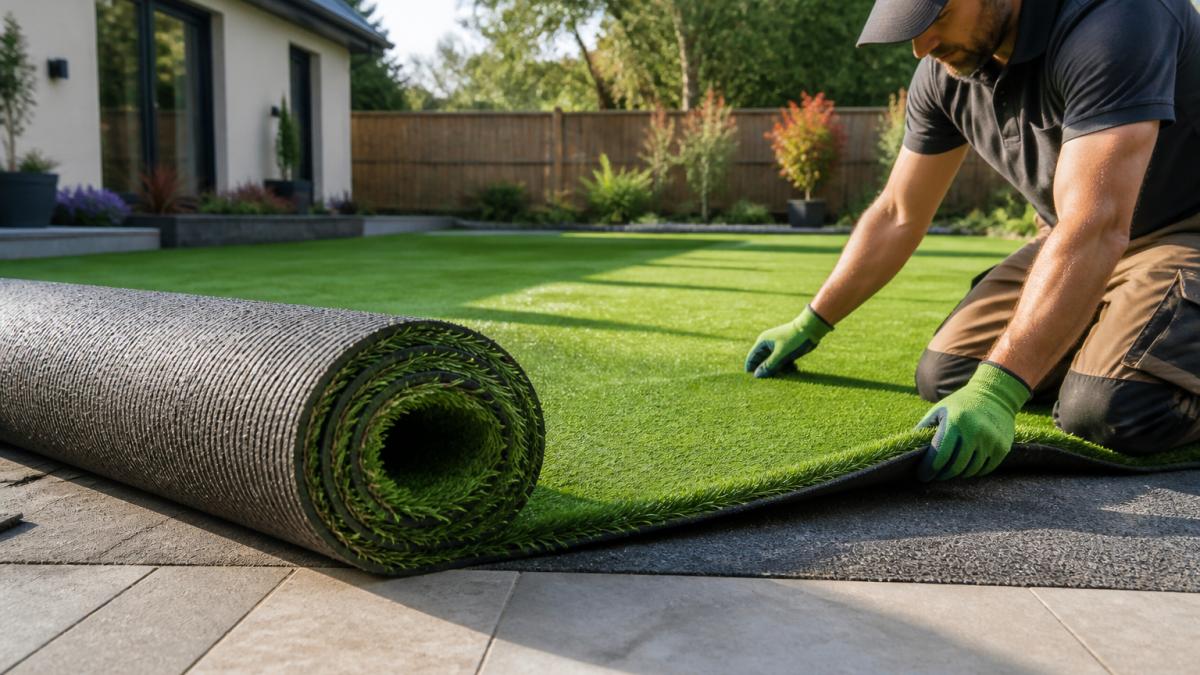
 comparison
Is Synthetic Turf Worth the Cost? A 2026 Analysis
Table of Contents
- The Real Cost Equation: Installation and Long-Term Savings
- Artificial Turf Installation Cost Per Square Foot: What Drives the Price
- Water Conservation and Utility Bill Reduction
- Artificial Turf Maintenance Requirements: Myth vs. Reality
- How Long Does Artificial Turf Last and What Affects Durability
- Environmental Impact and End-of-Life Disposal Concerns
- Curb Appeal, Property Value, and Warranty Coverage
- The Verdict: When Synthetic Turf Makes Financial Sense
- Frequently Asked Questions
Last Updated: October 2, 2026
The Real Cost Equation: Installation and Long-Term Savings
When homeowners consider whether synthetic turf worth the cost answers their needs, they're asking two questions: upfront cost versus long-term savings. The answer depends on your property size, local water rates, maintenance preferences, and how long you'll stay.
At Ward's Lawn Care & Landscape Co., we provide free estimates and transparent guidance to help homeowners evaluate this decision. Installation costs are substantial, but water savings, reduced maintenance labor, and reclaimed free time can add up quickly for the right homeowner.
Understanding what drives total cost of ownership is critical. Installation labor, material quality, site preparation, and drainage vary widely. A small DIY project with budget turf costs far less than professional premium installation, yet both can be right for their situations.
Artificial Turf Installation Cost Per Square Foot: What Drives the Price
Installation cost per square foot is misleading without context.
Material Quality and Cost Variance
Budget turf and professional-grade systems vary in cost per square foot and longevity.
Site Preparation: The Hidden Cost Driver
Site prep costs often exceed turf material cost.
DIY vs. Professional Installation: The Real Cost Trade-Off
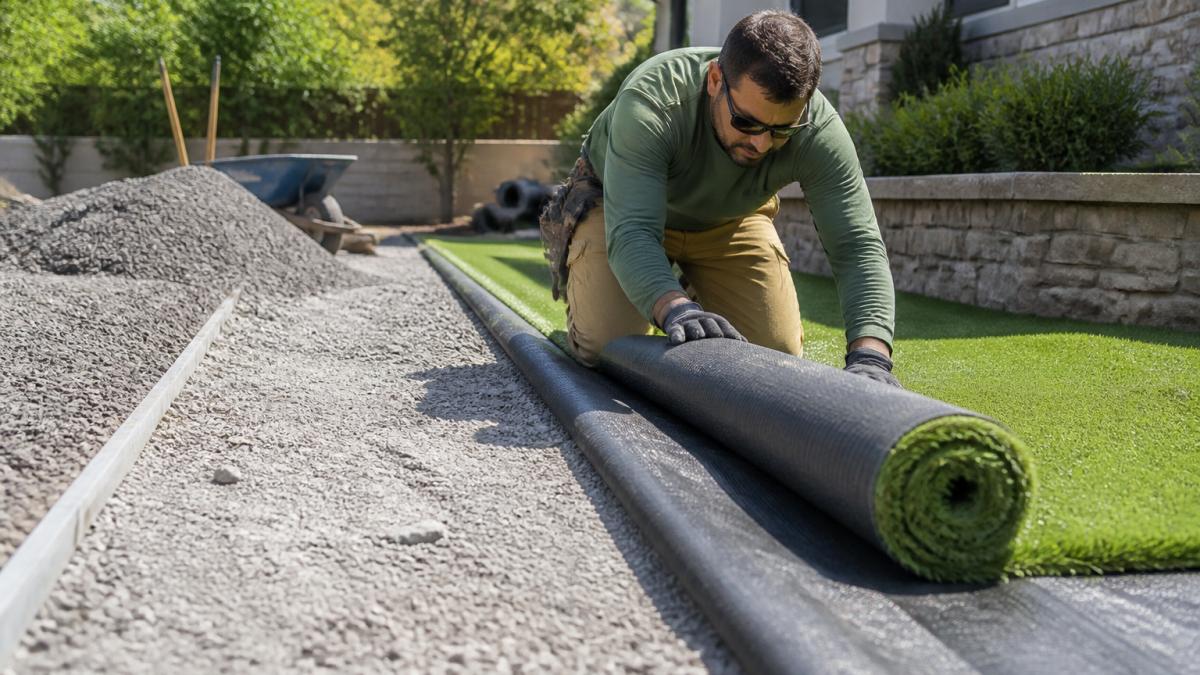
DIY projects with smaller rolls suit homeowners with basic tools.
DIY Installation Cost Savings (and Risks)
DIY installation can save on labor costs. However, DIY carries significant hidden costs:
- Warranty voidance: Most manufacturers void warranties if installation isn't certified. You lose 10-15 year protection, eliminating premium turf's financial justification.
- Drainage failure: Improper compaction or drainage leads to pooling, odor, and deterioration. Fixing costs $1,500-$5,000.
- Seaming and edge work: Poor seaming allows water infiltration and accelerates wear.
- Liability: Improper installation creates trip hazards or drainage issues affecting neighbors. Professional installers carry liability insurance; DIY homeowners don't.
Professional Installation ROI
Professional installation involves labor costs. Premium turf with professional installation often comes with a longer warranty and lifespan.
Location and Site Complexity
Urban properties with limited access, steep slopes, or complex layouts cost 50% more than suburban flat yards.
The Installation Decision Framework
Choose DIY if: project under 500 sq ft, flat site with good drainage, budget turf, comfortable with warranty voidance.
Water Conservation and Utility Bill Reduction
Synthetic turf eliminates irrigation entirely. Natural grass requires 1-2 inches per week during growing season; synthetic turf requires zero irrigation water (occasional rinsing for dust or pet waste is minimal). For homeowners in high-cost water areas or drought regions, this benefit alone justifies investment within 5-7 years.
Utility bill reduction varies by region. A quarter-acre lawn in moderate-cost water areas saves $300-500 annually; drought-prone regions with premium pricing save $1,000+. Over 15 years at $400/year savings, that's $6,000 cumulative savings plus environmental benefits.
Artificial Turf Maintenance Requirements: Myth vs. Reality
Synthetic turf requires different maintenance, much less of it. It needs occasional rinsing (minutes with a hose).
Pet waste management is straightforward: solid waste picked up easily, urine drains through perforated backing with proper drainage. Leaf cleanup is easier, no thatch buildup, just sweep or blow. No professional leaf cleanup services needed.
Maintenance is simple: rinse as needed, brush blades occasionally, inspect drainage after rain. Most homeowners spend 2-4 hours yearly, versus 40-80 hours for natural grass.
How Long Does Artificial Turf Last and What Affects Durability
Synthetic turf typically lasts 15 to 20 years with proper installation and maintenance. Professional-grade turf like Greenline uses high-density blades and advanced drainage for longevity. Budget options like VEVOR degrade faster under heavy foot traffic.
Quality turf includes UV stabilizers preventing fading; inferior products fade within 3-5 years. Professional-grade costs more because it's built to last through intense sunlight.
Climate affects durability: extreme heat softens fibers, extreme cold makes them brittle. Moderate climates extend lifespan. Installation quality matters enormously, poor drainage causes premature deterioration and odor.
Environmental Impact and End-of-Life Disposal Concerns
The environmental case is complicated. Synthetic turf eliminates water, pesticide, and equipment emissions but introduces microplastic concerns and disposal challenges rarely factored into cost calculations.
Synthetic turf eliminates irrigation water and pesticide use, a genuine environmental win.
Synthetic turf sheds microplastics entering soil and water systems. Long-term soil and groundwater impacts are still being studied.
Synthetic turf isn't recyclable in most communities; landfill disposal is standard. A typical lawn (2,500-5,000 sq ft) generates 3-6 tons of waste.
Regional Variation
Some regions are developing infrastructure for synthetic turf recycling. California, the Northeast, and parts of the Midwest have emerging programs.
The Environmental Trade-Off
The environmental case for synthetic turf is real but incomplete. Reduced water and chemical consumption versus microplastic shedding and landfill waste creates a genuine tension. For environmentally conscious homeowners, this trade-off deserves careful consideration:
- Choose synthetic turf if: You live in a water-scarce region, have high water bills, or are concerned about pesticide runoff. The water savings over 15 years often outweigh disposal concerns.
- Reconsider if: Soil health is a long-term priority for your property, you plan to restore natural landscaping after 15 years, or your region has no recycling infrastructure for synthetic turf.
Curb Appeal, Property Value, and Warranty Coverage
Synthetic turf dramatically improves curb appeal. A lush, perfectly maintained lawn year-round is visually striking. No brown patches, no weeds, no seasonal decline.
Property value impact is less clear. Some buyers view synthetic turf as a premium feature, lower maintenance, water savings, and year-round appearance appeal to busy homeowners.
In Greater Cleveland's market, synthetic turf is increasingly accepted as a legitimate landscaping choice. It appeals to homeowners who value time savings and water conservation.
Warranty coverage varies by product and installer. Professional-grade turf often includes longer warranties on fiber durability, while budget options may offer shorter warranties.
Ward's Lawn Care & Landscape Co. provides free estimates and transparent guidance on warranty coverage for any installation we manage. We help homeowners understand what's covered and what maintenance is required to preserve warranty protection.
| Product | Warranty Period | Best For | Key Feature |
|---|---|---|---|
| Oasis 85UF | 10-12 years | Balanced durability and cost | UV-stabilized, realistic color |
| Ottomanson | 5-7 years | Small DIY projects | Easy installation, budget-friendly |
| VEVOR | 3-5 years | Temporary or light use | Entry-level price point |
| Greenline Professional | 12-15 years | Full lawn replacement | High-density, heavy traffic ready |
The Verdict: When Synthetic Turf Makes Financial Sense
Is synthetic turf worth the cost? The answer is: it depends on your specific situation.
Synthetic turf makes strong financial sense if you:
- Have a large lawn and high water bills
- Value your free time and want to eliminate weekly mowing
- Have pets and deal with lawn damage from urine or digging
- Plan to stay in your home for 10+ years
- Live in a region with water scarcity or drought restrictions
- Have mobility limitations that make lawn maintenance difficult
Synthetic turf is a weaker financial choice if you:
- Have a small lawn where water costs are minimal
- Enjoy lawn care as a hobby or stress relief
- Plan to move within 5-7 years
- Have environmental concerns about microplastics and disposal
- Live in a region where natural grass thrives with minimal water
- Prefer the biodegradable, chemical-free benefits of natural grass
The total cost of ownership calculation is individual. For some homeowners, the 15-year lifespan, water savings, and maintenance elimination justify the upfront investment within 7-10 years. For others, the environmental concerns and disposal challenges outweigh the convenience benefits.
Professional installation is essential. Budget turf installed poorly will disappoint. Premium turf installed well will perform for 15+ years and deliver genuine value. Ward's Lawn Care & Landscape Co. offers free estimates and honest assessments of whether synthetic turf makes sense for your property. We can walk you through the real costs, savings, and long-term implications specific to your situation.
Contact Ward's Lawn Care & Landscape Co. today for a free estimate and transparent analysis of whether synthetic turf is the right choice for your property's landscaping needs.
Frequently Asked Questions
Is synthetic turf worth the cost compared to natural grass?
Whether synthetic turf is worth the cost depends on your priorities and timeline. Upfront installation costs are significantly higher than seeding or sodding natural grass. However, synthetic turf eliminates ongoing lawn maintenance expenses, reduces water consumption substantially, and maintains its appearance for 15-20 years with minimal care. Homeowners who value time savings and lower long-term water bills often see synthetic turf as a worthwhile investment. Those with small yards or limited budgets may find the initial expense harder to justify.
What are the main downsides of synthetic turf?
Key downsides include high upfront installation costs, heat retention that makes the surface uncomfortable during summer months, microplastic shedding that may affect soil health, and environmental concerns about end-of-life disposal. Synthetic turf cannot be recycled through standard municipal programs and often ends up in landfills. Additionally, some homeowners report pet waste odor issues and find that the grass blades flatten over time in high-traffic areas. Professional installation is typically necessary for proper drainage, adding to overall expense.
How much does it cost to install 1,000 square feet of artificial turf?
Installation costs for 1,000 square feet vary based on site conditions, local labor rates, product quality, and sub-base preparation requirements. Professional installation can vary significantly, depending on whether your yard needs extensive ground preparation, drainage systems, or removal of existing sod. For accurate pricing specific to your property, contact a professional landscaper for a free estimate. Factors like soil compaction, slope, and existing infrastructure all influence final costs.
Does synthetic turf increase property value?
Synthetic turf's impact on property value is mixed. While it improves curb appeal and reduces visible lawn maintenance, many appraisers and buyers view it as a cosmetic upgrade rather than a value-adding improvement. Some buyers prefer natural grass and view synthetic turf as a liability due to replacement costs and environmental concerns. In hot climates where water conservation is critical, synthetic turf may be viewed more favorably. Have a property appraiser evaluate your specific situation before making the investment primarily for resale value.